Looking back on Nirvana's seminal album 'Nevermind' on its 25th anniversary
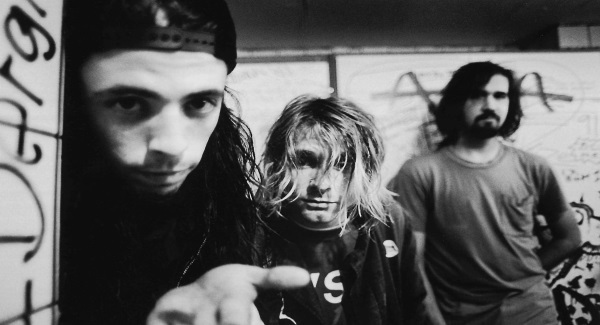
A FEW years before he formed the band Nirvana, Kurt Cobain was drinking with a friend in his parent’s house. At one point, his friend picked up a can of paint and sprayed the words ‘Kurt smells like teen spirit’ on a nearby wall.
It was years before Cobain discovered that she was in fact referring to a deodorant and by then the opening track from the band’s seminal album had become an anthem.
Nevermind was released on September 24, 1991, 25 years ago tomorrow. It hit the shops a few weeks after a European tour support slot with Sonic Youth that included gigs in Cork and Dublin, and was the band’s second album of three. It was by far their most successful, and has sold over 24m copies, regularly featuring on lists of all-time greats.
The 13-track album (there’s a ghost track) was recorded over a period of 21 days under the watchful eye of producer Butch Vig in Los Angeles. Although a new deal with Geffen Records meant the band’s budget far exceeded that of their $600 debut, Bleach, the sessions were not without their problems. Cobain was already suffering from those debilitating stomach cramps that would become the physical manifestation of the singer’s angst-ridden persona.
SENSITIVE SOUL
According to Vig, Cobain “was very sensitive to certain foods” which meant that sessions sometimes came to halt.
“Sometimes we’d eat dinner and he’d get sick half an hour later,” said Vig in an interview given to Burnt Out. “He’d end up spending 45 minutes in the bathroom. He was constantly taking Pepto-Bismol to relieve some of his pain.”
The deal with Geffen also meant that for the first time, the members of Nirvana had some cash. There was the occasional late night which sometimes resulted in late starts in the studio. But as Vig recalled it, “they were there to work, there was no partying in studio”.
And what a work it turned out to be. Apart from its famous opener ‘Smells like Teen Spirit’, Nevermind produced the hits ‘In Bloom’, ‘Come as You Are’, and ‘Lithium’, as well as the eerie acoustic ‘Polly’ and the anarchic ‘Territorial Pissings’ with its infamous lyric, “Just because you’re paranoid, Don’t mean they’re not after you.”
The impact of the album was enormous and took the band from underground curiosities to superstardom, knocking Michael Jackson’s album Dangerous off top spot on the US Billboard 100 in January 1992.
“Anybody that I knew at the time either adored them or hated them,” recalls 2FM DJ Dan Hegarty. “It was an axis change for a lot of people. You don’t realise it at the time but these don’t come along very often. But when they do, they change the way you listen to music.
“Nevermind had a huge impact on me. That big guitar sound, the attitude, everything was different to me. The only thing that I could reference it to was Pixies, but this was altogether bigger.”

RETURN OF THE AXE
As Hegarty alludes to, the success of Nirvana’s album opened up a whole new world of guitar music for generations of people who had become disillusioned with the cheese of pop and the superficiality of hair metal.
“It gave other bands more exposure,” says Joe Donnelly of TXFM. “Sonic Youth, Mudhoney, the Pixies — they had been around for a while but they weren’t as well known I think and it got them more exposure. When Cobain sat down to write ‘Smells Like Teen Spirit’ he said he was trying to write a Pixies song. So when it came out it was a distillation of the best bits of a movement that had in fact been around for quite a while.
“I think it changed people’s appreciation of music. I think it’s dangerous to underestimate how smart and intelligent the music consumer is at 15 years old. I think that the lyrics, even though they were written over on the west coast of the USA, they resonated with teenagers here as well; that sort of apathy and dissatisfaction, social awkwardness and feeling alienated. There was a depth to the lyrics and a knowledge whereas Motley Crue, Poison were really quite shallow.”
AMONG THE GREATEST
Rolling Stone rated Nevermind as the 17th greatest album in its list of the 500 greatest albums of all time, writing that “no album in recent history had such an overpowering impact on a generation — a nation of teens suddenly turned punk — and such a catastrophic effect on its main creator”.
While the former contention is arguable, there is little doubt about the latter. Cobain found life in the spotlight hard to handle. His anxiety was not helped by his heroin addiction which would contribute to his suicide in 1994.
In the aftermath of his death, Cobain’s legacy and his importance to youth culture was perhaps overblown. It has thankfully calmed somewhat and from the haze of gushing and hype, one monument stands to his undoubted creativity.
“As an album it sounds great these days,” says Hegarty. “It has aged a bit, but there’s nothing wrong with that. I think that the songwriting, the playing, and the production from Butch Vig still influences people today if you listen to great bands like Fangclub and Otherkin.
“Put on ‘Lithium’ or ‘In Bloom’ or the stunning ‘Something In The Way’, and you’ll be humbled by their brilliance.”
Three tracks that stand the test of time
The only song on the album that is credited to all three members of the band. When Cobain brought to a session, the song was only part-formed. It was down to bassist Krist Novoselic and drummer Dave Grohl to add the layers that give the fairly simple chord sequence its impact.
A rocking track that introduces the ‘second’ heavier side of the album. A tonne of feedback, chunky guitars, Grohl’s crazy drumming and Cobain’s desperate screaming all go into the mix here to make for a wild two-minutes of pure insanity.
According to Cobain, this song was written about when he was sleeping under a bridge when homeless. It now appears this was never the case. Real or imaginary, it turned out to be a beautifully morbid way to finish the album. What a wonderful cello.
CONNECT WITH US TODAY



Be the first to know the latest news and updates














