Getting back to basics with Bruce Parry
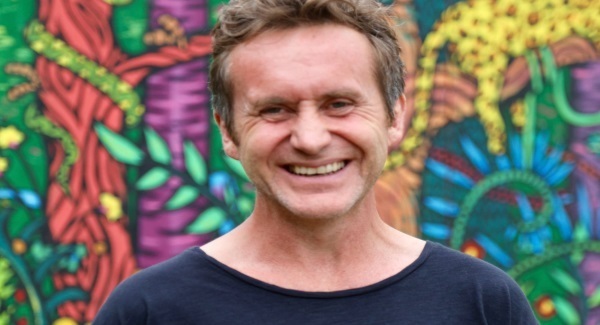
Bruce Parry shakes his head ruefully when he’s asked about his knowledge of Ireland.
He has drunk fresh cow’s blood in the Omo Valley of Ethiopia, herded reindeer with the Nenet of Siberia, and ingested mind-bending hallucinogens with tribes from Brazil to the Congo. But he’s never spent any proper time in this country.
It’s a situation the former presenter of BBC series Tribe can partly remedy over the next few days when he’s on this island to help promote his new feature-length documentary, Tawai — A Voice From The Forest.
Just don’t go along to the screenings expecting a longer version of one of the episodes of his hugely popular BBC show.
Tawai is an altogether more cerebral affair. Directed by Parry himself, the film does have some of his usual jungle adventures, but also features western academics and Indian sadhus discussing such concepts as the left brain-right brain conflict, and the benefits of meditation.
It all came about when Parry felt he’d reached the end of the road with the more mainstream shows he was making for the BBC.
He’d been to some fantastic places, but had also witnessed some of the more negative forces at play on the planet. It could no longer be business as usual. He had to respond to what he’d seen.
“How do we deal with all these things that are going on— globalisation, climate change, the way of life that we lead and the effect it’s having?
"What’s the answer to that? Before I went around the world looking at other things, this felt more important,” says Parry, who comes across as affable and polite as you’d expect from his TV shows.
Seven years later and his response is finally ready. The word ‘tawai’ comes from the Penan people of Borneo to describe their warm feelings of connection to the natural world, and the 48-year-old ex commando reckons it’s a concept people in the west would do well to rediscover.
Parry’s return to the Penan, a tribe who’d featured in his BBC series, also caught them at a crossroads. A nomadic hunter- gatherer culture with no hierarchy, the pressures of deforestation due to palm oil plantations were forcing them to abandon their traditional ways, and to settle down and tend crops.
Clearly taken with the incredible sense of communality in Penan society, and the sense of contentment that goes with it, Parry feels we can learn from them at a time when our own society is also facing all sorts of crises.
“I think that we can create any time of society we want. Left to our own devices in equality, we can live the most amazing lives. That comes across with the Penan.
"Here’s an egalitarian group, and quite possibly the most peaceful people on the planet. No leaders and no laws, they are living in harmony, which is the opposite of what we’d think.”
That might be fine in the jungles of Borneo, but surely much of their life can’t be applied in the industrialised world?
“My intention isn’t to turn back the clock,” he replies. “I’m trying to say that while we have created some amazing things in the technological age, we’ve also left some positive things behind that could be beneficial for us. And they’re the more subtle things... the connection, the community, our sense of identity... and they’re important.”
Parry’s visit to India, where he spent time with Hindu ascetics (sadhus) at the Kumbh Mela, the largest gathering of humans in the world — also informed his view that we need to make our lives simpler and slower if we are to relate to each other in a better way.
He points out that aspects of the sadhus’ practices for inner balance have already gained traction in the west, with yoga and meditation already going mainstream.
“It’s because they are very good tools for confronting some of the issues we have in society today. And what comes from that later is that we’re all feeling more empathic and connected, and we gravitate more towards other ways of experiencing our relationships, then maybe something more beautiful can come about.”
Parry is even hoping to put some of those ideas into practice by starting a sort of communal living space in Britain.
He’s not keen to say too much at this stage, but admits he’s been looking at various wooded sites in Scotland and Wales.
Of course, it’s ironic that, after leaving his home in Ibiza and seeking to return to living in a forest in Britain, the people who inspired Parry are being forced from the forests they’ve inhabited for millenia.
Through highlighting the plight of the Penan, and discussing their situation with representatives of the Malaysian state and various NGOs, Parry and his team are trying to help the group that he formed such a bond with.
The rest of us can also do our bit. Parry regularly points out that he doesn’t want to sound preachy or to make people feel bad, but the connecctions are clear.
The ending of the Penan’s way of life is directly linked to our consumption of palm oil.
This ubiquitous substance appears under various guises in ingredient lists on an estimated 50% of packaged products in your local supermarket, most notably in food and cosmetics.
“It’s as simple as checking whether there’s palm oil in your chocolate bar, or your shampoo, or your other daily products,” says Parry.
“We are at the heart of the driving force of the reasons why people like the Penan are losing their lands. It’s as simple as that.
"There are people making billions of dollars; meanwhile these people are suffering because we won’t read the label. I’m not trying to make people feel shit. We just have to see the link. We have to wake up to our effect in the greater world.”
Bruce Parry will be present for a q+a after the screening of Tawai - A Voice From The Forest at Queens Film Theatre, Belfast, at 6pm tonight; and Movies at Dundrum, Dublin, on Friday at 6.30pm. The film also screens at Triskel in Cork from Sunday to Wednesday.

CONNECT WITH US TODAY



Be the first to know the latest news and updates

















