Hilma af Klint: The Swedish artist who got spiritual with one of Cork's Beamish clan
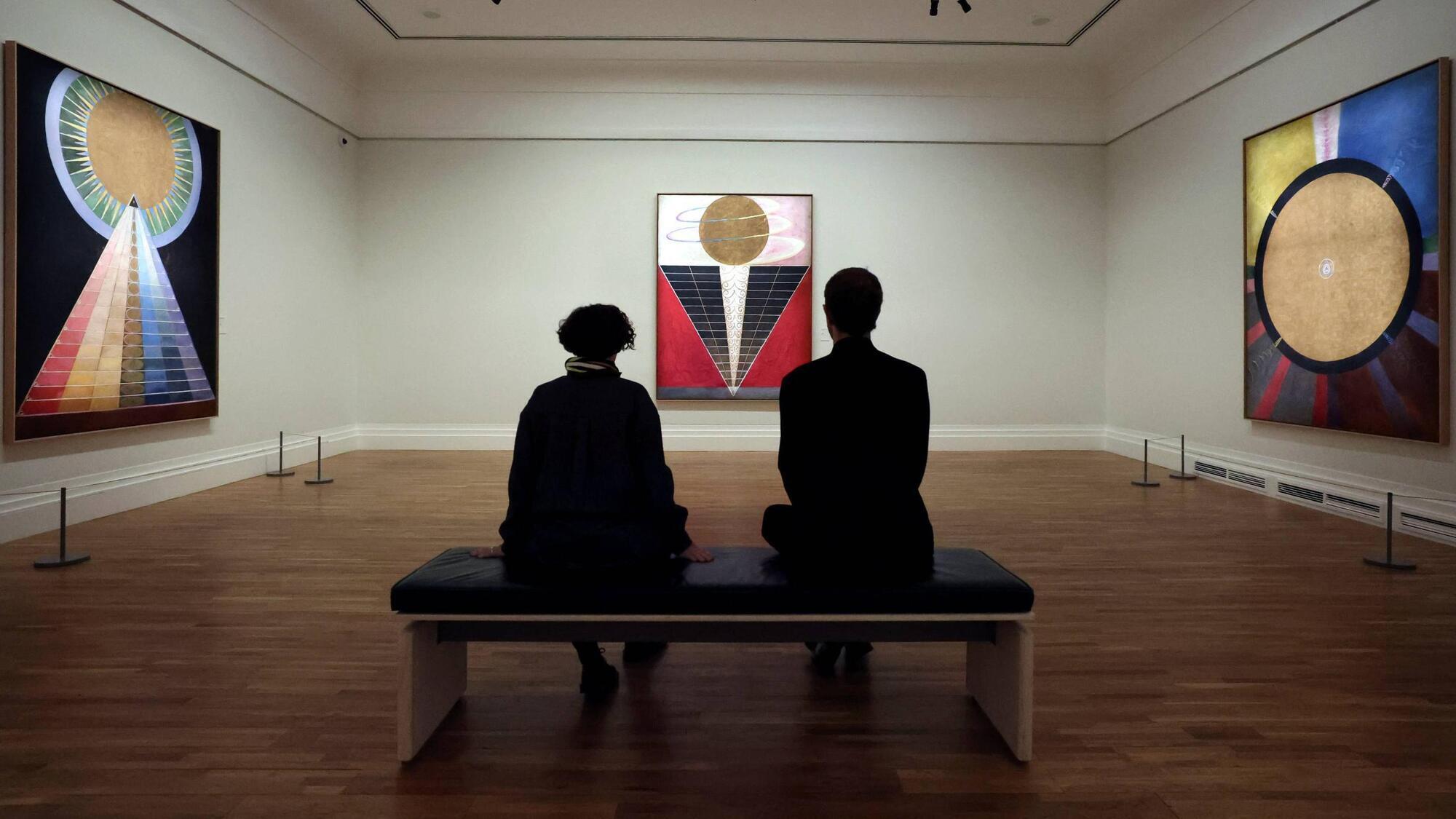
The exhibition of work by Hilma af Klint at the National Gallery of Ireland. Picture: Clodagh Kilcoyne
In 1906, the 44-year-old Swedish artist Hilma af Klint began work on a project she called The Paintings for the Temple.
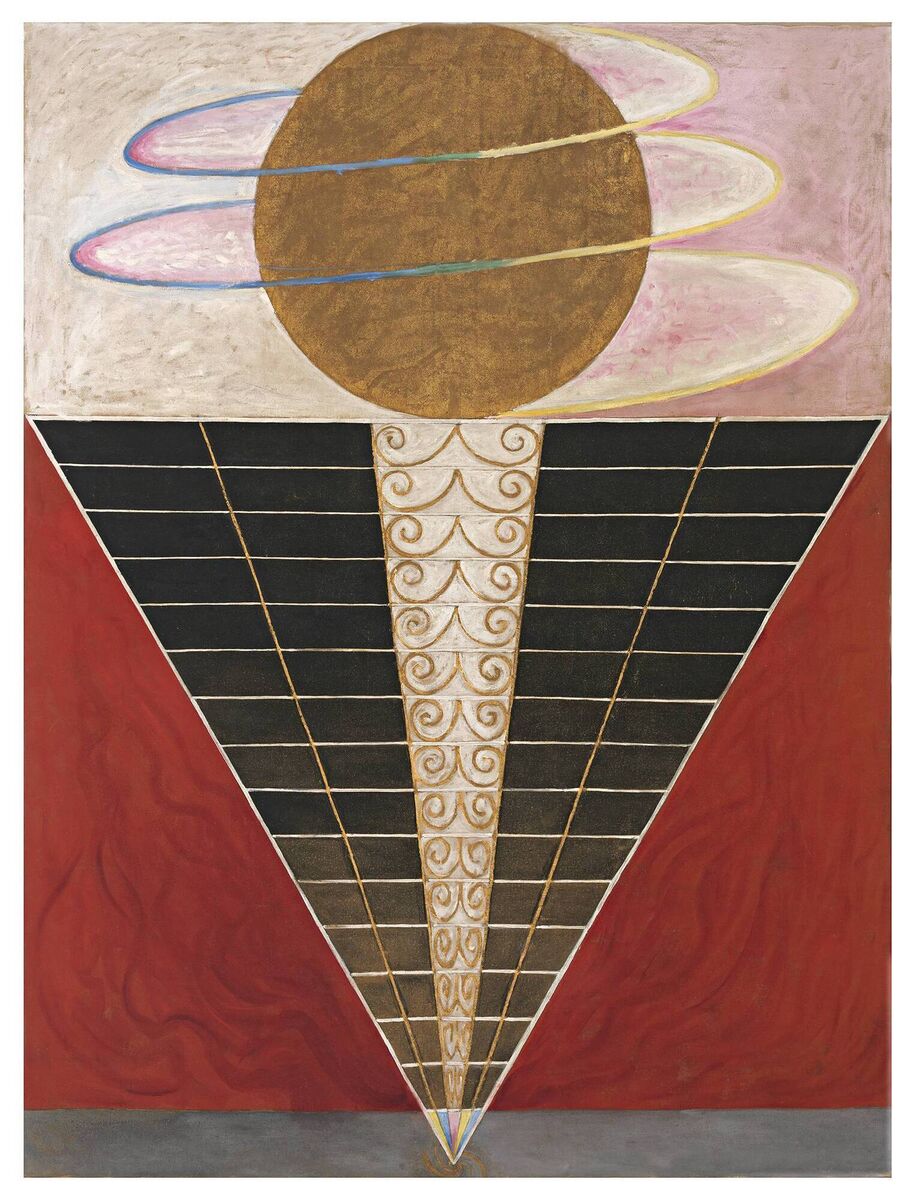
Although af Klint was well established as a painter of portraits and landscapes, there was little interest in this new series of 193 artworks, which featured spirals and geometric forms in luminous colours, and they soon went into storage.
It was only in 1986, 42 years after her death, that the art world began catching on to how innovative The Paintings for the Temple had actually been.
That year, the curator Maurice Tuchman included works from the series alongside Wassily Kandinsky, Kazimir Malevich and Piet Mondrian’s paintings in an exhibition at the Los Angeles County Museum of Art called The Spiritual in Art: Abstract Painting 1890-1985. Also featured were such giants of American abstraction as Georgia O’Keeffe, Jackson Pollock and Mark Rothko.
Thus began a process of reappraisal that culminated in a major retrospective, Hilma af Klint – A Pioneer of Abstraction, at Moderna Museet in Stockholm, Sweden in 2013. This included around 200 paintings and works on paper that had never previously been seen in public.
Since then, af Klint has been the subject of major exhibitions all over the world. The latest, Hilma af Klint: Artist and Visionary, has just opened at the National Gallery of Ireland, and features a selection of artworks on loan from the Hilma af Klint Foundation in Sweden.
Janet McLean, curator of Modern Art at the NGI, explains that the exhibition was inspired by a livestream of the winter solstice at Newgrange she watched in 2020.
“It was during covid,” she says, “and I remember thinking how moving it was that people were watching from all over the world. We are so connected to spirituality in Ireland, and I realised that there would be an audience here for an Hilma af Klint exhibition. We started having a conversation with the Foundation in Sweden the following year.”
Hilma af Klint: Artist and Visionary features 79 of the artist’s works, from her early drawings, landscapes and portraits, through her experimental paintings to the watercolours she made in her later years. “I hope people will stand in front of the paintings and get a sense of Hilma’s life,” says McLean.
Af Klint was born in Solna, Sweden in 1862. The af in her surname is an honorific, denoting noble status; her father was a naval officer, and the family were financially comfortable. In her youth, they moved to Stockholm, where she studied portraiture and landscape painting at the Technical School before going on to graduate from the Royal Academy of Fine Arts.
After college, af Klint had a studio in central Stockholm. “In Sweden,” says McLean, “young women were given financial independence. Her family did not expect her to marry; there was an openness to living an independent life. In those early years, she sold landscape paintings and did portrait commissions.”
Spiritualism was something of a fad at the time, especially in artistic circles, and af Klint is known to have begun attending seances in her teens. Her interest deepened after the death of her sister Hermina, aged 10.
She joined the Edelweiss Society, an association founded by the Irish-born Countess Huldine Beamish that combined Christian beliefs with Theosophy, a contemporary spiritual and philosophical movement with mystical leanings.
Beamish was one of the family associated with the Beamish & Crawford brewery in Cork, and had settled in Stockholm after marrying a Swede, Baron Carl Alexander Fock.
“Hilma eventually broke away from the Edelweiss Society,” says McLean, “and started a new group with some of her friends called De Fem, the Five.”
The Five, which included the artist Anna Cassel, continued to hold séances, and af Klint began experimenting with automatic drawing and writing, recording what she claimed were messages from higher beings.
Af Klint did not formally join the Theosophical Society until 1904, but within a few years, she embarked on creating The Paintings for the Temple, the monumental cycle of paintings whose creation would occupy her for the next nine years.
These vividly coloured works explore spirituality, evolution and the hidden connections between the natural world and the cosmos. They are now seen as abstract paintings that predate by several years the innovations of Kandinsky, Malevich and Mondrian, the artists usually celebrated as the pioneers of abstract art.
The Paintings for the Temple remain one of the most ambitious projects ever undertaken by a visual artist. “Her paintings feel massive,” says Mclean, “and you see something different in them each time.”
Some of af Klint’s abstract paintings were shown at the World Conference on Spiritual Science in London in 1928, but most remained in storage for many years. Legend has it that af Klint felt they would not be understood by her contemporaries, and left instructions that they were not to be shown until 20 years after her death.
“That’s kind of true,” says McLean. “She wrote a lot, and she left notebooks and sketchbooks. One of these is called the Blue Book. She drew miniature copies of her 193 paintings in it, and wrote that she didn’t want them to be seen. But that could mean she didn’t want the notebook to be seen, and not necessarily the paintings.
“But when you look at what was happening in the 1930s, when the Nazis were destroying artworks, it may also have been that she was protecting her paintings. Other artists removed their work from view as well.”
Little is known about af Klint’s personal life. “As a young woman, she was briefly engaged,” says Mclean.
“And later she had a series of intense friendships with women. She wrote letters in which she communicated her love for them. For many years, she lived with another woman, a nurse named Thomasine Andersson. They had a very close relationship, but we don’t really know the extent of it.”
Af Klint died in 1944, at the age of 81, from injuries sustained when she fell off a streetcar in Djursholm, near Stockholm.
Her nephew Erik af Klint, a Swedish naval officer, inherited her work, and began approaching museums to exhibit it.
As recently as 1970, the Moderna Museet in Stockholm refused his offer of the collection.
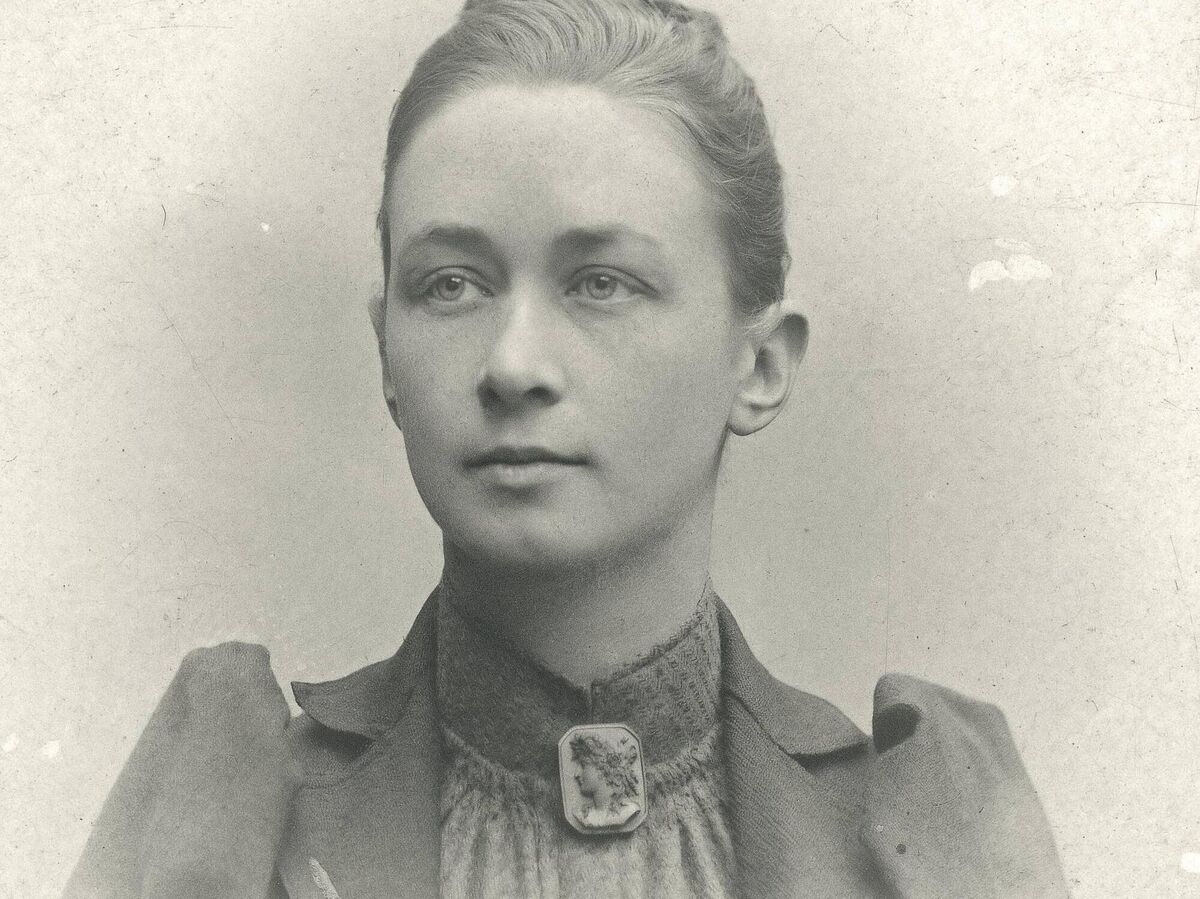
Undeterred, he established the Hilma af Klint Foundation a few years later, to continue promoting her work and achievements, which it has done with considerable success.
“There’s so much more still to investigate,” says McLean. “There are over 1,000 of her artworks, notebooks and texts in existence.”
She believes that af Klint would have enjoyed the attention her work is receiving today. “Hilma always believed the work was coming through her, and she wanted people to connect with it. It’s fascinating, really.”
- Hilma af Klint: Artist and Visionary runs at the National Gallery of Ireland until February 7, 2027. Further information: nationalgallery.ie