Culture That Made Me: Comedian Risteárd Cooper on the influences of Monty Python and Huckleberry Finn

As he tours with his new comedy show, co-founder of Après Match Risteárd Cooper reflects on cultural touchstones that have influenced his career
Risteárd Cooper. 

Risteárd Cooper. 

Risteárd Cooper, 57, grew up in Sandymount, Co Dublin. After drama school, he worked for a spell with Chicago’s renowned Steppenwolf Theatre Company.

He has performed leading roles in Dublin’s Abbey Theatre and London’s National Theatre. 

In 1998, he co-founded Après Match, the legendary comedy sketch trio. His comedy show, Out of His Head, is touring nationwide, including Cork’s City Limits, Friday, September 25. See: www.risteardcooper.com

Adventures of Huckleberry Finn

Growing up, I loved Mark Twain’s Adventures of Huckleberry Finn. It was brilliant that he went to his own funeral, faking his death to escape the clutches of his abusive father. There was something about Huckleberry Finn. 

He didn’t have a bean. His best friend was a slave. He was able to invent this life for himself, the two of them sailing down the Mississippi on a raft they made themselves — the freedom of that, the inventiveness. He was outside the norm, an anti-conformist. As a 12- or 13-year-old, that rang bells with me, because it was exactly what I wanted to do.

The hunt for Mick McCarthy

We did an Après Match gig at the Cork Opera House just after “Saipan”. I came on in a sketch as Mick McCarthy. It was incredible. There were people getting off their seats, screaming: “You bollix! Get the fuck out of Cork!”. Barry Murphy, who was doing Frank Stapleton, had to say [in Stapleton’s droll voice]: “He’s not him. He’s only pretending. He’s only pretending.”

Withnail and I

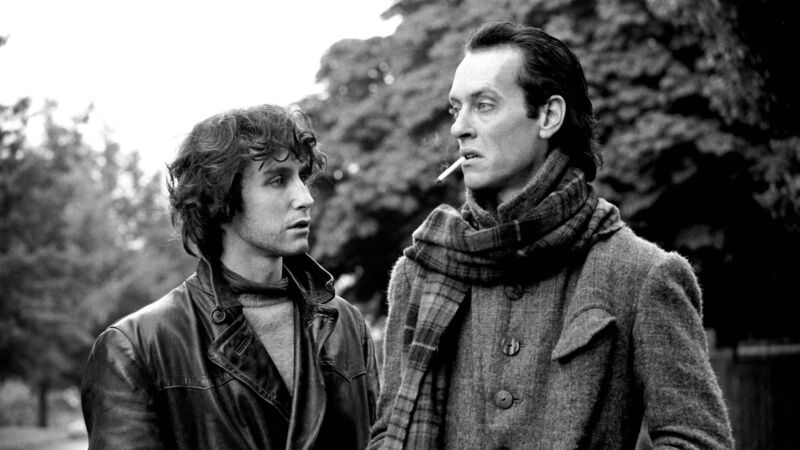
I’ve probably seen Withnail and I over 20 times. I can relate to it as an actor — the struggle, the envy, the selfishness of Richard E. Grant’s character. It’s incredibly funny. 

Paul McGann and Richard E. Grant on the set of Withnail & I. Picture: Murray Close/Sygma/Sygma via Getty

I don’t think I’ve ever seen a film that has that balance of incredible humour, pathos, and gravity. It has that in buckets. It’s beautifully shot — all those scenes when they escape to the country, you get the sense they’re escaping the misery of life in 1960s London. And how unprepared and privileged Withnail is, but at the same time, he’s completely bereft.
Playing Withnail, I still find it baffling that Richard E Grant wasn’t a drinker. It’s his best performance — and he probably wouldn’t thank me for saying it — because he jumped off a cliff. He went for it. It was a very brave thing to do for such a young actor, and an untried one.

A View from the Bridge

Probably the best production of a play I’ve seen is Arthur Miller’s A View from the Bridge with Ken Stott, a brilliant Scottish actor. Mary Elizabeth Mastrantonio was in it as well. It’s a fantastic play. It goes into fairly menacing territory.

It’s about Italian immigrants coming over to New York, near the Brooklyn Bridge. Stott’s character’s niece is living with them. He has an unhealthy, possessive relationship with her. These Italian fellas are coming around. They’re obviously interested in her. It’s about his response to that. 

With Arthur Miller, all the scenes are peppered with tension, but with humour as well. Sometimes you go to a theatre, and you can hear a pin drop. That was one of those experiences.

The Homecoming

I’ll never forget a production of Harold Pinter’s play The Homecoming in Dublin’s Gate Theatre in 2001, directed by Robin Lefevre, starring Ian Holm. It had a sensational cast. Lia Williams — a pal of mine, I didn’t know her at the time — was in it. John Kavanagh was brilliant in it. He’s a brilliant behavioural actor. There was a scene where he was peeling a banana. It wasn’t the main scene, but it was the way he did that.

There were moments in The Homecoming where they could have easily gone for laughs — there’s a lot of potential laughs in it — but the braver option is to not get the laugh. 

Despite what people say about how tough it is to get laughs in certain situations, when the tension is set up around a particular character or a dilemma, it is easy to get a laugh, to diffuse a situation with a laugh. 

I loved how Robin LeFevre and the cast didn’t allow that to happen. You were walking a tightrope for the whole experience, being left breathless by the tension and rigidity of what was going on behind the lines; the relationships between characters; the weirdness; and this overt sexuality in some ways but also repressed in other ways. Everything you’d want in a drama was there.

Billy Connolly

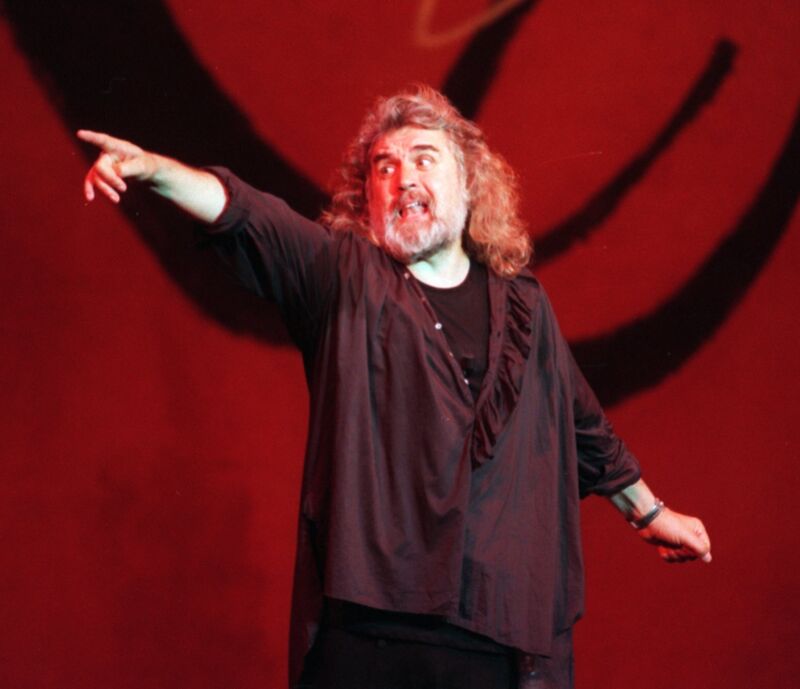
Billy Connolly in Cork Opera House in 2006. Picture: Richard Mills

Billy Connolly stands out as a stand-up comic. I saw him in Dublin’s Olympia many moons ago. I had a proper pain in my face afterwards. 

There’s a warmth to his comedy, a unifying experience with the audience: “Come on in, we’re all in this together.” 

A lot of other comedians I’ve seen, they might be funny and good in lots of ways, but they don’t have his charisma, or his desire to relate to people. You come out of a Billy Connolly gig a happier person. You see some comedians and you think: “Yeah, that was really good, but I’m actually quite miserable.”

Blood Brothers

My earliest, impactful theatre memory was a version of Blood Brothers in Dublin’s Olympia. Years later, I was in a version of it in the Cork Opera House. The first production I saw was with Brian Murray and Rebecca Storm. 

I was a teenager. Even without the music, it would be an interesting story. There’s a darkness to it: the streets of Liverpool, an impoverished woman who has loads of kids and how she copes. I love the comedy in it as well — there are brilliant comic moments between the twin boy characters who don’t know they’re related because they’ve had different upbringings. To top it all off, the music is brilliant. Tell Me It’s Not True is one of the great classics.

The Night of the Hunter

The Night of the Hunter with Robert Mitchum is a great movie. He’s a preacher, a menacing character. It’s a great, dark story about a threat to innocence. There are some movies from that period — in the ’50s — that you’re amazed they were made because they’re so dark. It’s like that film got out through the side door kind of thing. Robert Mitchum was fantastic in it.

Monty Python

Monty Python’s Flying Circus was a massive influence. I loved the rebellious nature of their sketches, the madness and attacking of social mores. They cut loose. The Meaning of Life, for example. Growing up, we were always quoting from it. “Bloody Catholics.” “What are we, dear?”  “Protestant and fiercely proud of it…I could if I wanted have sexual intercourse with you and by wearing a rubber sheath over my old fellow, I could ensure that when I came off, you would not be impregnated. Thanks to Martin Luther … I can wear whatever I want on my John Thomas. But they cannot.”

The Life of Brian

A classic line, which I’m always quoting, is in The Life of Brian. Brian is at the window. The baying crowd is beneath him. Brian says: “You’ve got to think for yourselves! You’re all individuals!” Then the crowd [in unison]: “Yes, we’re all individuals!” Brian replies: “You’re all different!” To which the crowd shouts back: “Yes, we are all different!” One fellow says: “I’m not.” It’s a brilliant reversal, an unexpected gag. I loved the irreverence of Monty Python.

More in this section

Scene & Heard

Newsletter

From music and film to books and visual art, explore the best of culture in Munster and beyond. Selected by our Arts Editor and delivered weekly.

Cookie Policy Privacy Policy Brand Safety FAQ Help Contact Us Terms and Conditions

© Examiner Echo Group Limited