Film reviews: Andy Serkis' take on Animal Farm lacks the sharp satire Orwell's tales demand
Plus, Wham's performance in China in 1985
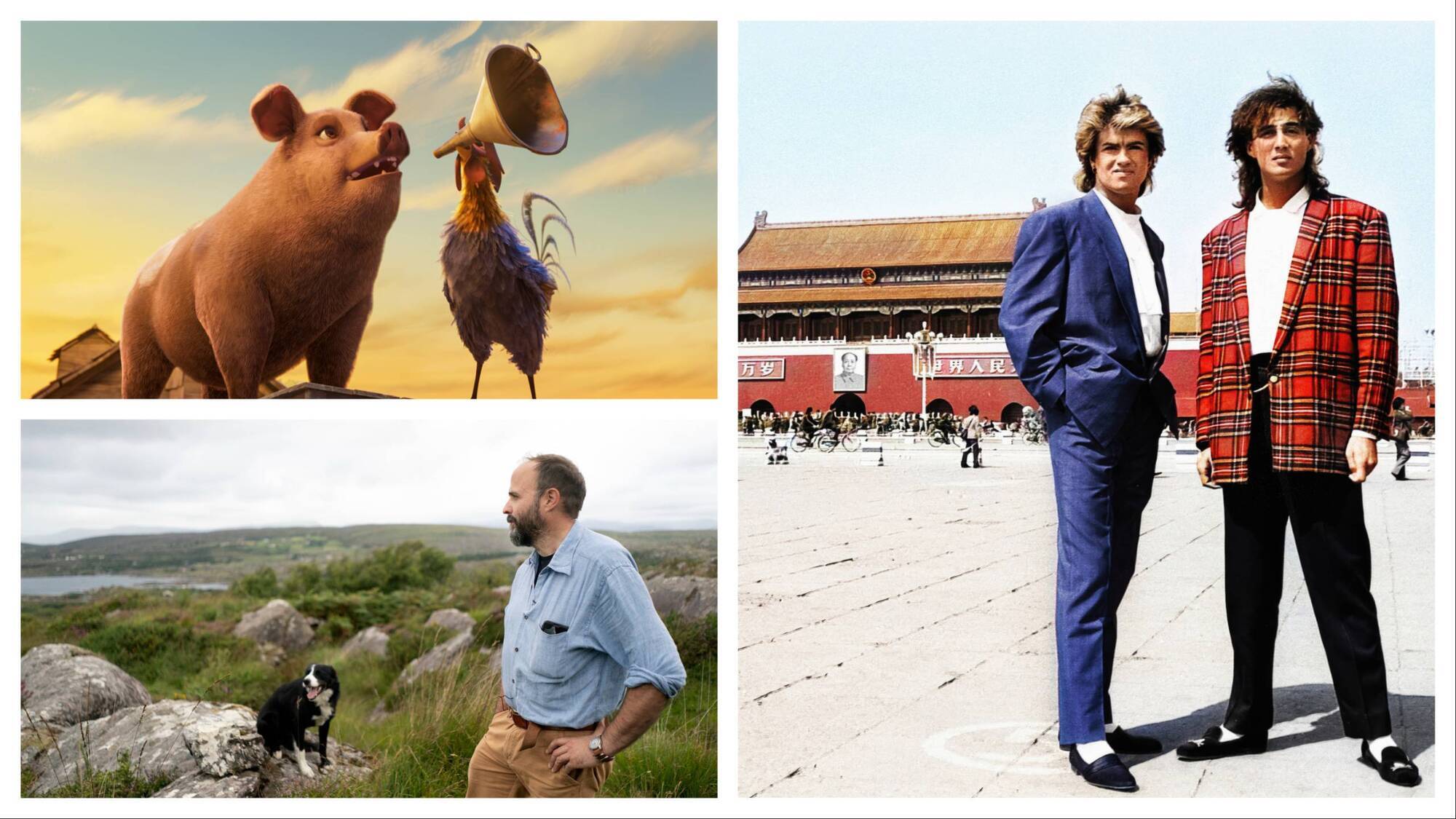
Clockwise from upper left: Snowball (Laverne Cox) and Randolph the Rooster (Andy Serkis) in Animal Farm; George Michael & Andrew Ridgley in China 1985; and Eoghan Daltun in his Beara Rainforest Rewilder.

Clockwise from upper left: Snowball (Laverne Cox) and Randolph the Rooster (Andy Serkis) in Animal Farm; George Michael & Andrew Ridgley in China 1985; and Eoghan Daltun in his Beara Rainforest Rewilder.

Animal Farm

★★☆☆☆

Andy Serkis reframes Orwell’s cautionary tale, Animal Farm (PG), updating its themes for a modern audience.

The story opens on Manor Farm, where the animals suffer under Farmer Jones’s neglect. Inspired by dreams of equality and freedom, they overthrow Jones and rename their home ‘Animal Farm’, a beacon of equality — until cracks appear, with some animals becoming more powerful than others.

Napoleon (Seth Rogen) emerges as the leader of the pigs. He shuns work, believing leadership alone entitles him to privilege. As his suggestions harden into commands, Boxer, the loyal cart-horse (Woody Harrelson), does most of the work.

Opposing him is Snowball (Laverne Cox), who believes every animal should be treated fairly. It is a losing battle. Snowball is exiled, leaving Napoleon free to tighten his grip.

With Snowball gone, a piglet, Lucky (Gaten Matarazzo) — a character created for this adaptation — steps up, determined to stand up for what is right, but finds himself powerless against Napoleon’s growing authority.

As the farm prospers, the animals encounter “magic paper ”, which they learn can be used to buy things. Napoleon whisks the animals to a shopping centre, where the pigs indulge in extravagant purchases they neither need nor understand.

Further complicating matters is billionaire businesswoman Freida Pilkington (Glenn Close), who wants to take over Animal Farm. Viewing Napoleon as a convenient path to ownership, she exploits his vanity and hunger for power.

Napoleon doesn’t need much exploiting . He readily falls under Freida’s sway. Can poor little Lucky persuade the power-hungry pigs that there is a fairer way to live?

Serkis never settles on a clear vision, and the result is a film that lacks the sharp satire Orwell’s original demands. From toilet humour to a serious lack of bite, the animation is far from appealing, and far too much screen time is given to a group of whiny sheep. The voice cast does their best, but all in all, it’s a bit of a pig’s ear.

  • Cinematic release.

An Irish Atlantic Rainforest

★★★★☆

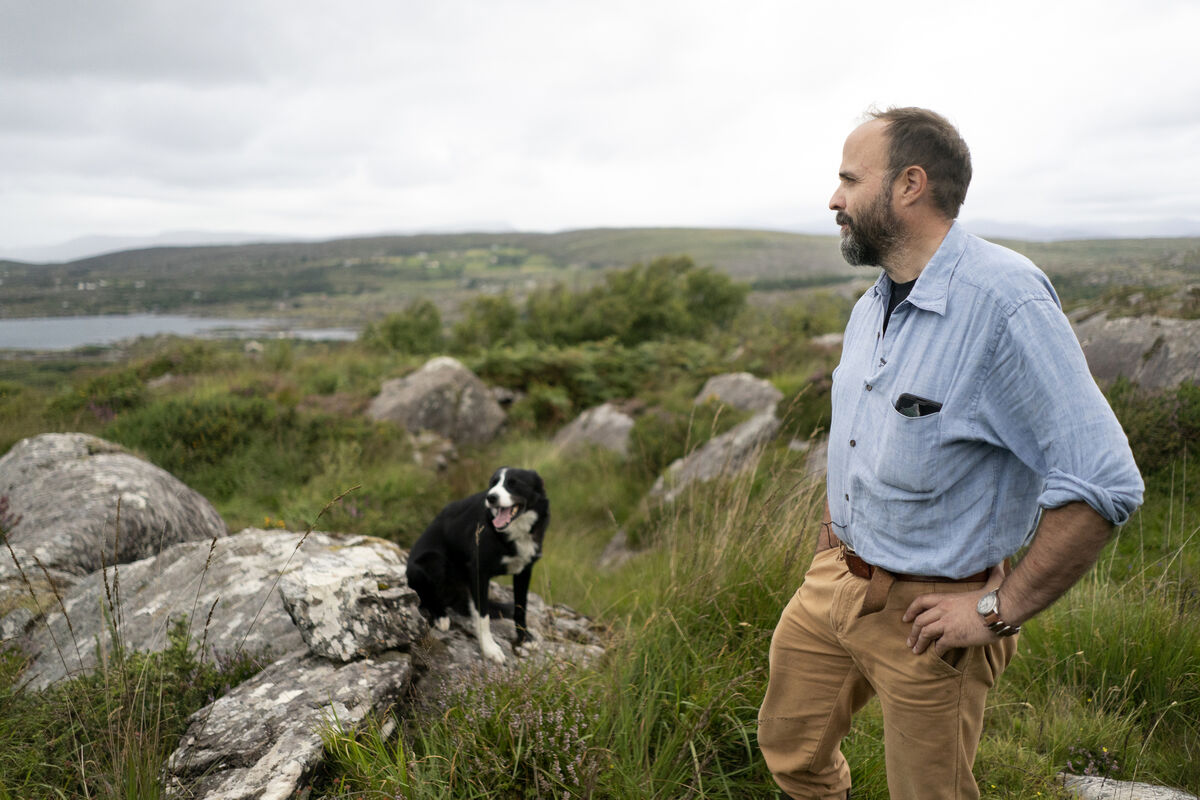
Eoghan Daltun in his Beara Rainforest Rewilder Eoghan Daltun with his dog, Charlie, on the the upper part his Beara property, near Bofickil, which is in the early stages of temperate rainforest rewilding. Picture: Chris Maddaloni/The Irish Times

Along the rugged coastline of the Beara Peninsula in West Cork, a remarkable example of native woodland restoration has emerged from Eoghan Daltun’s decades-long commitment to restoring the natural landscape.

His work has transformed a once-managed landscape into a thriving rainforest ecosystem, creating a flourishing haven for native species and biodiversity.

Over years of careful observation, patience, and commitment, Daltun nurtured the return of diverse plant life, woodland habitats, and the natural processes that support a wide variety of wildlife.

Based on Daltun’s 2022 autobiography, Gary Lennon’s new documentary, An Irish Atlantic Rainforest (NA), is co-written with Daltun.

Daltun bought the 73 acres of former farmland in 2009 with his then wife and young family. He is a renowned environmentalist with a deep understanding of creatures both large and small, and of how nature works. He knew that, under the right conditions, his land — supported by Beara’s climate — could return to a lush landscape teeming with plants and animals.

The story of ecological restoration is presented alongside Daltun’s personal history, linking the recovery of damaged environments with the healing of human experience.

Growing up poor in a treeless area, he felt disconnected from nature. The film links the revival of ecosystems with the emotional and social value of restoring people’s bond with the land.

Like any great nature documentary, Lennon captures the richness and wild beauty of this renewed ecosystem, from the smallest snail to the pine marten.

We witness how fallen trees continue to provide habitats for countless insects and other organisms; how bioluminescent mushrooms illuminate the forest floor in the darkness of night; and how pine martens have returned to make their homes in a place once considered lifeless.

Daltun’s early life in Dublin and time as a stonemason in Italy shaped his respect for the natural world. He later restored Cork’s Echo Boy statue as a stone conservator.

The documentary explores why he eventually settled in Cork, purchased the land, and chose to step away from traditional forms of ownership, allowing the landscape to recover and regenerate on its own terms.

We learn of his financial and family challenges, his experience raising sons in Beara, and his growing bond with the forest. We also come to understand how Ireland, often presented as a country of endless green landscapes, has, in reality, become barren in many areas due to deforestation, land-use changes, and the loss of its native ecosystems.

Lennon’s wise choice to give us a story of hope amid the messaging of threat ensures the audience sees why nature needs to be supported and reminds us that everyone can play their part, even if it is with a small start. Beautifully shot, this documentary manages to be both personal and expansive. Vital stuff.

  • Cinematic release

Wham! 10 Days in China

★★★★☆

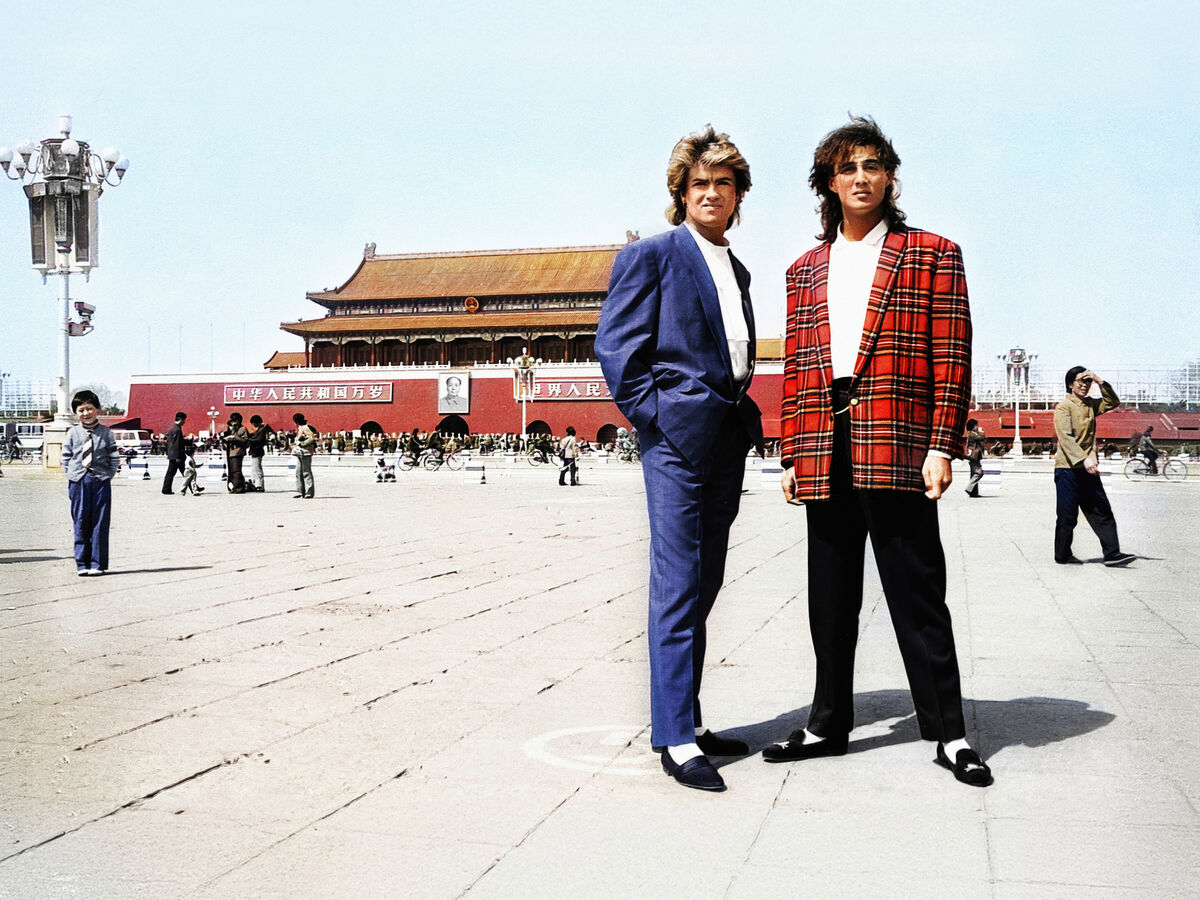
George & Andrew in China 1985

In 1985, WHAM! made history as the first major Western pop act to perform live in communist China. George Michael and Andrew Ridgeley’s landmark shows in Beijing and Guangzhou became a bold bid for global attention while also opening a new chapter in cultural exchange.

Featuring rare archival material, restored footage and newly uncovered recordings, WHAM! 10 Days in China examines how this extraordinary event mattered to the artists, their collaborators, and the Chinese fans who witnessed a cultural encounter unlike anything that had come before.

By 1985, Wham! were determined to break America, but George Michael’s throat problems made extensive touring impossible. Manager Simon Napier-Bell devised an audacious plan: Stage concerts in China, then largely closed to Western pop, to generate worldwide publicity. Featuring interviews with the band’s collaborators and Chinese contributors, the documentary charts the historic visit, cultural contrasts, and the group’s unexpected role as unofficial ambassadors.

The documentary offers a compelling glimpse into a nation amid transformation while delving into George Michael’s complicated relationship with fame and privacy. The inclusion of newly uncovered footage provides fresh insight for long-time fans.

  • Cinematic release, from July 28

x

More in this section

Scene & Heard

Newsletter

From music and film to books and visual art, explore the best of culture in Munster and beyond. Selected by our Arts Editor and delivered weekly.

Cookie Policy Privacy Policy Brand Safety FAQ Help Contact Us Terms and Conditions

© Examiner Echo Group Limited