'I am just relieved for now': Iranian author on the war and her book at the Cork World Book Fest
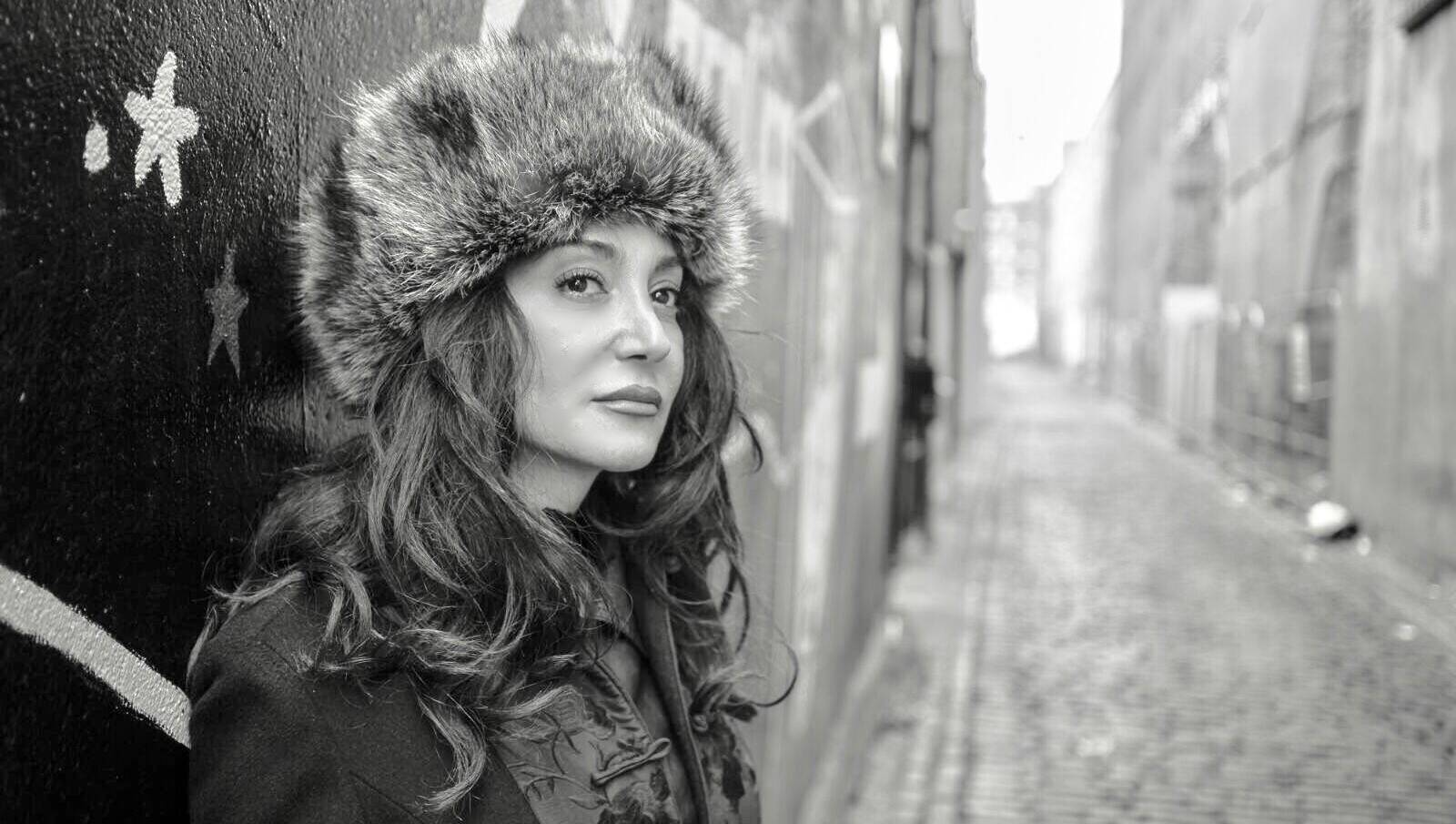
Ahead of a visit to Cork, author Roxana Manouchehri talks about the comfort of food inspiring her book, and shares her fears for her parents in Iran, writes Colette Sheridan
'I am just relieved for now': Iranian author on the war and her book at the Cork World Book Fest

Roxana Manouchehri will be reading at Cork World Book Festival.

Iranian artist and author Roxana Manouchehri will be interviewed at the Cork World Book Fest about her evocative book, This is Not a Cookbook. 

Based in Dublin, this is an anxious time for the graduate in painting. Manouchehri’s elderly parents live in Tehran, and during the first week of the war in Iran, a hospital beside their house was bombed. 

While her 92-year-old father and 82-year-old mother try to present a brave front, not wanting to worry their children (their other two daughters live in the US), Manouchehri knows they are scared and lonely.

Because their internet connection isn’t working in the Iranian capital, they have an expensive app which they can only use for calls to America. Manouchehri’s parents call their stateside daughters, and they pass on any news to her.

Following US president Donald Trump’s recent suspension of attacks on Iran for two weeks after his climb down from the threat to annihilate the country, Manouchehri says: “I am just relieved for now. The internet is still off and I miss talking to my parents the most. 

"I don’t trust Israel, especially. Let’s hope they don’t break the rules, and keep their hands off Iran. I was against this war from the beginning.” 

Born in 1976, three years before the Iranian Revolution and four years before the Iran-Iraq war, Manouchehri left Iran in 2007, having been awarded an Asian Artists’ Fellowship programme in the National Art Studio, Chang-dong, in Seoul, South Korea.

She exhibited her work in Seoul and married an Irish man there, from whom she is now divorced.

Now working in the Chester Beatty Library, hosting workshops as well as working in the Hugh Lane Gallery and in community centres, Manouchehri says that when war ended in Iran during her teenage years, society was very conservative.

“There was hair-covering and no partying. It was very strict,” she recalls.  

But regarding women’s position in Iran, Manouchehri says it all depended on what kind of family you came from.

Roxana Manouchehri: 'I was going to return to Iran... but I married an Irish guy in Seoul and stayed there for over three years, and then came to Dublin'

“I was very lucky to grow up in a very open-minded family. They made everything available to us, like piano classes and swimming lessons. We went to really good schools and we all went to university. 

"I started to teach art and when I was doing my masters, I taught art in a university. My older sister is a piano teacher and my younger sister is a biomedical engineer. I honestly didn’t want to leave Iran at all, but for winning the competition in Seoul. 

"I was going to return to Iran because I had a studio there, a car and a little apartment. But I married an Irish guy in Seoul and stayed there for over three years, and then came to Dublin.”

Manouchehri says she experienced a huge culture shock in South Korea, which contributed to illness. 

“For example, sexism and racism there is much worse than in Iran. Korean men talk about who is young and who is older, whether someone is slim and pretty. I was really mentally ill in Korea. I became anorexic and had a very tough time. 

"When I came to Ireland, it was a relief. I did yoga and meditation and it really helped me. I was away from that toxic society and started to feel better.” 

The comfort of food from her childhood and later experiences of international cuisine inspired Manouchehri’s book which includes some recipes as well as short personal stories about growing up in Tehran. 

She learned how to make kimchi and her then husband started to cook traditional Irish dishes such as bacon and cabbage and Irish stew. Manouchehri says that there is a dish similar to Irish stew in Iran. 

When she was exhibiting in Finland, she made a big pot of soup for the opening. “It’s a big trend now with some galleries serving food and calling it ‘food art.’” 

About six or seven years ago, Manouchehri started writing. At a residency at IMMA (Irish Museum of Modern Art), one of the curators there saw her illustrations, read one of her stories and introduced her to Skein Press which published her book.

“Skein Press decided to only select the parts of my writing that go back to my childhood in Iran and the war there as well as stories of my parents and grandparents, the recipes they shared and incidents in their lives.” 

Displacement is a theme in the era following the Iranian Revolution. Manouchehri says it’s too dangerous to go back to Iran. But through her art and her writing, she remembers what it used to be like.

  • Roxana Manouchehri will be in conversation with Grace Neville on April 24 at the Paperboys Café, Triskel, at 3pm. See: corkworldbookfest.com
x

BOOKS & MORE

Check out our Books Hub where you will find the latest news, reviews, features, opinions and analysis on all things books from the Irish Examiner's team of specialist writers, columnists and contributors.
More in this section

Scene & Heard

Newsletter

Music, film art, culture, books and more from Munster and beyond.......curated weekly by the Irish Examiner Arts Editor.

Cookie Policy Privacy Policy Brand Safety FAQ Help Contact Us Terms and Conditions

© Examiner Echo Group Limited