Stuart Adamson: The life and death of Big Country's great frontman
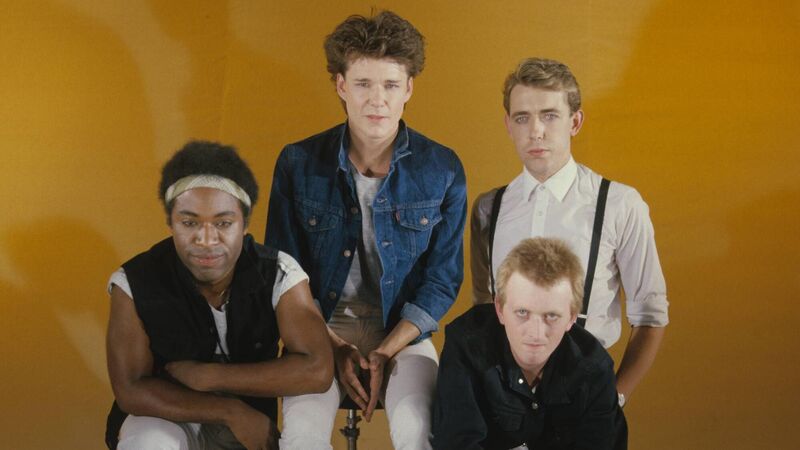
The late Stuart Adamson, second from left, and the other members of Big Country in the 1980s. Picture: Kerstin Rodgers/Redferns
The death in December 2001 of Big Country frontman Stuart Adamson was a tragedy for those who knew him personally and for the many more who had encountered him through his epic and emotive arena rock.
But for music journalist, author and magazine editor Scott Rowley, there was also a haunting sense of what might have been: some months previously, he had reached out to Adamson only for the call to go unanswered.
“I kind of got the feeling that people had forgotten Stuart. He was such a massive hero to me as a kid. And I thought, well, if I can get an interview, maybe I can offer him a chance to write for a mag. So that was my plan. His manager gave me his phone number in Nashville. I called and he never answered. I tried again a few days later, and he never answered then. He went missing not long afterwards.”
Adamson had disappeared before, but this time something felt off. Ravaged by years of alcoholism and having hit rock bottom in his career, he took his own life in a hotel room in Hawaii — a great artist lost at the age of 43 and leaving behind a wife and two children.
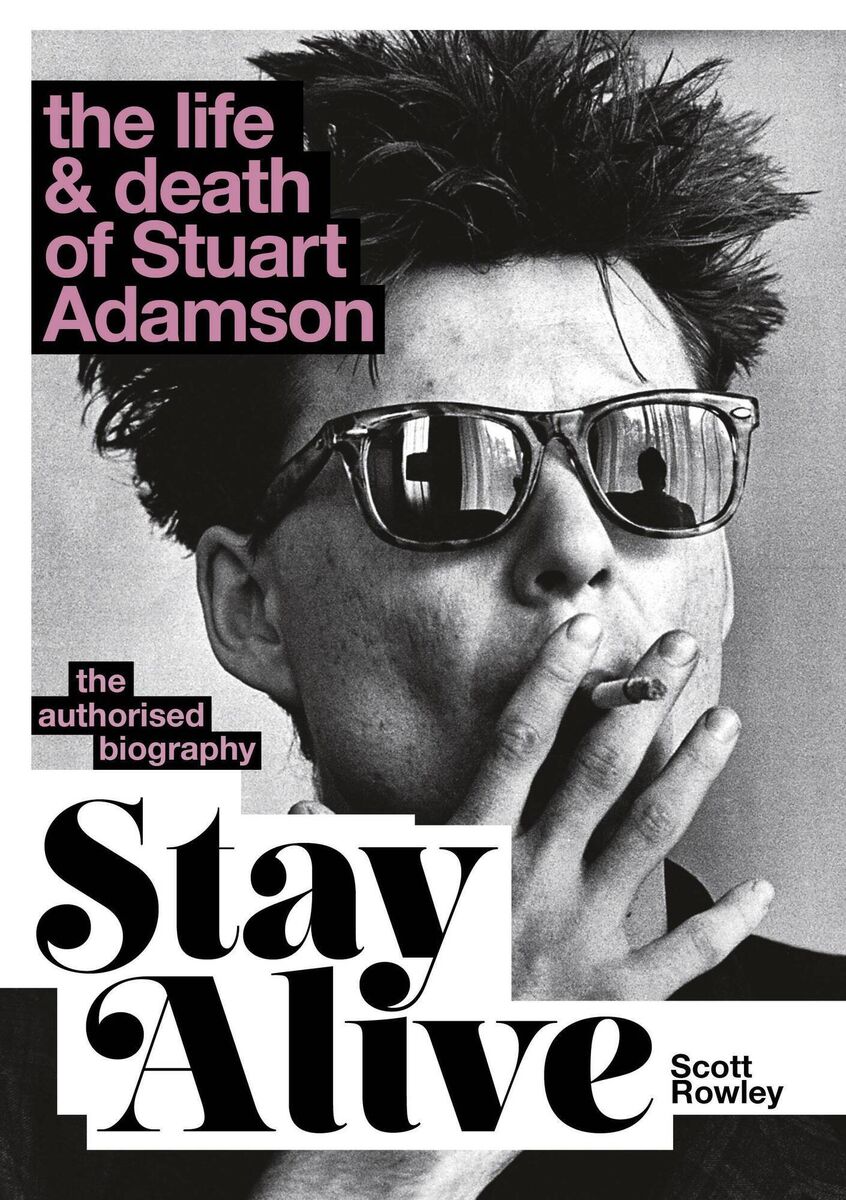
Now, as the 25th anniversary of his passing approaches, Rowley, who has worked at magazines such as and has movingly chronicled the rise and unravelling of a beloved but often understood and underrated artist in his book written with the co-operation of the musician's family and former bandmates.
The journey was an emotional one for Rowley — and for the many figures from Adamson’s life whom he interviewed for his raw and gripping portrait of a musician who soared to incredible highs but ended up hollowed out, and in his mind, cast aside by the music business.
“There were times I came downstairs after a day of doing Zoom calls and I’d say to my wife, ‘I’ve just made another two people cry’. I was taking people back through some terrible times — some of the worst in their lives.”
Big Country became famous for strident, stirring anthems such as the 1983 mega‑hit Infused with a quintessentially Celtic passion and grandeur, their music marked them as peers of Simple Minds and especially U2, whose paths they crossed over and over.
Indeed, there is a sense throughout the book that U2 were a sort of mirror image of Adamson’s band — the global megastars Big Country could have become had the sliding doors of life worked out in their favour.
There were also significant differences. In particular, the Dubliners possessed a drive absent from the retiring and thoughtful Adamson. If he’d possessed just a jot of Bono’s ambition or his ease in the spotlight, you can imagine his story having a very different ending. But while he had talent and charisma in abundance, he despised the trappings of success.
There were demons, too — though the degree to which he might have been carrying around unresolved childhood trauma only became clear much later. Three years after Stuart’s death, his father, William Adamson, was convicted of sexually abusing a number of children.
Rowley is careful to note there is no evidence of Adamson ever speaking about childhood abuse to either of his two wives or his bandmates. However, we know now his father was abusing children when Adamson was growing up in their mining village home outside Dunfermline in the east of Scotland.
Whether he was also targeted is impossible to know — but all the evidence suggests his childhood left him with deep emotional scars. “He carried that with him for the rest of his life,” writes Rowley.
In terms of the relationship with U2, the grand irony is that, starting out, Adamson was the famous one, Bono and the Edge the starstruck fans. Before Big Country, Adamson had played guitar in the Scottish punk band The Skids — of whom a young U2 were huge admirers. They would later show their appreciation when covering, along with Green Day, The Skids’ 1978 single
“They were absolute peers. And also, The Skids were famous before U2. The Edge and Bono were fans and came over to see them in, I think, Liverpool. The Edge has spoken openly about Stuart being such a great guitar player and all that sort of stuff.
"First of all, Stuart was an influence on U2. And then they were peers who came up at the same time, obviously, like Simple Minds, The Alarm, U2, Big Country — all kind of broke similarly. It felt like a new breed of rock star. Not the clichéd sex, drugs, and rock and roll, hairy chest. Not like [1970s heavy rockers] Free. Still rock, but different — beyond the clichés and beyond the riffs and the solos and all that stuff.”
Adamson was defined by his contradictions. He was a gifted guitarist and had an aura — on stage, he looked far closer to an archetypal rock god than try‑too‑hard likes of Jim Kerr or Bono. But he was shy in private, a homebody who hated his years in London with The Skids and couldn’t wait to retreat to Dunfermline, which is where he formed Big Country in 1981. Though the book doesn’t make a meal of it, there are parallels with Kurt Cobain, another charismatic rock star who struggled in the spotlight.

“The similarities would be a kind of anti‑stardom punk attitude. That is where Stuart came from. He kind of thought rock stars were dickheads, and was very anti‑rock star,” says Rowley. “And so, therefore, anti‑rock star behaviour. All that sort of sat uneasily with him. And so, then, going back to Dunfermline and being set apart from the people he grew up with — being the star, the big man.
"It’s a kind of working‑class problem, isn’t it? If you go away and you become successful, then you come back, people are like, Who do you think you are? But also, not wanting to stand out. Only wanting to be ordinary again.”
Much like U2 in Ireland, Big Country to this day divide opinion in Scotland. Some see their music as an expression of a uniquely Scottish artistic identity — loud and proud and with signature guitar style by Adamson that has been compared to the haunting howl of the bag-pipes.
To others, they will forever be naff stadium rockers, whose moment had passed almost as soon as it had arrived. As with U2, they certainly had their toe‑curling moments — in particular an ill‑judged venture into bombastic and over-produced stadium rock with their 1985 LP,
“It breaks down into two groups. There are the people who love them. There are still loads of those people. They’re still held fondly. But then there’s probably — and I fell into this — the cool fashionista thing where people think they’re a bit naff. I, as a fan, went through it. I was a young teenager when came out. Music fashion had moved on. I was probably listening to The Jesus and Mary Chain and Scottish indie bands — The Shop Assistants, early Soup Dragons. That is where the cool scene was. Big Country seemed like these cheesy pop stars. There were a lot of people who felt the same way. Everybody prefers it when their cult heroes stay penniless and unknown.”
He still has complicated views about Big Country, loving their early work and understanding later attempts to break America were of their time. But he sees Adamson as a singular figure. Here was an ordinary guy from the humblest of backgrounds with extraordinary talent who deserves to be remembered as more than just another tragic rock story.
“He’s never really been truly celebrated. Twenty‑five years on, it’s time to look back at this guy — a pioneer, a great songwriter, and an amazing performer. To try and understand what drove him to do what he did. That was always the missing part for me. It seemed to me a very Scottish story and a very working‑class story. There was a wrong to be righted, a little bit. Tell the story and explain who he was. And give him credit for the things he achieved. It feels like 25 years on, we can celebrate him now; we don’t have to mourn him.”
- by Scott Rowley is published on March 26