BBC apologises for not editing racial slur out of Bafta Film Awards broadcast
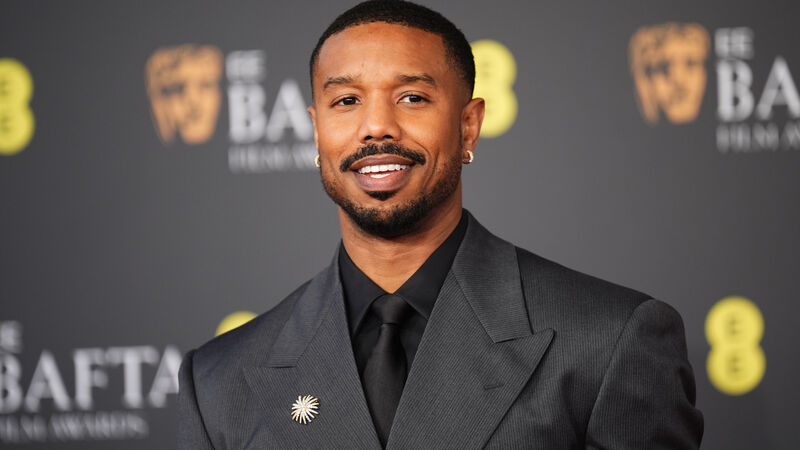
Michael B. Jordan attending the 79th British Academy Film Awards, at the Royal Festival Hall, Southbank Centre, London.
The BBC has apologised for not editing a racial slur out of its coverage of Sunday’s Bafta Film Awards ceremony prior to broadcast.
It comes after the corporation apologised for “any offence caused” after a racial slur shouted by Tourette campaigner John Davidson during the ceremony was broadcast.
The slur was shouted as actors Delroy Lindo and Michael B Jordan presented the award for special visual effects at London’s Royal Festival Hall on Sunday.
A BBC spokesperson said: “Some viewers may have heard strong and offensive language during the Bafta Film Awards.
“This arose from involuntary verbal tics associated with Tourette syndrome, and as explained during the ceremony it was not intentional.
“We apologise that this was not edited out prior to broadcast and it will now be removed from the version on BBC iPlayer.” Following the incident, the Bafta Film Awards was removed from the BBC’s iPlayer streaming service.
It comes after Tourette syndrome charity Tourettes Action said it “deeply understands” the harm of the racial slur, but called for understanding of the condition.
The charity said it was “incredibly proud” of Mr Davidson and those involved in the film , which tells the story of his life, having developed the condition when he was 12.
A spokesperson for the charity said: “We also want to address the negative comments that have surfaced following John’s involuntary vocal tics during the ceremony.
“We deeply understand that these words can cause hurt but, at the same time, it is vital that the public understands a fundamental truth about Tourette syndrome, tics are involuntary. They are not a reflection of a person’s beliefs, intentions or character.
“People with Tourette’s can say words or phrases they do not mean, do not endorse and feel great distress about afterwards.
“These symptoms are neurological, not intentional, and they are something John – like many others with Tourette’s – lives with every single day.” It went on to say that it had found the “backlash” to the incident “deeply saddening” and added that Mr Davidson had made a decision to leave the ceremony early.
Tourette Scotland, which has worked with Mr Davidson, said there was “no meaning” behind his outburst and that the Tourette’s community is “kind and very empathetic, and would never like to upset anyone with their tics”.
A spokesperson for the charity said: “It is important that the Baftas and the recognition for the Tourette’s community and the way that Robert Aramayo and John Davidson have helped to change perceptions about those living with Tourette’s stays at the forefront of everything.
“However, the backlash around the coprolalia (the type of Tourettes which sees offensive words shouted) has once again shown that more work needs to be done to educate society on Tourette’s Syndrome and for those living with it.” During the broadcast, the awards ceremony’s presenter Alan Cumming issued an apology for the language viewers may have heard.
He said: “You may have heard some strong and offensive language tonight. If you have seen the film I Swear, you will know that film is about the experience of a person with Tourette syndrome.
“Tourette syndrome is a disability and the tics you have heard tonight are involuntary, which means the person who has Tourette syndrome has no control over their language. We apologise if you were offended.” Mr Davidson was made an MBE in 2019 for his efforts to increase understanding of Tourette syndrome and help families deal with the condition.
Speaking on Times Radio, Ed Palmer, vice chairman of Tourettes Action, said the BBC should have considered bleeping out the slur.
He said: “This is really one of the most acute examples of where something that is a disability can cause quite understandably huge amounts of offence to someone.
“So, if it’s being pre-recorded now, then bleeping it out, for example, might be a reasonable compromise.
“But I think it has to be taken on a case-by-case kind of decision and scenario.
“But I’m very, very mindful of the people that would have quite understandably been hugely offended by whatever word was said, or an offensive word that’s used by somebody with tics and Tourette’s.” Robert Aramayo won best actor for his performance in I Swear, which also won best casting. He was also named EE Rising Star.
The ceremony saw Sinners director Ryan Coogler become the first black winner of the Bafta for best original screenplay for the film, which also won best supporting actress for Wunmi Mosaku and original score.
According to the NHS, Tourette syndrome is a condition that causes people to make sudden, repetitive sounds or movements, which in rare incidences can result in offensive language being used, that cannot be controlled.
It says there is no cure but treatment can help to manage the tics.
Mr Davidson, Bafta, Tourette Scotland, Lindo and Jordan have been contacted for comment.