Wuthering Heights: The enduring appeal of Emily Bronte's novel, and why Heathcliff may have been Irish
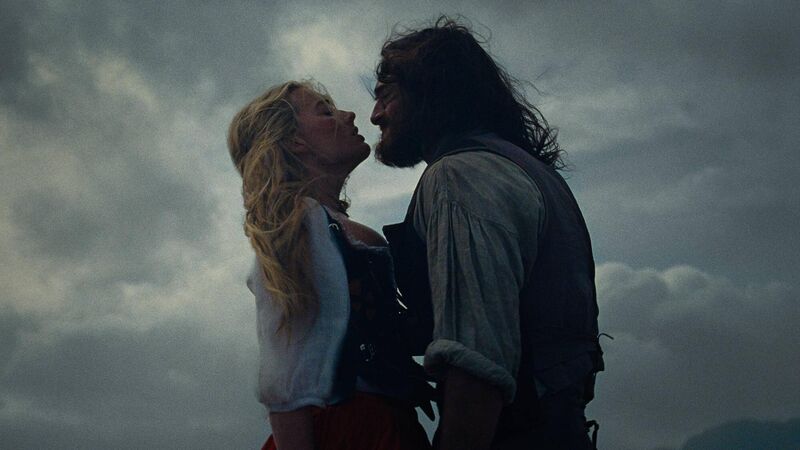
A scene from the new Wuthering Heights film.
When Emily Brontë’s was published in 1847, the reception was less than enthusiastic, with critics decrying it as depraved and immoral. God knows what the poor Victorians would make of the latest screen adaptation of the novel.
Directed by Emerald Fennell, the trailer, featuring suggestive sex scenes, anachronistic costuming and music by the louche Brat queen Charli XCX, generated endless online discourse and TikTok memes.
The casting also raised eyebrows, with a 35-year-old Margot Robbie clad in red PVC playing Catherine Earnshaw, a character who dies in her teens. Jacob Elordi as Heathcliff appears to channel romantic hero rather than vengeful sadist, although he very much nails the dark and brooding requirement.
Fennell, creator of the sensationally successful if nonsensical , excels at viral marketing and knows exactly how to play a Gen Z audience, many of whom are delighting in the prospect of her twisted take on the book. She has also given herself something of a ‘get out of jail free’ card by putting the film title in quotation marks, saying: “You can't adapt a book as dense and complicated and difficult as this…I can't say I'm making , it's not possible. What I can say is I'm making a version of it.”
Regardless of the hype surrounding the adaptation, the fact is still part of the cultural conversation almost 180 years after it was published is astonishing in itself. Brontë’s story of the obsessive and thwarted love of Heathcliff and Catherine which plays out across generations against the dark and dramatic landscape of the Yorkshire Moors was groundbreaking for its time.
There have been many screen versions but as Fennell alluded to, the book’s non-linear structure, featuring numerous unreliable narrators and an often confusing cast of characters, make it a tricky task in terms of adaptation.
While the film is being sold as for a new generation, and is released just ahead of Valentine’s Day, Dr Mary O’Connell, a lecturer in English literature at UCC, says the book is much more than a love story.
“I watched the trailer and I thought, 'did Emily Bronte die for this?’,” she laughs. “Although I accept the fact that Emerald Fennell is qualifying it by putting the title in quotation marks, describing it as the greatest love story ever told has rather spectacularly missed the point. It’s a Gothic novel, a book about trauma, abuse, torture and revenge. It’s a wonderful, powerful, violent and energetic book; I love the nature in and how elemental it is.”
It was also a groundbreaking and inventive work for its time in terms of its language and themes, which challenged many readers. “The writing in it is incredible, Brontë is pushing the boundaries of what we can do with language,” says O’Connell. “It is not the easiest of reads. When it came out, people were profoundly disturbed by it. There's one contemporary review that says something like ‘Read , burn ’, which says a lot about the power of the book.”
Robert Logan, a member of Brontë Ireland, the Irish offshoot of the Brontë Society, acknowledges the book is a daunting prospect to anyone adapting it.
“There isn’t a dull page in the whole book. The writing is incredibly vivid and alive. I really admire anybody who tries to put it on the screen, because I cannot imagine how you portray all of that passion and grit.”
The Brontës’ Irish roots — the sisters’ father Patrick was an Anglican clergyman from Co Down — have often been cited as an inspiration for . Heathcliff is found as a child by Mr Earnshaw on the streets of Liverpool, and is described as dark in colouring. While his ethnicity is never made explicit, some scholars have argued he is an Irish immigrant escaping the Famine. Whatever about this theory, Logan says his belief the Irish connection influenced Emily’s writing has grown stronger.
“There was a time when it was dismissed as fanciful but the more I’ve read and thought about it, I believe there is something in how much of Patrick’s Irish background the sisters absorbed; he was very involved in their day-to-day life and their education.”

There is also conjecture the character of Heathcliff was of Romany or African descent, which has led to accusations the casting of a white male actor rather than a person of colour is inappropriate.
“We don't know exactly where he's from, but that’s the point; we know what he's not rather than what he is and he's othered because of his class and how he looks,” says O’Connell. “I think we’re meant to believe that Heathcliff's rage is at least in part motivated by his experience of racism and then to cast Jacob Elordi, people have had their say on that and it is problematic.”
Logan says he has never seen an adaptation of that got close to the book. “It would be lovely if [this version] could just grasp what Heathcliff is about. That is something that everybody has failed to do so far.”
He will be among the many cinema-goers curious to see what the fuss is about and hopes it brings more people to the book and the work of the other Brontë sisters.
“The Brontë purists absolutely hate anybody tinkering with it and see it as some sort of mortal sin. I am looking forward to it, I think it will bring a new audience. If they can get the gist of it across, that will hopefully encourage people to go back to the original text.”
O’Connell also welcomes anything that encourages more people to read the Brontë sisters, while the impact of a screen adaptation has a personal resonance. “I will watch it with an open mind. For all the people that go and see it, there will be many who will be curious about the book. I'm here now teaching 19th-century literature because at the age of 14 I saw Colin Firth as Mr Darcy [in the 1995 television adaptation of ], and that was me gone. So you never know.”
- opens in Irish cinemas on Friday, February 13
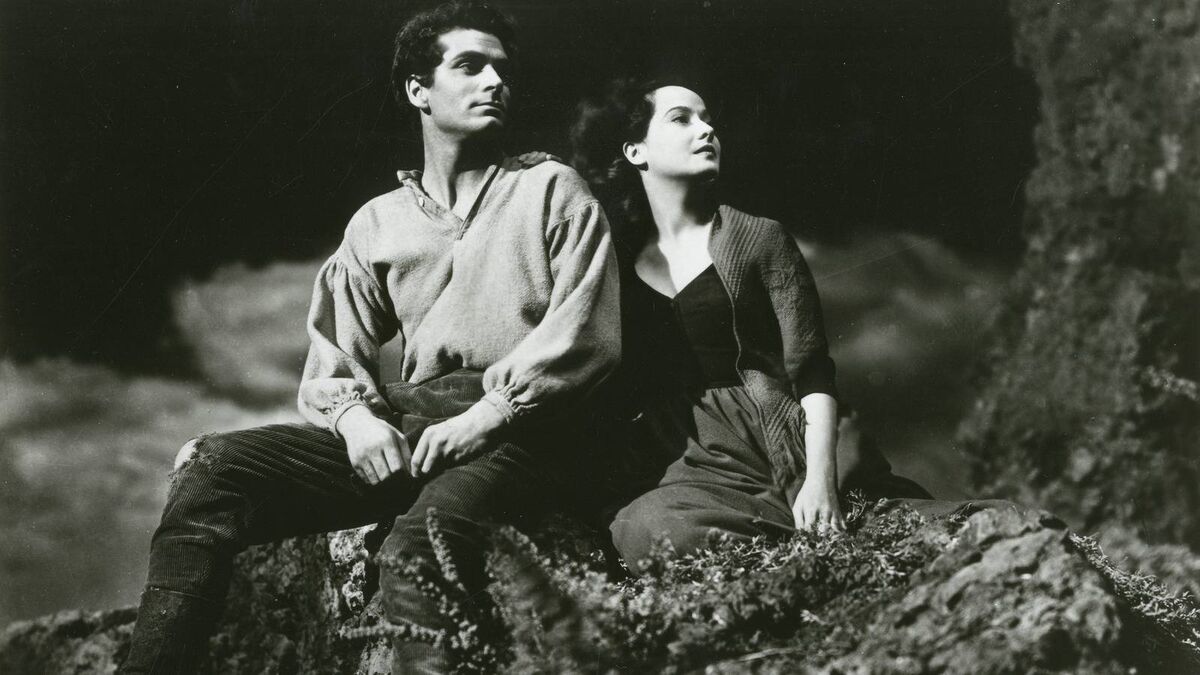
Beautifully filmed by William Wyler, this classic black-and-white version still holds a special place in the hearts of generations who saw it when television was still a thing. The greatest luvvie of them all, Laurence Olivier, is wonderful as Heathcliff, with Merle Oberon as Cathy.
Iconic is an overused word but this remarkable song and performance is the first thing that comes to mind for many when they hear the words .
As Robert Logan of Brontë Ireland says: “Kate Bush probably did more for the Brontës than anything else in terms of reawakening consideration of them.” Special mention to Alan Partridge’s memorable rendition as he exits the lift in the Linton Travel Tavern.
Ralph Fiennes is one of the best actors of his generation but this wasn’t his finest moment. He and French actress Juliette Binoche as Cathy were something of a mismatch in this off-kilter version from Peter Kosminsky, better known as a documentary filmmaker. Also, curiously, featured Sinead O’Connor as Emily Brontë.
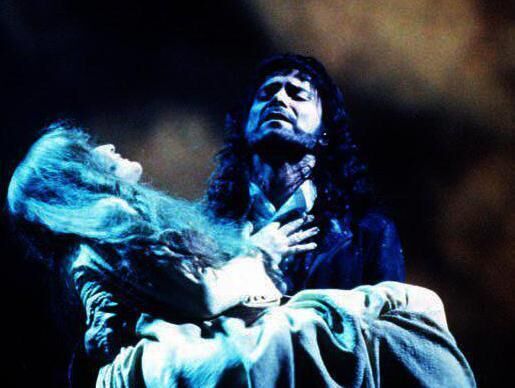
While debate is already raging about Jacob Elordi as Heathcliff in the new film, a 56-year-old Cliff Richard also stirred plenty chatter when he took on the role in his self-produced musical stage show in 1996. The pop star attempted to flesh out the character of the book’s male lead for a production that toured to some large venues around Britain. A box-office success, some critics were less kind, with one dubbing it as “living dull”.
Andrea Arnold’s version is probably the most successful in attempting to capture the raw and elemental nature of the novel. A perfect showcase for the talents of Irish cinematographer Robbie Ryan.