Book review: The Famine years in West Kerry
Bryan MacMahon’s descriptions of events between 1845 and 1849 leave no doubt that the Famine was as bad as any famine witnessed in the television era
Book review: The Famine years in West Kerry

Bryan MacMahon has written intensively on the Famine. This is his third book covering that period.

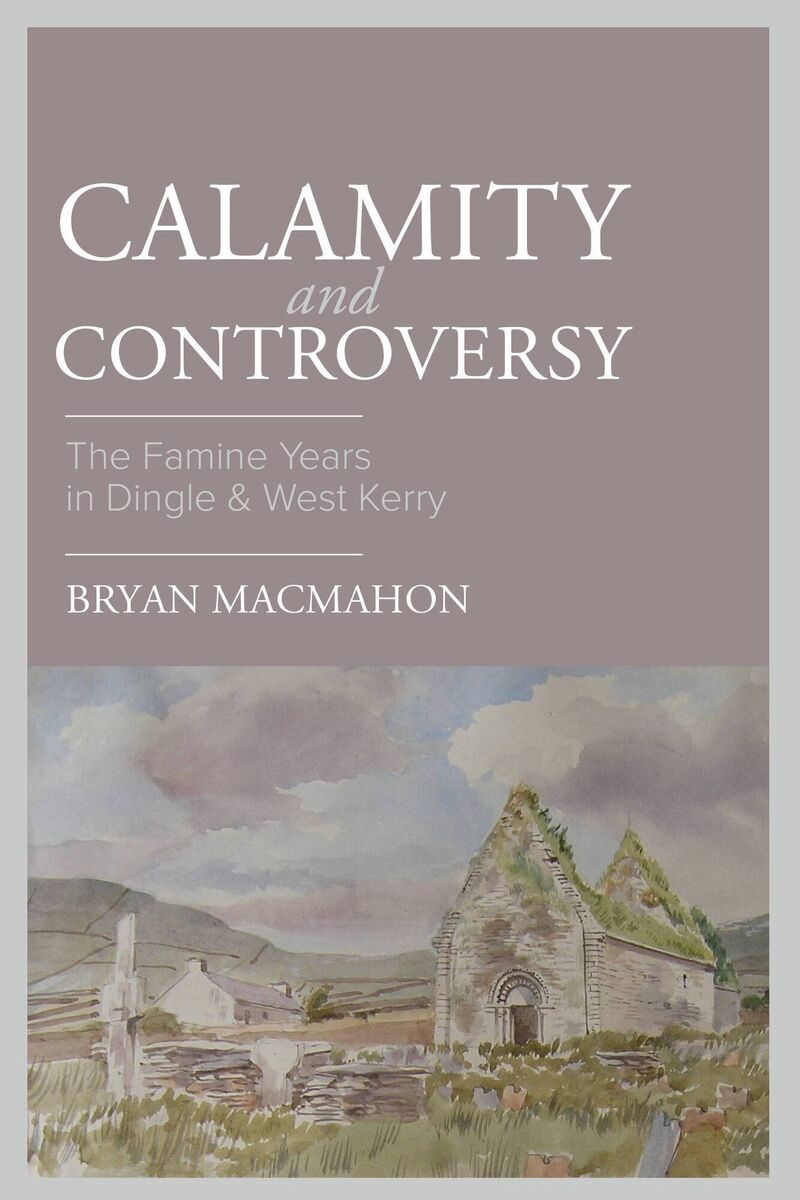
  • Calamity and Controversy: The Famine Years in Dingle and West Kerry 
  • Bryan MacMahon 
  • Wordwell Books, €20.00

The Dingle Peninsula is now a world renowned tourist destination. The main town, Dingle, has activities to accommodate a broad range of tastes, all set against a backdrop of breathtaking scenery.
It is easy to believe the scenery before them has always been perfect. However, West Kerry was a different place 180 years ago.

Life on the Dingle Peninsula during and after the Famine years is the subject of Bryan MacMahon’s latest book, Calamity and Controversy: The Famine Years in Dingle And West Kerry

MacMahon has written intensively on the Famine. This is his third book covering that period.

The “Calamity” in the title refers to the Famine. MacMahon’s descriptions of events between 1845 and 1849 leave no doubt that the Famine was as bad as any famine witnessed in the television era.

MacMahon details horrific accounts of emaciated children found crawling over the corpses of their dead mothers, appalling scenes in the workhouses, and accounts of starving men working on relief projects like breaking stone to earn a few pence, 8d (3cent) a day.

Some heroes emerge from the calamity. Because men, and mostly clergy, held the power at the time, these heroes are, for the most part, men and clergy men at that. 

This is where “Controversy” enters the story as not all clergymen were Catholic.

MacMahon shows that behind the horror of the times, a battle was being fought between the clergies of the Catholic Church and the Church of Ireland for the souls of the people of West Kerry.

Proselytising by the Church of Ireland was a feature of West Kerry from the 1830s. Initially, the proselytisers offered education, and sometimes accommodation as an inducement to conversion. 

The Dingle Ventry Mission Association (DVMA) did much of this work. When the crop failures from 1845 caused an urgent need for food provision, the DVMA responded by providing soup on a daily basis.

The Catholic clergy organised boycotts of the converts. When three Catholic barristers organised a parish mission in Dingle in August 1846 to counter the proselytising, thousands flocked to the church three times a day. 

Whether this was a religious zeal however, or a natural human response to a 90% failure of the potato crop, is difficult to assess.

These religious wars continued throughout the worst of the Famine and into the 1850s before the proselytising movement faded.

MacMahon highlights some remarkable men whose work during the famine was nothing short of heroic. The Reverend Charles Gayer, who died in 1848, cared for everyone he could, regardless of their religion. 

The Eask Tower opposite Dingle stands as a memorial of his work. Two other men who stand out are the Reverend Thomas Moriarty and Fr Owen O’Sullivan.

While MacMahon says of Moriarty that “[he] was undoubtedly an Anglophile”, his work, his care of the starving and his promotion of the Irish language made him a man apart. 

Furthermore, his work on the Blasket Islands went a long way towards saving the population there.

Fr Owen O’Sullivan, parish priest of Dingle, also played a major role. As part of the Catholic response to proselytising, some of O’Sullivan’s tactics were questionable. His sincerity and beliefs however, are above question.

O’Sullivan and the other priests of the area were overrun by the demands resulting from the Famine. 

Because of centuries of British policy, their flock was largely uneducated and the church funds were low. Meanwhile the Church of Ireland pastors were raising considerable funds in England to allow them to ‘cherry pick’ their converts.

Calamity and Controversary opens the door to a different side of the history of Dingle and West Kerry. MacMahon does not take sides; he relates the events of the time in a manner that raises questions and encourages further reading.

My next visit to West Kerry will include a tour of the many monuments, scars, and graves of the people who lived and died in Ireland’s most turbulent time and which MacMahon carefully and sensitively depicts.

BOOKS & MORE

Check out our Books Hub where you will find the latest news, reviews, features, opinions and analysis on all things books from the Irish Examiner's team of specialist writers, columnists and contributors.


More in this section

Scene & Heard

Newsletter

Music, film art, culture, books and more from Munster and beyond.......curated weekly by the Irish Examiner Arts Editor.

Cookie Policy Privacy Policy Brand Safety FAQ Help Contact Us Terms and Conditions

© Examiner Echo Group Limited