Book extract: ‘Turnover tax’ in 1963 was fraught with political risk
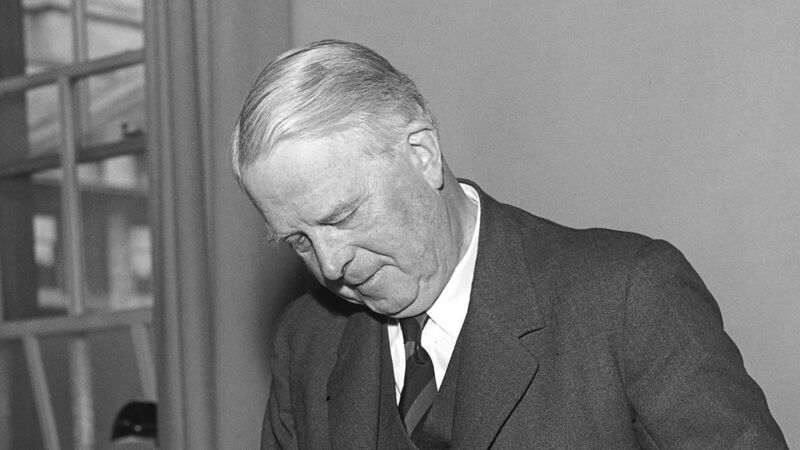
When finance minister James Ryan introduced a new sales tax of 2.5% on all goods and services it was the most significant change to the Irish taxation system since independence
Book extract: ‘Turnover tax’ in 1963 was fraught with political risk

James Ryan on budget day 1957; on his seventh budget in 1963 he proposed a new sales tax of 2.5% on all goods and services, which he christened the ‘turnover tax’. Picture: courtesy of Lensmen photographic archive

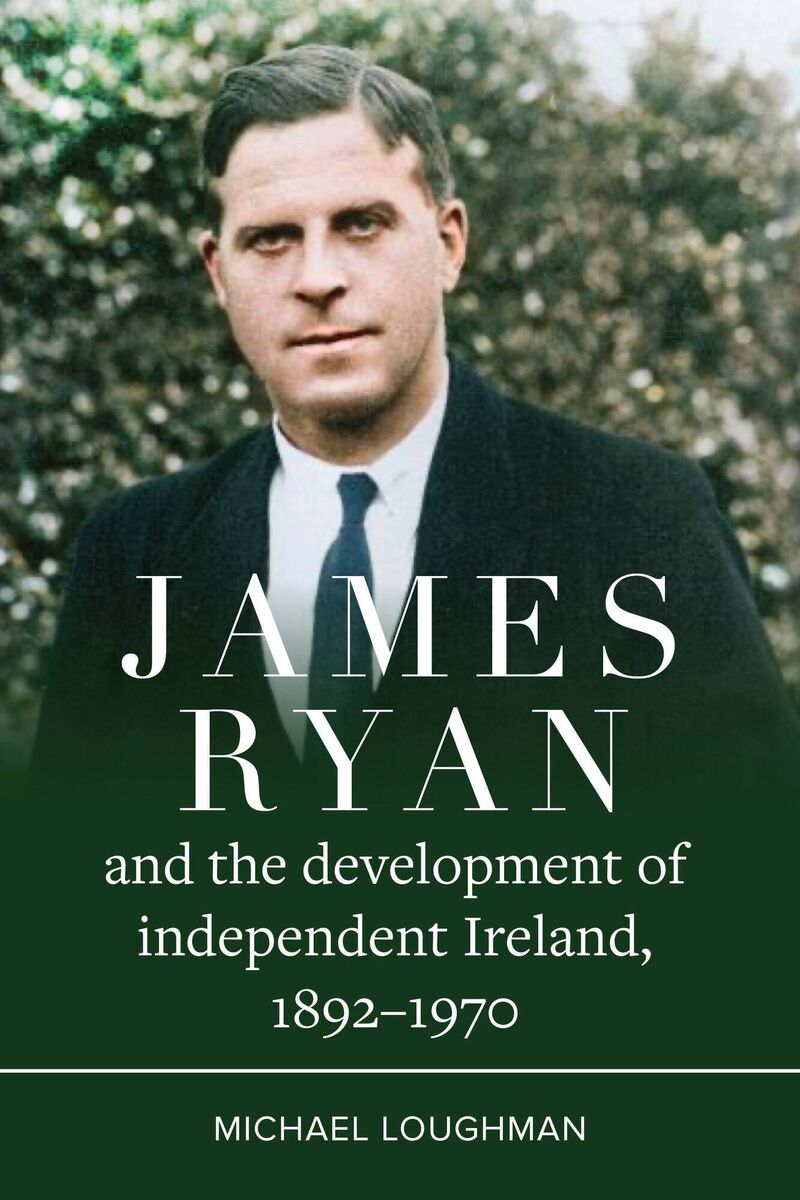
  • James Ryan and the Development of Independent Ireland, 1892-1970 
  • Michael Loughman 
  • Four Courts Press, €24.95 

On 23 April 1963, Minister for Finance, Fianna Fáil’s James Ryan, presented his seventh budget in his typical unpretentious fashion. 

The minister mumbled and hurried through his speech, as if ‘he did not want anyone to hear it’. 

In particular, as one journalist observed, his performance was emblematic of his ability to ‘pack the most deadly wallop into the most innocuous half-articulated phrase’.

Once they had deciphered Ryan’s words, the onlookers learned that he was proposing a new sales tax of 2.5% on all goods and services, which he christened the ‘turnover tax’. 

It was the most significant change to the Irish taxation system since independence. 

Indeed, in the view of the  Cork Examiner, it represented the ‘first major departure in taxation procedures in these islands since Pitt introduced income tax’.
Such a tax had been under consideration for some time, but, as the secretary of the Department of Finance, TK Whitaker, explained to Ryan at the start of 1963, it could no longer be delayed. 

More revenue was needed to meet the state’s ever-growing demands, and the existing archaic tax system was insufficient. 

Excise duty on the ‘old reliables’ of tobacco, alcohol, and fuel could no longer be relied upon to raise the requisite sums. 

At the same time, the government was reluctant to raise income tax for fear of hampering economic competitiveness. As such, a new tax was required.

Ryan brought the sales tax proposal to cabinet in January 1963, and, as he later recalled, ‘they were all against it’. 

The Minister for Health, Seán MacEntee, denounced a tax on retail sales as ‘politically the most unacceptable of all possible taxes’. 

A desperate Minister for Transport and Power, Erskine Childers, proposed a raft of cost-saving and revenue-raising measures as an alternative. 

He argued, for instance, that since no lives had recently been lost for lack of them, they should cancel the purchase of new rescue helicopters. 

There was a similar furore when the Fianna Fáil backbenchers got wind of the proposal, with many demanding that such a tax be limited to luxury goods only, which would effectively make it impotent. 

Ryan mollified some of the internal opposition by backing an extensive social welfare package to shield children and the disadvantaged from the tax’s effects. 

Ryan had backing of Taoiseach Seán Lemass

Most importantly, Ryan had the backing of his long-time political ally, Taoiseach Seán Lemass, who firmly told dissenters in the party that they either had to reduce expenditure or impose new taxation. 

Neither the Taoiseach nor most of his TDs were inclined towards the former.

The day after Ryan’s budget announcement, The Irish Times front page headline left the public in no doubt as to its implications: ‘SALES-TAX BUDGET HAS NO SILVER LINING: Everyone will have to pay more for almost everything’. 

Unsurprisingly, hostility to the tax was immediate and vociferous. Opposition politicians blasted Ryan for taxing basic necessities and complained that such a measure would never have been considered if not for his fiscal profligacy. 

Meanwhile, members of a newly formed grocers’ union insisted they would not become tax collectors and resolved ‘To fight against the implementation of this turnover tax by every means at my disposal, as I deem it an unjust and dictatorial act’. 

Soon, thousands of them took to the streets in one of the largest protests Dublin had seen in some years. 

One erstwhile Fianna Fáil supporter was so outraged that he even sent a cryptic death threat to Lemass, warning him that ‘Injustice was always met with injustice in this country’ while ominously telling him to remember the fate of the assassinated Kevin O’Higgins.

Tax fraught with political risk for minority government

Such a tax was fraught with political risk for any government, especially a minority government like this one. 

The government’s survival was dependent on the support of a handful of independent TDs who had good reason to be nervous about backing this. 

An ill-timed by-election in May provided a quick opportunity to test the turnover tax’s appeal. 

As he rallied Fianna Fáil activists for the campaign, Ryan defended the tax as essential for their ‘expansionist policy’, which aimed to raise living standards. 

He confidently predicted victory and with that, ‘many of those who are now fanning the fires of revolt will lose interest … and we’ll all settle down to be peace loving citizens again’. 

In the event, Fine Gael won in a ‘minor landslide’, thus raising further questions about the loyalty of the independent TDs.

Unsurprisingly, the turnover tax dominated the debate on the subsequent 1963 finance bill. 

Emboldened by the by-election and sensing an opportunity to bring down the government, the opposition waged a tenacious campaign against the bill. 

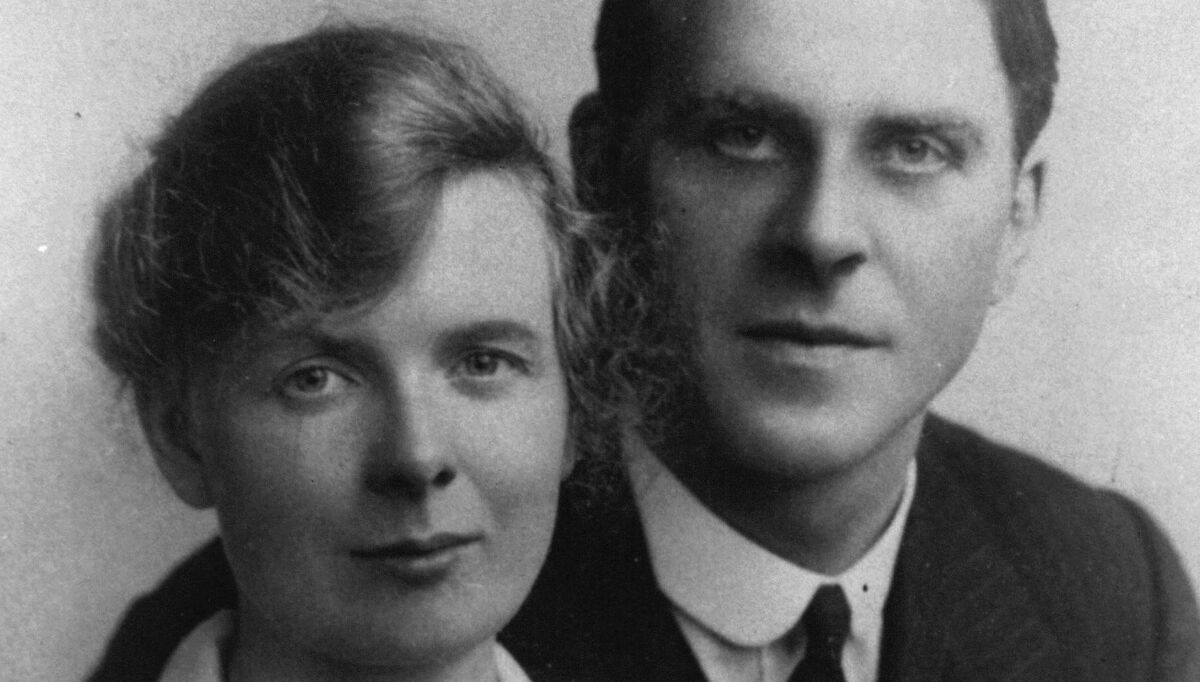
James Ryan and Máirín Cregan shortly after their marriage in 1919. Picture: courtesy of Jim Ryan

The debates were thus occasions, recalled Brian O’Nolan, ‘of terrible scolding and scalding, with abuse and insults hurled readily across the floor with the greatest of freedom and violence’. 

The Civil War and the Blueshirts were readily invoked, although few could match the aspersions of Fine Gael’s Oliver J Flanagan. 

Inexplicably, he suggested the government was displaying communistic behaviour while also claiming the turnover tax was being introduced at the behest of a mysterious millionaire ‘ice-cream king’ who intended to use it to squeeze out the competition. 

It was just as well that President John F Kennedy visited the country in the middle of the process. The respite was needed.

As the two independent TDs whose support was essential for the finance bill’s passage and the government’s survival, Joseph Leneghan and Frank Sherwin were the focus of much attention and were subjected to vicious abuse. 

Sherwin received many insidious letters, including one containing a bullet, while Leneghan was granted a Garda escort amid rumours of a plot to kidnap him to prevent him from casting a crucial Dáil vote. 

At one point, Sherwin appeared to be buckling under pressure when he proposed an amendment that was unacceptable to Ryan. 

With this divergence, the government’s collapse seemed likely, but by convincing him that his social welfare package would adequately compensate the disadvantaged, Ryan pulled Sherwin back from the brink. 

Although, if Oliver J Flanagan is to be believed, Ryan bribed him with £3,500. Whatever Sherwin’s reasoning, the bill was approved, and the government survived by a single vote.

A wave of protests by housewives ensued when the turnover tax took effect later that year, and it remained a potent political issue for some time thereafter. 

However, public anger gradually dissipated as confidence in the government’s ability to maintain economic and social progress grew. 

Despite the dreary premonitions among many in the party when Ryan first proposed the tax, Fianna Fáil secured re-election in 1965.

Although few would celebrate a new tax, it was a crucial step toward establishing the modern and diverse tax system required to fund a modern European state. 

Reflecting on the turnover tax episode in 1987, TK Whitaker marvelled at the political courage taken by Ryan and his minority government in introducing such a measure, which, despite being necessary, was highly unpopular. 

He questioned, in a remark that remains relevant, ‘who would chance it today?’.

BOOKS & MORE

Check out our Books Hub where you will find the latest news, reviews, features, opinions and analysis on all things books from the Irish Examiner's team of specialist writers, columnists and contributors.


More in this section

Scene & Heard

Newsletter

Music, film art, culture, books and more from Munster and beyond.......curated weekly by the Irish Examiner Arts Editor.

Cookie Policy Privacy Policy Brand Safety FAQ Help Contact Us Terms and Conditions

© Examiner Echo Group Limited