Infinity review and pictures: Cork Arts Theatre launches 50th anniversary celebrations
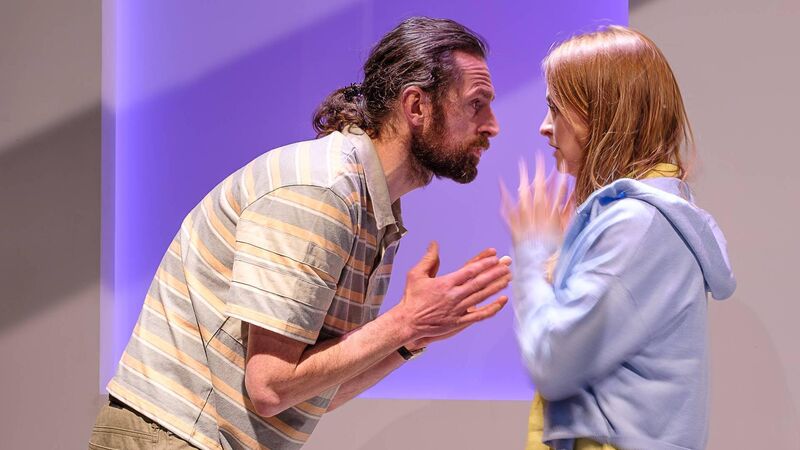
Timmy Creed and Martha Dunlea in a scene from Infinity, at Cork Arts Theatre.
★★★☆☆
Cork Arts Theatre plays an integral role in the cultural ecosystem of the city and this year it celebrates 50 years of providing a platform for emerging writers and actors. It marks this milestone with Re:Directing, a series of three contemporary plays with Cork-born directors.
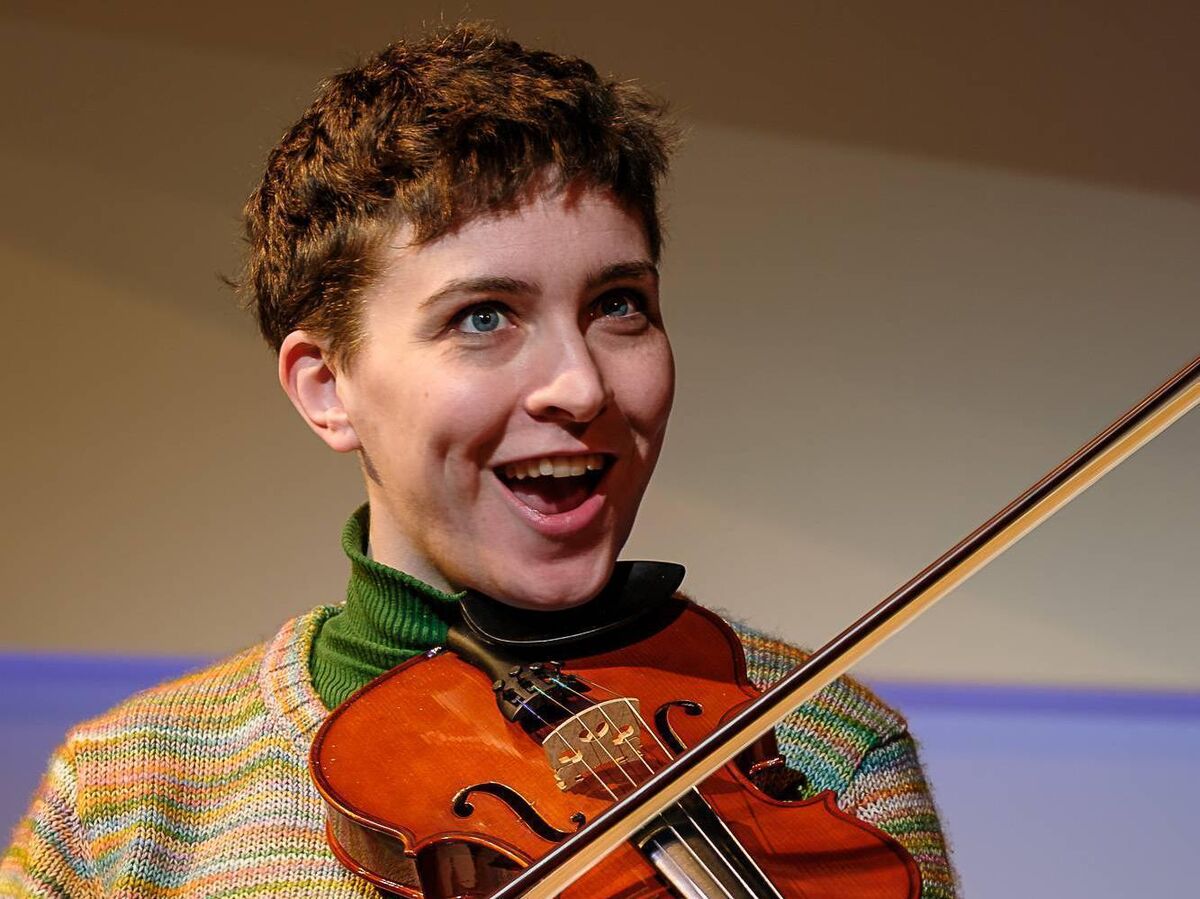
First up is by Canadian playwright Hannah Moscovitch, and directed by Julie Kelleher, which explores the nature of time and love through the relationship of a theoretical physicist Elliot (Timmy Creed) and violinist Carmen (Martha Dunlea) and how their dysfunction in turn affects their daughter Sarah Jean (Bláithín MacGabhann).
Elliot and Carmen meet at a party, and it’s not exactly love at first sight; she is on the rebound and his attempts at seduction are cringe-inducing. They end up together but seem to be at cross purposes from the beginning, his egotism and absorption in his studies pushing her away while after an unplanned pregnancy, she is reduced to a stereotype of unfulfilled motherhood. In parallel, we meet a grown-up Sarah Jean, who turns out to be another academic struggling with relationships and intimacy.
While one can see what Moscovitch is aiming for here, the play doesn’t quite deliver on her ideas, with the themes struggling to emerge from an unfocused script. The hesitations and interruptions in the dialogue are aiming for naturalism but come across as forced, while Elliot’s musings on his studies and the nature of time become a meaningless jumble.
There are glimpses of potential throughout and moments of levity which don’t all land successfully, some of the sexual references verging on facile rather than revealing. The subject of terminal illness is treated with a glancing flippancy which strips it of all emotion and poignancy; news of a distressing diagnosis is delivered to an eight-year-old Sarah Jean with an inexplicably cruel directness that would be hard to imagine in real life.
Despite the best efforts of the actors, with Dunlea in particular bringing some colour to a thankless role, it is hard to get any true sense of the characters’ motivations.
Kelleher has said the brief was to stage a contemporary work that hadn’t yet had an Irish production and as the other two plays chosen were by British playwrights, she wanted to do something different. It’s a laudable aim and ambition but ultimately proves the wrong fit for the obvious abilities of the actors and director.
- is at Cork Arts Theatre until February 14