Tom Dunne: Kinsale weekend allowed me immerse again in the brilliance of the Fab Four
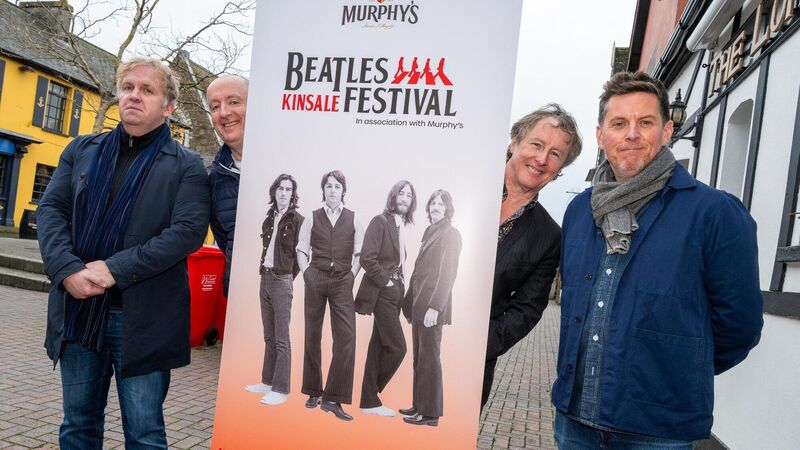
Tom Dunne in Kinsale recently with Beatles Festival organisers Ciaran Fitzgerald, Anthony Collins and Patrick Ryan. Picture: John Allen

Given the ubiquity, the sheer amount of product, books, documentaries and films that still emanate from the universe of a band that broke up over five decades ago I wondered something: If I didn’t name the band in this article would you be able to work it out. Of course you would.
I will admit I have an ulterior motive for this. I think, such is the abundance and frequency of new material on this band, that many, if they saw the name in print again might wonder “What? More stuff?” and possible jog on. And they’d be jogging past so much truly great new stuff.
For that is the wonder of this universe. Half a century later it is still revealing itself. Some say the devil is in the detail, others say it is God that resides there. I’m Team God; the more you pick at it, the more wonderous, the more inspired, the more incredible it all appears.
And indeed precarious. It was never at any point guaranteed to happen. It could have failed to launch and if it did launch, it could have crashed to earth at any moment. It was, time and time again at the mercy of people, decisions and events over which it had scant, if any control.
Take for instance the famed “failed audition” at Decca Records. At that audition the A&R man, Dick Rowe, had famously decided “guitar bands are finished.” Said four-piece were sent on their way with a “don’t phone us, we’ll phone you” flea in their ear. But what if Decca had signed them?
They would more than likely have found themselves in the hands of a “guitar band” producer. They would never have met the inhouse EMI man who subsequently produced all of their albums. Without his vision, orchestrations, and pioneering use of the studio it hard to imagine how they might have progressed.
His Decca equivalent would probably have made them sound like The Tremeloes. They’d have been gone after two albums. The “Great British invasion” would never have happened. Dylan might have stayed a folk act. would not be what it is. Bruce Springsteen, Tom Petty and Billy Joel would have had to find different inspirations into music.
This and other theories are part of what I have just spent three days discussing in Kinsale. There I talked to experts, eyewitnesses, authors, photographers and fans that ranged in age from 18 to 85. The love was palpable, possibly even greater now that it was then. If it was all we needed we certainly got our fill.
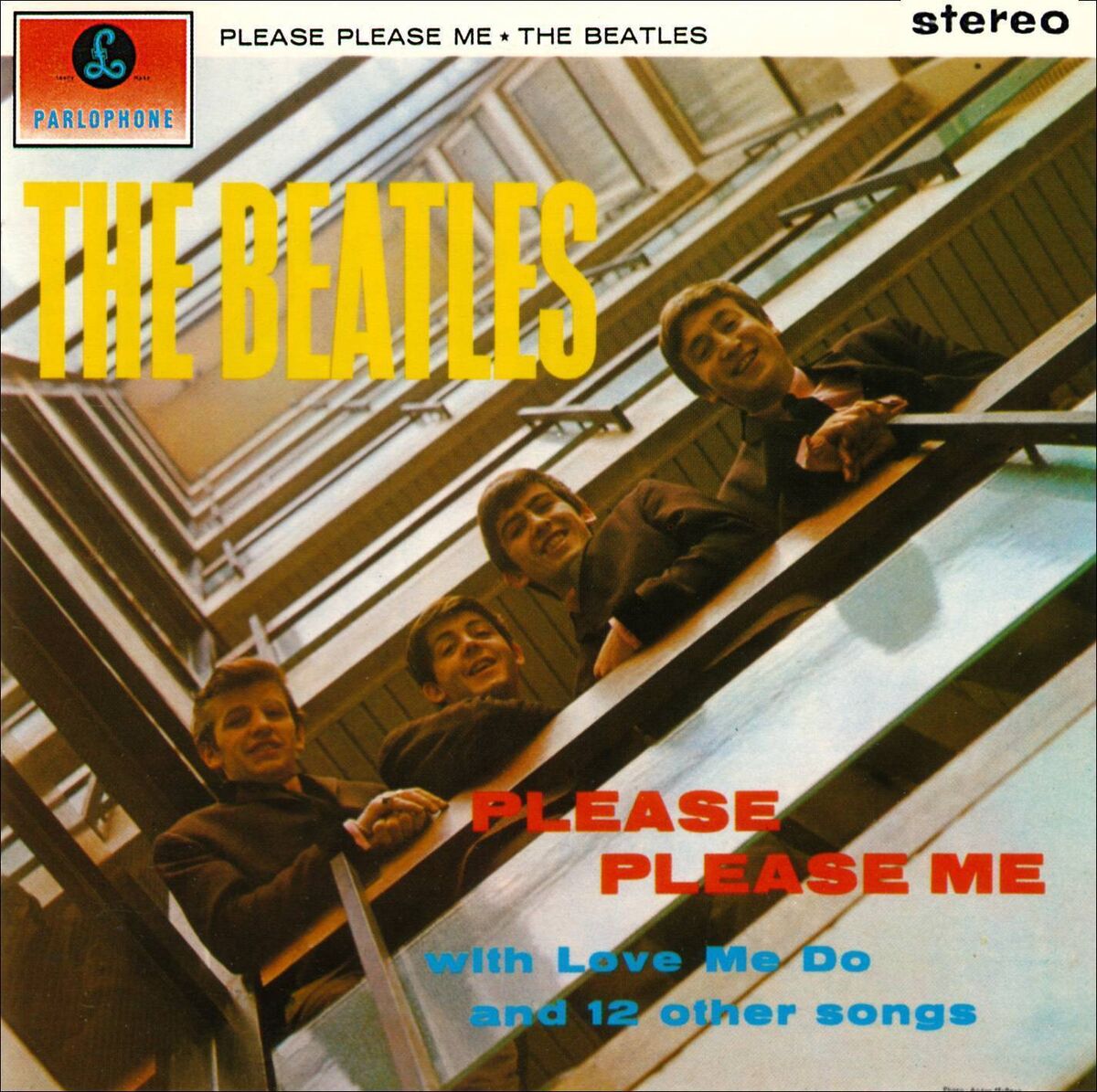
One moment in particular from the weekend in Co Cork has stayed with me. It concerned the sleeve of their debut album. It’s the one where all four members are peeking over the balcony at the record company, reproduced later for the ‘Best Ofs’. It tells so many stories.
It is quite obviously an impromptu shot, un-styled and unplanned. They are not yet the band we will know later. They could be Cliff Richard and the Shadows. The signature hairstyles have not yet arrived. No one is planning a cohesive look because no one expects them to last. It could be the 1950s.
To achieve the shot the photographer had had to lie flat on his back. His name was Angus McBean. In the 1940s he had been one of the most sought-after theatrical photographers in Britain, famed for his portraits of Vivian Leigh, John Gielgud and Laurence Olivier.
But by the time he found himself lying on his back to get that shot all of that had changed. He’d been charged in 1953 under Britain’s laws criminalising homosexuality with “gross indecency”. He had served two years in Wormwood Scrubs prison. It had hit him hard.
After McBean’s time inside the lucrative theatrical work stopped. Hence, on that day in 1963 he was trying his hand at album sleeves. It is the moment two worlds collide. McBean, on his back, a potent symbol of what the narrowminded ignorance and cruelty of that old era could do and the boys peeking over the handrails.
They are about to help ignite and sound track the biggest change in social values that society had experienced in centuries. They, with Bob Dylan, are about to “turn the lights on”. There will be four new films on these guys next year. Part of the process of passing this cultural baton to the next generation.