Children's book reviews: News travels fast as readers are left between a rock and a hard place

Pet O’Connell rounds up a selection of the latest children’s books, with tales of climate change and Ramadan fasting, mountain climbing, and the wonders of Irish seaweed
Children's book reviews: News travels fast as readers are left between a rock and a hard place

Above from left: Adiba Jaigirdar’s novel tells of the humility and self-control at the heart of Ramadan; Jamie Carroll has a positive message for procrastinators; and marine biologist Lucy Taylor guides readers through rock pools and sand dune flora.
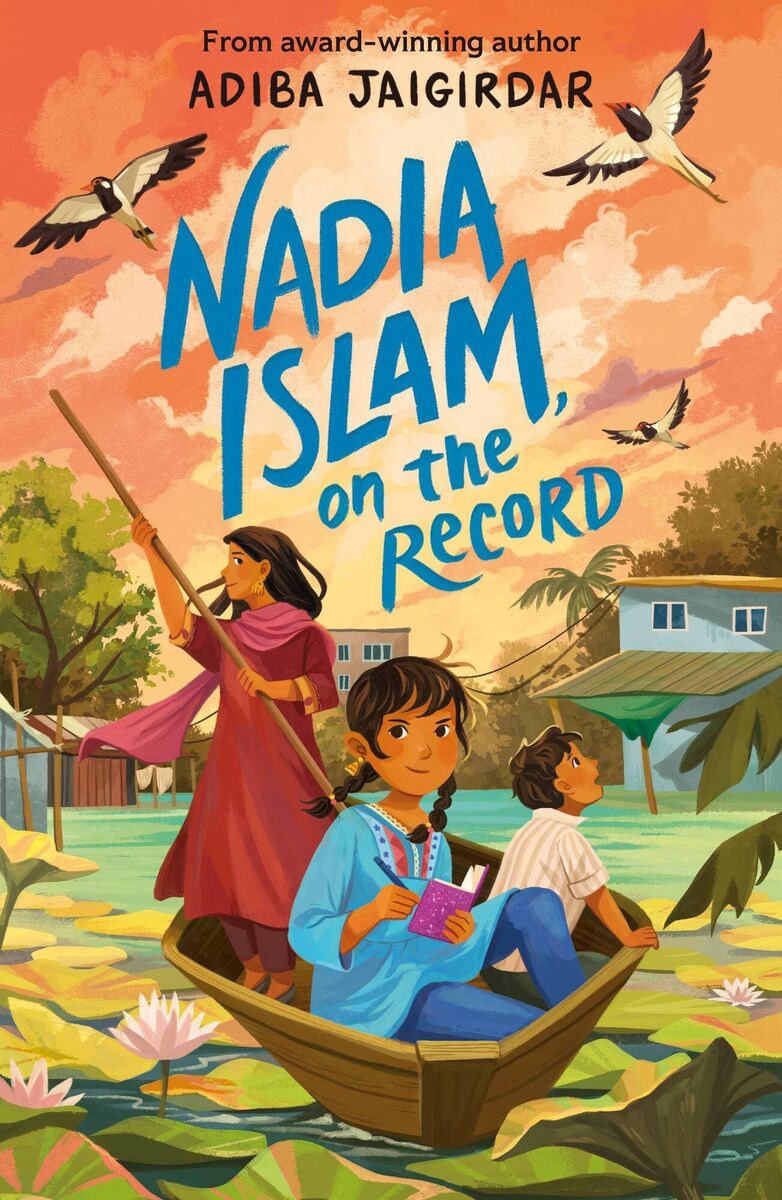
Nadia Islam, on the Record by Adiba Jaigirdar (Hodder Children’s Books, €7.99)

The school newspaper is looking for a new editor in chief and Nadia has her sights firmly set on the job.

Her chances rest on writing a winning article, but any hopes of working on the perfect story with her best friend Yasmin are dashed when Nadia’s family decides to spend the summer holidays back in Bangladesh.

Nadia and Yasmin had also been planning to undertake their first-ever Ramadan fast together. 

Now, however, Nadia will be stuck with her annoying older brother — who was already allowed to fast last year, having reached the age of eight — and their cousins in Bangladesh who she has only ever spoken to briefly by phone.

Though Yasmin’s attempts to soften the blow by suggesting the Bangladesh trip could become the subject of the newspaper article fall on deaf ears, Nadia is cheered by the presence of her journalist aunt on the family holiday.

Her mother’s sister, Nadia’s ‘Khalamoni’ is researching how climate change is disproportionately affecting communities in her native Bangladesh, and wants to report first-hand on the devastation in low-lying areas during the monsoon season.

When Khalamoni agrees to take Nadia with her to conduct an interview with a family who have opened a shelter for climate-change refugees, Nadia is thrilled, though equipped only with her sparkly purple notebook, she feels ill-prepared to tackle such a weighty global topic.

She is astounded, however, to discover that the instigator of the shelter idea is Reem, a girl little older than herself.

Climate change is now no longer the abstract concept it seemed to Nadia when learning about it at school, and inspired by Reem’s actions, she determines to make a difference herself as an aspiring journalist.
At the same time, Nadia is on a steep learning curve around Ramadan, discovering the challenges of fasting as she rises before dawn to eat sehri, which must sustain her until she eats again after sunset.

Perhaps the most important thing she learns, though, is that despite the rivalry she feels with her brother and cousins as the ‘baby’ of the family, their ill-conceived idea of a ‘Ramadan race’ to compete for the most days of fasting achieved, is completely at odds with the humility and self-control at the heart of the holy month.

The insights gained by Nadia provide a perfect means of introducing readers aged nine-plus to the foods, prayers, clothing, and customs surrounding Ramadan and Eid al-Fitr, though a glossary or explanation of terms might have been helpful for non-Muslims.

The Bangladeshi/Irish author of The Henna Wars and Hani and Ishu’s Guide to Fake Dating, Adiba Jaigirdar was born in Dhaka and brought up in Dublin, graduating from UCD with a BA in English and History. 

She draws on her own childhood experiences for Nadia Islam, though more detailed use could perhaps have been made of contrasts between Nadia’s experiences in Bangladesh and her life in what appears to be America — a departure from the Irish settings in Jaigirdar’s previous books for young readers.

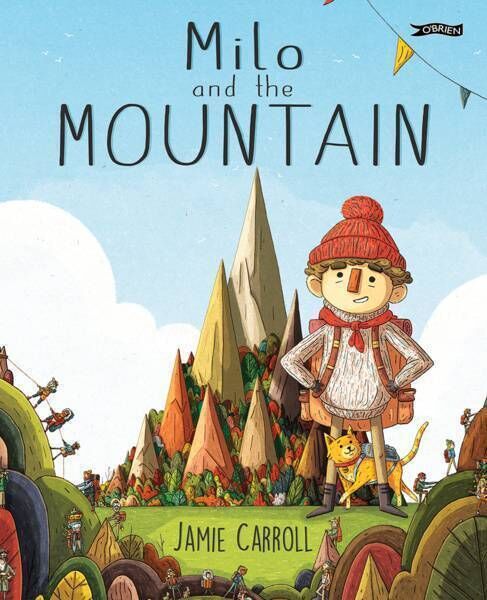
Milo and the Mountain by Jamie Carroll (O’Brien Press, €14.99)

Living beside a mountain means that Milo stares up at it every day and dreams about it every night, but it does not mean he has climbed it.

He’d really like to get right to the top but something always stops him. “It’s too cold. It’s too dark. I’m too tired,” he tells himself. “Maybe I’ll try tomorrow.”

Tomorrow never comes though, and as spring turns to summer and autumn to winter, Milo is no closer to climbing that mountain.

Could he save himself the effort and stow away in another climber’s rucksack? Parachute onto the peak from an aeroplane? Use a jetpack? No, he admits, that wouldn’t count as climbing the mountain.

Finally, Milo comes to the realisation that he needs help to take the first step, and finds that his friends and family — and even his cat — are more than willing to walk with him as he begins his journey.

With them by his side, Milo has a new resolve and even when the going gets tough, he knows they will be there to lend a helping hand. 

The debut picture book from Dublin author-illustrator Jamie Carroll has a positive message for procrastinators and everyone held back by fear of failure.

Even the biggest, seemingly insurmountable challenges can be tackled with a little help from friends and family, and often all we have to do is ask.

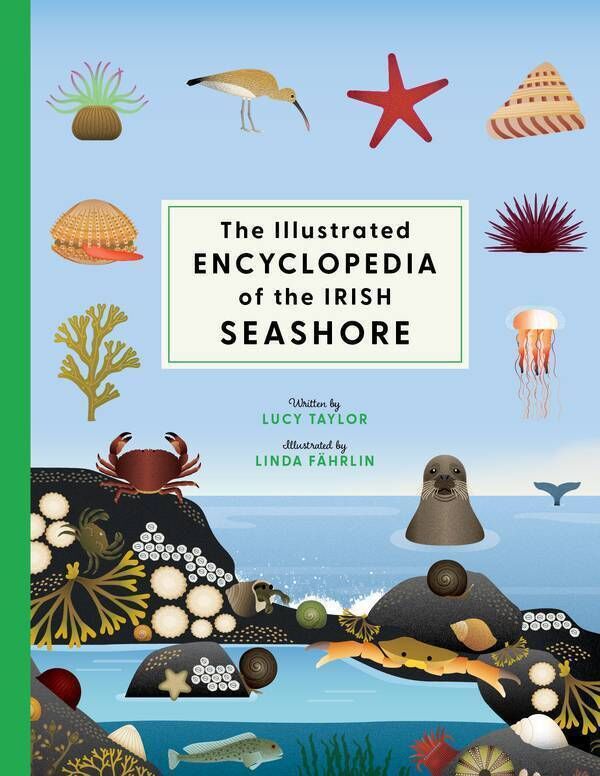
The Illustrated Encyclopedia of the Irish Seashore by Lucy Taylor, illustrated by Linda Fährlin (Gill Books, €22.99)

Botanist Ellen Hutchins of Ballylickey (1785-1815) discovered many previously-unrecorded species, her paintings and drawings of non-flowering plants and seaweeds contributing greatly to scientific knowledge, before the introduction of cameras.

Maude Delap (1866-1953), a marine scientist who lived on Valentia Island, discovered a rare sea anemone found only in the waters around the Co Kerry island, and was the first person to observe all stages of the lifecycle of the compass jellyfish.

Both feature in a new seashore encyclopedia for young readers, who now have Kerry-based marine biologist Lucy Taylor to guide them through tidal rock pools, sandy ecosystems, and dune flora.

The author of Ireland’s Seashore: A Field Guide, Taylor points out that even from a human perspective, the Irish seashore, estimated at 5,800km in length, is not all sandcastles and picnics, and is a crucial source of food and means of access.

“Anyone leaving or arriving in Ireland used the sea until the 20th Century,” she adds. 

Our coast is what connects us to the rest of the world.

Ocean currents ensuring the relative warmth of Irish waters, especially in the south-west, also mean Ireland is home to some species found in the Arctic, as well as others that inhabit the Mediterranean.

In terms of coastal mammals, the harbour porpoise and bottlenose dolphin feature, along with a brief guide to differentiating between Ireland’s two types of seal, the harbour seal with its dog-like face, and the larger grey seal, whose face is described as like that of a horse.

Among the whales and cormorants, crabs and jellyfish, though, one of the book’s highlights turns out to be a section on seaweed. 

Unrelated to garden plants and possessing no roots or leaves, seaweed absorbs nutrients, including nitrogen, from seawater, creating oxygen as it photosynthesises. 

It is the type of chlorophyll in the photosynthesis process which dictates the brown, green, or red colours of the more than 570 seaweed species around the Irish coast.

If you don’t know your velvet horns from your dabberlocks and think egg wracks are only useful for making omelettes, it’s time to dip into this beautifully-presented guide, illustrated by Linda Fährlin.

x

BOOKS & MORE

Check out our Books Hub where you will find the latest news, reviews, features, opinions and analysis on all things books from the Irish Examiner's team of specialist writers, columnists and contributors.
More in this section

Scene & Heard

Newsletter

Music, film art, culture, books and more from Munster and beyond.......curated weekly by the Irish Examiner Arts Editor.

Cookie Policy Privacy Policy Brand Safety FAQ Help Contact Us Terms and Conditions

© Examiner Echo Group Limited