Station To Station, David Bowie: The inside story of the Thin White Duke and the 1976 album
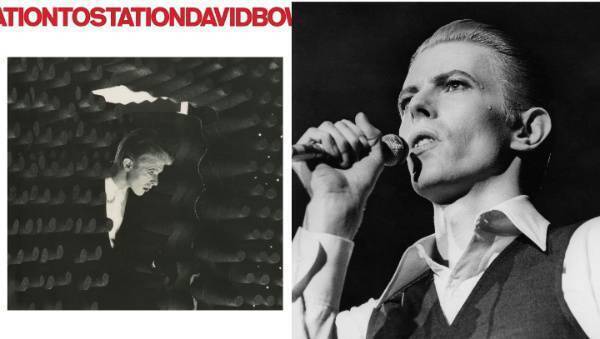
David Bowie released 'Station To Station' in January 1976.
David Bowie’s first American number one single, 'Fame', was a last-minute addition to , his 1975 breakthrough album in the US. It also came with jagged edges and a sneering attitude towards success that even Bowie described as “nasty” and “angry”.
'Fame' gave a first hint of Bowie’s new direction and his controversial character, the Thin White Duke, a persona who would turn the temperature down and invite a much darker, stoic presence.
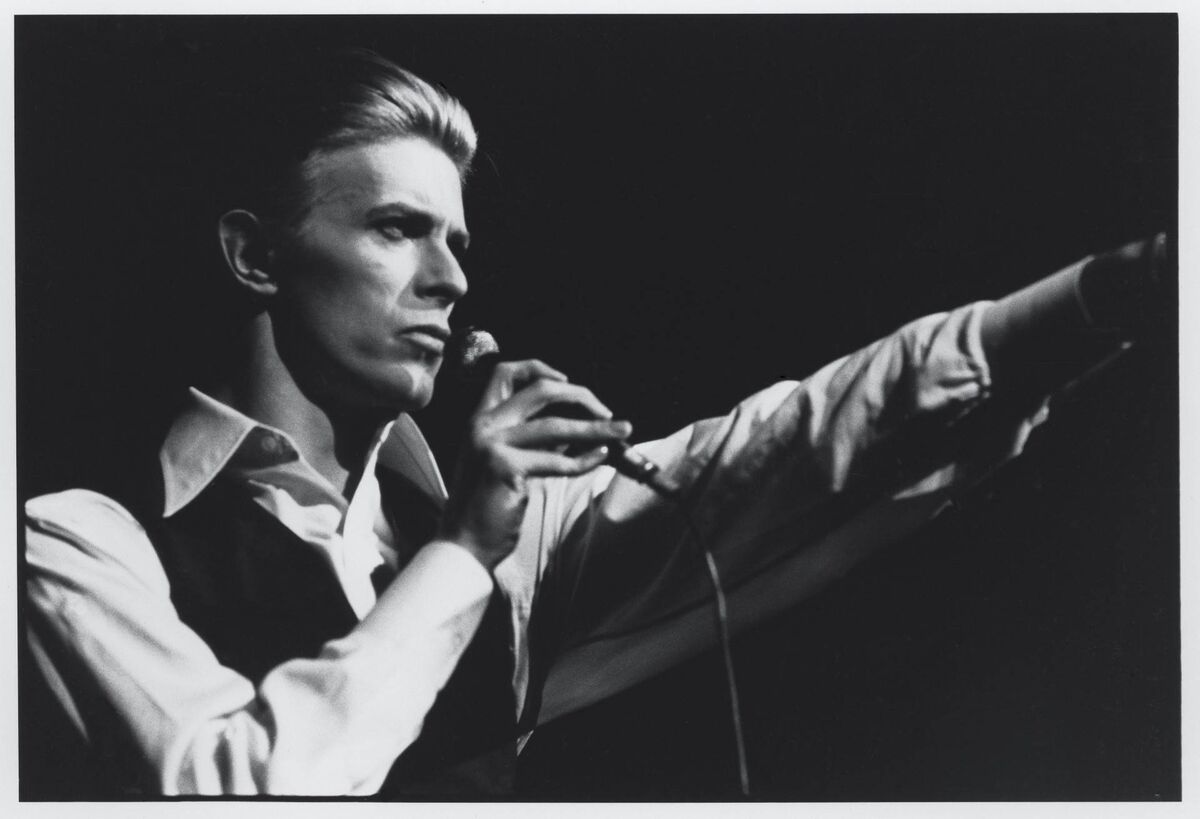
By the mid-1970s, Bowie was unhealthily underweight, the effects of years of cocaine abuse and a poor diet. The cover of (1974) presented Bowie as something almost vampiric; an image he later said made him look like he’d “stepped out of the grave”. It was a prelude to the figure who would soon emerge.
When was released in January 1976, its cover presented the Duke's stark arrival with a monochrome, cropped still of Bowie, accompanied by a large white border and red text. Released two months earlier, delivered a lead single and another chart hit with its clipped funk rhythm and smooth soulful vocal.
It felt like the last breath of an album that helped Bowie crack America by adopting the country's musical values, blending R&B and Philadelphia soul with his ear for a melodic pop hit. did something very different, particularly its title track. Clocking in at 10:14, a speeding train finds its way into a hypnotic groove, marked by ominous drones and a cauldron of feedback. Sustained overdriven notes and shifting time signatures add to its absorbing cacophony.
Band member Carlos Alomar described the DAM Trio (Dennis Davis, Alomar and George Murray) on the title track as “Bowie’s Kraftwerk”. The rhythm guitarist had helped bring authentic clout to ; he would also provide essential structure and cohesion on one of Bowie’s most experimental recordings, setting the tone for subsequent long-players.
“We started laying on all these overdubs, and I became bandleader, only working with rhythm, guitar, bass and drums,” Alomar explains of the track’s robotic pulse.
“That being said, once we started grooving, Earl Slick came in, and we were like: ‘What is this feedback and the concept of having a note sustained longer for three minutes; is that okay?’ The experimentation part of that album; that’s what is. The ability to experiment. is a pop song, and the others could have been on but notice how the song created this experimental narrative. It was the longest song I ever heard.”
The creation of the tune was a nocturnal and cocaine-fuelled experience for both Bowie and Slick, working until dawn. Slick had joined Bowie on the Diamond Dogs tour, appearing on and came up out of nowhere,” says Slick. “I had a call from him [Bowie] out of the blue in LA and we began recording in a small rehearsal space for two days at the studio to touch on the vibe for the record, which was not complete by any means. A lot of the lyrics were unfinished and the album’s opening piece, running at just over 10 minutes, was three different parts of different songs that were glued together.
“The wail of the feedback on the guitar was a spur-of-the-moment thing at 5am; we were up all night recording as usual. That’s both of us with a wall of Marshall stacks; it’s not just me.”
For all the late nights, drugs and dabbling, Bowie’s vocal performance across the album was one of his finest. amplifies Bowie’s spiritual anxiety and curiosity, from the occult-inflected symbolism of its opening track to the prayerful plea of 'Word on a Wing'.
Bowie told the in 1980: “It was the first time I’d really seriously thought about Christ and God in any depth, and 'Word on a Wing' was a protection."
He went on to suggest it was around this time he began to wear a small silver cross, and added "the passion in the song was genuine”.
Essential to the creation of the Duke persona was Thomas Jerome Newton, the alien he played in Nicholas Roeg's 1975 film . Susan Compo, author of , says: "It was a character that never really left him; he always kept that noirish look. It was such a startling shift, the beautiful orange hair with yellow at the front.”
The track 'TVC 15', lyrically at least, summons something of Newton, recalling the film’s scenes in which he is surrounded by multiple television screens. Bowie described the song’s “demonic” television that consumes his girlfriend as “a very good friend of mine”, suggesting contemporary anxieties about technology and obsession. as well as our own relationships with screens.
Musically, it’s a playful pop/rock number. When Bowie suggested he required a piano, it was also Slick who suggested E-Street Band member Roy Bittan be invited to the studio. “It was at that point that David realised we didn't have a piano player. I said a friend of mine plays with Bruce [Springsteen], let me see if he'll come down. I think for Roy was the right guy,” says Slick.
Critics were somewhat confounded when the album was released in 1976. Renowned music writer Lester Bangs, who hadn’t been won over by 'Ziggy Stardust' but had warmed to 'Young Americans', described as a “masterpiece”.
'Ziggy Stardust' and the Thin White Duke were very different aliens: one completely absorbed America, the other was repelled by it. The cover, shot by Steve Schapiro shows Bowie stepping into a spaceship and departing the culture he once soaked up as Ziggy. Bowie would also use another Schapiro image from when defining his next album,
The Great Gale of 1976 battered Western Europe just days before was released, a real storm that symbolically set the tone for the unrest gathering around Bowie’s most controversial character.
In an interview published in February of that year, Bowie suggested Britain "could benefit from a fascist leader”, a comment he later disowned, but at the time, many fans and critics were confused. This unease was underscored by a contested Nazi salute at London’s Victoria Station a few months later. While Bowie denied it, suggesting it was a wave to fans, the moment reinforced the sense of menace and uncertainty surrounding the Duke.
The triumvirate of the Duke, Newton and Bowie, fuelled by cocaine addiction and dark fascinations with the occult and the Third Reich, was taking its toll on the man formerly known as David Robert Jones.
In America, reached number three on the Billboard charts and number five in the UK. It would be Bowie’s highest US placing in four decades. Through time, reassessment and successive reissues, it would come to be regarded as one of Bowie’s finest achievements. The album’s creator remained cautious when discussing , claiming it was a period he barely remembered, yet its brilliance can't be denied.
It’s half a century since the release of and a decade since Bowie’s death and the release of his final album, just days apart. The albums have much in common besides marking significant anniversaries. In the video promo for 'Lazarus' — Bowie’s final single — he returns to the Thin White Duke, wearing a version of the outfit he once marked with hand-drawn, arcane symbols.
An image from this Schapiro session also featured in the 1991 gatefold reissue of During the video, he moves, thinks, frets and scribbles as if channelling the same fierce creative energy that drove him while drawing the Tree of Life during the Schapiro shoot in 1975 before he steps into the wardrobe and closes the doors.
In one final artistic statement, released just a day before his 69th birthday and two days before his death, Bowie finally comes to terms with the Duke, confronting the character, the crisis years and his own mortality, on his own terms.
The 50th anniversary of is released on Half Speed Master and picture disc formats on January 26
Earl Slick will hold a solo masterclass on Sunday March 1, and perform at this year's Dublin Bowie Festival, celebrating the 50th anniversary of with Mike Garson, Gerry Leonard and Mark Plati at Opium on February 28. See www.dublinbowiefestival.ie
- Richard Purden's new book, , will be released in October