Stuart Bailie: 'The wanker who started Blur versus Oasis'
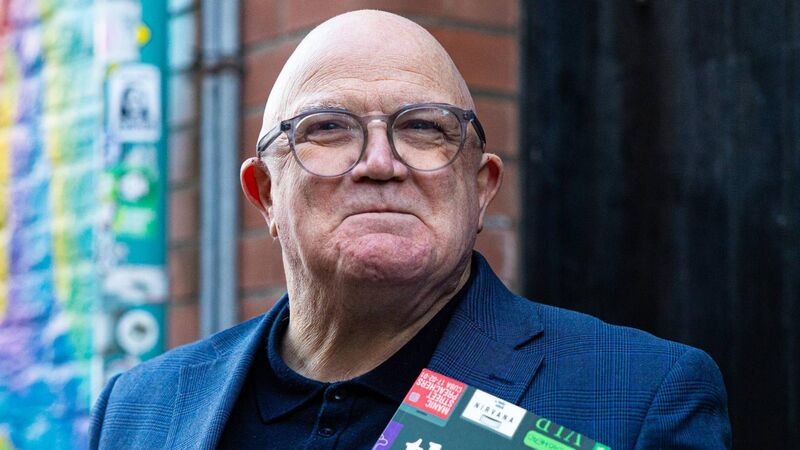
After serving his time on Belfast fanzines, Stuart Bailie went on to write for some of the top music publications on these islands. Picture: Jonah Gardner
In 2002 Oasis played at Belfast’s Odyssey Arena. As Stuart Bailie stood in the pit taking photographs and jotting down notes he was spotted by Noel Gallagher.
“See that guy down there taking photos?” Noel asked the crowd. “He’s the wanker from who started Blur versus Oasis. Take your camera and f**k off.”
Being publicly admonished by the Gallaghers in front of 9,000 Oasis fans is water off a duck’s back for Bailie. The journalist and author has just published a compendium of his music journalism. The book compiles interviews with PJ Harvey, Andrew Weatherall, Nick Cave, Tom Waits, Patti Smith and loads more that were originally published in and other publications. It also recounts 40 years at the coalface of a changing music industry: where once music journalists went off on tour with bands nowadays access can sometimes be limited to a short PR-controlled Zoom interview.
He accompanied Radiohead to the Tibetan Freedom Concert in 1997, ventured to Compton with the Manic Street Preachers days after the 1992 LA riots, and at a U2 soundcheck in Seattle in 2017 was called a, “tough Nordy c**t” by Bono.
Punk rock had changed everything for a teenage Bailie in Belfast. He was 16 when The Clash visited the city in October 1978. He took the day off school and headed for the Ulster Hall.
“I had a vague idea that you could help to push the amplifiers and carry the gear in," explains Bailie. "There was me and seven or eight other people and we just pushed stuff around and lifted things out of the van and then we got to hang around and The Clash arrived and did a soundcheck.”
After the soundcheck Bailie and a few others were invited by Mick Jones to accompany The Clash on a walk around town. “I was just absolutely grinning from ear to ear, really elated,” remembers Bailie. “They talked to you like an equal. You just felt endlessly empowered. It was such a brilliant feeling.”

Things were never the same for Bailie. “After that, just a lot of gigs, I just hung out in the afternoon and school attendance went down very badly after that.
“There was a period of stasis, stress and anxiety,” says Bailie about Belfast of the mid-70s. “A militarised place, a ring of steel around the city centre. You had to get searched going in. But there was fun to be had and there were concerts, more concerts than we probably remember, the sainted Rory Gallagher who played every year.
“Punk bands like Rudi and later on The Outcasts and Stiff Little Fingers, the Belfast acts that were fearless and in Derry you had The Undertones and later The Moondogs. All of a sudden you didn't need anyone to greenlight what you were about.”
Punk signalled a way of life for the teenager, “Waking up as a 16-year-old going, right, what can I do today? I’m going to read this fanzine. I’m going to stand in Corn Market in the centre of town and just meet punks that I’ve never met before. So you were kind of handed a life.”
Bailie played in a few bands and eventually sold his guitar. That same day he bought a typewriter. The future seemed clear, like thousands of others he headed for London.
“I went to London with a couple of scraps of paper with names. The best punk fanzine in Belfast was probably the standard of the writing was exceptional. And from that, Gavin Martin got a job at David McCullough got a job at These were people I would have been aware of. Carol Clerk from Belfast was the news editor at Barry McIlhenny was also with Barry took me out and showed me the ropes.”
Bailie got his start with the weekly music paper A few years later Record Mirror folded and he made the jump to NME eventually becoming its assistant editor. It was his dream job: “I loved NME, when I would read the UK music press, especially, they felt like the wise uncles that I never had, so there were always these voices that were advising you or telling you stuff. I loved the culture of the music press, they could expand your mind and expand your understanding of the world.”
While he was with the marketing department would try and work out how many people read each copy of the paper. “A music paper in the 1980s and '90s went around the school bus. They said the 'swap rate' was something between five and nine,” says Bailie.
“When I was with the it was touching 120,000 on a good week and you multiply that by five or nine, you’re talking about more than half a million people potentially reading what you write. So in the absence of internet culture, online stuff, very little on television, a little bit in the broadsheets and in the popular press, the music press was the place to find out about the music that you loved.”

By the end of the '90s the power and influence of the music press was in decline. “The growth of things like MySpace, where artists could control their own communication with their fans. All of a sudden, there was maybe not so much need for a gatekeeper to tell you what to purchase or what not to purchase.”
The changing role of the critic in today’s society is often considered, Bailie’s very cognisant of the debate. “For a lot of artists, they thought, fantastic, we don’t have to tolerate these snooty individuals with their pens and their tape recorders ever again. I would grieve a little bit because sometimes there’s nobody there to say, actually, this new album stinks. Something happened that was quite seismic.
“The rawness of and at their best, critiquing and encouraging and explaining. I grieve and I mourn for the glory days.”
He left London and returned to Belfast in the late 90s but continued writing about music. In recent years he’s published a number of books. His 2018 book is an authoritative exploration of how music connected with the Troubles. In 2005, alongside Snow Patrol’s Gary Lightbody and others, he co-founded the Oh Yeah Music Centre in Belfast. Named after the Ash song the resource centre is an inclusive space for emerging and established musicians.
“Old footage around that time and outside the City Hall, it said ‘Ulster Says No’. That was the Unionist rhetoric. We didn’t want to call it a boring acronym,” he says. “So we called it Oh Yeah. After a song that has an affirmative in the title and an expression of enthusiasm, excitement.”
Barry McIlhenny the journalist who showed Bailie the ropes passed away last May. “Barry’s gone, he died suddenly recently and Carol [Clerk] died early, Gavin [Martin] died early. That was an impetus to write the book. It was almost like, get it out there, fella. You can’t say I’ll get round to this in 5 or 10 years from now. I’m 64, going on 65. Who knows how long we’ve got on this planet?
“Music’s been just the best companion,” he smiles. “I love songs. I love the artists who write the songs and how they impact in our souls, you know.”
- by Stuart Bailie is out now
Terri Hooley’s astonishing life on his 75th birthday. “Music, Good Vibrations, Belfast, punk rock, conflict, chaos and attitude.”
On Van’s 75th birthday a book about 75 of his songs, “and what they tell us about the landscapes of Belfast, about social change, musical wellsprings and great excursions into nature.”

How musicians (Bono, Christy Moore, the Undertones, Stiff Little Fingers, Orbital, Kevin Rowland, the Miami Showband survivors and others) “have responded to violence, bigotry and shocking events.”