Banksy, big deals, and basic incomes: 10 talking points in the visual arts world in 2025
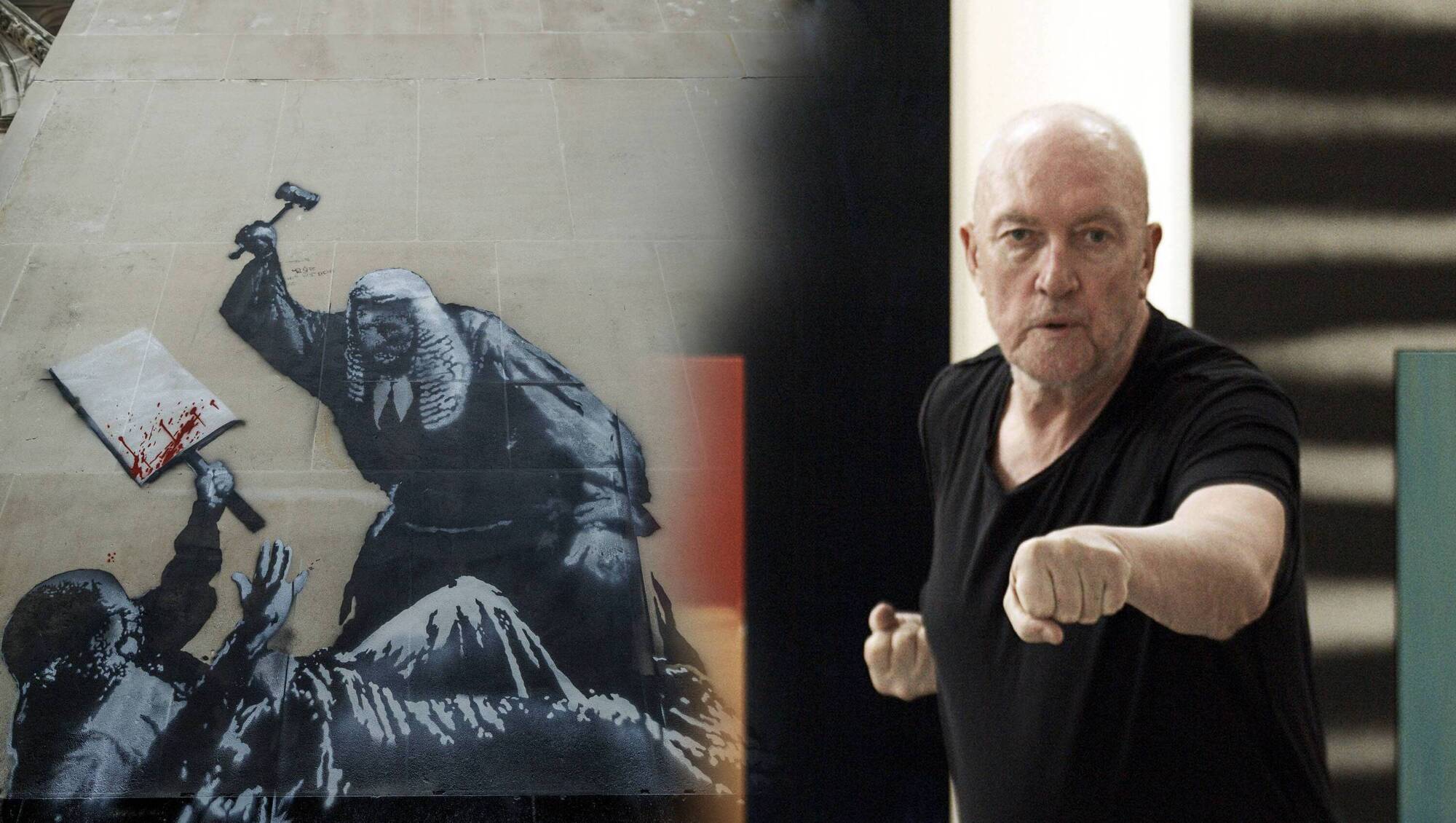
A Banksy mural outside the Royal Courts of Justice and Seán Scully’s oil on aluminium painting are among our 10 talking points in the visual arts world in 2025.
The highest price paid for a work by an Irish artist in 2025 was the $1,512,000 secured for Seán Scully’s oil on aluminium painting (2017) at Phillips Modern & Contemporary Art Evening Sale, New York on May 13.
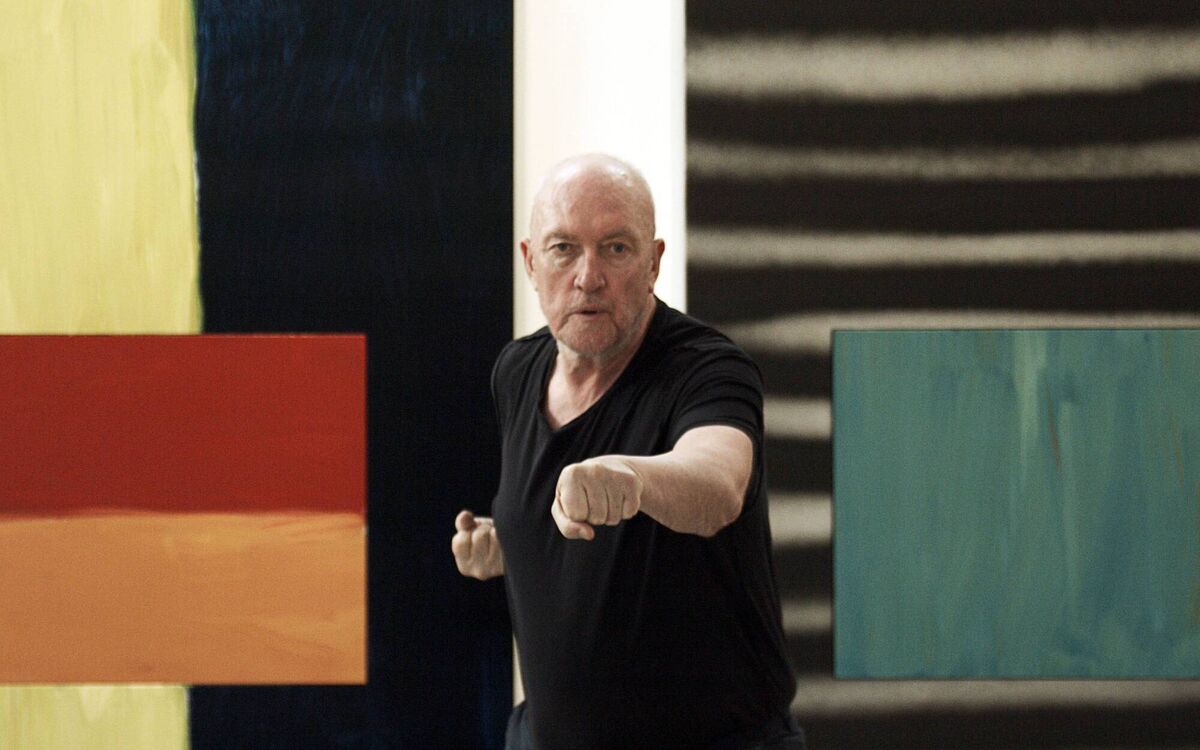
Like much of Scully’s Landline series, the painting is an abstract composition, in this case comprised of six bands of colour applied in thick gestural brushstrokes, inspired by the elemental forces of land, sea and sky.
Scully turned 80 in June.
The most paid for an Irish artwork sold in Ireland was the €270,000 secured for Paul Henry’s decidedly more traditional painting, (1933-36), at Whyte’s of Dublin in March.
Most visual artists in Ireland juggle their creative activities with teaching work or other endeavours. The introduction, in 2022, of the Basic Income for the Arts, a pilot scheme that has provided 2,000 artists with an allowance of €325 per week for three years, was revolutionary.
Most of the recipients have reported being far more productive, and the scheme has been acknowledged as such a success that it was extended to February 2026.
On Budget Day, minister for arts and culture Patrick Donovan announced that the scheme is to be continued, and as many as 2,200 new applicants can expect to be awarded the funding in late 2026.
On his death from pneumonia, aged 55 in 1918, Gustav Klimt left behind at least 14 children and a reputation as one of the greatest artists of his time.
In November, Klimt’s Portrait of Elisabeth Lederer sold for $236.4 million at Sotheby’s, New York, making it the most expensive work of modern art sold at auction and the second most expensive artwork ever sold, after Leonardo da Vinci’s . The buyer has not been publicly identified.
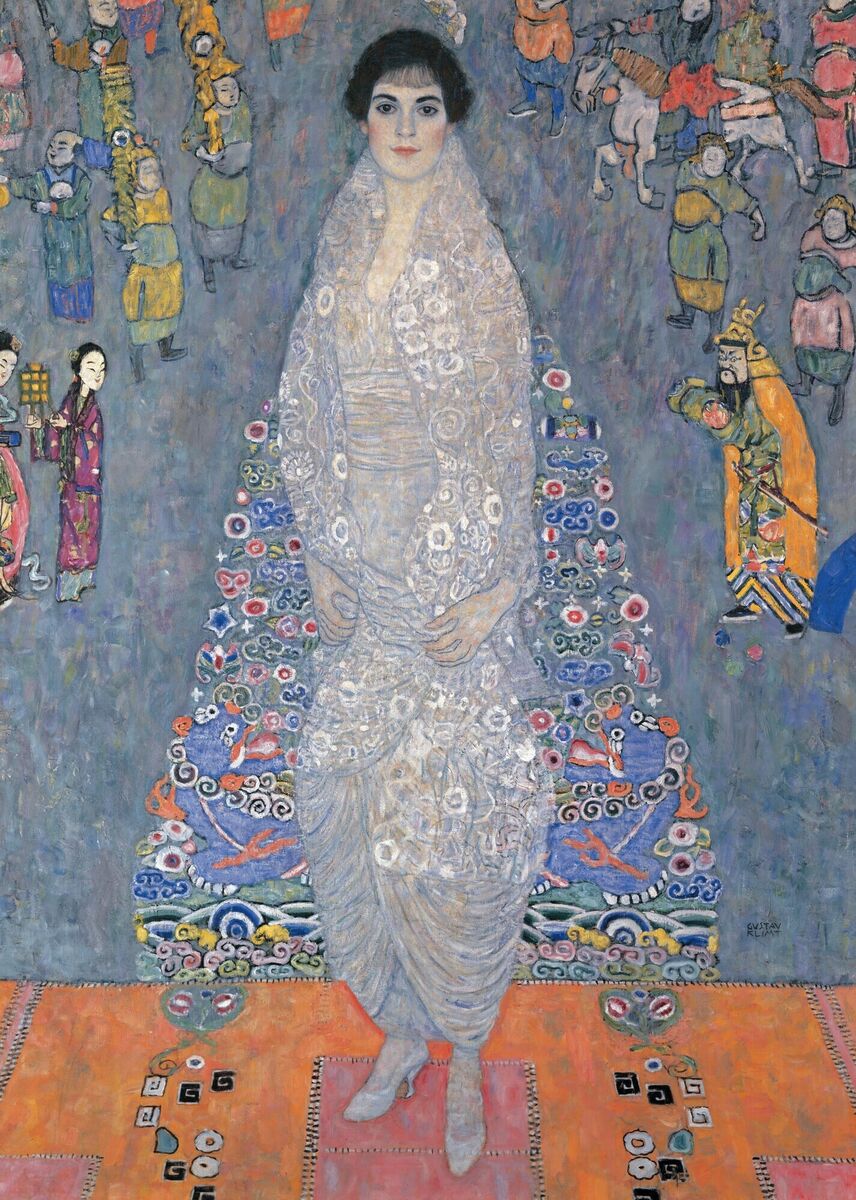
The subject of Klimt’s portrait was the daughter of a wealthy Viennese couple, August and Serena Lederer. He worked on the painting between 1914 and 1916, but was never satisfied that it was finished. Serena Lederer eventually seized it from his studio.
The Lederers were Jewish, and the portrait of Elisabeth was part of a collection confiscated by the Nazis after the Anschluss, or annexation of Austria, in 1938. Elisabeth died in 1944, but the painting was restored to her brother Erich in 1948.
The portrait was eventually acquired by the American billionaire Leonard Lauder, and came to auction after his passing in June this year.
Frida Kahlo was one of the most colourful artists of the 20th century. Born in Mexico City in 1907, she suffered catastrophic injuries in a road accident when she was 18. , like many of Kahlo’s paintings, chronicles her experience of pain.
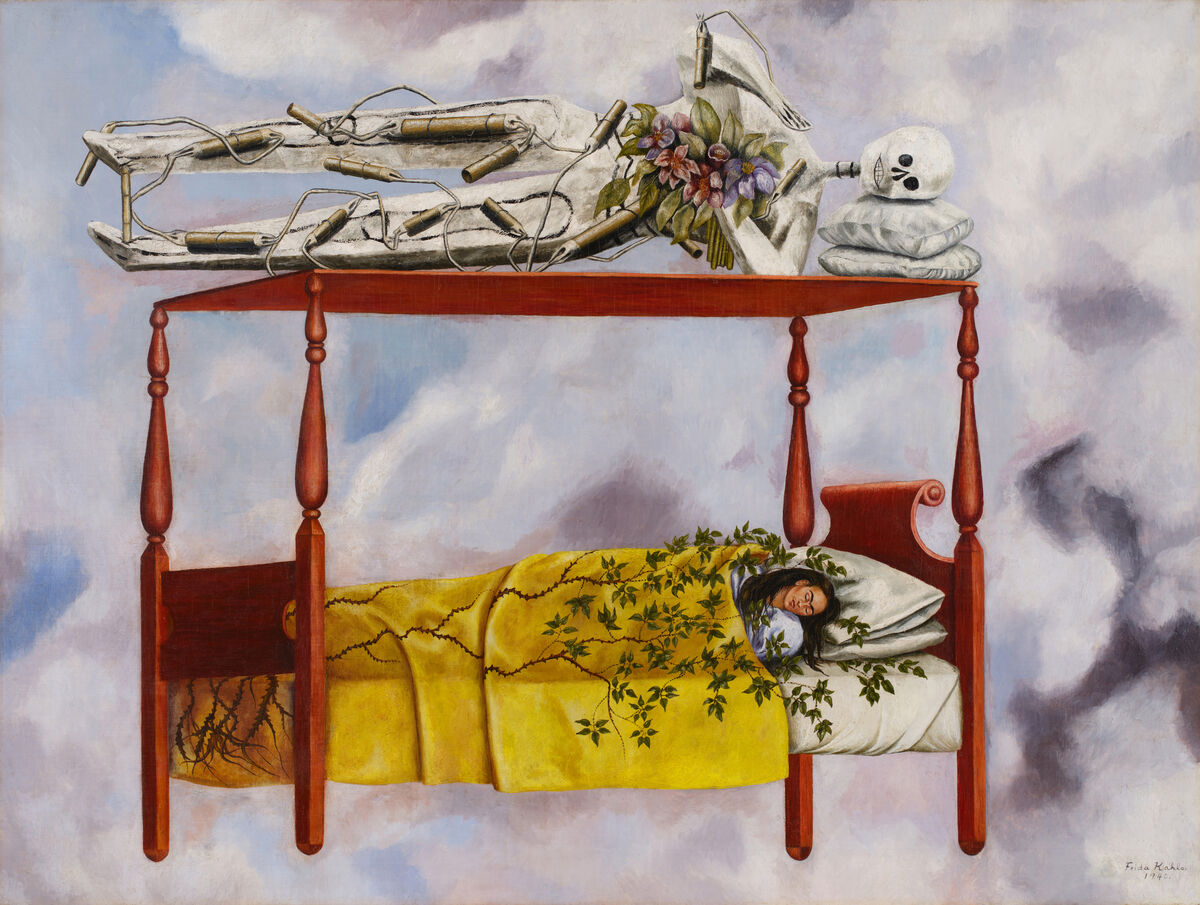
The 1940 self-portrait shows Kahlo asleep in a wooden bed floating among clouds, while a papier-mache skeleton with sticks of dynamite reclines on the canopy above her.
The painting sold for $54.7 million at the Exquisite Corpus auction of surrealist artworks Sotheby’s, New York in November. The sale established a new world record for a work by a female artist, eclipsing by $10 million the $44.4 million paid for Georgia O’Keeffe’s in 2014. Again, the buyer chose to remain anonymous.
Ireland lost a number of its best-known artists in 2025. Gene Lambert, the Dublin painter and photographer died in March. Left partially paralysed after a car crash in 1981, Lambert became a very vocal campaigner for the disabled.
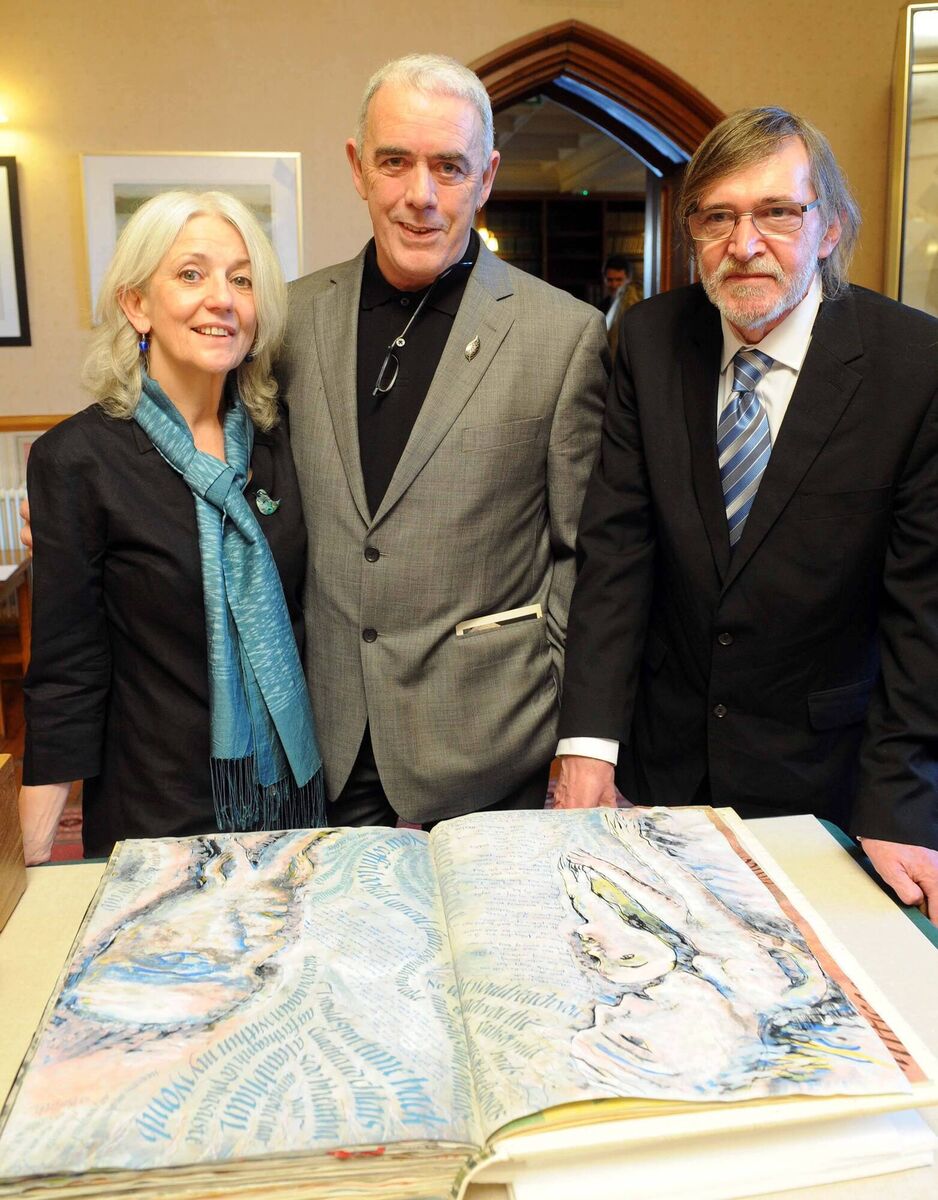
He was co-editor, with Theo Dorgan, of , which raised €1 million for Poetry Ireland.
The Dublin painter Michael Kane, who died in May, was a founding member of the Independent Artists Group, which evolved into the Project Arts Centre. He was known for his brightly coloured paintings of working people, particularly in the streets of Dublin.
Alice Hanratty, who also died in May, was a painter and printmaker who travelled in East Africa for several years before returning to her native Dublin, where she taught at NCAD and restored a four-storey Georgian home on Henrietta St. She represented Ireland in a number of international print exhibitions, in Paris, Kyoto and New York.
The Co Wexford sculptor Michael Warren, who died in July, was arguably Ireland’s greatest sculptor. He produced large-scale public artworks as far afield as Spain, Greece, France and the United States, as well as in Ireland, where his work can be seen at Trinity College Dublin and at the Irish Museum of Modern Art.
It has often been argued that Ireland does not have a strong history of visual art. Words on the Wave: Ireland and St Gallen in Early Medieval Europe, which ran at the National Museum of Ireland from May to October, demonstrated otherwise.
The exhibition brought together a collection of priceless manuscripts from the Abbey Library of St Gallen in Switzerland, along with more than 100 artefacts from Ireland dating to the early medieval period. Among the objects on loan from Switzerland was the Irish Gospels of St Gall, an 8th century manuscript featuring vibrant portraits of the Evangelists, the Crucifixion and the Last Judgement.
Also included in the exhibition was the Lough Kinale Book Shrine, Ireland’s oldest and largest container for a sacred book, and the recently discovered Ardshanbally Brooch, both of which were on public display for the first time ever.
All contributed to ensuring that Words on the Wave was the most memorable exhibition in Ireland this year.
The British artist Jenny Saville has forged a career as one of the most brilliant figurative painters working today, producing monumental nudes of female subjects, as well as self-portraits and charcoal studies of her children. Her degree show at the Glasgow School of Art in 1992 brought her to the attention of the legendary collector Charles Saatchi, who mentored her thereafter.
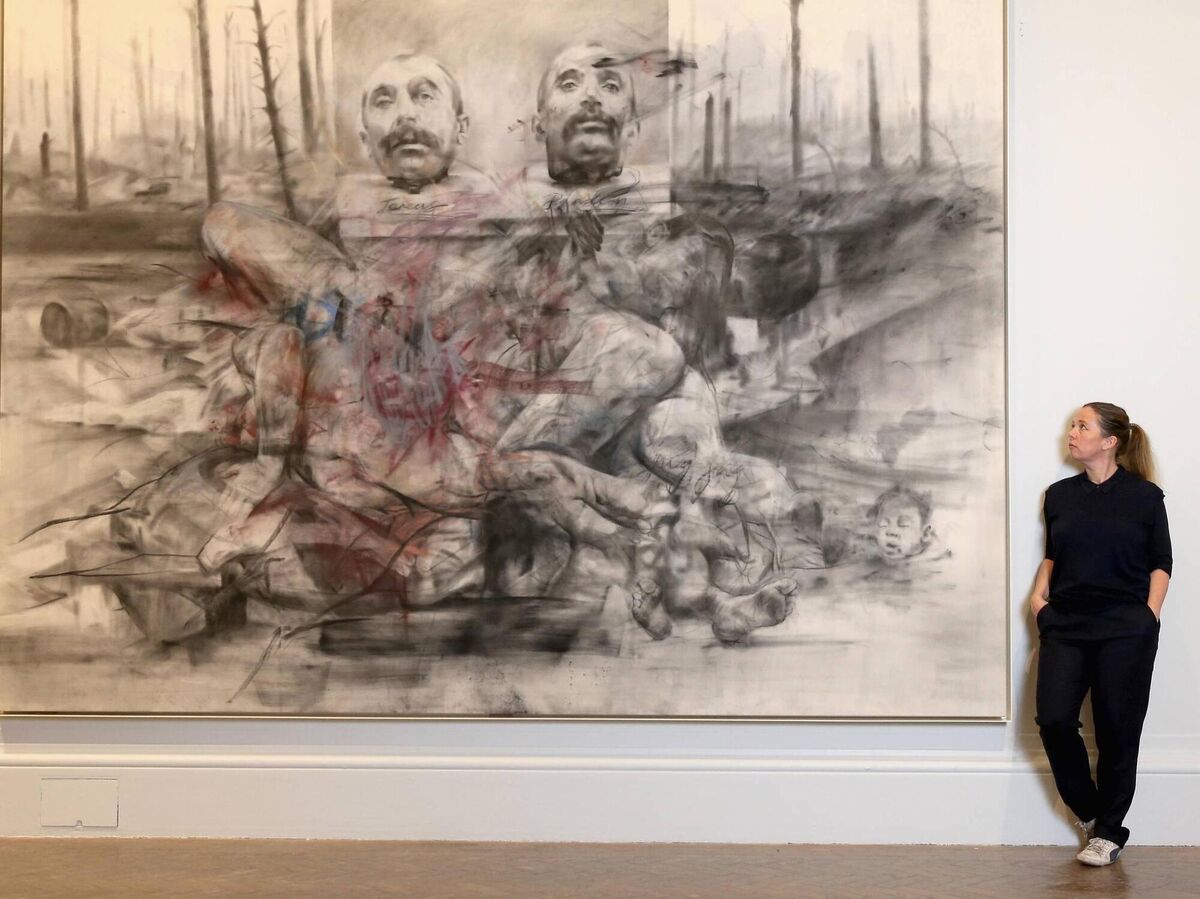
The Anatomy of Painting, which ran at the National Portrait Gallery in London from June to September, brought together 45 of Saville’s oil paintings and charcoal drawings in the largest retrospective of her work to date, and was arguably the most extraordinary solo exhibition by any artist in these islands in 2025. Saville is 55, and will no doubt continue to fascinate art lovers for many years to come.
The artist known as Banksy has been a prolific presence on the British art scene since the 1990s. Best known for his anti-establishment street art, which has popped up on walls throughout Britain, and as far afield as the Israeli West Bank, his identify remains a mystery, though many have speculated that he is in fact a Bristol-born graffitist named Robin Gunningham.
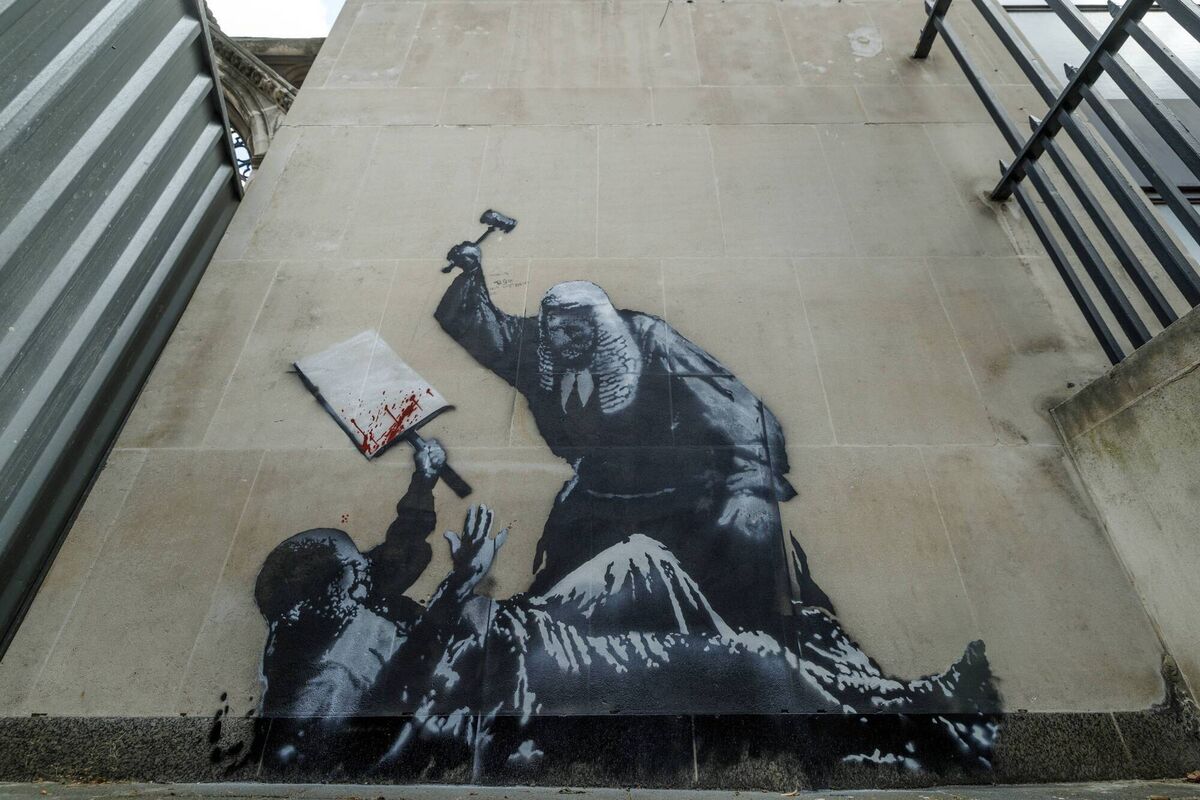
On Saturday September 6, 890 people were arrested at a London protest against the ban on activist group Palestine Action. Just two days later, on the morning of September 8, Banksy’s latest mural appeared outside the Royal Courts of Justice on Carey Street.
It depicted a judge, in a black robe and wig, wielding his gavel as a weapon against a protestor on his back on the ground. The mural was soon covered up and was quickly removed, but not before appearing in traditional and online media all over the world, confirming that Banksy remains the king of guerrilla marketing.
The most spectacular art heist of 2025 was the theft, in broad daylight, of the French Crown Jewels from the Louvre Museum’s Apollo Gallery on October 19. At 9.30am, two men parked a cherry picker outside the building, rode up to the second storey in a bucket, and smashed a window to gain entry.
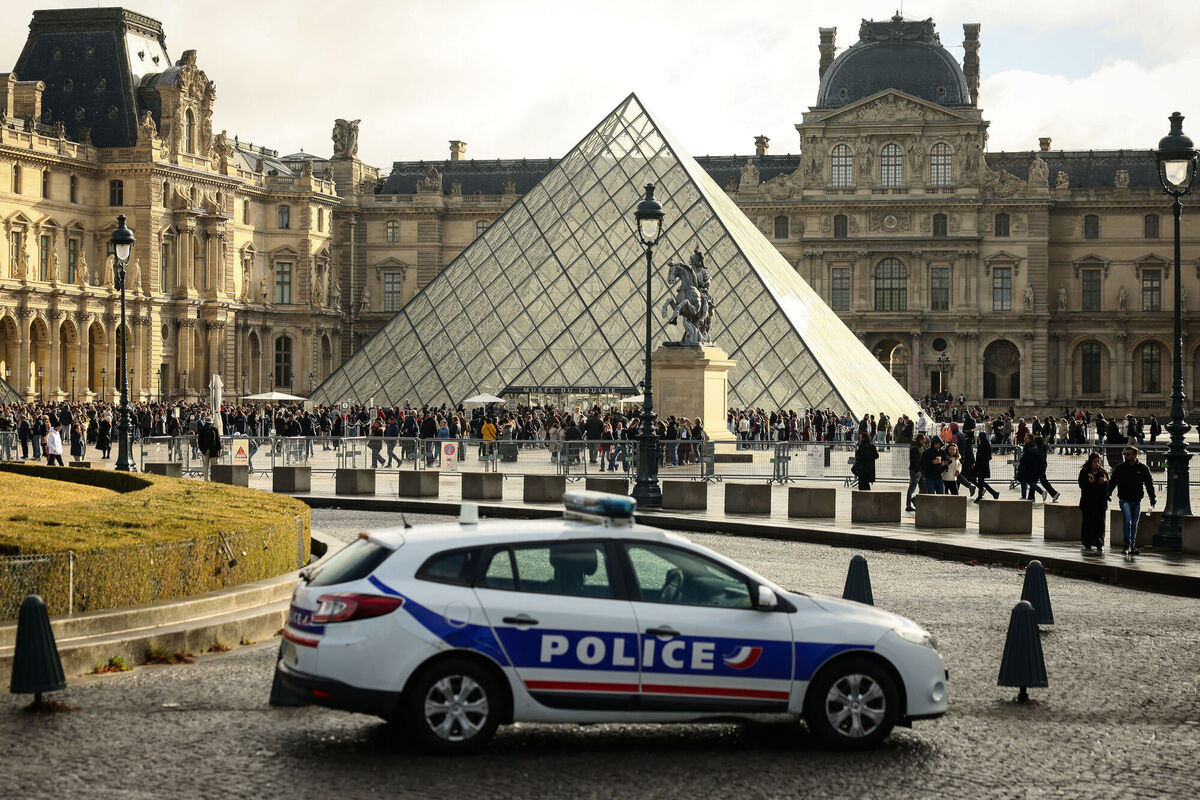
They used angle grinders to break open the display cases, making off with nine pieces of jewellery worth over $100 million in less than eight minutes.
One item, the 1855 Crown of Empress Eugenie, wife of Emperor Napoleon III, was dropped and damaged outside the museum as the perpetrators climbed onto scooters driven by accomplices and sped away. Police have arrested eight suspects, but the other stolen items, including an emerald and diamond necklace given by Napoleon I to his second wife, Empress Marie-Louise, have yet to be recovered.
The greatest controversy in the art world in 2025 concerned the use of artificial intelligence in creating ‘original’ art. Christie’s Augmented Intelligence Auction, which ran in London from February 20 to March 5, featured 34 works produced by Refik Anadol, Harold Cohen, Claire Silver and five others with the assistance of AI.
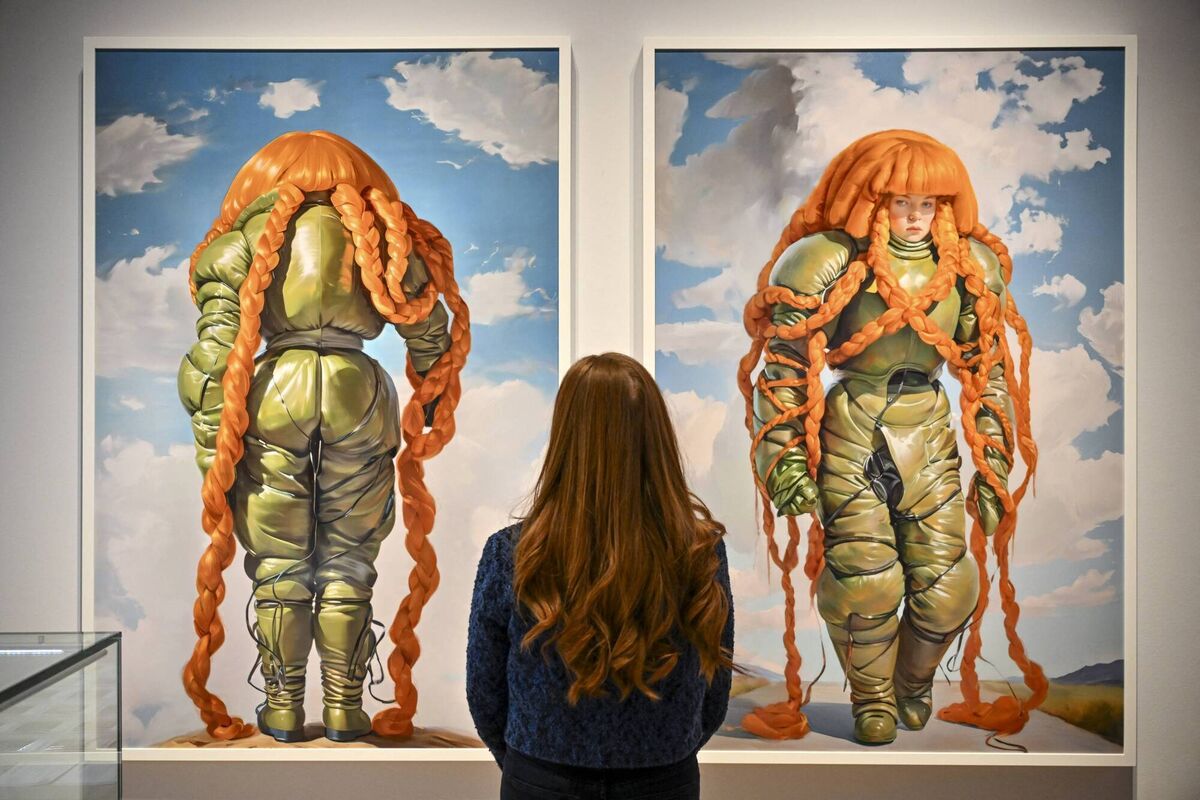
More than 6,500 artists signed a petition calling for the auction to be cancelled, claiming the artworks were created using AI models trained on copyrighted work without a licence. Christie’s countered that the artists involved had trained AI to use their own work as models, or had used information that was already in the public domain.
The auction went ahead as planned, and generated sales of $728,000. With AI technology still in its infancy, this will no doubt be the first of many controversies over what constitutes original or authentic visual art.