Gabriel Byrne at the Cork Film Festival: 'Festivals like this keep alive the idea that cinema matters'
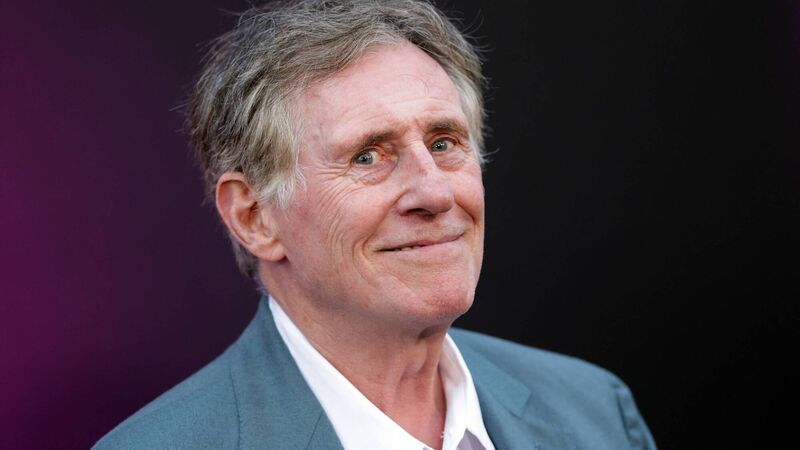
Gabriel Byrne attends the world premiere of "Ballerina", presented by Lionsgate, at TCL Chinese Theatre on June 03, 2025 in Hollywood, California. (Photo by Matt Winkelmeyer/Getty Images)
Gabriel Byrne appears on screen in the small square of a Zoom call, his face instantly familiar but lighter than expected, the Dublin timbre unhurried.
“I go down to Cork very regularly,” he says, rolling the word as though tasting it.
“Even though I live in the States, my first port of call is Dublin — and then down to Cork.”
He laughs when the connection stutters. “That’s the price of distance,” he shrugs, a man who long ago made peace with it.
Next week, he’ll close that distance, returning to Cork Film Festival to talk about , the 1985 political thriller produced by David Puttnam, who is being honoured by the festival this year.
For Byrne, it’s more than a trip down memory lane. It’s a return to the film that shifted his career from Irish theatre actor to international leading man.
“I haven’t seen the film for a long time,” he admits, “but I remember the world it came out of — Thatcher’s Britain.
The film’s plot — a journalist uncovering a government cover-up — could have been lifted from the headlines then or now.
“It’s about how far you can go as a journalist,” he says.
“It was a very atypical movie. It ends not with the hero getting the girl and riding into the sunset, but with the reporter’s death — an explosion dismissed as a gas leak on the news. It was brave. Political films were rare then.
“It asked: What is the role of a journalist in a free society? What are the pressures to tell or hide the truth?”
He was a decade into acting when came his way, but its success transformed the trajectory.
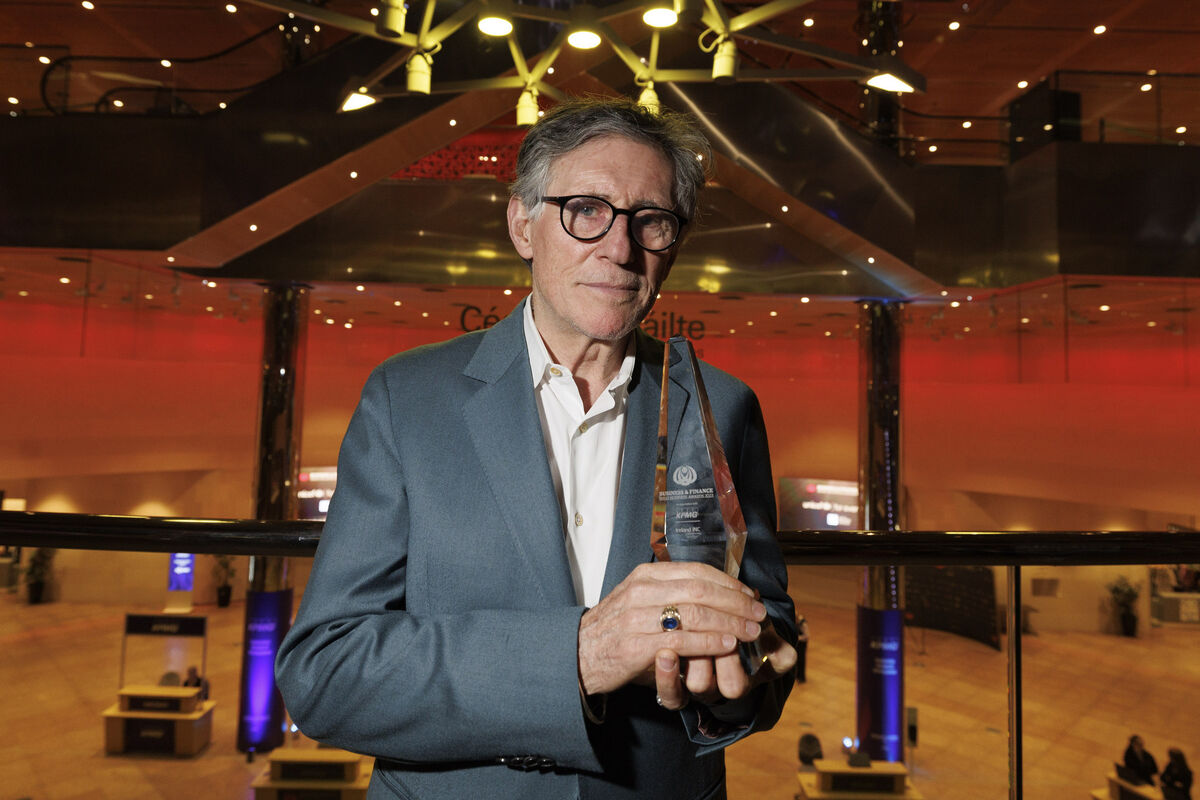
Before that, Byrne had already carved out a distinctive path: Born in Dublin in 1950, he began at the Abbey Theatre and found early fame on RTÉ’s and .
His film debut in John Boorman’s (1981) led to a steady climb through stage and screen, but it was that opened international doors.
From there came Ken Russell’s , the Coen brothers’ , and a string of transatlantic performances that made him one of cinema’s most quietly magnetic presences — from , and to and HBO’s , which earned him a Golden Globe.
Nearly five decades on, Byrne remains one of the few actors equally at ease in Hollywood, European arthouse, and Irish theatre — a career built less on stardom than on substance.
“Up to then, Irish actors were consigned to the back of the shot,” he says.
“In films made in Ireland, you’d still have Americans or Brits doing bad accents, while the Abbey Theatre crowd got one line. Playing an English reporter was, for me, a huge breakthrough, not just as an actor, but as an Irish actor being allowed into that world.”
The role led to , then , and, as Byrne puts it: “America opened up after that.”
Yet, he remembers that early prejudice.
“Being Irish meant being the guy in the corner of the pub in with one line.”
He didn’t soften his accent or his sense of self.
“I’ve never taken out American citizenship,” he says. “I’ve always wanted to remain Irish. But you do notice the way you’re perceived changes when you leave. Somebody once said: ‘I never knew I was Irish until I left Ireland.’ And it’s true. Abroad, that becomes your whole identity.”
The conversation drifts naturally to the state of cinema itself — the real reason he’s glad to support Cork Film Festival. “The business has changed hugely, even in the last 10 years,” he says.
“Which is why film festivals are more important than ever. They give people in the business a chance to come together, and they let audiences discover new voices on a big screen together.”
He worries that the communal magic of cinema is fading. “Studios never imagined their days would be numbered, but home technology has altered everything.
"Big cinemas aren’t inviting anymore. You have to applaud the people running independents — they’re like small bookshops, a stand against corporate entertainment.”
Watching a film at home, he says, will never replicate sitting in the dark with strangers.
“That collective participation — that’s the key. It’s still a wonderful experience.
“You can stop the film at home and make a cup of tea, but you lose the moment where everyone breathes together.”
Byrne’s concern lies in what’s coming next.
“AI is going to affect the business hugely,” he says.
“Not just how films are made, but how they’re distributed. Netflix, Amazon, all those streamers, they’ve become their own studios now.
“They control the channels of distribution, so the old studio system has been pushed onto the back foot. The danger is that the communal experience gets replaced by an algorithm.”
He smiles ruefully.
“People used to queue around the block for a new Robert Altman film. That collective excitement doesn’t exist anymore. Film has become home entertainment. But it’s survived everything before — from silence to technicolor to the blockbuster — and it will evolve again. It always does.”
His affection for Cork Festival lies in that belief.
“Festivals keep alive the idea that cinema matters. Even Cannes and Venice are under pressure to show big studio pictures, but you’ll always find worthwhile independent films in there. That’s why Cork’s reputation is so important — it’s great for the city, great for filmmakers, great for filmgoers.”
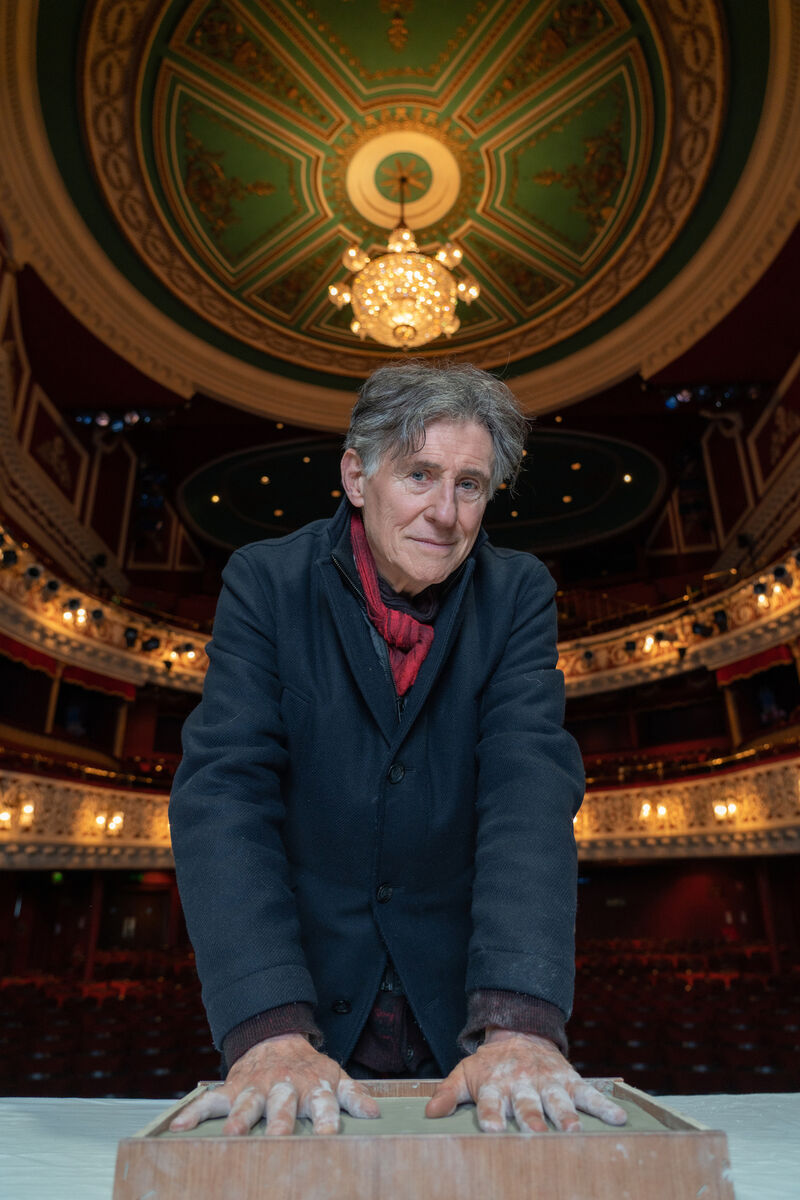
When he talks about David Puttnam, the admiration is immediate.
“David was incredibly successful at that time, but he took risks. was one of them. He could have stayed in Hollywood making safe choices, but he wanted to tell stories that mattered. He couldn’t work in that system because the kind of films he believed in weren’t being made. So he made his own.”
That decision, Byrne says, changed things for actors too. “Until then, the Irish in British cinema were caricatures. Defence gave me a lead role as an Englishman — that was unthinkable then. And it opened the door for others. Now, it’s unremarkable to see an Irish actor lead an international film. That’s progress.”
The progress wasn’t easy. “When I started, I’d have to fly from Dublin to London for an audition and back the same night. I couldn’t afford it. You’d walk into a room as one of 10 people, and they had no idea you’d been at the airport at seven that morning.
“Irish actors were only offered small parts — the IRA man, the drunk, the comic relief.”
He laughs softly. “That was the gig.”
He still marvels at the change. “Now you look at the generation coming out of Ireland, it’s wonderful.
“They didn’t have to go through that grinding start. You can be Irish and be front and centre.”
Byrne himself never quite believed in arrival. “I’ve never felt I’d ‘made it,’” he says.
“It’s like football. Look at Liverpool right now. You can win the league, but next season you start again. You can’t live off the last victory.”
He’s philosophical about fame and its half-life. “You look at the people who were the biggest names of their day — Brad Pitt, Johnny Depp, Leonardo DiCaprio — and now they’re the old guard. It’s a young person’s game in some ways. You have to make peace with that, to hand over the baton. If you don’t, it’ll be taken from you anyway.”
There’s no bitterness in his tone, only understanding. “The key is to stay grounded. I’ve seen what happens when success changes people.
“They go from being decent and approachable to being divas, never satisfied. Fame makes you lose the run of yourself. I learned early on that the most important thing is the work. Whether you’re a plumber or an actor, the job is the job. Do it, do it well, then move on. The rest is noise.”
His distrust of celebrity is rooted in experience. “When I worked on The Riordans, those people were more famous in Ireland than any film star. They couldn’t go anywhere. I was there the day RTÉ came in and told a roomful of 25 people their careers were over. That’s when I learned how meaningless fame can be. One day you’re adored; the next you’re forgotten.”
He shakes his head. “I’ve seen people suffer from it. Not being able to walk down the street, being chased, hiding in cafes. It’s not a pleasant thing. I’d rather be known for the work than for being known.”
For all that realism, there’s still warmth in his relationship with home. “Cork’s always been special,” he says. “My wife and I got married in Ballymaloe in 2016, so it’s a place of great memories.
“Sometimes I feel like going to East Cork, sometimes West — they both have their own magic. The people, the food, the air — it’s one of my favourite places.”
He recalls his first visit, decades ago.
“We did a play at the Opera House called The Liberty Suit, about the councillor Mannix Flynn. It was a huge success in Dublin and in Cork. The Cork audience took to it, even though it was a very Dublin play. I was down there for six or seven weeks and almost started talking like a Cork man,” he laughs.
“It’s a lovely place to go.”
When he arrives back this November, it will be to celebrate not just a film, but a lifetime spent believing that art still matters — that truth told on screen can shift something in the world beyond it.
“Festivals like this keep that flame alive,” he says.
“Because when you sit in the dark with strangers and watch a story unfold, you’re reminded that there’s more that connects us than divides us. And that’s always worth defending.”
- Gabriel Byrne will be in conversation with Academy Award-winning film producer David Puttnam at a special screening of on November 7 at the Triskel as part of Cork Film Festival