Phil Coulter: 'People misinterpret Ronnie Drew. They think he was a bit of a bowsie'
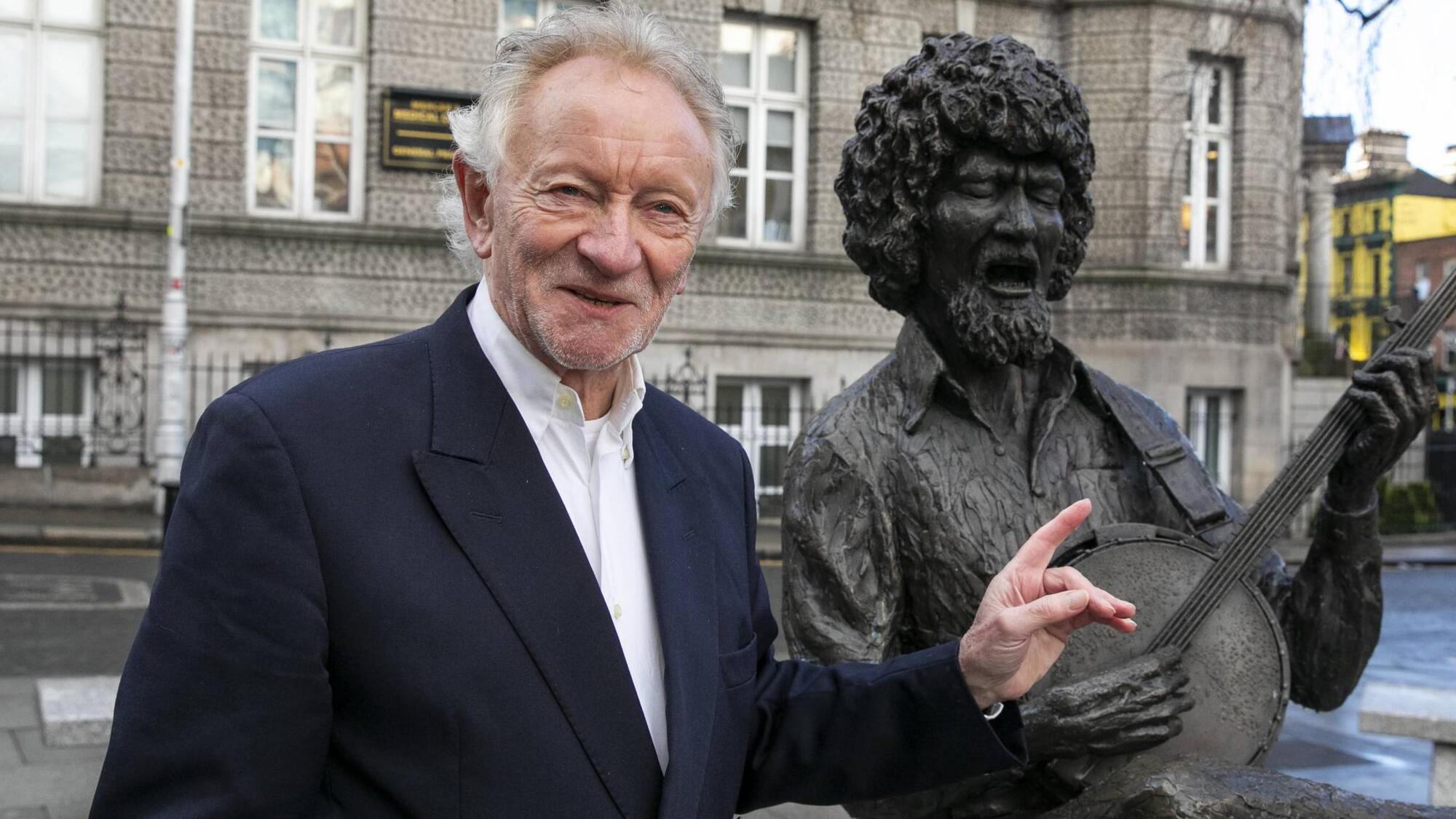
Phil Coulter at the Luke Kelly statue on South King Street, Dublin. Picture: Jason Clarke
Phil Coulter first crossed paths with The Dubliners in 1969. He was commissioned to write a song, for a movie of the same name, starring Richard Harris and Sean Connery. He only had one band in mind to sing the song – The Dubliners. Their manager, Noel Pearson, organised for them to meet up in a London studio to record the song.
“In the event the song never got into the movie, but more importantly, it introduced me to The Dubliners,” says Coulter. “There was a grudging but slowly growing rapport. They weren't at all impressed by the fact I'd won the Eurovision Song Contest and sold millions of records. That was of no interest to The Dubliners. I had to earn my spurs with them.”
Coulter says he became quite close to Ronnie Drew. “I live in Bray and before he passed away, he lived in Greystones. Ronnie didn't suffer fools gladly. He was probably the most suspicious of Coulter when I arrived on the scene. It took longer to warm him up. He was such a character. People misinterpret Ronnie. They think he was a bit of a bowsie. He was anything but. He was well read, very bright, well-travelled, just great company apart from anything else. We shared things in common. We went horse-riding together.”
The Derry man has fond memories of Drew’s wit. “He was always on the drink and off the drink. When he had come back on it, he was in his local pub in Greystones, and some busy body came in and went, ‘Ah, Jaysus, Ronnie, I thought you were off the gargle,’ says Coulter, adopting Drew’s distinctive guttural drawl: ‘I'm having a gin and tonic,’ he said. ‘When you have one, I find it's very good to help you mind your own business.’”
In the early days of their collaboration, Luke Kelly was Coulter’s biggest ally. Coulter remembers hearing him in the studio singing He had never heard the song before. He loved its Americana and workers’ rights aspects. When he added some piano at the top of it, tumbleweed rolled through the studio – Ciarán Burke wasn’t convinced about putting piano on a Dubliners song, but Kelly won them over.
Kelly had an incredible voice, says Coulter: “He had great integrity about the songs he sang. For example, he would not sing S at Dubliners’ gigs because he didn't think it would get the respect it deserved. There was only one recorded film version of Luke singing it on a TV series the great Jim McCann did.
“Luke had a super voice. He had a great engine. Technically, I can't remember ever having to stop and go, ‘No, you’re a bit flat there on those last four bars’ or ‘You’re a bit sharp. You came in too soon.’ Never. He was boom. His intonation was impeccable. He had great ears, and he had great diction. If you listen to Luke singing, every word is clear. He knew how to project his voice, how to interpret a song.
– Luke's voice was in my head when I was writing that. That's a privilege for any songwriter – to have Luke Kelly’s voice to breathe life into your words. is a song which means a lot to me. It’s a very personal song [inspired by Coulter’s son who was born with Down syndrome].”
All five of The Dubliners classic line-up – Kelly, Drew, Burke, Barney McKenna and John Sheahan – travelled to Derry for Coulter’s mother’s funeral. It was a mark of the respect they had for him. In all, Coulter produced six of the band’s albums.
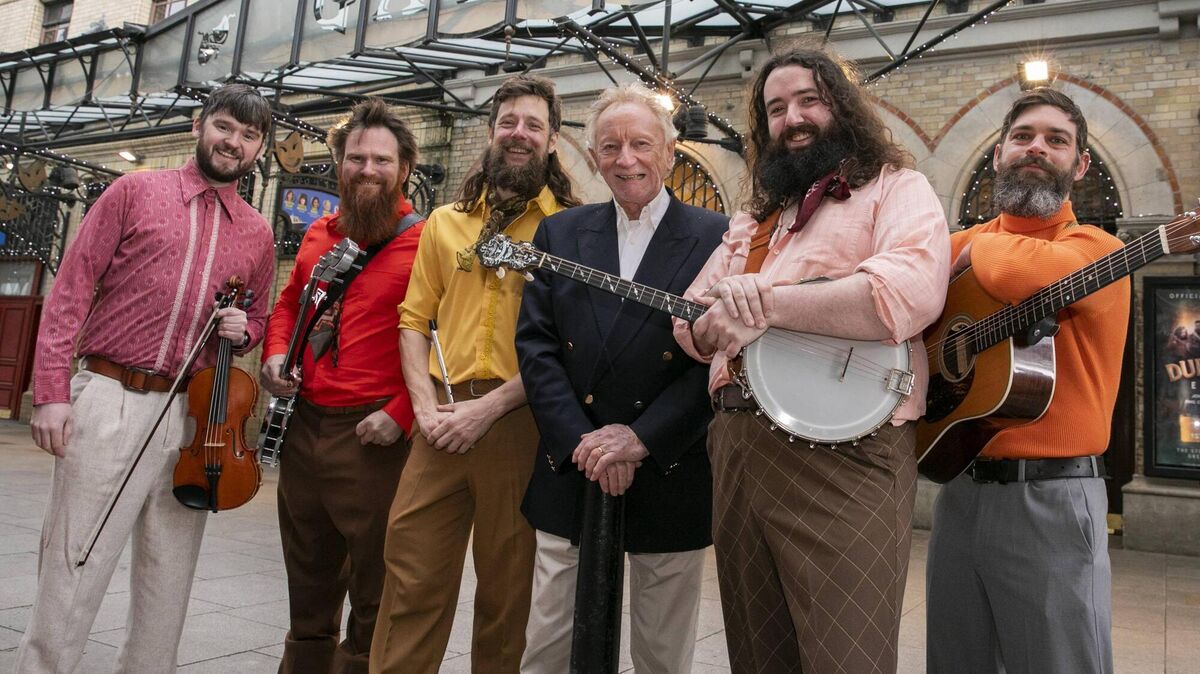
The last surviving Dubliner, Sheahan (producer) and Coulter (musical director) have teamed up again for an original stage show celebrating the band’s music, which returns to the Gaiety Theatre for a run this month. Five musicians bring the band back to life in a show narrated by Imelda May. Adam Holohan has the unenviable task of inhabiting the role of McKenna, a singular personality.
“Barney inhabited a parallel universe – ‘Barney Land,’ which was his domain,” says Coulter. “You suspended normal judgment with him. I remember we were recording the great Irish song Ciarán Burke was a gaeilgeoir. He sang it first as gaeilge. Then I did a translation into English, which was spoken by Ronnie. With John Sheahan playing the whistle behind, you had Ronnie going, ‘Tis the reason of my sorrow that I’m forbidden/To visit the lonely glen where my love dwells’. We went through the whole thing, got to the end. The last cadence was, ‘If you're at peace with the love of your heart,’ and it all fades away, diddle-eye.
“Down in the control room, you couldn't see into the studio, so I didn't know what was going on up there. As I'm pulling down the faders after the song was finished, I heard this crackling interference. I'm assuming it’s something technical and it’s ruined. I went up to the studio to tell the boys, ‘Damn it, there’s been a technical error. We’ll have to go back and do it all over again.’ I walk into the studio, and I see The Dubliners in a semicircle around the microphone, and on the floor fast asleep – Barney McKenna. The noise that I heard was Barney snoring.”
- The Dubliners Encore, Dublin’s Gaiety Theatre, September 15-20. See: thedublinersencore.com
- Phil Coulter is on a nationwide tour, November 4-December 20. Munster dates include Siamsa Tire, Tralee, Nov 23; Glor, Ennis, Nov 28; St. John’s Church, Waterford, Dec 5. See: philcoulter.com
There was a time in the 1990s when hosting the Eurovision Song Contest was a dilemma for Ireland because of the financial burden it placed on RTÉ, the national broadcaster. Ireland had won the competition four times in five years, including three in a row from 1992 to 1994. Those problems seem a distant memory now, with only one top 10 finish since 2000 (when Jedward finished eighth in 2011).
Phil Coulter has an enviable record in the contest. He co-wrote Sandie Shaw’s 1967 winner and Cliff Richard’s which finished runner-up the following year. He also arranged and produced Dana’s 1970 winner, He advises Ireland should return to basic principles and focus on substance rather than style.
“The only time we ever did well in Eurovision was when we had a good song, not a bells and whistles dance routine, nothing gimmicky. There are European countries who can do the other stuff – the choreography, the theatricality, the lighting rigs – better than we can. These days, the hairdresser is nearly as important as the song.
“There has not been a big global hit out of the Eurovision, arguably since Abba’s win in 1974. The Eurovision produced songs like “Volare, oh, oh!” A song still alive today. If I stopped five people on the street and asked them to tell me a Eurovision winner from the last three years, number one, they couldn’t tell you, number two, they certainly wouldn't be able to sing it. I still earn sizable royalties from and that's from 1968. Why? Because the song has legs.”