Book review: Memoir rich in literary allusion, social mobility, and so much more

'Homework' is an account of Geoff Dyer’s upbringing in Cheltenham in the 1960s and ‘70s, a world he evokes in gloriously minute, Proustian detail
Book review: Memoir rich in literary allusion, social mobility, and so much more

Geoff Dyer’s 1960s working-class childhood is depicted as unapologetically ordinary, filled with the boyish toys and past times that arouse gentle nostalgia for the mid-20th-century world.

  • Homework 
  • Geoff Dyer 
  • Canongate, €20.99

It has become commonplace to laud English writer Geoff Dyer for his versatility, but that makes the praise no less valid. 

A multi-awarding author of numerous works of fiction, non-fiction, criticism, and other surprisingly genre-defying books, he has now turned his highly accomplished hand to memoir. 

Homework is an account of Dyer’s upbringing in Cheltenham in the 1960s and ‘70s, a world he evokes in gloriously minute, Proustian detail.
Dyer’s 1960s working-class childhood is depicted as unapologetically ordinary, filled with the boyish toys and past times that arouse gentle nostalgia for the mid-20th-century world. 

He writes charmingly about his ever-growing collections of army figurines, Airfix models, Action Man dolls, and bubblegum cards, of playing conkers in the autumn, of the colours and tastes of long-gone sweets, and the rapture of receiving annuals at Christmas. 

Later, Dyer writes with understated wit and self-deprecation about his adolescent schooldays, detailing his clumsy efforts with girls, his love of football (undiminished by his own mediocrity at the sport), his bookishness, his embarrassing puberty, and his developing sense of physical inferiority.

Surrounded by an array of grandparents, aunts, uncles, cousins, and friends, being an only child was never a cause for loneliness. 

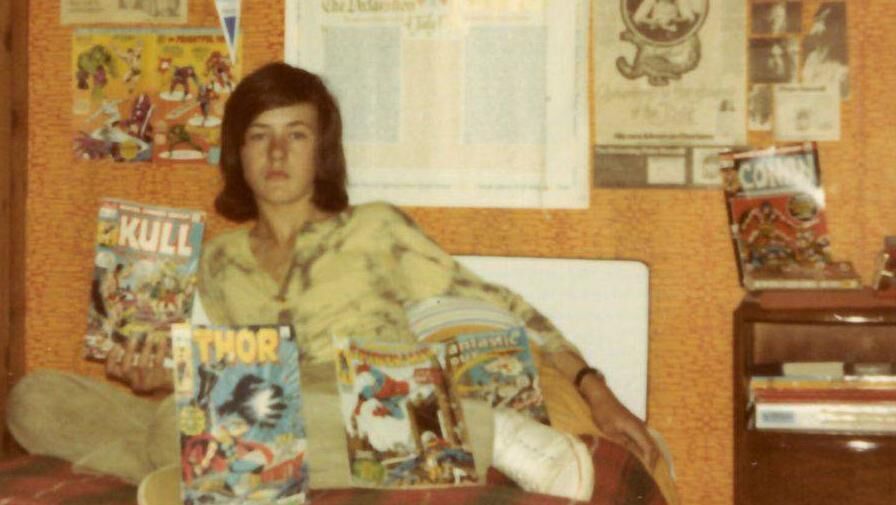
A young Geoff Dyer in his bedroom in his family's home in Cheltenham, England.

But, naturally, the two central people in his life — and in the book — are his parents. 
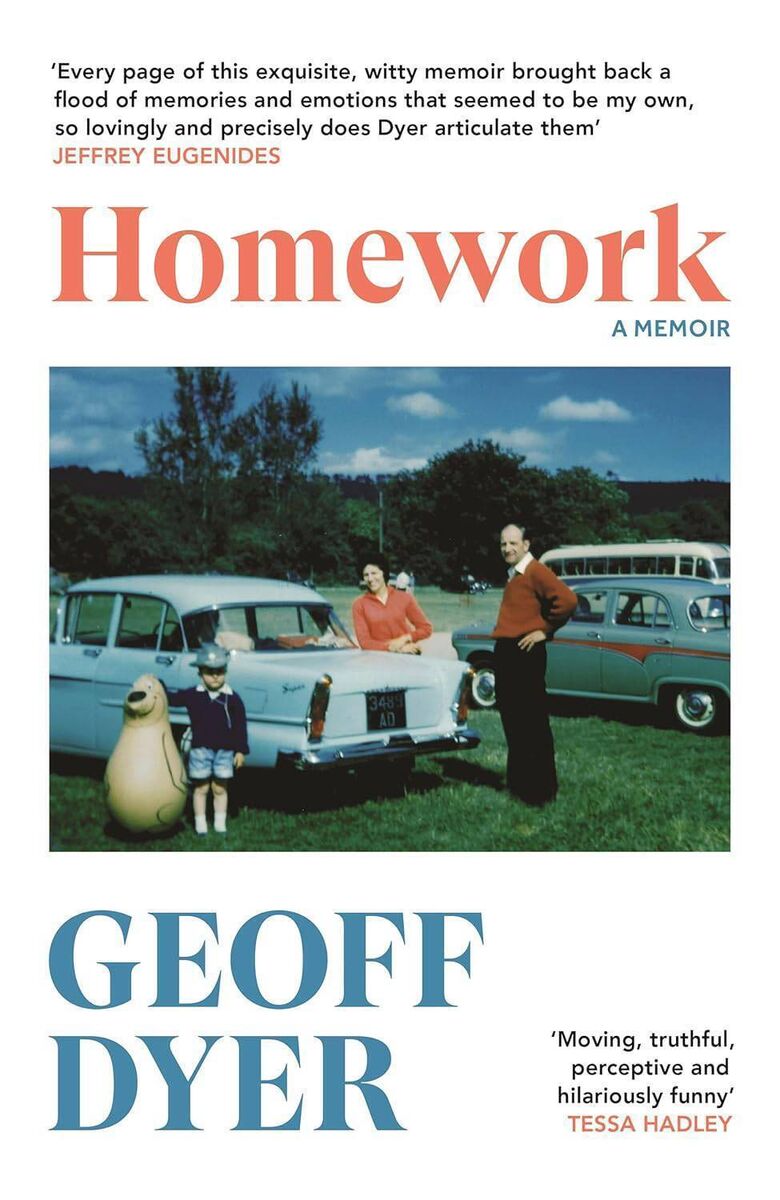
His portrayal of his reticent, Methodist-background mother Phyllis, whose birthmark tragically afflicted her entire sense of self, is tender and moving. 

Dyer’s more complicated portrait of his father Arthur, a Labour-supporting, Thatcher-despising, staunchly anti-Royalist engineer, is of an unusually tight-fisted and tight-lipped man, who was also self-sacrificing and without any real meanness. 

He stresses that although they were not poor, his father’s internalisation of the wartime rationing spirit simply meant he would never spend any money.

Dyer presents distinct dead or diminishing worlds. There is his own vanishing world, the source of the memoir itself. 

There is the dying world of his parents’ generation, and before them, his grandparents’, whose farming lives were to the young writer an alien mixture of myth and the Victorian fiction of Thomas Hardy.

Dyer’s family history also acts as an account of social mobility in England over a century or so. 

His mother’s father, a veteran of the Battle of the Somme, was an illiterate man from rural Shropshire, while much of Arthur Dyer’s young life was shaped by the parsimony and violence of wartime experiences.

Arthur is depicted increasingly at odds with the post-war consumer boom, constantly complaining about the cost of things, at one point even putting so little petrol in his beloved Vauxhall Victor that he has to coast down inclining roads.

Even so, his father could not stop the forces of progress. In 1970, the family moved to a bigger home and, later, Dyer went to study in Oxford. 

Although Homework is not a book about Dyer’s formation as a writer, it is a book rich in literary allusion. Yet, this literariness is never heavy-handed but lightly worn and always illuminating.

Dyer is an immensely skilled writer, one who can seamlessly switch from joyfully endorsing his childhood love of sugar to considering, by way of Roland Barthes, the semiotics of an old family photograph.

Like all the best memoirs, Homework also reflects on the process of recollection as well as offering a defence of it: ‘Can’t memory’, he asks, ‘be a species or form of fact?’ 

The facts of his youth, as he recalls them here, are poignant, joyous, funny, sad and evocative, and offer a portrait of a life of reasonable contentment in post-war England that feels at once both fading and familiar.

BOOKS & MORE

Check out our Books Hub where you will find the latest news, reviews, features, opinions and analysis on all things books from the Irish Examiner's team of specialist writers, columnists and contributors.

More in this section

Scene & Heard

Newsletter

Music, film art, culture, books and more from Munster and beyond.......curated weekly by the Irish Examiner Arts Editor.

Cookie Policy Privacy Policy Brand Safety FAQ Help Contact Us Terms and Conditions

© Examiner Echo Group Limited