Author interview: Psychiatric care left wanting — ‘I lost so much’ as a psychosis patient
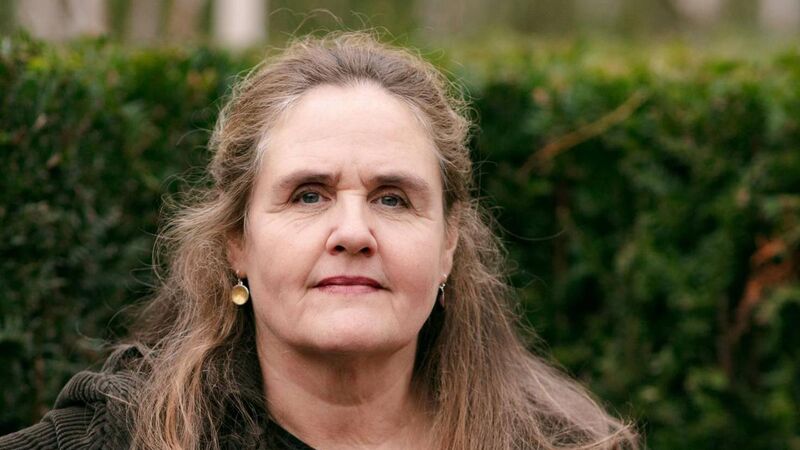
In this compelling and affecting memoir Mary Ann Kenny describes how the experience of psychiatric care left her feeling dehumanised and even more traumatised
Author interview: Psychiatric care left wanting — ‘I lost so much’ as a psychosis patient

Mary Ann Kenny: 'I felt cast out by society. I had no rights, I had no voice. And that is the greatest kind of trauma.'

  • The Episode 
  • Mary Ann Kenny
  • Sandycove, pb €17.99

When  Mary Ann Kenny’s husband John collapsed and died while out running near their home in Co Dublin, she was blindsided by the sudden and devastating loss. But for Mary Ann, the nightmare was only beginning.

The circumstances of John’s death and having to tell her two young sons had a profound impact on her and she struggled to cope in the aftermath. 

She was prescribed sleeping pills, sedatives, and finally anti-depressants, to which she had a severe physical reaction. 

Soon after, she experienced psychosis, believing her children had somehow been poisoned by her medication, and ended up in psychiatric care on two occasions.

In her compelling and affecting memoir, The Episode, she describes how the whole experience, including being denied access to her children for a period, left her feeling dehumanised and even more traumatised.

“I felt cast out by society. I had no rights, I had no voice. And that is the greatest kind of trauma. On an evolutionary basis, we need to be part of a society,” she says.

We need connection with other people. We need care when we’re sick and that had been withdrawn from me.

It is 10 years since John’s death and Mary Ann’s admission to a psychiatric hospital; her career as an academic is thriving and she and her sons, now teenagers, are in a good place. 

However, the anger she feels about her treatment stayed with her, which eventually led to her writing the book.

She says: “I couldn’t put it behind me. It was consuming me and my every thought. I have a very strong sense of injustice, and so did John.

“When my involvement with psychiatric services came to an end, I felt liberated, but I was also full of questions about what had happened to me.

“I requested my files and I was enraged by what I read, about the way I had been treated as a person who had suffered a very sudden and tragic loss and was at the lowest point of my life.

“I felt I hadn’t been treated with the compassion and care that I deserved. Yes, I lost John but I lost so much as a patient.”

That astonishing lack of care and compassion towards a grieving wife and mother is evident throughout Mary Ann’s treatment as recounted in the book. 

Kindness needed more than psychiatric treatment

She acknowledges that while she did require psychiatric treatment, what she needed even more was kindness and most of all an opportunity to process the overwhelming accumulation of grief, uncertainty, and anxiety.

She also felt tremendous guilt for relying on her friends and her own elderly mother who herself needed care.

As she writes: “What I needed most was to rest my tortured brain and my exhausted body.”

Instead, the death of her husband was barely mentioned and she was subjected to endless questions and team meetings where some staff didn’t even introduce themselves or acknowledge her presence.

“It was absolutely torturous and excruciating to me to be asked perpetually about my thoughts at a time when I was heavily medicated, seriously ill, and exhausted and unable to verbalise my thoughts anyway, and certainly not in front of a group of professionals, half of whom I might never have met before,” she says.

Mary Ann received no talk therapy during her admissions and it was only when she left hospital and attended a cognitive behavioural therapy group that psychotic depression was explained to her.

“It is beyond belief,” she says. “When I would say to people that I didn’t get any therapy when I was in hospital, they would be like: ‘What? You must have’.”

It’s shocking, and it’s seems to be much more a feature of psychiatric treatment.

She compares her experience to one she had when she was admitted to hospital for a serious injury two years ago.

“One of the big differences was that I was kept informed the whole time,” she says. 

“I was never sent copies of any letters that went from my psychiatric consultant to my GP, whereas, when I had my physical injury, every single communication between my surgeon and my GP was copied to me so I was kept up to date the whole time.

“The first time I saw the equivalent letters for my psychiatric treatment, and I’m talking about my outpatient care as well over the following years, was when I requested my files.

”I was kept completely in the dark. It is all part of that dehumanisation and disempowerment.”

According to Mary Ann, the psychiatric system views mental illness as a chronic condition, which is counter-productive to recovery: 

“There was no sense from them that this was ever going to end — they did not hold out any hope that this would resolve itself.”

They view the person who’s mentally ill as a collection of symptoms — weight loss, insomnia, delusional thinking, in my case — and they treat those symptoms in a vacuum.

When her brother visited her, he told her what she describes as the single most helpful thing that anyone said to her during her period in hospital.

She writes: “It’s an episode… and an episode has a beginning, a middle and an end… you’re now in the middle — and the middle is horrendous — but episodes always end, and this will end.

“No mental health professional ever said anything remotely similar in all the months I spent being treated by them. It would have helped if they had.

“As it was, my brother’s mantra gave me hope. And it turned out to be true.”

Mary Ann refers to being caught up in a mental health system that is itself sick. 

She says she would be “delighted” if mental health practitioners and social workers read the book and learned something from it.

“I have been as fair as I possibly can to them,” she says. “It is a hard position that they’re in, but it is not black and white.

“I hope that they see that there is a human being at the heart of this particular mental health emergency and every mental health emergency — a human being who is suffering.

“We all need to have a bit more compassion — professionals and society.”

She found the process of getting her experience onto the page cathartic to an extent but it was also a journey of discovery as she pieced together what had happened to her.

“I wanted to put my story on the record,” she says. “There were other records — this is my record. But I had to unravel it.

“It was very therapeutic, it hugely aided my understanding of what had happened to me.”

While she has achieved clarity, she says her experience in psychiatric care is never far from her thoughts: 

“I still think about so many aspects of this story all the time. I think about John all the time and his death, it was his anniversary recently.

“It’s spring again, the sun is shining, the clematis is flowering … and then the next few months come and it’s July and I’m thinking, this is when … so it’s never too far from my thoughts, any of it.”

The Episode not only serves as a reminder that there is always hope but also as a way to remember her husband John and celebrate all that he brought to his family’s lives.

“We are a very close unit and we have our sad moments, but we keep John alive and we talk about him a lot,” Mary Ann says.

“I wove whatever I could about him into this story. He would have been incensed about what happened to me but overjoyed by this book.

“His spirit lives on in it, it really does.”

More in this section

Scene & Heard

Newsletter

Music, film art, culture, books and more from Munster and beyond.......curated weekly by the Irish Examiner Arts Editor.

Cookie Policy Privacy Policy Brand Safety FAQ Help Contact Us Terms and Conditions

© Examiner Echo Group Limited