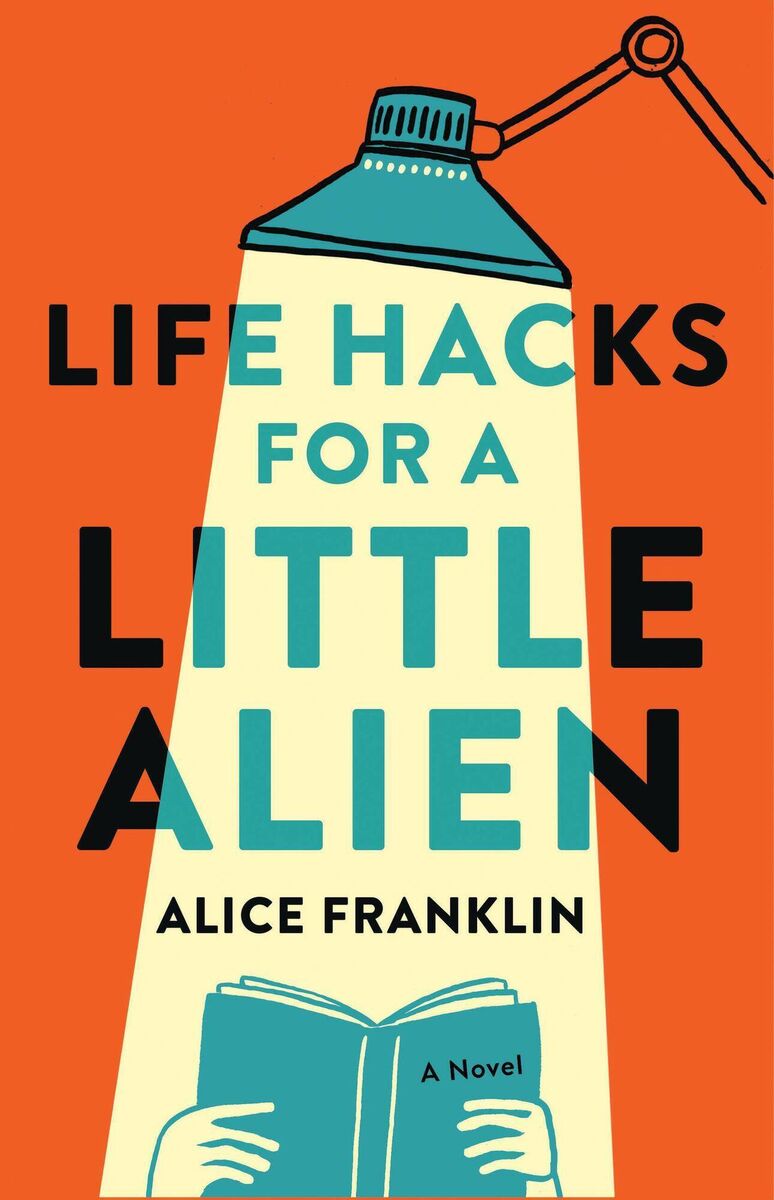
Book review: Neurodivergent narrative drives this sparkling debut

Unconventional book is a gripping story about a nameless, neurodiverse girl growing up in the 1990s and 2000s
Book review: Neurodivergent narrative drives this sparkling debut

From the narrative structure to the eccentric characters, nothing about Alice Franklin's book is conventional.

  • Life Hacks For A Little Alien 
  •  Alice Franklin
  •  Riverrun 

ALICE Franklin’s debut novel, Life Hacks For A Little Alien, tells the story of a neurodivergent girl growing up in the 1990s and 2000s, depicting her journey from child to teen with humour and style.

The main character is nameless, referred to only as “Little Alien” throughout. Narrated by Little Alien’s all-knowing future self, the book is addressed to her current self. This is confusing at first, but Franklin writes with serious panache and most readers will adapt to the unusual structure quite quickly.

In the first paragraph, Little Alien is told (by adult Little Alien) that she superficially resembles other children but is different to them and always will be. In her early years, she constructs sentences and uses words in unique ways, leading to repeated misunderstandings.

Her sense of being something “other”, of being an alien in human form, only increases as she gets older.

Little Alien’s encounters with formal education are not portrayed with affection. Her difficulties in school begin on her very first day when she doesn’t entirely grasp what’s being asked of her or why she’s there in the first place.

Later on, she gets in trouble for cutting up class bibles. As the years pass, she moves from school to school encountering one unsympathetic teacher after another in run-down, oppressive classrooms.

She doesn’t socialise well or make friends, aside from another neurodiverse boy named Bobby, who becomes a companion and confidante for life.

If school is a source of confusion and angst for Little Alien, her home life brings little respite. Her mother’s battles with mental illness mean that she is frequently absent or unavailable. Her father is well-meaning in his ham-fisted attempts to bring stability to Little Alien’s life and home but, in the end, he too is an agent of chaos in her life.

Considering all this, it’s unsurprising that Little Alien struggles to sleep. Watching TV late one night, with everyone else in bed, she has an epiphany when she sees a documentary on the Voynich Manuscript, an illustrated 15th century text written in a language that nobody has yet decoded. A complex text that can’t be understood is something that Little Alien can relate to.

The book becomes an obsession and she soon finds herself spending all of her free time in her local library reading everything she can about it. The library becomes her safe space, contrasting sharply with the harsh and repressive atmosphere of the classroom. There are many twists and adventures to come but this obscure manuscript gives her life purpose and is, ultimately, her salvation.

The positioning of the narrator as a linguist is deeply significant. Little Alien understands and uses language differently to every other character in the book, bar her only friend Bobby. Her adult self is present to reassure her that there is nothing wrong in how she speaks, thinks, or writes. 

Little Alien is a charming character in all her forms and the arched tone of the narrator, as well as the quality of Franklin’s prose, allows her to address some challenging subjects such as mental illness, incarceration, and the dangers the adult world poses to children without the novel becoming overly sombre.

From the narrative structure to the eccentric characters, nothing about this book is conventional. Even the footnotes at the end of each chapter, supposedly for “further reading”, are part serious, part narrator’s joke on the reader. It all only adds to the joy of the experience. 

A simple but gripping story superbly written; this is a sparkling debut.

x

BOOKS & MORE

Check out our Books Hub where you will find the latest news, reviews, features, opinions and analysis on all things books from the Irish Examiner's team of specialist writers, columnists and contributors.


More in this section

Scene & Heard

Newsletter

Music, film art, culture, books and more from Munster and beyond.......curated weekly by the Irish Examiner Arts Editor.

Cookie Policy Privacy Policy Brand Safety FAQ Help Contact Us Terms and Conditions

© Examiner Echo Group Limited