Helle Helsner: Danish artist has made her home in West Cork
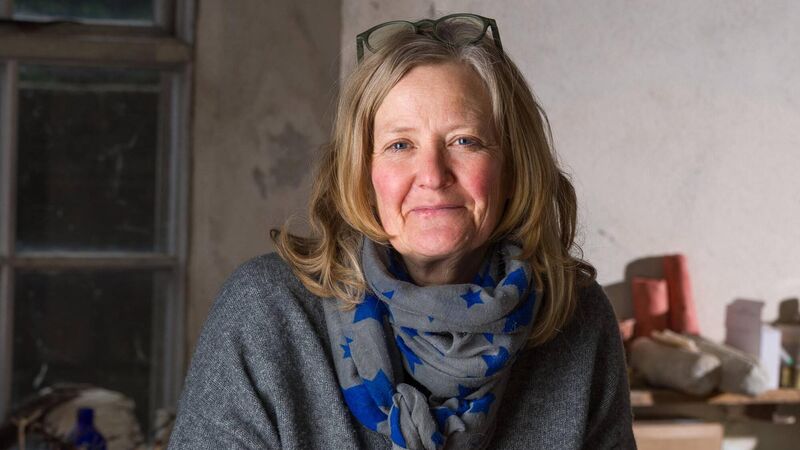
Helle Helsner lives in Kilbrittain, and has a studio in Skibbereen.
Helle Helsner lives in Kilbrittain, Co Cork, maintains a studio in Skibbereen, and teaches at the Crawford College of Art and Design in Cork city. “It’s a nice triangle,” she says. “It’s a fifty-minute drive to my studio, the same as to Cork, but it works, for some strange reason.”
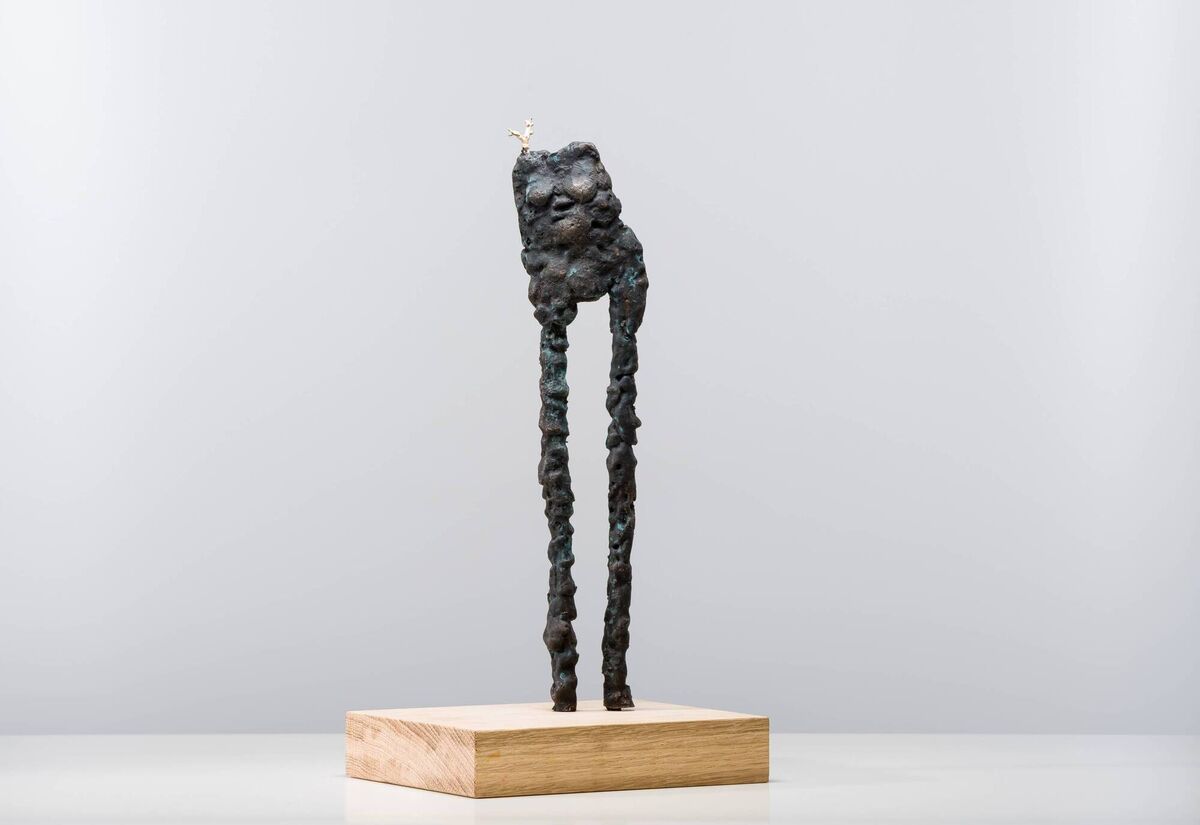
Helsner’s exhibition, Core: New Work in Bronze and Drawings, is running a little closer to home, at the O’Connell Gallery on Ashe St, Clonakilty until April 26. The work is largely inspired by her interest in the copper mines at Allihies on the Beara peninsula.
Helsner remembers vividly her first visit to Allihies, when she and a friend drove out there for a meal one evening. The Man Engine, the most prominent of the 19th century mines buildings, was lit up against the night sky above the village.
“And I was like, what the hell?” she says. “I couldn't believe I hadn't seen it before. Now, of course, I try and go down to Allihies as much as I can, which is nearly never enough.”
A native of Denmark, Helsner’s interest in working with metal was partly what prompted her to move to Cork in 1994 to study sculpture at the Crawford College of Art and Design.
“I was living in Copenhagen,” she says, “but I’d spent three months in Ireland in 1991, and I really wanted to come back. Art colleges in Denmark tend to be more focused on design, but I knew I wanted to do sculpture and drawing, and I could do both at Crawford. There was a foundry, and that’s where I spent most of my time, casting bronze.
“I liked that Crawford was a small college as well; I think that’s still one of its best selling points. But I never imagined that I would end up sitting here thirty years later. I really didn’t. That was never part of the plan.”
Helsner went on to complete a Masters by Research at Crawford in 2001, focusing on prehistoric bronze casting. She taught part-time at the college for some years thereafter, before joining the staff full-time in 2021. She is now the 2nd Year co-ordinator.
“I particularly like teaching second years because they’re still figuring things out,” she says. “I really like the emphasis to be on experimentation rather than on producing finished pieces. I think that teaching feeds into my own practice as well, and that’s how it should be.”
Around the same time as Helsner was made full-time, Crawford’s parent college, the Cork Institute of Technology, amalgamated with the Institute of Technology, Tralee to become Munster Technological University.
“They were very keen for people to do PhDs at that point,” says Helsner. “I was lucky to get a scholarship to do mine through the Burren College of Art in Co Clare. They’re very engaged with the landscape and ecology up there.
"My PhD is about mining culture and social politics and landscape and resources, and I thought Allihies would be the perfect place to go and investigate for my research, it’s so magical and raw.”
Helsner familiarised herself with the Mine Museum housed in the former Methodist church in Allihies village, and accepted local historian Theo Dahlke’s offer to guide her around the copper mines. “Theo showed me where the women and children used to sit and crush the ore up by the Mountain Mine. I got really interested in that because there's so little information. There's not much information about the miners either, but there's certainly very little about the women. That became, I suppose, part of my focal point, to look at the whole history of the women as well; women in the landscape and women as activists speaking up for the landscape. There’s also this idea that the landscape, Mother Earth, is inherently feminine in many ways.”
Helsner does much of the preparation work on her sculptures at her studio in Skibbereen, but casts them at home in Kilbrittain. “I have my own little foundry,” she says. “So I can do everything myself. I shape my pieces in wax, and then I cast them using the lost wax process. I use a mix of clay and horse manure for the mould. When you cast bronze, it creates gases. The clay in itself is quite fragile, but when you add the horse manure, it becomes porous, so the gases can escape. I use a gas fired furnace to melt the bronze. I pour it into the mould, and let it set. And then I crack it open to reveal the sculpture.

“Sometimes I think I'm more interested in the process than the end result. It’s extremely meditative.” Helsner has 15 bronze sculptures in her show at the O’Connell Gallery, along with two large drawings and a mixed media painting on canvas.
“Drawing is very much part of my process,” she says. “I call it deep mapping. It's not about drawing exactly what you see, but what you experience when you are in the land. That’s really where I use Allihies. Yes, there are references to the mines and to the ruins in the landscape, but there's also references to everything else; the people, the sheep, the humans, the past, the present."
Helsner says this is more than just a geological record. "It's trying to get the whole sense of Allihies on a piece of paper. And it informs the sculptural pieces too. They take a more solid form in the sense that they look quite figurative, but they’re not necessarily so. Again, they're more an essence of the landscape.”
Helsner hopes to complete her PhD next year, but believes her interest in the Allihies mines will inform her work for many years to come. “I’ve always been drawn to West Cork,” she says. “When I first visited Ireland, back in 1991, my first port of call was Union Hall, and now I have my studio in Skibbereen, I feel I’m moving further west. I plan to end up in Beara one day; that’s very much my magic place.”
- Core: New Work in Bronze and Drawings by Helle Helsner runs at the O’Connell Gallery in Clonakilty, West Cork until April 26. Further information: oconnellgallery.ie;https://www.instagram.com/helle_helsner/