Ardal O’Hanlon on comedy, trigger warnings, and life after Father Ted
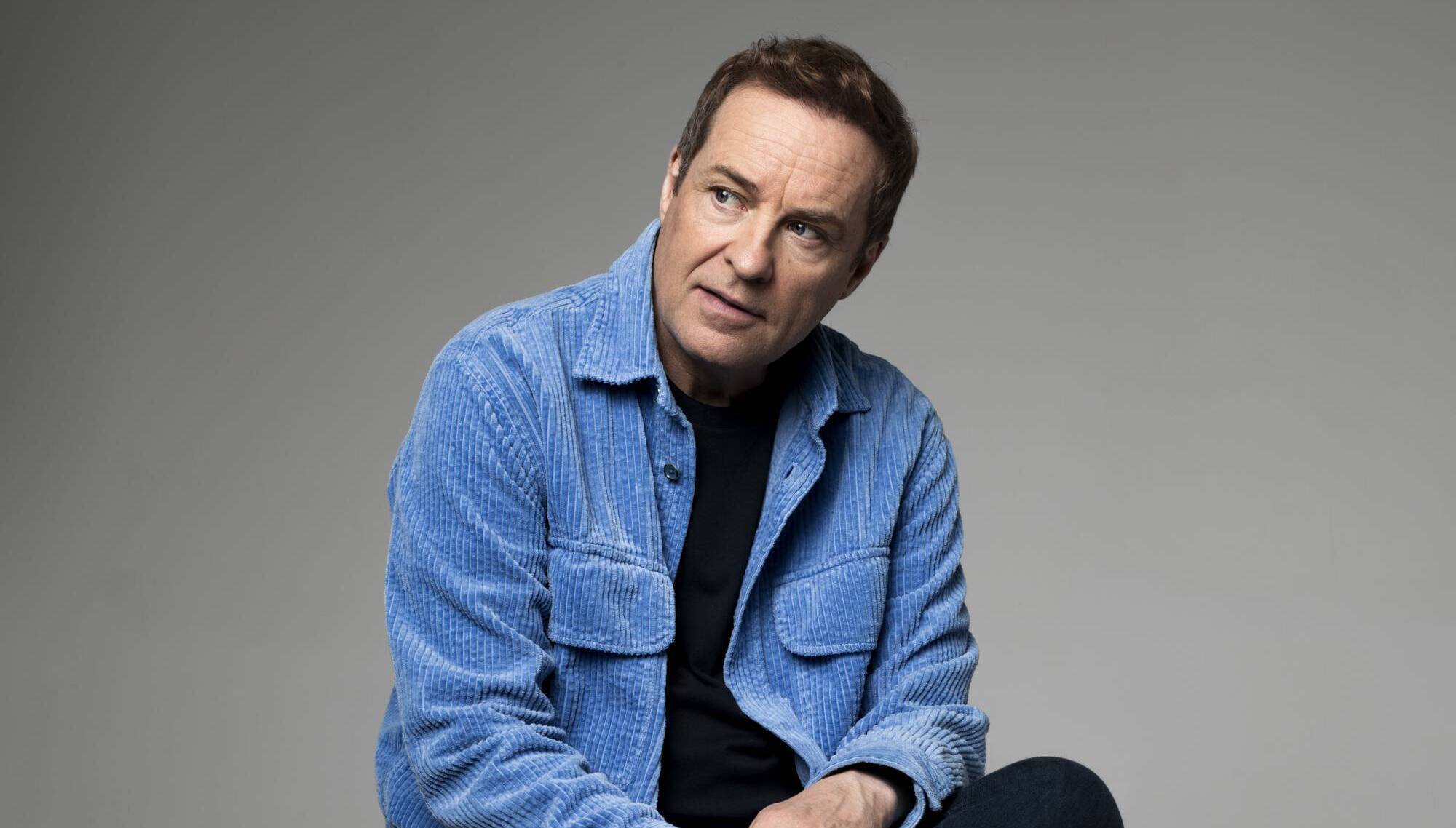
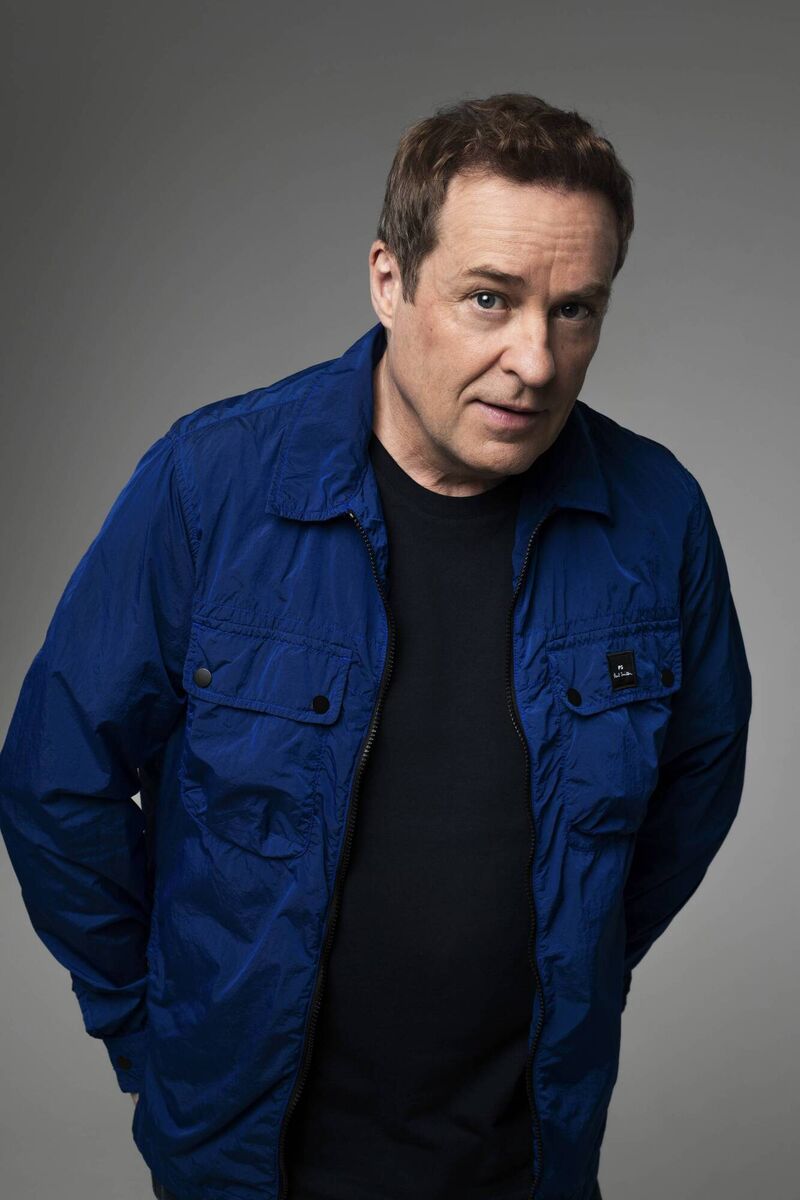
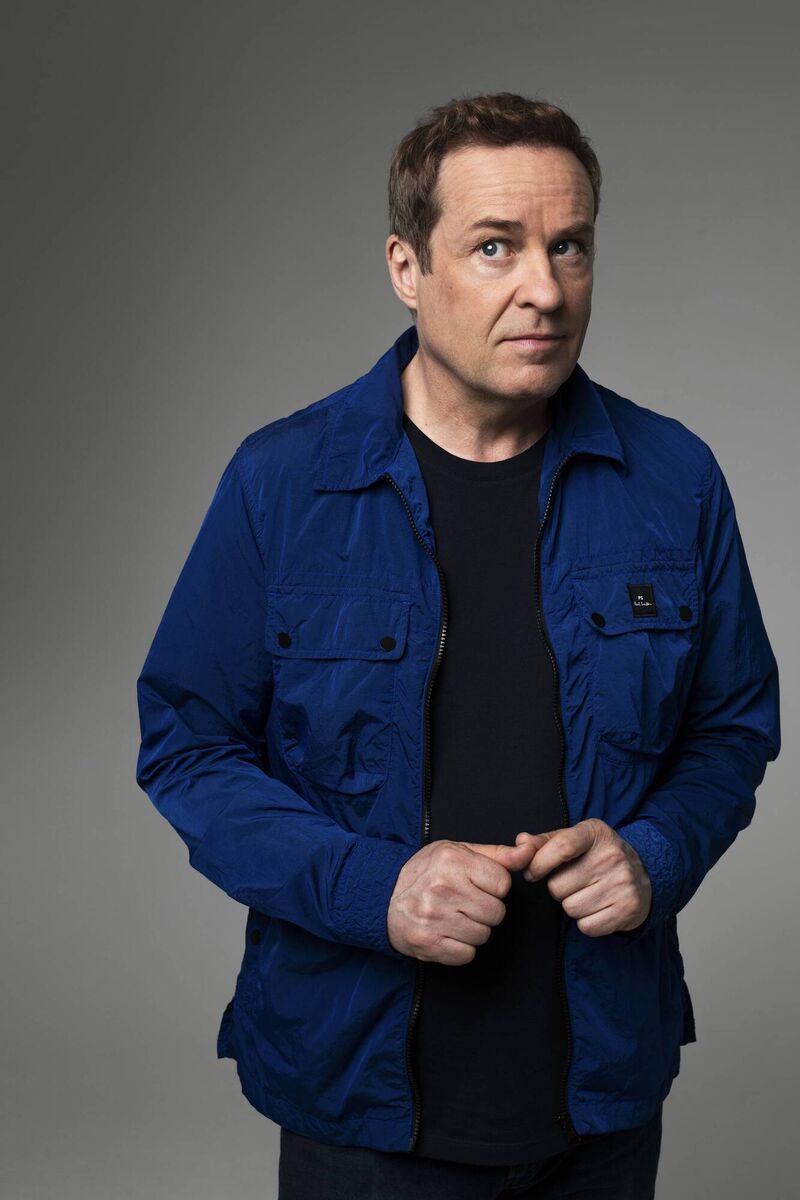
Ardal O’Hanlon: ‘Sometimes my opinions are too strong for public consumption.’ Picture: Matt Crockett
Ardal O’Hanlon’s new stand-up show is called Not Himself and, given the kind of early morning he’s had, you couldn’t blame him.
“I started off this morning with Good Morning Britain, which has to be experienced,” he explains down a Zoom line from what looks to be a storage cupboard in an industrial estate — though, mercifully, one that at least has a window. He’s been chatting to various media since 6am this particular morning, one which began with a grilling by telly doyen Richard Madeley.
“Imagine the first person you speak to in the morning is Richard Madeley?” O’Hanlon continues, recounting what seems to have been an episode of comedy PTSD.
“This kind of suits me to some degree; ostensibly, you’re here to talk about your show or whatever. But, you know, Richard is far more interested in getting something off his chest. His big, big gripe was how dare they put trigger warnings on Father Ted....”
We’ll get to that, don’t worry, but everyone’s favourite Dougal has plenty on his in-tray at the moment.
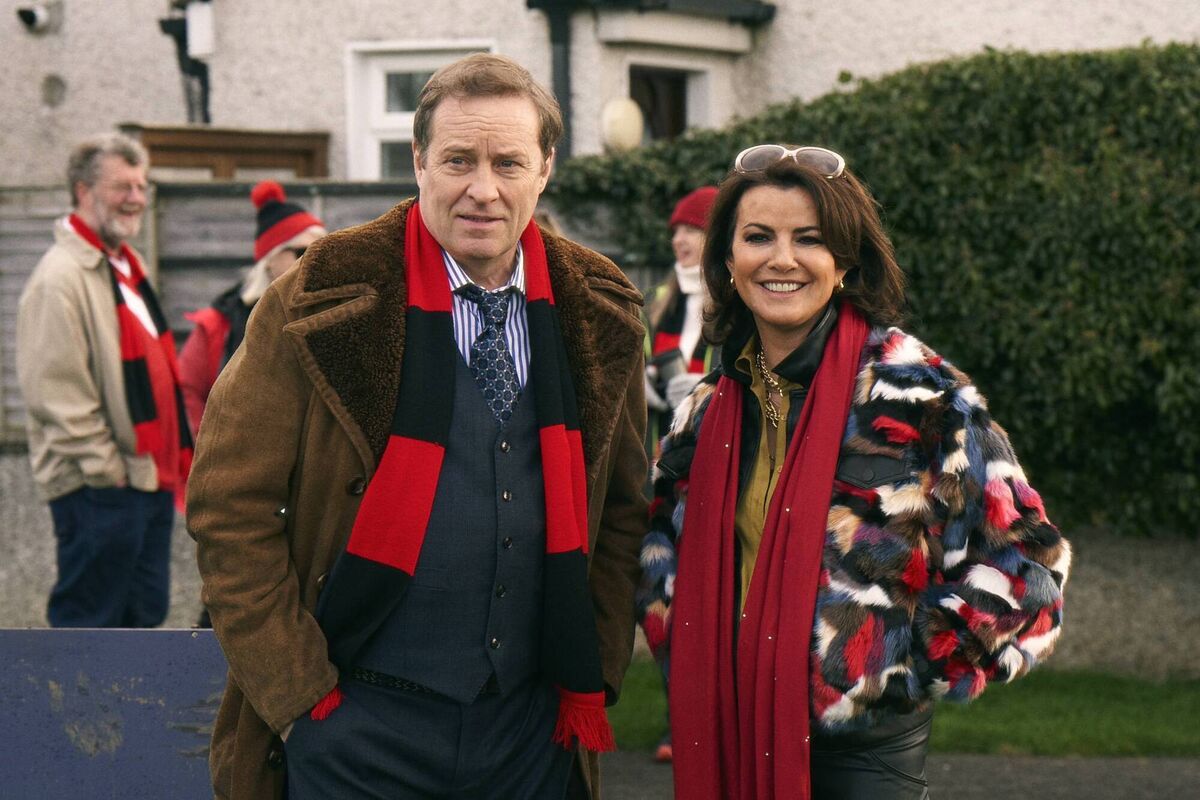
In addition to the upcoming stand-up tour, there’s also his turn in a new feature-length comedy, Fran the Man, which hits Irish cinemas in April, and his new crime novel due out next year, currently at the fine-tuning stage. However, like the Hollywood actor who still thirsts for the theatre, O’Hanlon’s new show is front and centre.
It will be his first tour since those distant pre-covid times, and the Carrickmacross native believes that the enforced break from touring had a significant impact, not least a kind of collective nervousness among his peers when the pandemic restrictions were lifted, “a real anxiety about getting back up on stage”, but which for him resulted in “a very big mental reset” — one in which he suddenly started saying ‘yes’ to things that previously he would have “shied away from” such as Channel 4’s comedy panel game show, Taskmaster.
“Age is part of this as well,” he says.
“As you get older and more experienced and everything else, you get a little bit more confident in your opinions, you’re a bit bolder, you know, so you’re able to go places that you wouldn’t go previously.
“But I also think it was because you can see how easily it’s all taken away from you. You embrace it wholeheartedly.
“I would find the big difference for me now on stage is, there is an itch, but it’s more than that. I feel very — I hate this word, because it’s such a wanky word — but present. I feel very present on stage, absolutely alive to the moment, you know, enjoying the experience, because I might not be doing it for much longer.”
O’Hanlon is now a youthful 59. To hear him talk about the new material, it is tempting to see the title of the show in two ways: One as the classic Irish definition of a fella who is out of sorts, or maybe just befuddled by what’s happening around him; but there’s also the second reading, which is O’Hanlon reaching out a little, presenting something different to the world. As ever, it’s a balancing act.
“I kind of feel I know what I’m doing,” he says. “I wouldn’t be doing this if I didn’t want to do it. It’s that kind of shift in mindset where, like in the past, I would have been: ‘Oh my God, I hope people like this.’
“And, you know, maybe playing it a bit safe in the past, you know, not taking any chances, if something wasn’t fully cooked, ‘oh I’d better not do that bit, because it’s not quite there yet’. Whereas now, I think I’d be a little bit braver and just trying bits that I really want to say.”
He has been looking at how he — a middle-aged, white Irishman — fits in. “I don’t feel I have to prove anything to anyone,” he says at one point — yet he’s wary that, given how he is perceived, particularly by British audiences, some topics might be seen as off-beam.
“I kind of wrestle with this all the time,” he says. “Because of the characters I’ve played over the years, the kind of fluffy, silly, goofy kind of characters, because of the sort of surreal, slightly observational comedy I’ve done over the years, I just feel people wouldn’t really accept it for me. I know from the last time I was touring in Britain, and I kind of had a big chunk about Brexit and stuff like that. People didn’t really accept it from me, you know what I mean?
“I find stand-up for me is more escapist, joyful, fun.
“I know I’m not a controversial comedian. I’m not an outspoken comedian. I’m not going to bring heavy politics into my show, even though I might have strong opinions.” He gives a healthy laugh when he adds: “Sometimes my opinions are too strong for public consumption.”
And there’s the rub: Comedy is built around laughs and yet it has a strange status as a kind of cultural bellwether — of opening up the possibility, of saying the unsayable in the name of getting a giggle, but which in the current torrents of the culture wars might feel like hopping between moving ice floes.
O’Hanlon sprang to cross-channel fame as the loveable dolt Fr Dougal Maguire in Father Ted, now a comedy classic, but which too has found itself in the crosshairs in recent times.
All of which bring us back to Richard Madeley.
“So I think it was the Channel 4 Player, they’ve decided now to add extra trigger warnings to one or two episodes,” O’Hanlon says.
“I think it’s the episode with the Chinese community, I think it’s about kind of a slight racism or something. But I mean, of course, anyone who’s a student of Father Ted and comedy generally will know that it’s a comment on racism.
“I’m not really in favour of trigger warnings,” he adds. “I want everyone to be very happy, and I don’t want anyone to get upset about something I was part of or anything like that, but I really do think people need to be given a lot more credit for their decisions when it comes to what they view.
“The whole trigger warning thing is just so crazy when you think about it. You could put warnings on things to say ‘this might be a bit boring’. I mean, you could warn people about anything. You could warn people going into the supermarket like, you know, some of the fruit might offend you. Like, that fucking heritage tomato looks very like a testicle. Honestly, I think it’s nonsense.”
But then, everything seems to veer towards the subjective, and every opinion — or at least any that is aired in public — is likely to undergo a thorough rinsing.
Father Ted was co-written by Graham Linehan, who is now more synonymous with his views on the transgender community. Just days before we spoke, Chris O’Dowd — who appeared in the Linehan-penned The IT Crowd — had made some broadly supportive comments about Linehan, centred around his skills as a comedy writer.
O’Hanlon has similar sentiments.
“I saw those comments by Chris O’Dowd, basically saying he [Linehan] is much missed as a comedy writer. I would echo those comments. He was a fabulous comedy writer. But beyond that, I don’t have an awful lot to say about it.
“I mean, I’ve kind of been aware of the fix that Graham has got himself into over the years, and he has very strong views on that subject of transgenderism, and he’s entitled to those views. You know, sometimes I’m taken aback by the way in which he expresses those views. And I think if you choose X as the forum for debate, it’s an extremely toxic environment. It’s a cesspit. It’s also very binary in the sense that either it’s yes or no; or are you with me, or are you against me? For most people, myself included, that’s not the way I see the world.”
O’Hanlon says he doesn’t feel particularly informed on the trans issue, adding: “Like most human beings, you just want everyone to be happy.
“Is there any way I can support people who aren’t happy in their own bodies? How do I support people who are in that position? I mean, there are bad faith actors on all sides, don’t get me wrong, sure. And then the big question is: How do you legislate for that? But I’m not a legislator. I don’t quite know how I would go about that if I was in a position where I had to legislate for those kind of issues.”
It highlights a broader issue, wherein everyone’s opinion about everything needs to be nailed to the door. O’Hanlon may be road testing slightly testier material for Not Himself, but he sees the demands of social media as reductive at best — and destructive beyond that. “Social media is obviously great for a lot of people, some people get an awful lot out of it.
“I’ve always been sort of slightly wary of social media. I do have very strong opinions, and I express them amongst my friends and in the way I’ve always expressed them, about lots of different things.
“But, you know, there’s this compulsion — or this obligation — to share those opinions with the world on extremely dubious platforms and social media. And like, if you don’t share them, then there’s something wrong with you, like you’re a coward, or you don’t care, or you’re ignorant.
“I don’t think that’s right or fair, you know, because my thing is, how is my opinion going to help here in this particular situation?
“I don’t know if somebody who’s known for playing stupid characters on TV can really add a huge amount of value to that debate publicly.
“I’m kind of the person who does go off and make documentaries about things. If someone gave me a camera and a crew and told me to go to Gaza for a couple of months, I would do that. Then, maybe, I would express my opinion in a very thorough way. But going on social media and tossing something out and, an hour later, putting up a funny little clip of my stand-up — that doesn’t work for me.”
It’s a far cry from the apparently benign mid-90s, when O’Hanlon and Dermot Morgan became household names due to the success of Father Ted.
O’Hanlon’s fondness for the show is obvious. Yet as he admits, it wasn’t quite overnight success.
“It was very slow, slow, slow, slow and then quick, quick, quick,” he says. “I would have started comedy when I left college, when I was about 22. I was 28 by the time I went to London. So there was six years, the ‘lost’ years,” he says with a laugh, “floating around Dublin, and you know they were the best years in some ways when there’s no expectation, you’re with your mates, you’re all in the same situation, impoverished but creative, having a laugh, sharing wonderful, formative experiences.”
He admits that in part his decision to relocate to London was to move beyond any identification, no matter how opaque it might have been, as the son of a prominent Fianna Fáil TD Rory O’Hanlon who went on to serve as ceann comhairle and who is still going strong aged 91.
“It was great where nobody knew you, nobody knew anything about your background or your baggage, which — for the best will in the world — they do in Ireland. Obviously, everyone knows where you come from straight away and who your people are,” he says.
As for the Father Ted legacy, people still shout lines of dialogue at him on a daily basis.
“I was in Knock Airport yesterday,” he says.
“I had the entire catering staff in Knock Airport, ‘go on, go on, go on’ to me.”
His documentary work has covered the Irish islands, the stained glass art of Harry Clarke, and some of the country’s archaeological treasures, but one series — 2006’s Leagues Apart — saw O’Hanlon telling the stories of some of Europe’s fiercest football rivalries. Now, he is back in the world of the beautiful game with Fran the Man.
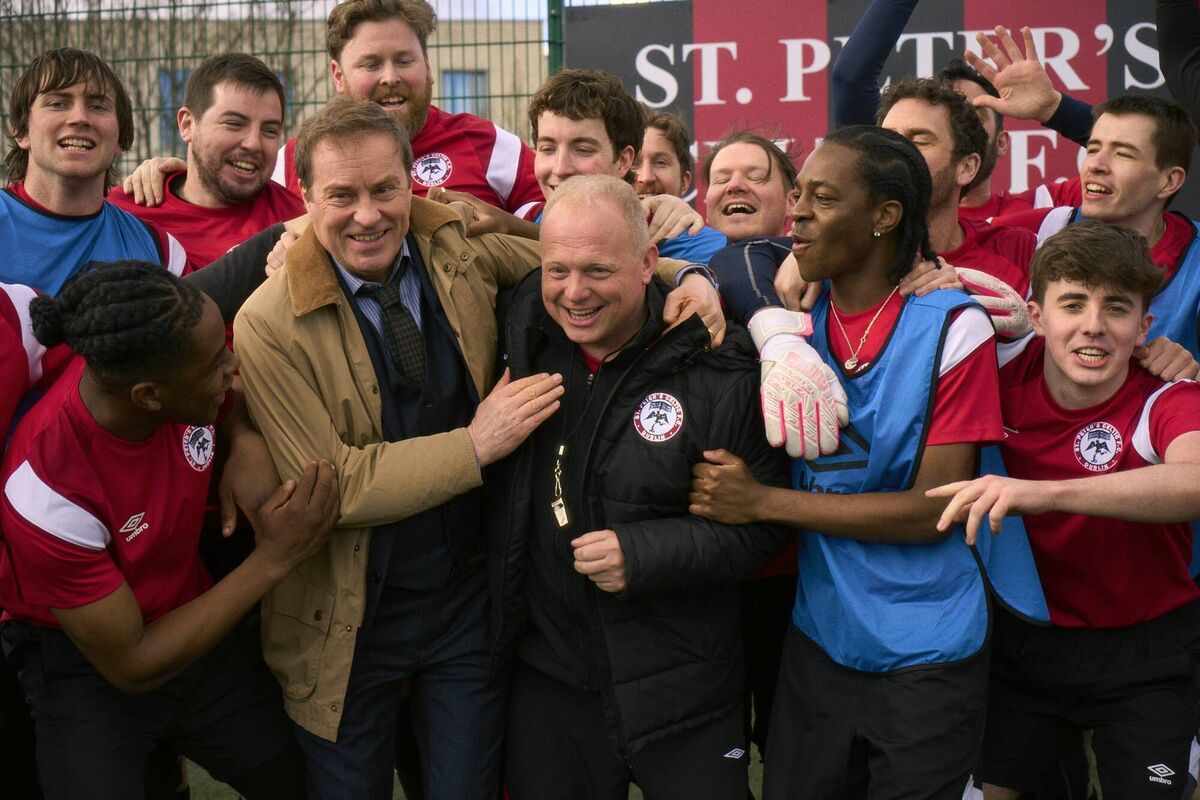
Here, the assistant manager of fictional amateur club St Peter’s Celtic, Fran Costello (played by Darragh Humphreys) is embroiled in a match-fixing tangle just as the team is embarking on a fairytale cup run. O’Hanlon plays the team’s manager, who also happens to be Fran’s solicitor.
It makes me wonder whether there isn’t another idea bouncing around in there, where O’Hanlon buys former League of Ireland side Monaghan Town and, in the style of Welcome to Wrexham, propels them back to the big time?
“I probably could afford to buy the club,” he laughs, before praising Fran the Man. “It’s just a really lovely film set in that world. I think it does something that a lot of films or, you know, TV shows sort of set in the football world don’t do well. I think we captured the football side of it quite well. You know, it’s quite authentic, I think.”
He was back playing some football before Christmas, which he described as “a real shock to the system” — “days later, I was coughing up stuff”. As ever, there was a glass-half-full element.
“I don’t think I was much help to my team, but I was very proud that the touch was still there.”
And that might just be where Not Himself and O’Hanlon’s oeuvre rests: We could be talking about trigger warnings and matters of identity and political tectonics, but it all boils down to an essential truth. “Ultimately,” he says, “I can’t lie, it’s a bunch of jokes.”
- Fran the Man is in cinemas from April 11; The Not Himself tour begins September 24 and includes dates in The Everyman, Cork, and 3Olympia, Dublin. Ticketmaster.ie