How the Fleadh Cheoil helped revive traditional music in Ireland
A new book shows how the Fleadh played a crucial role in helping to revive traditional music
How the Fleadh Cheoil helped revive traditional music in Ireland

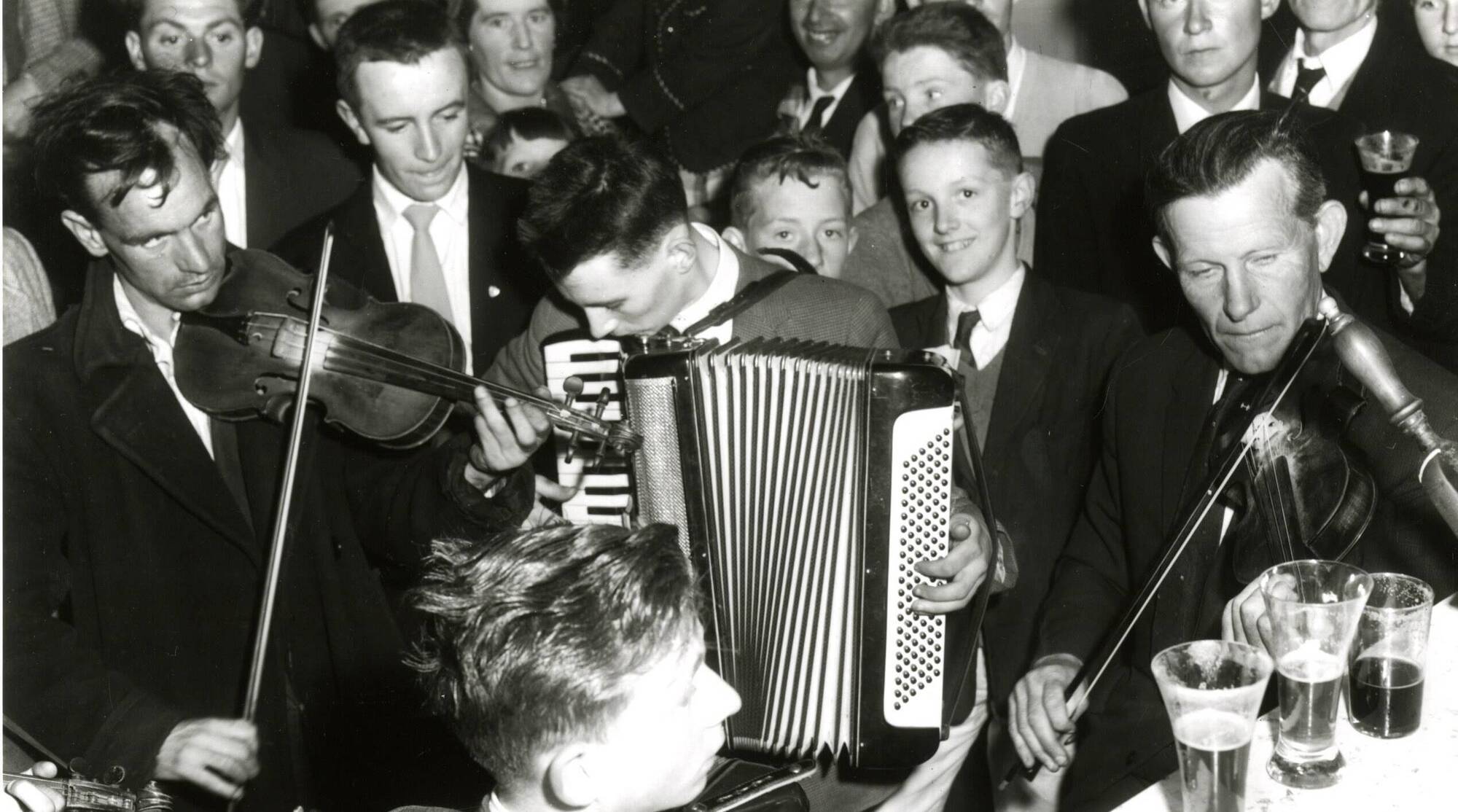
The Fleadh Cheoil in Swinford in 1961.

“They barred the country house dance, and the priests was erecting parish halls. Then the emigration started. A lot of lads I used to play with went off to England and America, and there was no one but myself… I used to nearly cry. Nowhere to go, no one to meet, no sets in the houses. Nothing left but the hall.”

West Clare fiddle player Junior Crehan’s bleak reflection on the declining social opportunities for Irish traditional music and dance, exacerbated by the 1935 Public Dance Halls Act, sets the scene for the renaissance that followed.

Fleadh Cheoil na hÉireann, first held by a nascent Comhaltas Ceoltóirí Éireann in Mullingar in 1951, arrived on a wave of social change in the wake of post-war economic stagnation and was “the most extraordinary thing which happened to traditional music in the 1950s and 1960s on this island”, asserts researcher Dr Méabh Ní Fhuartháin, head of Irish Studies at the University of Galway.

Though its path was not without twists and turns in the years ahead, the festival’s rise was swift, and in Clare a very different picture of traditional music emerged when the all-Ireland fleadh visited the county for the first time in 1956.

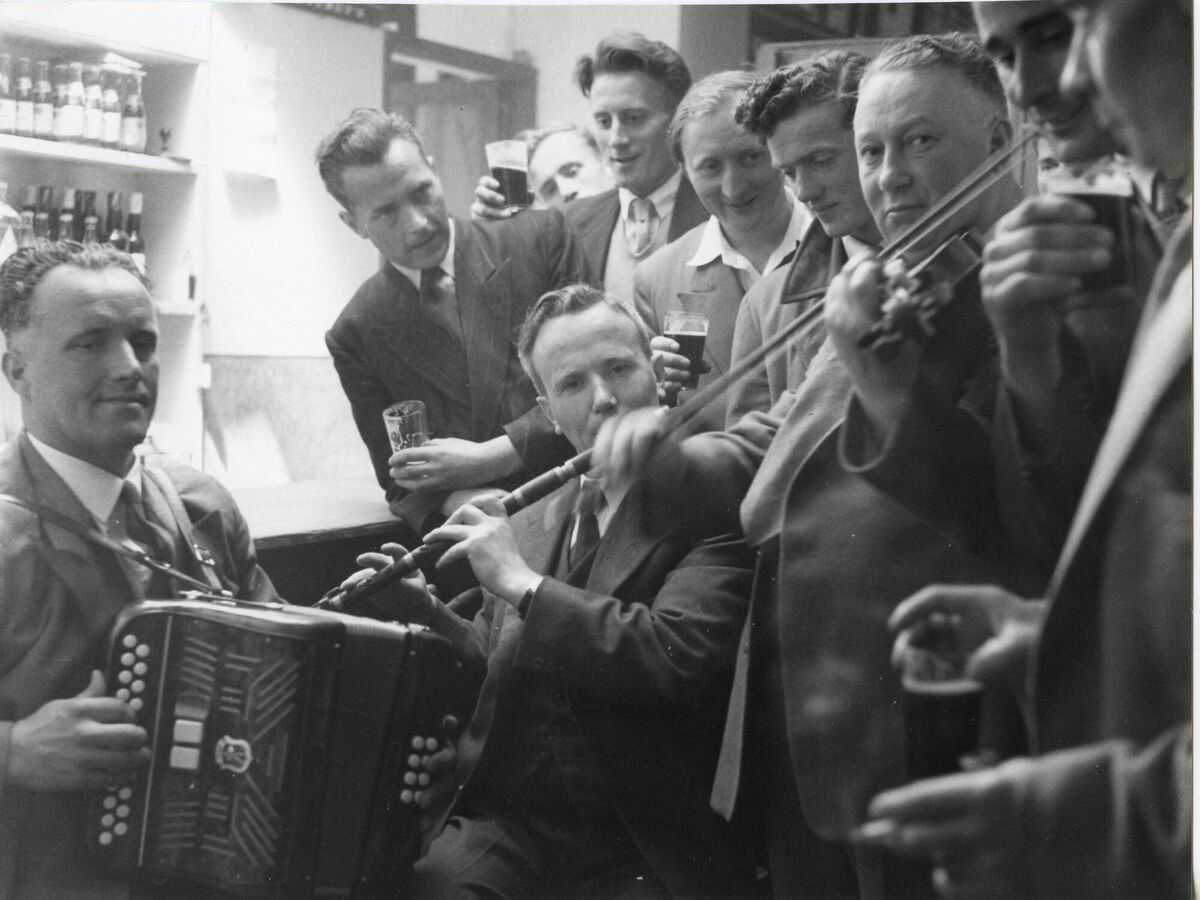
“Ten fiddles, two jew’s harps, a battered concertina, six concert flutes. Three tin whistles, two melodeons and four raucous accordions are thundering out the melody.”

In Ennis, the session is taking place not in a pub, but in the lingerie department of a shop which “seems to have cast aside its 85 years of dignity and respectability as singers and musicians raise the roof”.

In Heading to the Fleadh: Festival, Cultural Revival and Irish Traditional Music, 1951–1969, Ní Fhuartháin explores how the festival, which today attracts crowds in excess of 600,000, unleashed a new exuberance for collective music-making after decades of decline.

Méabh Ní Fhuartháin studied at UCC.

In what is termed the “first comprehensive academic study” of the largest annual festival of Irish traditional music, Ní Fhuartháin casts a critical eye over the context for the fleadh’s establishment and the shaping of the festival in its first two decades. Concerts, céilithe, competitions, and sessions formed “a core set of material and symbolic components, creating a distinct fleadh identity embedded in the social and cultural world of Irish traditional music, and becoming a key driver in the revival during this period”.

While she notes that the key aim of the fleadh was to provide opportunities for musical communion and that “gathered from near and far, musicians came to the fleadh with the expressed purpose of playing traditional music with other musicians”, formal competition, as well as the informal session, became synonymous with the fleadh in a “simultaneous coexistence of opposites”.

Indeed, it was through adjudication that the fleadh “defined acceptable sounds of traditional music in competition, which spilled over into other sites of performance”, she says, and by the 1960s Comhaltas regarded itself as the gatekeeper of Irish traditional music.

Modelled as a “competition-festival”, Fleadh Cheoil na hÉireann in its early days required none of the qualifying county or provincial rounds that now exist and
“musicians often met casually at the fleadh and decided spontaneously to enter duet and trio competitions together”, says Ní Fhuartháin.

Though some early fleadhanna accepted competition entries on the day, there was nothing casual about the fiddling duel fought between Armagh’s Brendan McGlinchey and Séamus Connolly of Clare, which in 1961 continued into the early hours of the morning after multiple recalls failed to produce unanimity among three judges on the destination of the senior title. What eventually decided it in Connolly’s favour was his strict adherence to fleadh rules on tune choice.

Whether in matters of musical style and proficiency or repertoire choice, fleadh rules and their interpretation proved challenging in the festival’s early decades and continue to cause debate.

Ní Fhuartháin finds no evidence of a specific ‘Comhaltas style’ of playing developed through competition, “but there are preferences”, she tells the Irish Examiner. “There are things which are prioritised in competition, but those are not consistent either. The tides of time change them.”

Many musicians, she notes in Heading to the Fleadh, were “sceptical of competition and the very notion of adjudicating performance, even if they competed themselves”.

For Clare musician Michael Tubridy, who made just one foray into adjudication in 1964, “the lack of consistency and guidelines in adjudication, and, in his view, the impossibility of objectivity, merely confirmed his suspicions about the unsuitability of the competitive frame for Irish traditional music”.

Ní Fhuartháin shines a spotlight on the thorny topic of delineating “the right kind of traditional music” in fleadh terms. What is considered traditional? “It’s nebulous in 1955 and it’s nebulous now,” she says. However, “symbiotically with adjudicators”, competitors can influence change “when new repertoire is introduced and has some success, but also in terms of style”.

“And the fleadh doesn’t exist in a vacuum, as much as one might think that. The fleadh is responding not just to wider cultural and social change but also to this arbitration of what’s really traditional and what isn’t. It’s making those changes itself.” In singing competitions in particular, she “realised that the authenticity marker was actually to do with whether [a song] had been commercially successful or not by a ‘popular’ artist”, familiarity via radio airwaves sometimes breeding adjudicator contempt.

As those who performed songs popularised by Donegal’s Bridie Gallagher discovered, her association with a particular air “was enough to make it competition-toxic” at the fleadh.

Fleadh Cheoil na hÉireann’s own commercial merits are examined by Ní Fhuartháin, who contrasts the 1956 festival in Ennis with the following year’s fleadh in Dungarvan, which one newspaper dubbed a ‘flop ceoil’, despite its success in the eyes of musicians who attended.

The Fleadh Cheoil in Dungarvan in 1957

Based on the huge numbers that had flocked to Ennis, organisers and businesses in Dungarvan pulled out all the stops, but when only an estimated 5,000 of the anticipated 40,000 arrived in the Waterford town, newspapers devoted many column inches to bemoaning the “thousands of sandwiches, hundreds of pounds of ham and beef, chicken and mutton” that went to waste.

As a moveable festival, Fleadh Cheoil na hÉireann — which boosted Wexford’s economy by an estimated €60m in 2024 — created commercial expectations in its host towns and a conflict between cultural and commercial concerns became evident.

Accusations that commercial interests had triumphed over cultural authenticity were made when the fleadh returned to Mullingar in 1963 and was blighted by an “unruly group” intent on “causing real trouble”, with buildings damaged and several people injured.

Its second decade, the permissive Swinging 60s, saw what was referred to as the ‘Fleadh Óil’ embroiled in conflicts of societal change as its booming popularity, especially among young people, was blamed for the unwelcome attendance of “beatniks, teddy boys and other bizarre and unwashed individuals”.

There were whispers that the All-Ireland Fleadh should be abandoned until such time as the unruly elements could be rooted out, and suggestions that the festival should be held on an island in order to control access. A national newspaper’s front-page headline proclaimed ‘Beards at Fleadh Cheoil are criticised’, and disorder by ‘bowsie elements’ saw the 1965 festival in Thurles dubbed the “fleadh of the shattered glass”.

It took the might of the Irish Countrywomen’s Association to ensure such shenanigans did not occur in Enniscorthy, when its campaign saw plans to bring the 1970 fleadh to the Wexford town abandoned in favour of a move to Listowel. The ICA’s intervention was “extraordinary”, says Ní Fhuartháin. “They said ‘no – not coming here’ and they just put a stop to it.”

The middle decades of the 20th century on which Ní Fhuartháin focused her research were transformative in Irish life and popular culture, she says. “The fleadh is an essential part of that, warranting this kind of critical [academic] attention.”

A flute player who studied music at UCC, Ní Fhuartháin entered fleadhanna as a child but “didn’t have the stamina”, later becoming a fleadh adjudicator, which she “also didn’t really have the stomach for”, yet it was Comhaltas and its role in shaping tradition that she chose as the subject of her PhD research.

Expanding on that research and releasing it into the public domain, her book “positions the fleadh at the top of any taxonomy of traditional music revival and Irish cultural transformation in the 1950s and 60s”.

“In those first two decades, I just think the fleadh is a remarkable development and there isn’t really a parallel anywhere else in other revival movements of the mid-20th century in the United States or in Britain. There’s nothing quite like the fleadh that emerges,” she says.

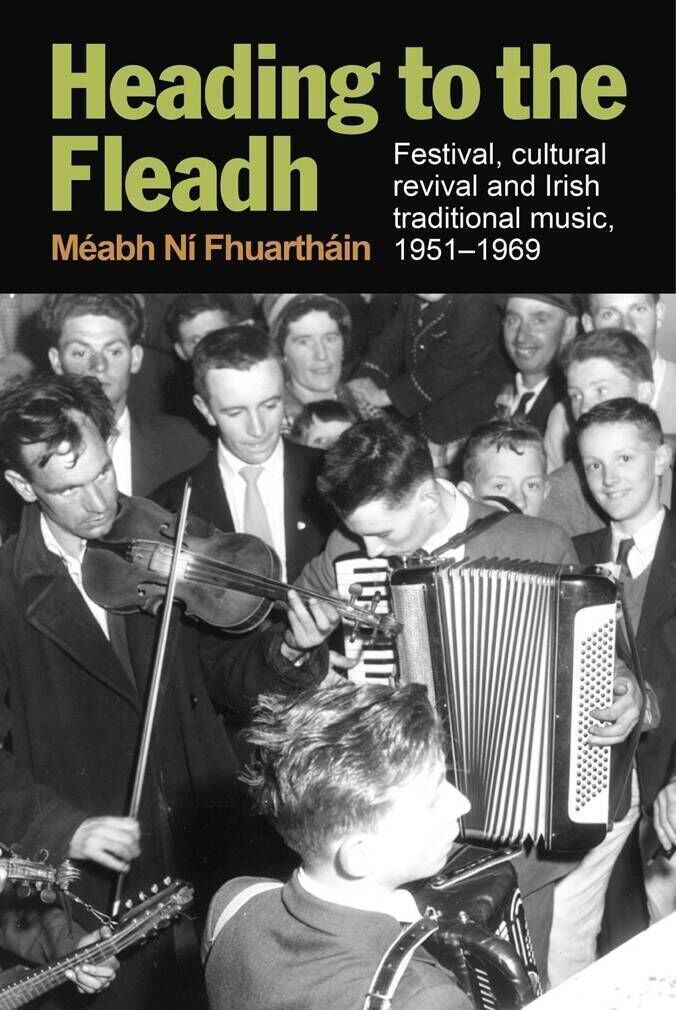
Heading To The Fleadh by Méabh Ní Fhuartháin.
  • Heading to the Fleadh: Festival, Cultural Revival and Irish Traditional Music, 1951–1969, by Méabh Ní Fhuartháin, Cork University Press

More in this section

Scene & Heard

Newsletter

Music, film art, culture, books and more from Munster and beyond.......curated weekly by the Irish Examiner Arts Editor.

Cookie Policy Privacy Policy Brand Safety FAQ Help Contact Us Terms and Conditions

© Examiner Echo Group Limited