Tom Dunne: Scratch the surface on 1975 and you'll discover a most interesting year
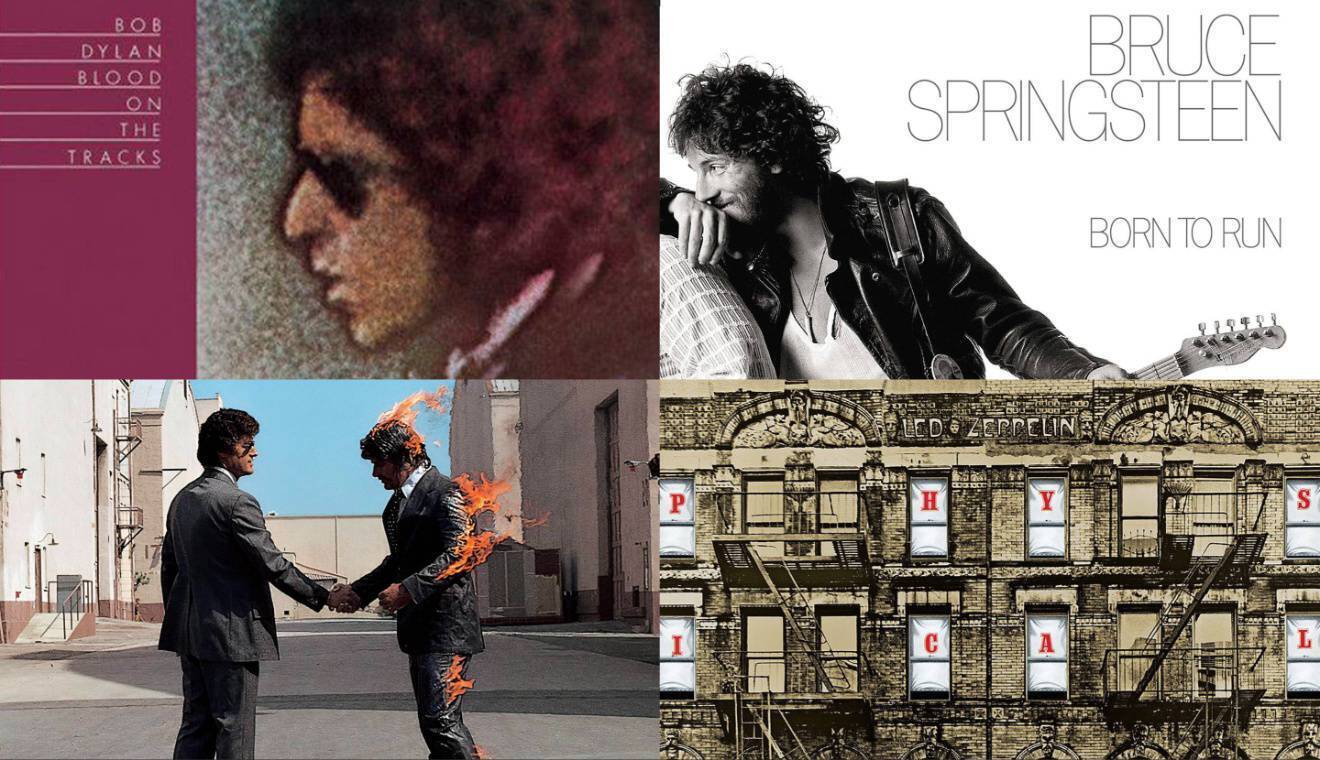
Some of Tom Dunne's 1975 selections
The 50th anniversary vinyl re-issues and six-CD box sets of classic albums that will undoubtedly arrive in the coming months paint a cosy picture of 1975 as a year dominated by old school rock. From Blood on the Tracks to Physical Graffiti to Born to Run, rock reigned supreme. Or did it?
It had started with the release of Bob Dylan’s classic Blood on the Tracks. Rumour had it that he recorded it partly to assure the new wave of emerging singer song writers — Neil Young et al — that he was still the boss.
He even went into studio ahead of the band and recorded all the tracks with just him on acoustic. Young pretenders listening to these unadorned versions of ‘Tangled up in Blue’ and ‘Big Girl Now’ must have wept openly. He wasn’t going away.
By September they had someone else to worry about. Bruce Springsteen’s Born to Run immediately established him, as had previously been reported, as “the future of rock and roll.” By October, the Boss adorned the covers of both Time and Newsweek.
The music press’s main worries in 1975 where the speed at which Led Zeppelin appeared able to sell out tickets — three Madison Square Gardens in four hours — and whether John Lennon could escape deportation from the USA.
Apart from that it was mostly how many column inches they could give to Little Feat, Steely Dan and Pink Floyd, and how often they could feature the Zep on the Old Grey Whistle Test without receiving complaints from the Monopoly Commission.
As Queen closed out the year with ‘Bohemian Rhapsody’, taking a six-minute song to the top of the charts for nine weeks, it must have seemed the rock’s golden age would last forever.
Yet, within 18 months those with big hair, an exposed midriff or a penchant for the extended guitar solo was forming orderly queues at bus stops the world over. Their destination was the town of Oblivion. They were one-way tickets. How could this have happened?
It would have taken a cultural Hercule Poirot to see it coming. The signs were miniscule: The occasional college show, a seemingly joke album, a fanzine or a gig in the Bowery where the only others present were other band members. And yet.
It had started in March when a New York band called the Dictators released an album called The Dictators Go Girl Crazy. It was described as "wickedly funny, brilliantly played”, “a hopelessly naïve masterpiece of self-indulgent smartass rock and roll”, and “a blueprint for bad taste, humour, and defiance”.
It didn’t sell but two journalists, John Holmstrom and Legs McNeil, would be so smitten with it that later in the year they would launch a fanzine called Punk, largely as they said, so that “they could hang out with the Dictators”.
In June, again in New York, a gig took place at a venue called CBGB’s. The venue was a dive, the area dangerous to be in. There was a heatwave and a garbage strike. A band called Talking Heads played their first show supporting The Ramones. Each band brought five people. Legs McNeil was one of them.
Then in November, in the UK, a band called the Sex Pistols played its first ever show at St Martin’s School of Art in London. They supported a band called Bazooka Joe, who took one look at them and broke up.
They realised as they watched the Sex Pistols that the branch of music they were in, the pub rock end of the rock world, was from that moment on, as dead as a dodo. Their bassist became Adam Ant, the others The Vibrators. They would not be the last band to break up in the face of the Pistols.
In November, Patti Smith released Horses. Working in rock as she felt “the presentation of poetry wasn't vibrant enough," she did not at first seem a part of any wider movement, But, as writers threw a net over what was and was not “punk”, she was soon seen as the “punk poetess.”
As the year ended Legs McNeill and John Holmstrom launched Punk magazine with Lou Reed on the cover. Suddenly all those disparate scenes, bands, venues, madcap writers and cartoonists had a home and a flag.
Bob’s Rolling Thunder Review would remain masterful, but soon there really would be some new gunslingers in town. Costello, Weller, Byrne, Strummer, new voices that he just couldn’t really match, because he just wasn’t one of them.