Adam Kay: I can have all sorts of medical mishaps... in fiction
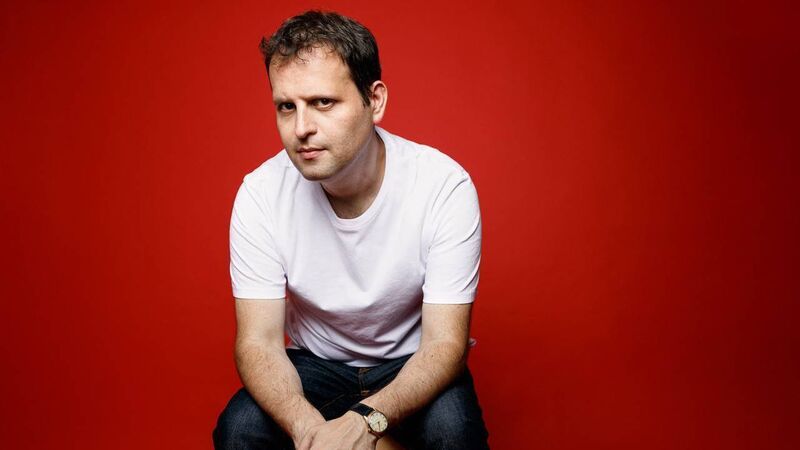
Adam Kay: "There is no one, I don’t think, who goes into medicine for cash."
Adam Kay must be one of the most famous ex-doctors in the world, but he knows a few others in the club. The 44-year-old allows himself a big laugh when I ask whether he’s ever sat down to compare notes — medical or comedy — with Harry Hill.
“I do know Harry, or Matthew [Hall] as he’s also known, and he is a very funny, clever man,” Kay says.
“There is a whole load of doctor comedians, going all the way back to Chekhov, but he wasn’t really a comedian, was he? But like Graham Chapman, Monty Python, Graeme Garden, Simon Brodkin, who did the Lee Nelson, Paul Sinha on The Chase... I don’t know quite what it is...”
We’ll get to why so many medics have swapped their scrubs for open mic nights later, but the canon of doctors with a nice line in humour has a new entrant in Kay’s latest book, , with Kay stating he hopes the story also helps to demystify medicine for younger readers.
Five pages into the book and its titular genius is just a few seconds old and turning to the midwife and asking her to pass the scissors so he can cut his own umbilical cord.
“I’ve written for this age of kids before with some non-fiction. I had a book called and a couple after that,” Adam says, “and the thinking behind that is I think the body is fascinating and amazing, and I think because you’re forced to learn about it at school, it can never be cool, it can never be space or dinosaurs, and I think it should be up there. So I wrote those in a sort of funny, scurrilous, bodily fluids headiness way with a view to making kids hopefully enjoy the silliness grossness of it and then learn that way.
“The majority of people will find themselves [in hospital] as patients or visiting relatives and think they’re scary, scary places. I primarily wanted to write a funny, silly yarn that kids would enjoy, but I wanted to get that [acknowledgement of that fear] in there at the same time — hopefully not in an eat-your-greens way but in a way they can relate to. There’s a big thread in it about trying to make hospital a more fun place.”
Kay’s own artistic endeavours since leaving the world of medicine have been wide and varied, but numerous projects still hark back to his days in scrubs.
Dexter is the latest, his prodigious abilities — he is a 10-year-old doctor, after all — prompting me to wonder whether it is at least vaguely satirical, especially of the straight-As requirements of medical study.
“Even though he is our hero, he is very much an outsider because his superpower is being a mega-genius, and that means he is, by definition, othered, which was my experience of being a kid, certainly most people’s experience of being a kid,” Adam says. “So hopefully the idea of what is normal, and how normal do we want to be, is in there too.”
Not that he’s unaware of the possibly very Irish idea of medical notions, best illustrated by the classic ‘Corkwoman from Montenotte’ joke with the proud Leesider raising the alarm about her stricken son: “Help, my son — the doctor — is drowning.”
"I think it is a job that should be 100% pretty much on the interview, on communicating.”
As he sees it, Dexter is very smart, but also a bit flawed because of his personality and his depth of knowledge.
His own voice pokes through regularly through the use of margin notes, scribbled by Dexter and often nitpicking or taking issue with the narrative being written about him: “I am very aware that parents will end up reading these books with their kids, and always trying to write a bit for the grown-ups, and also I remember the books I liked as a kid were the ones where I didn’t think I was being patronised or talked down to.”
Adam has two children and he admits that his experiences as a parent has further defined his appreciation of those working in hospitals, as well as the reality that hospitals are potentially terrifying places for younger people. One of his children was in a neonatal unit for a time and he says: “I didn’t think that my respect for the people who work in our hospitals could get any higher, but it turns out as a dad of a sick kid it can turn up to 11.”
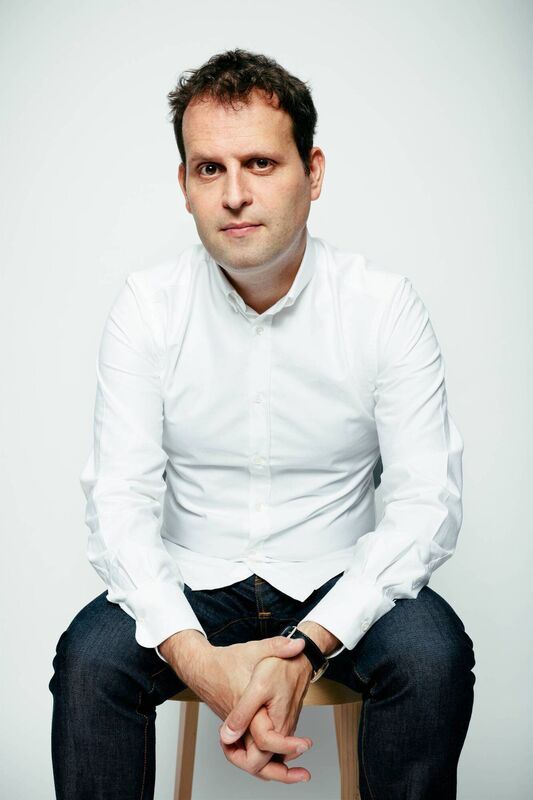
It certainly is a change from the days when Adam was delivering babies by C-section.
He freely admits that “there is a mismatch between a doctor and a patient recollection of any interaction in terms of how important it is to them. So I remember every time I have been to hospital with these kids, I could draw one of those police identikit of any one of the staff who looked after my kids. I delivered 2,000 babies or whatever it was, I remember a few of them, generally for difficult reasons, but in general that was one of seven caesarean sections I had to do that evening.”
And it’s not like the notorious workload for those working in hospitals has decreased in any way. While we’re used to mega waiting lists, the more recent deterioration in Britain’s prized NHS has come as a blow to people like Adam, who worked in it for so long.
Adam’s writing career exploded with the global success of , his diaries of his time as a junior doctor, and which was later adapted for television.
It opened up a separate avenue of TV writing as well as a spate of other books and touring shows. While he admits that “the arts have enormous value”, he knows that his old job carried more weight.
“I do miss it very much,” he says of working in medicine. “The reason you go into it in the first place is to help people. There is no one, I don’t think, who goes into medicine for cash. There are more efficient ways of converting those straight As into cash.”
Yet he says that when he speaks to his former colleagues, there’s none who does not have a ‘Plan B’.
On a recent tour he says he couldn’t believe the number of voices — Irish, English, Welsh and Scottish — that he heard in the audiences, many of them working in medicine but having decamped ‘Down Under’ or to Canada and elsewhere to work in a health system that doesn’t place immense pressure on both physical and mental health.
“Why wouldn’t you?” he says. “You’re still helping people, still using your skills to save lives, but you are getting out of a miserable situation.” To illustrate his point, he refers to the scarcely believable example of a colleague who couldn’t get time off for his own wedding.
This brain drain is one of the reasons he fears for the very future of the NHS, which he says is not based on machinery but on the people working in it.
Yet he can also appreciate that, even in a fully functioning health system, the sheer gravity of life and death means that there is room for dark humour, maybe just as a coping mechanism.
“When I went to medical school, we weren’t taught ways of coping with the bad days, the bad shit that hits you, so people improvised with their own,” he says.
This could be alcohol, to take a negative example, but he recalls how the college Christmas show, at which people could make fun of their consultants or the patients and deliver silly sketches, proved to be a door into comedy and performance... one he ultimately dived through.
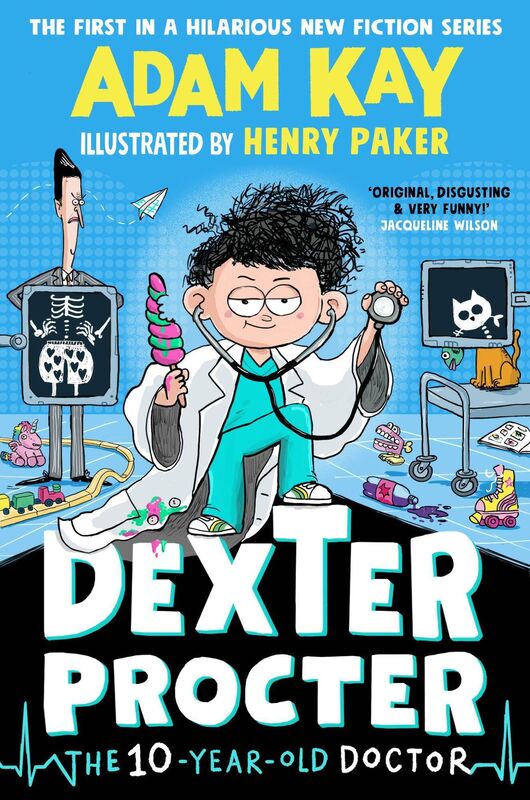
Book two of has already been delivered, he says, admitting that “there is a bit of me in the character — not in the genius part, but he has my sense of humour and quite a lot of my failings”.
He’s also penned what he calls an ‘if-dunnit’, a medical crime mystery in which a doctor is convinced his colleagues are being murdered, but no one believes him.
Called , and due out in September 2025, it could, he says, be viewed as possibly the sleep-addled ravings of an actual junior doctor, delirious after working 72 hours straight. Or maybe it’s true.
“In fiction I can have all sorts of medical mishaps,” he says.
Either way, it’s quite clear that for Adam Kay, Plan B has worked out just fine.
- , The 10-Year-Old Doctor is published on September 12 by Puffin. Also available in audio and ebook.