Kanturk memories with a deaf dad and 11 siblings inspired Carmel Winters' new play
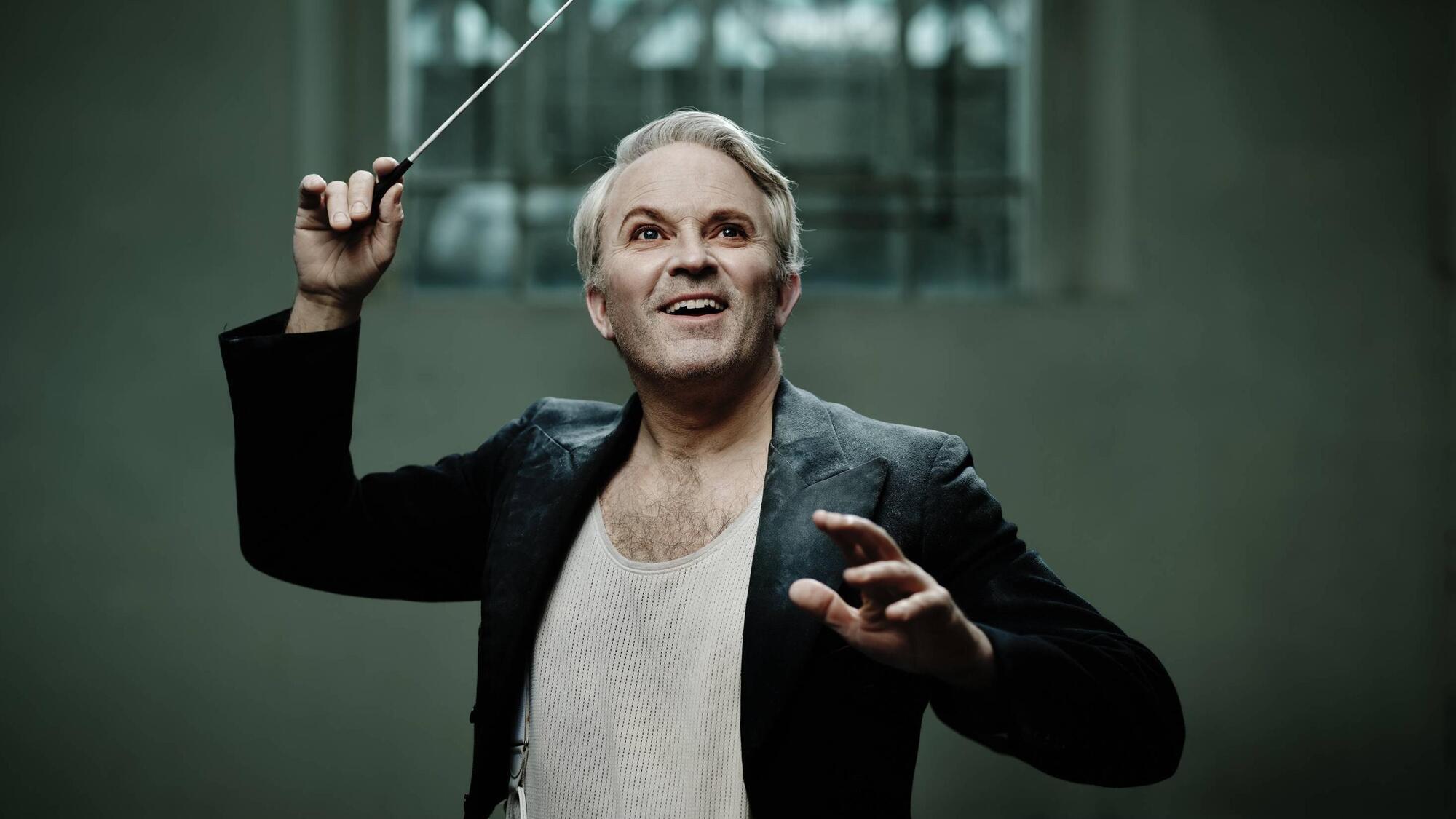
Louis Lovett in The Maestro and the Mosquita. Picture: Ros Kavanagh
Carmel Winters grew up in a large family in Kanturk, Co Cork, with 11 siblings, in an era when the notion of spending ‘quality time’ with parents was very much not a thing. Moments of connection with her father were few and far between — even more so given that there was an additional barrier to communication.
“My father was deaf, at a time when there was no kind of provision for that. He lived in a hearing world, and we just got on with our business with him not hearing at the centre of it. But as I got older, I wondered what it was like inside that deafness. I was so grateful to remember that the only times I was really in connection with him was when we were watching either Charlie Chaplin or Laurel and Hardy. Then I got to see what he loved and what he relished, and what really made him laugh.”
The memory inspired her to write The Maestro and The Mosquita, a non-verbal show, staged in collaboration with Theatre Lovett, and with a score by the English Oscar-winning composer Stephen Warbeck.
“To see my father laughing with the same abandon as a child is something that’s very precious to me as a memory. I wanted to make something where a child would be beside an adult in their life, and they'd have a kind of insight into the way that adult was responding to the humour. To be there enjoying something truly together, that means a lot to me at the moment, because I think there's a lot that divides us now,” says Winters.
This urge to share and collaborate is echoed by the mutually creative relationship between Winters and Warbeck, who composed the score for Winters’ 2018 film Float Like a Butterfly. As well as doing the music for The Maestro and The Mosquita, Warbeck is also directing, along with Muireann Ahern of Theatre Lovett. Winters and Warbeck are in the middle of rehearsals in Youghal when we speak; the show will preview at The Everyman in Cork before its premiere at the Dublin Fringe Festival.
“When we were making Float Like a Butterfly together, I’d look across the room, when Stephen was recording the music, and there'd be this sparkle of mischief in his eye, and we would communicate through little kind of mischievous glances. It was an incredibly effective shorthand, because essentially, we’re both scuts. The clown is alive in Stephen in a big way,” says Winters.
This sense of mischief feeds into the physical comedy that underpins the show, with Ballinlough-born actor Louis Lovett as the titular maestro, who is tormented by a blood-hungry mosquita.
“Physically, Louis is a fantastic comedian,” says Warbeck. “The whole physical theatre thing, it has been going for hundreds of years, and he makes it fresh and alive, it feels effortlessly contemporary.”
As a non-verbal show, the music has an even more important role to play, and Warbeck brings a wealth of experience in this regard, with a long and illustrious list of credits as a composer includes TV shows such as Prime Suspect, and the films Captain Corelli’s Mandolin and Shakespeare in Love, for which he won an Academy Award. The soundscape has been recorded and features a variety of instruments played by virtuoso musicians.
“For a long time, it was me in the room with a keyboard, singing or shouting and then we recorded it. It grows from something quite intimate and small, and at its biggest, it's got quite a scale.” Warbeck says that emotional connection is key to how he composes any work, whether for screen or stage.
“The one similarity for me is that I have to respond emotionally to what I see. So that will be true in theatre or in a film, that I feel like I have to get inside a character or empathise with what's happening for it to mean something to me. If I'm happy with what I'm doing and finding it rewarding, the music feels like it writes itself. But if I don't feel connected to something, it feels like an incredible mountain to climb. And in this case, I feel very connected to the people in the room and to the material.”
Ultimately, the protagonists of The Maestro and The Mosquita must find a way to co-exist, a theme that has increasing resonance in a world embroiled in conflict and division, says Winters.
“This is the biggie inside the play — how can I love my enemy? For the maestro, this pesky mosquita becomes the embodiment of everything that has defeated and hurt him. We're exploring if it is possible to not just to make peace, but make deep connection and kinship.”
It is clear that Winters and Warbeck have that connection and kinship. As an accomplished theatre-maker and film-maker, Winter is no stranger to accolades herself but when I ask her what it’s like to work with an Oscar winner, she laughs.
“Remarkably easy, I would like only to ever work with Oscar-winners from now on. Honestly, there’s no ego with Stephen, none, he is a pure artist, he’s just completely alive to the creative act and to fun.”
Warbeck’s Oscar is kept in an alcove in his kitchen. “It’s very badly scratched because the children used to dress it up when it they were little in Barbie clothes. But the best award I have is also in that alcove — a gold plastic figure that's rather corpulent, which says ‘world's best dad’, I mean, I'm pleased with the Oscar, but that other award means even more.”
As for those who might wonder why the insect of the title is feminine, Winters’ explanation might encourage those afflicted by mosquito bites to look a little more kindly on the perpetrator.
“Only the female mosquito bites as she cannot procreate without our blood. Otherwise, mosquitos are vegetarians and they wouldn’t bother us. We have all had the horrible experience of being bitten and the torment of the itch afterwards but to think, wow, she’s only biting us to nourish her eggs — that is the beginning of making friends with the enemy, understanding their perspective.”
- The Maestro and Mosquita previews at the Everyman Theatre, Cork on Sept 5, and premieres at Project Arts Centre as part of Dublin Fringe Festival on Sept 13, running until Sept 15. everymancork.com
- The Man Who Talks to Statues: Cork actor Shane Casey, star of The Young Offenders, plays a voiceover artist who embarks on a mind-bending road trip, encountering literal icons including Richard Harris and Molly Malone. Civic Theatre, 7pm, Sep 5-11.
- Afterwards: This show from Once Off Productions delves into the stories of three women in the recovery ward of an English abortion clinic. A timely look at the current state of reproductive rights in Ireland and beyond. Peacock Stage, Abbey Theatre, previews, Sept 6 & 7, 7pm; performances, 7pm, Sept 9-14.
- Dancehall Blues: Coiscéim Dance Theatre The groundbreaking dance company celebrates its 30th year with this landmark performance. Stephanie Dufresne and Alex O’Neill perform an intimate duet as dusk approaches, exploring hope, despair and everything in between. CoisCéim Studio, Fairview, previews, 7.45pm, 6 & 7 September, performances, Sept 8, 10 -15 & 19 - 21.
- Earth Sonnet: A wealth of creative talent comes together to perform the Earth Sonnet song cycle, a reflection on nature and the climate crisis, composed and directed by Mel Mercier, and based on seven new sonnets from poets including Cork’s John FitzGerald and Gerry Murphy. Dublin Institute for Advanced Studies, Merrion Square, 1pm, 6pm, 10pm, Sept 13 & 14.
- This Boy is Cracking Up: Killian Sundermann One of Ireland’s most popular online comedians, born in England to German parents, ponders the very serious issue of which football team to support in his first solo stand-up show. Smock Alley Theatre, 6.15pm, Sept 16-20.
- fringefest.com