Books are my business: Head of publishing at Cork University Press Sinéad Neville
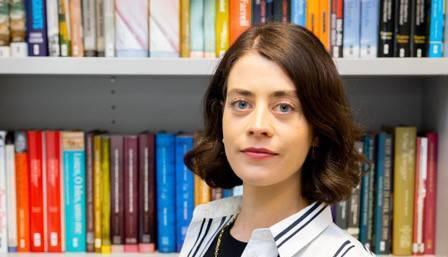
Her work involves leadership of the press, which involves overseeing the strategic direction, and the operation and business management side of things
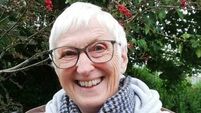
Sinéad Neville: 'It is like coming full circle because the chair of our editorial committee here is Heather Laird, who taught me in my undergrad and masters.' Picture: Rubén Tapia
Sinéad Neville: 'It is like coming full circle because the chair of our editorial committee here is Heather Laird, who taught me in my undergrad and masters.' Picture: Rubén Tapia

Sinéad Neville is head of publishing at Cork University Press, based at the Boole Library in UCC. It began publishing in 1925 and is the oldest university press in Ireland.

How did you get into publishing?

I did a degree in English and philosophy, and then a masters in English at UCC. Later I worked in publishing in London for eight years, in editorial, marketing, and sales roles, all for small independent publishers, so I got a good grounding in all aspects of the business.

I moved back to Cork in 2021, when the opportunity came up to lead marketing and communications at the Everyman Theatre. 

My husband and I were keen to move back and it felt like a great opportunity to change things up and work in a different industry. I was there for two-and-a-half years and loved it.

When the role of head of publishing at Cork University Press came up, it was a dream job for me, I couldn’t pass up the opportunity, so here I am now. 

At the outset of my career, I was particularly keen to work in academic publishing, that is what I was most passionate about. 

It is like coming full circle because the chair of our editorial committee here is Heather Laird, who taught me in my undergrad and masters.

What does your role involve?

Overall leadership of the press, which involves overseeing the strategic direction, and the operation and business management side of things.

I work closely with our editor and the editorial committee on each of the book projects. I also liaise with all the external stakeholders, so our print and e-book distribution providers, and of course I also support the authors with the promotion of their books.

Next year is the centenary of Cork University Press — the publishing industry has seen a lot of changes in that time, especially in the last few years. 

There is so much change happening in the academic publishing industry, so part of my role is keeping up with that unprecedented pace of change. 

We are shaping policies around sustainability, accessibility, grappling with the use of AI, then you have open access to scholarly outputs, all with a view to seeing the press continue on its original mission to deliver research and learning with impact for the next 100 years.

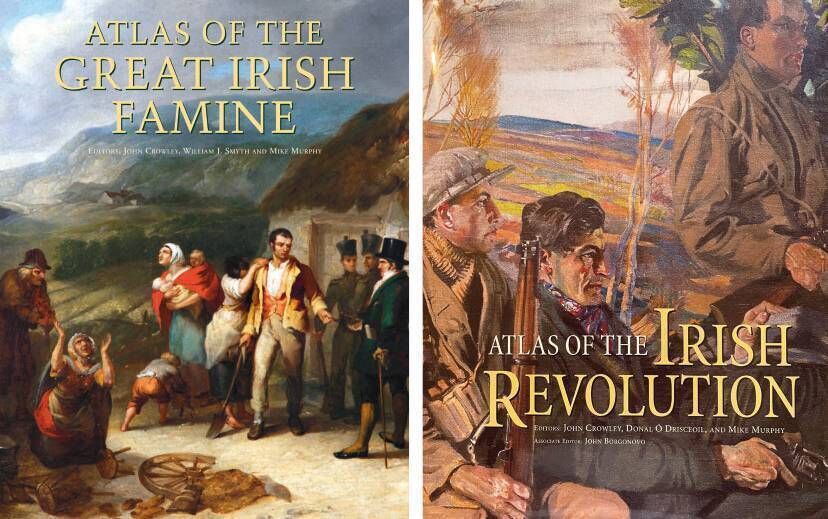
The 'Atlas of the Irish Civil War' completes the trilogy of the 'Atlas of the Great Irish Famine' and the 'Atlas of the Irish Revolution'.

A major upcoming publication for us is the Atlas of the Irish Civil War, part of a series that has traversed from the scholarly community and really engaged with the public. 

There are so many people in the country who have copies of the Atlas of the Irish Revolution and the Atlas of the Great Irish Famine. 

The Atlas of the Irish Civil War completes that trilogy as it were and it is a very important publication for Cork University Press and for UCC as well.

What do you like most about what you do?

For me, it’s about the research, knowing that Cork University Press is playing a small role pushing the debate forward in all of these fields is exciting. 

For example, we recently published a book, Care by Mark Garavan, which explores the crisis around care, putting forward proposals and breaking new ground. It is being involved with work like that, engaging with wider society and debate.

What do you like least about it?

Probably the existential threat that is looming over the humanities and social sciences. 

It feels like there are increasing challenges in terms of communicating the importance of those fields and the impact they have on society. 

It has been disheartening to hear about the recent cuts to humanities research funding in the UK; I hope it won’t come down the track in Ireland.

Three desert island books

My first pick is non-fiction, Patti Smith’s memoir, Just Kids, which I adored and would read again and again. She is an amazing musician, artist and poet and her writing is so lyrical but it is also very visceral.

Then it would be Wide Sargasso Sea by Jean Rhys, a classic feminist book that I read when I was studying at UCC. It had a major impact on me as I was really interested in post-colonialism and feminism and that tied it all together.

My third book would be our forthcoming  Atlas of the Irish Civil War because, like the other Atlas publications, there is just so much in it. There are pictures, maps, case studies, fascinating new perspectives and it will be brilliant for delving into that period in Ireland.

x

BOOKS & MORE

Check out our Books Hub where you will find the latest news, reviews, features, opinions and analysis on all things books from the Irish Examiner's team of specialist writers, columnists and contributors.
More in this section

Scene & Heard

Newsletter

From music and film to books and visual art, explore the best of culture in Munster and beyond. Selected by our Arts Editor and delivered weekly.

Cookie Policy Privacy Policy Brand Safety FAQ Help Contact Us Terms and Conditions

© Examiner Echo Group Limited