Anthony Glavin’s work continues to deal with the Irish American dynamic
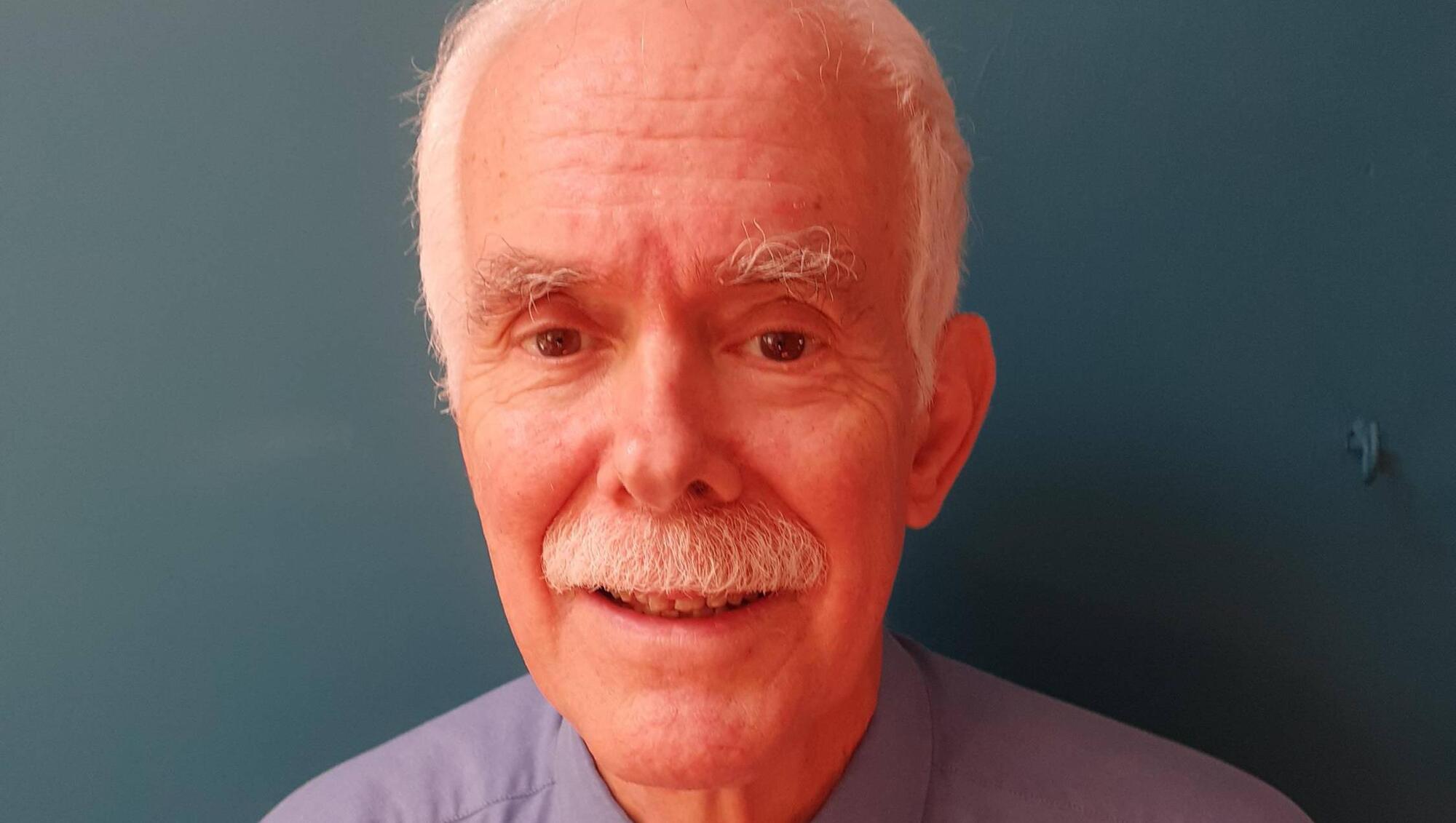
Anthony Glavin calls himself third generation Irish: ‘I think I have Irish sensibilities, but I don’t engage in Irish politics.’
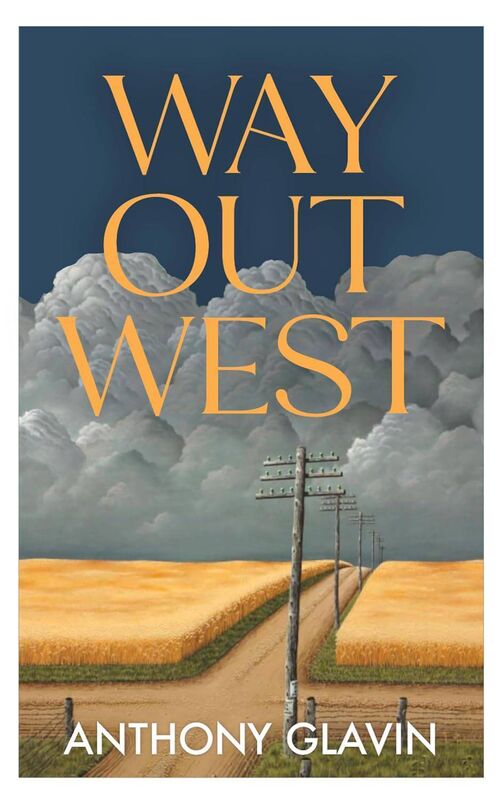
- Way Out West
- Anthony Glavin
- New Island Books, €15.95/ Kindle, €8.47
I don’t remember when I first met Anthony Glavin. The writer from Boston has been part of the fabric of literary Ireland since he settled here in 1974.
Quietly influential, he’s helped many a writer along the way, and yet retains a dignified modesty, staying largely in the background at the events and book launches he regular attends.
He’s a short story writer, a novelist, and a critic; skills that have contributed to make his latest novel, shine with authenticity, empathy and a real understanding of his craft.
We meet in Dublin’s Buswell’s Hotel — along with his Irish wife of 42 years, Adrienne. Tall and erect, with a moustache, Glavin is affable, and softly spoken, his Bostonian accent still detectable.
He tells me his memory isn’t all it once was, but Adrienne will help supply any dates and details that might have slipped his mind.
follows Fintan Doherty, a Donegal born boy, who, raised on stories told by returned yanks, dreams of escaping to the fabled land.
And when his mother dies, there seems little to keep him in Ireland. And he goes — via Europe, ending up in Ohio, seduced by the wide landscapes, and working at anything and everything, as he lives in an array of rented rooms.
Glavin’s life was almost the mirror image of the fictional Fintan. He thumbed around America in the late sixties, working at odd jobs, but his childhood was rooted in Boston, and it was Donegal that provided him with that sense of adventure.
“I absolutely loved Donegal,” he says. “I fell in love with it. You could fish. You could hike. And the stories. Oh my God, it was the stories — you couldn’t get enough of it.
“I could listen to my first landlord forever. A sheep farmer, he was a weaver as well. After growing up in Boston, it was like being in a movie.”
The novel is beautifully narrated. I loved the way we are shown America through the eyes of an Irishman.
We see Fintan’s surprise at the way adverse mental health and disability are treated in the states — with complete acceptance, and his impatience with America’s love of trashy plastic and anything impermanent is a key feature.
How did he get into that mindset, when, at Fintan’s age, he had never left the states?
“My time in Ireland enabled me to see America from that point of view. It sounds like a contradiction, but from coming to live in Ireland, I learned so much about the states.”
He originally came in 1967, when he hitchhiked around the country for a few days.
He had saved up money by the time he returned in 1974, and that was when he began to write in earnest.
His early short stories were published in by the original editor, David Marcus. And it was he who encouraged Glavin to bring out a collection.
was published by Poolbeg Press in 1980. And it was through those stories that Glavin met Adrienne, who was working for the publisher at the time. It wasn’t a rapid romance.
“It was a slow burn,” says Adrienne. “I think we were both a bit timid.”
The couple spent time in America, going back and forth before finally settling in Dublin in 1995. They still live in the house in Whitehall, Dublin 9, that they bought back then.
Meanwhile, Glavin had taken over the editorship of .
“David Marcus and I had become friends,” says Glavin. “He’d studied all my stories and knew my writing. We’d met for coffee.”
After a happy time there, he joined the publisher, New Island, at a time when the founder, writer Dermot Bolger was still involved.
He was an editor there for several years — a role he adored.
When I ask what skills he needed, and if he’d had to gain any qualifications, he says he kind of segued into it, before admitting, with some hesitancy, that he’d won a scholarship to major in English Literature at Harvard.
“I don’t often talk about it, but I loved it there. It was wonderful.”
It was when he was commissioning editor at New Island, that Glavin asked the journalist Nuala O’Faolain if he could publish a collection of her columns.
“And then I began to see that the columns needed some narrative,” he says. “I said, ‘you have a story to tell’.”
How right he was! The resulting manuscript, selling as , took Ireland, and indeed the world, by storm.
“She had always wanted to write her story,” he says, “but had never got round to it. And yes, we did talk about her vulnerability a lot. I asked was she sure and she said she was.”
The American sale came about by chance.
“We went round to the Viking pub with our friend, Liz, and her American visitor. She happened to be in publishing, and when I told her all about Nuala, she said, ‘I think I know someone who would be interested in that.’ I followed up, and pitched the book, and the publisher accepted it.”
Laughing, the couple tell me that there is now a plaque on the bench they were sitting on in the Viking, to say ‘This is where the deal was done’.
Since that time, Glavin has continued to be much in demand as a freelance editor. And he’s been heavily involved at the Irish Writer’s Centre, helping many fledgling writers through their annual Novel Fair.
I’d imagine he’s a wonderful mentor, because his own work is so brilliantly structured and flawlessly edited.
In , he wraps the narrative around a painting Fintan found painted by an American artist who’d been living in Donegal. His search for the artist brings the novel to a startling, yet perfectly logical conclusion.
“An American, he lived in Donegal in his twenties,” says Glavin. “Unknown in this country, he was a towering figure in America, but was blacklisted because he was a communist.”
There’s a wonderful love story anchoring his new novel; one that evolves over the years, and is written with such sweet tenderness, that when it ends in tragedy, the reader feels profoundly moved.
There was no exact parallel in Glavin’s life, but he did have a first marriage that ended sadly.
isn’t the first of Glavin’s work to deal with the Irish American dynamic, which isn’t surprising, as he calls himself third generation Irish.
“My mother was Irish American,” he says. “And I have Irish citizenship.” But does he feel Irish?
“I think I have Irish sensibilities,” he says, “but I don’t engage in Irish politics.” This is telling, because his childhood in Boston was steeped in politics.
“It was a very politically aware household,” he says. “Both my parents were active democrats. I have a picture of Bobby Kennedy with my Mum and Dad. We all helped at the elections.” And now?
“I still have a belief that America could be good,” he says, rather wistfully. And when I ask him if he’s troubled by Trump, he says: “Troubled doesn’t even begin to describe how I feel. I’m losing sleep over it.”