School gate politics takes disastrous playdate down dark path for parent
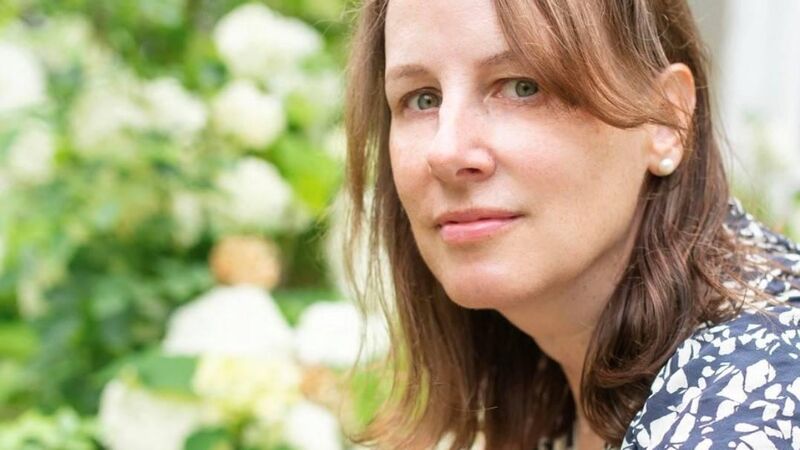
Clara Dillon's 'Playdate'  is a finely plotted book, one to be read in a single sitting
School gate politics takes disastrous playdate down dark path for parent

Clara Dillon said she initially googled ‘school gate politics’ and got a lot of her ideas there. Picture: Cara Hodge

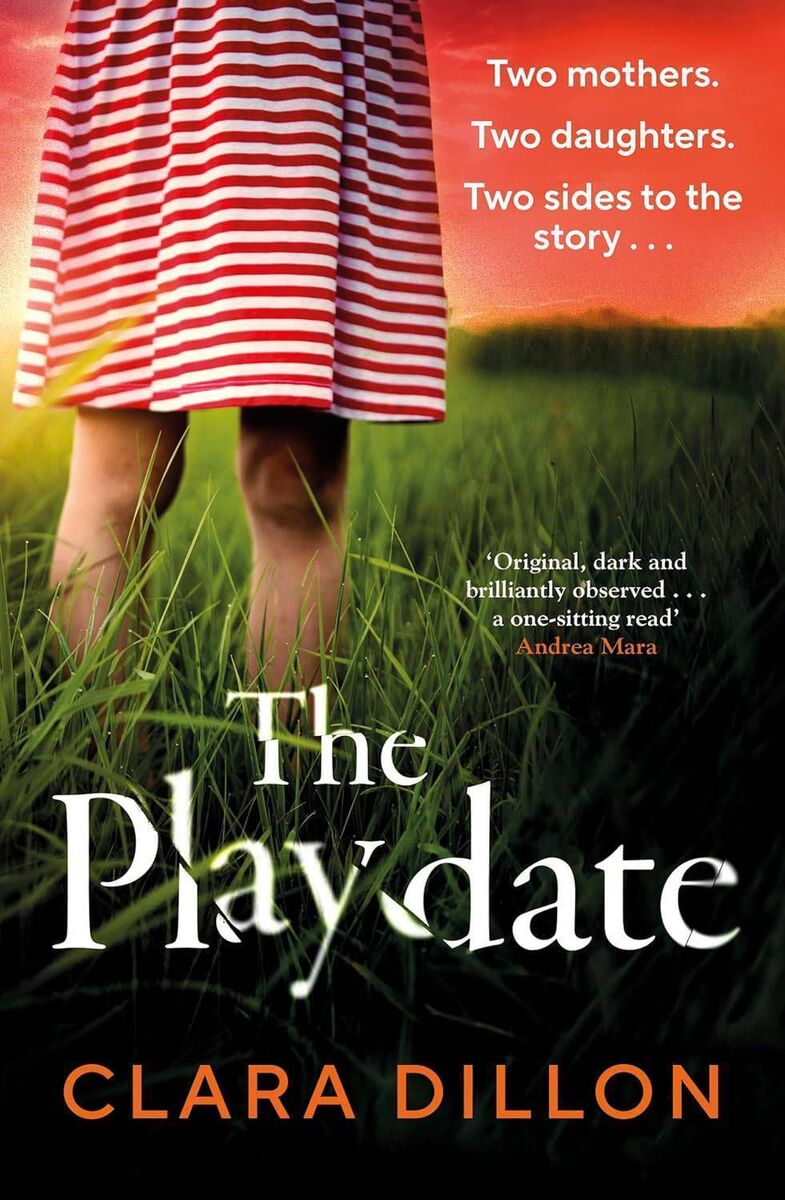
  • Playdate 
  • Clara Dillon 
  • Penguin Sandycove, €16

A few years ago Clara Dillon invited some children over on a playdate. During the afternoon, one of them wandered into the road. 

It was a hair-raising moment, but all ended well. Clara, though, was shaken. The experience got her thinking.

“Imagine how awful it would be to have to phone a parent and tell them that something terrible had happened to their child, and to face their dreadful reaction, and you had been looking after that child.”

Clara, an anaesthetist, whose hobby is writing, was looking for an idea for a novel back then. Getting home, she decided to write about that particular scenario. 

A scene showing an accident of some sort on a playdate could be her first chapter. But how could she develop the idea?

“I thought it would be terrible to explain that to any parent, no matter how nice they were, but what if the parent was somebody who could take this down a potentially dark road?”

Excited, Clara realised she had the bones of a novel. “It fell into my head after that,” she says. 

The novel starts with the disastrous playdate, and the other mum is clearly not a person you would want to get on the wrong side of, so it becomes a novel of two halves. What leads up to the playdate and what happens afterwards.

She narrates the bulk of the story through Sara, a mum who recently arrived in Ireland from Britain, and is struggling to make school gate friends for the sake of her vulnerable nine-year-old daughter, Lexie. 

It doesn’t come naturally to her and, by trying to force such friendships, she’s becoming increasingly tense.

We see Vanessa through her eyes and, from the start, she’s not very likeable. Glamorous and entitled, she leads the band of BM’s — Beautiful Mums — and her daughter holds power in the playground.

When Sara offends the other woman, it’s Lexie who suffers the backlash.

“The next challenge was to work out why, if relations were so bad between the two mums, Sara would have invited Vanessa’s child in the first place. I had to think of an explanation.”

She cites various triggers. “Sara hasn’t good social supports. Things don’t build up when you’ve got friends to chat to and take advice from. She’s isolated. Her husband is away a lot, and the more wrongfooted she becomes, the tenser she gets.”

This is a finely plotted book, one to be read in a single sitting. There are some jaw-dropping twists, yet it feels plausible.

That’s because the author has created such rounded authentic characters.

If you find your character’s voice, you’re away. I’ve tried to write other novels, but if you don’t find the voice, you’re forcing it.

“In this novel, the voices fell into my head strongly,” Clara says. “You go, ‘this character is in a bit of a pickle, what will they do next?’ And you think, ‘of course!’ And this other character would definitely respond this way.”
As she’s a doctor, I wondered if Clara had thought of setting her novel in a hospital. “That seems logical,” she says, agreeing, “but I’m not keen to go down that road. 

"Because I’m a doctor myself, I felt that if I wrote anything negative about a hospital, readers would go, ‘oh. Is this what she thinks about her patients?’, I’d feel restrained.”

Clara trained in Dublin, and then moved to Britain — progressing as an anaesthetist first in Bristol, and then London. After a long-distance relationship, her now husband — also a doctor — moved to London, but he always wanted to return to Ireland.

“I loved England. We had a fantastic time in London.

“Then one day, he said: ‘I’m applying for a consultant post in Dublin. I’m going back’, so I had a choice to make.”

She moved back in 2011, shortly after the birth of her first baby. It was a bit of a wrench for her at the time, but she’s happy now.

And so are her two daughters. “They’ve had a good experience of school,” she says. 

They have some friends from when they were babies and have never been outsiders, but I’ve certainly heard lots of stories. It’s ‘did you hear about…’ or ‘I’ve had to move schools because my child is being bullied’.

She did a fair amount of research as well. “I did a bit of googling online,” she says. “I typed in ‘school gate politics’ and hundreds of stories, forums, and chatrooms came up.

“I got a lot of ideas from there.”

Clara adores writing — indulging herself with it on her days off when others might be hill walking. She hopes to write another novel, and has an idea swirling around in her head, but she’d never give up the day job.

“Medicine is my priority,” she says, “though there are, obviously, many cons. The main pro for me is that ultimately, we are helping people. 

"You can go home sometimes and think: ‘I did something that was good.’ And you’re not trying to sell something to someone or having to pretend to be someone that you’re not. We don’t have to lie.”

Coming from a medical background, it was, perhaps, inevitable that she would become a doctor.

Although she went through a stage of wishing she was a journalist, the profession has been good to her.

“I work mostly in theatre now, but for many years I worked in ICU. It was the most interesting part of anaesthetics, but it was far more consuming — both mentally and physcially than what I’m doing now.

“You’d get calls in the middle of the night, and you’d never fully finish your job. It was very hard, and I pulled back when I had kids. I do regret it, but now I can go home.”

She enjoys chatting to the patients, some of whom are very frightened or scared.

“You always have to remember that it’s just one more day for you, but it’s a huge day for them — one they will never forget.”

The lack of pressure at work, means she can read again, as well as write — a pleasure she’d given up on in those many busy years.

“I like reading books about ordinary lives with a bit of menace lurking underneath, and that’s probably what I’ll write again. People who are not what they seem, trying to make good decisions, but they end up not being.”

Her favourite book of all time — one she wishes she had written — is Tana French’s debut, In the Woods.

“It’s a masterpiece. I’ve read it at least three times and bought three of four copies over the years.”


I keep recommending it to people and lending it to them, and then not getting it back.

When she has more time — perhaps when she retires — Carla would like to teach literacy to adults interested in learning to read. Reading difficulties is one of the many issues she explores in her debut.

“It’s an eye opener,” she says. “Adults who run their finger along a page, mouth the words, or fidget when they read because they’re tense, can be made fun of and called stupid. Yet research shows that some people who are very bright can’t make a connection.

“It’s affects language too. It’s like a light that’s on but flickering. There are all these ideas in their heads, but they can’t articulate what they want to say.”

Happy with her debut — Clara says she’s invented a new genre. “I call it school gate Noir,” she says.

x

More in this section

Scene & Heard

Newsletter

Music, film art, culture, books and more from Munster and beyond.......curated weekly by the Irish Examiner Arts Editor.

Cookie Policy Privacy Policy Brand Safety FAQ Help Contact Us Terms and Conditions

© Examiner Echo Group Limited