Books are my business: Sandycove editorial director Brendan Barrington
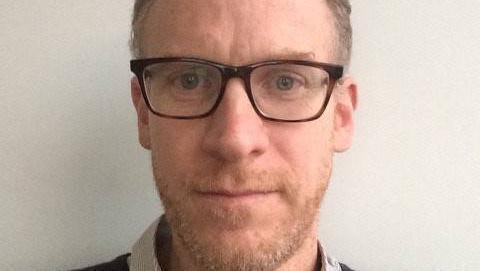
Brendan Barrington: 'In 2000 I started The Dublin Review, a quarterly literary journal, and in 2003 I joined the brand-new Penguin Ireland imprint, now Sandycove, as an editor.'
Brendan Barrington is editorial director at Sandycove, an imprint of Penguin Random House. He also founded The Dublin Review, a quarterly magazine of essays, memoir, reportage, and fiction. Born and raised in New York, he lives in Dublin.
How did you get into publishing?
My first job in book publishing was an internship at Lilliput Press, which turned into an editorial role. In 2000 I started The Dublin Review, a quarterly literary journal, and in 2003 I joined the brand-new Penguin Ireland imprint, now Sandycove, as an editor.
What does your role involve?
An editor’s job is enormously wide-ranging. I look for books to acquire for Sandycove: reading submissions from writers and agents, and approaching people who I think may have a brilliant book in them.
To do this part of the job well, I need to keep my ear to the ground for every possible source of talent and expertise.
Once a book is acquired, I work with the author through the writing process (if the writing isn’t already completed), and I edit the text — a process that can take weeks or months, depending on the nature of the project.
Meanwhile, I am working to marshal all of the resources of Penguin Random House to make sure the book will have its very best chance of success on publication.
I brief a jacket design from the art department — aiming to have a finished jacket months before publication, so that we can share it with booksellers and media.
The sales team is responsible for making sure that the booksellers know about the book, read it in advance when possible, and order healthy numbers.
The comms team prepares a campaign of publicity and marketing that will peak in the period around the publication date.
The rights team looks to sell foreign editions of the book and to explore possibilities for a film or TV adaptation or any other use of the intellectual property.
There is a team that sees the book through the copy-editing and proofreading processes. And there is a team that oversees the physical production of the book.
The editor’s job is to make sure that all of these colleagues have the information and materials they need in order to do the very best they can for each project.
What do you like most about it?
The variety. Every book is different, and every author is different. I love the challenge of making an editorial plan and a publishing plan for each book: it’s really different every time, and so it never becomes repetitive.
And I love the drama of working with a writer to make a book as good it can be.
What do you like least about it?
It’s hard when a terrific book doesn’t get the level of attention or sales you think it deserves. Every editor goes through this, it’s part of the job.
But whereas editors always have multiple books on the go, some of which might be bestsellers or prize-winners, for an author their latest book is the only book that matters, and I feel for them when it does not connect with the public in the way we had hoped.
What are your career highlights?
Working with Tim Robinson, the great polymathic chronicler of the Aran Islands and Connemara, first at Lilliput and then at Penguin.
For my money, he was Ireland’s greatest living non-fiction writer until his death in 2020 — and one of the very best in the world.
And over the past year it has been a great privilege to work with Anna Fitzgerald on her first novel, Girl in the Making — a really extraordinary piece of work, coming this March.
Three desert island books
Some of my all-time favourite books are very short, but on a desert island you’d better go big.
So, I’ll have the Library of America collected editions of the works of James Baldwin and Joan Didion: they combined deep and wide intelligence with astounding literary style. And I’d better take Ulysses too, to help me remember Dublin and all its great linguistic and literary energy.