Hughie O’Donoghue on Mayo views, Manchester links, and his Cork exhibition
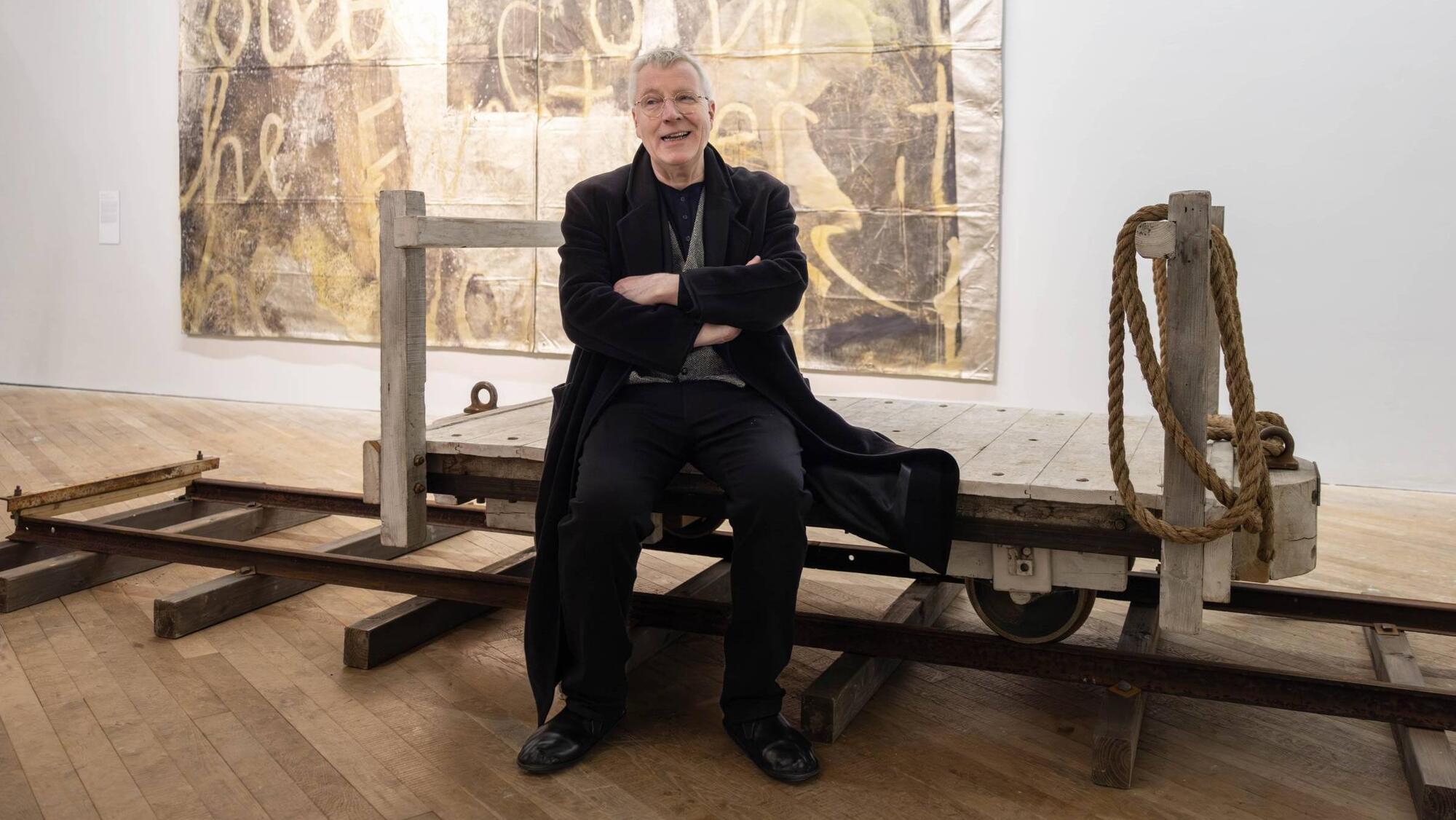
Hughie O'Donoghue at the Glucksman, UCC, recently for the opening of his exhibition.
Growing up in Manchester in the 1950s and ‘60s, the artist Hughie O’Donoghue was brought back every summer to his mother Sheila’s home place at the edge of Lough Carrowmore in Erris, Co Mayo.
“It’s wild country,” he says. “Mountains. Lakes. I was deliberately taken there to give me a sense of that landscape, and it’s indelible in my memory. It's a kind of default position, which one reverts to in terms of identity.”
The Carey family farm, where he spent those childhood holidays, is visible from the house that O’Donoghue now - after many years living in Kilkenny - calls home. The farm, and the surrounding landscape of Erris, has informed much of the work in Territory, his current exhibition at the Glucksman Gallery in Cork.
So too has O’Donoghue’s family history, which is as fractured as one might expect of small farmers in the West of Ireland in the early 20th century.
“My mother’s father – my grandfather - died in 1920,” he says. “There's no image of him, no photograph, and almost nothing is known about him. My mother was brought up by her mother on an incredibly poor piece of land. She was one of eight children, and they all had to leave and get jobs. My mother left in 1937. She went into service in Manchester, where she met my father.”
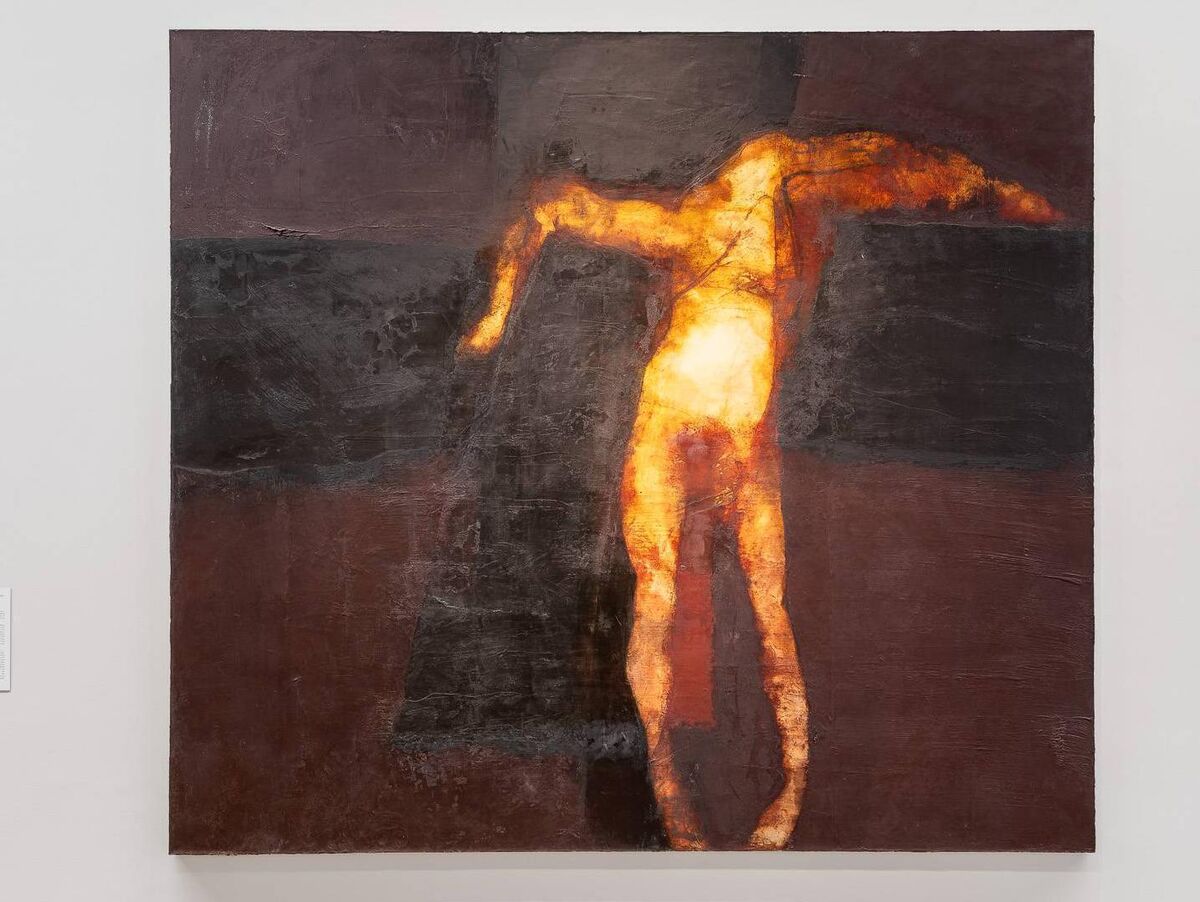
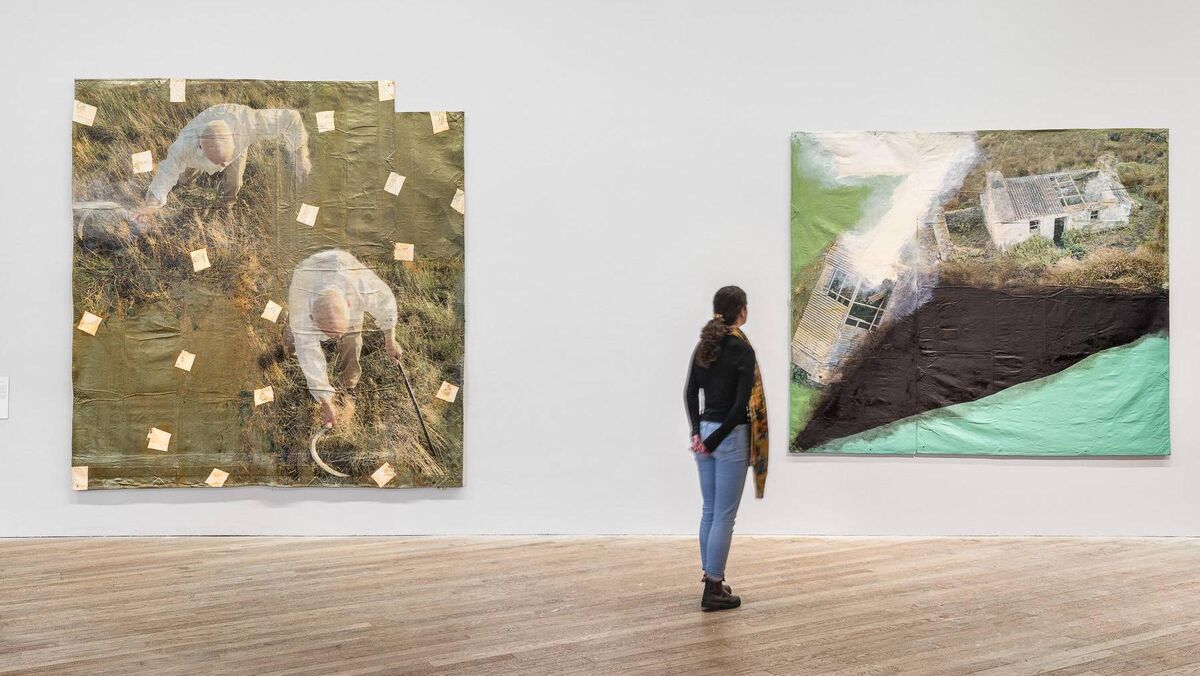
O’Donoghue is known for his large-scale paintings in oils on canvas, such as Knocknalower (Hill of the Lepers), a work from the UCC Collection that is featured in Territory. Often, his works incorporate photographs, and in recent years he has taken to working on tarpaulin, a material he likes for its industrial quality: "There’s kind of a distressed surface. It’s not pristine or clean.”
One of the most striking pieces in the show, Michael Gaughan’s House, is a work on tarpaulin that incorporates an aerial photograph of a neighbour’s homestead, now in ruins, in the townland of Gortmore. The ruin is visible from O’Donoghue’s kitchen window.
“Gaughan is a name within my family,” he says, “but I didn't know that before I went looking into the census returns, which record who lived in these houses that are now in ruins all over the west of Ireland. I was curious about that; who lived where, and how many of them were there? And the census tells you. A house might have had one room, one window, and a thatched roof, and eight people might have lived in it. It's bald fact, but it triggers your imagination. It's a way of connecting with the past, but not just that; it’s a way of connecting with your own self really, your own identity came out of this.”
O’Donoghue’s father Daniel was born in Manchester. “His background was more complex than my mother’s. He spent much of his childhood in Co Kerry, but then came back to Manchester. His mother and father, who I knew, were Irish Republicans, but he was British by birth; he was drafted in 1939, and he served in the British Army for the duration of World War II. And all of that has fed into my own story, really.”
O’Donoghue has often referred to his father’s experiences of World War II in his paintings. But his interest in warfare goes further back again. Territory features his only large-scale sculptural work, A Distant Thunder, whose title refers to the first artillery barrage of the Battle of the Somme in 1916, which could be heard on the south coast of England.
The work consists of a stretch of First World War railway track, such as was laid on the battlefields of Northern France and Belgium, and a recreation of a vehicle that was used to evacuate wounded soldiers. The piece was first shown at O’Donoghue’s exhibition, One Hundred Years and Four Quarters, at Galway Arts Festival in 2016.
“When I went to look at the Glucksman,” he says, “I felt the Territory exhibition would need a sculpture, something that would serve to connect the paintings. So I thought of remaking A Distant Thunder.
“Stevie Scullion, who I work with whenever I need technical assistance, acquired the tracks from the Romney and Dymchurch Railway over 20 years ago. He had a huge input into the making of the sculpture. We made something very practical, that can be remade in different forms. When I showed it in Galway, it was like a battering ram. Whereas in Cork, we erected a gantry above the tracks, with a bell to be tolled. I’m delighted with it.”
O’Donoghue is constantly working, often on large-scale exhibitions, and it is no surprise to learn that he has already begun work on his next project. “I’m currently staying at Luggula, Co Wicklow,” he says of the famous estate of the Guinness family. “I knew Garech Browne, the former owner, very well, and I’ve been visiting since 1991. It’s an extraordinary place, and very like Mayo, in many ways. It's a wild and very beautiful country; there’s Lough Tay and, above it, Fancy Mountain, and all these enormous trees.
“I've got a little apartment and a studio in an old coach-house in the courtyard. I don't quite know what I'm doing just yet, but I think the work will form some kind of exhibition at some point. I'm fortunate to be busy. I enjoy what I do, and each different thing is a new challenge. It keeps me stimulated.”