Children's Books Round-Up: Irish-written tales where the kids are the heroes
Nicola Pierce and Judi Curtin negotiate the Famine and its legacy; Sinéad O'Hart steps into Irish mythology
Children's Books Round-Up: Irish-written tales where the kids are the heroes

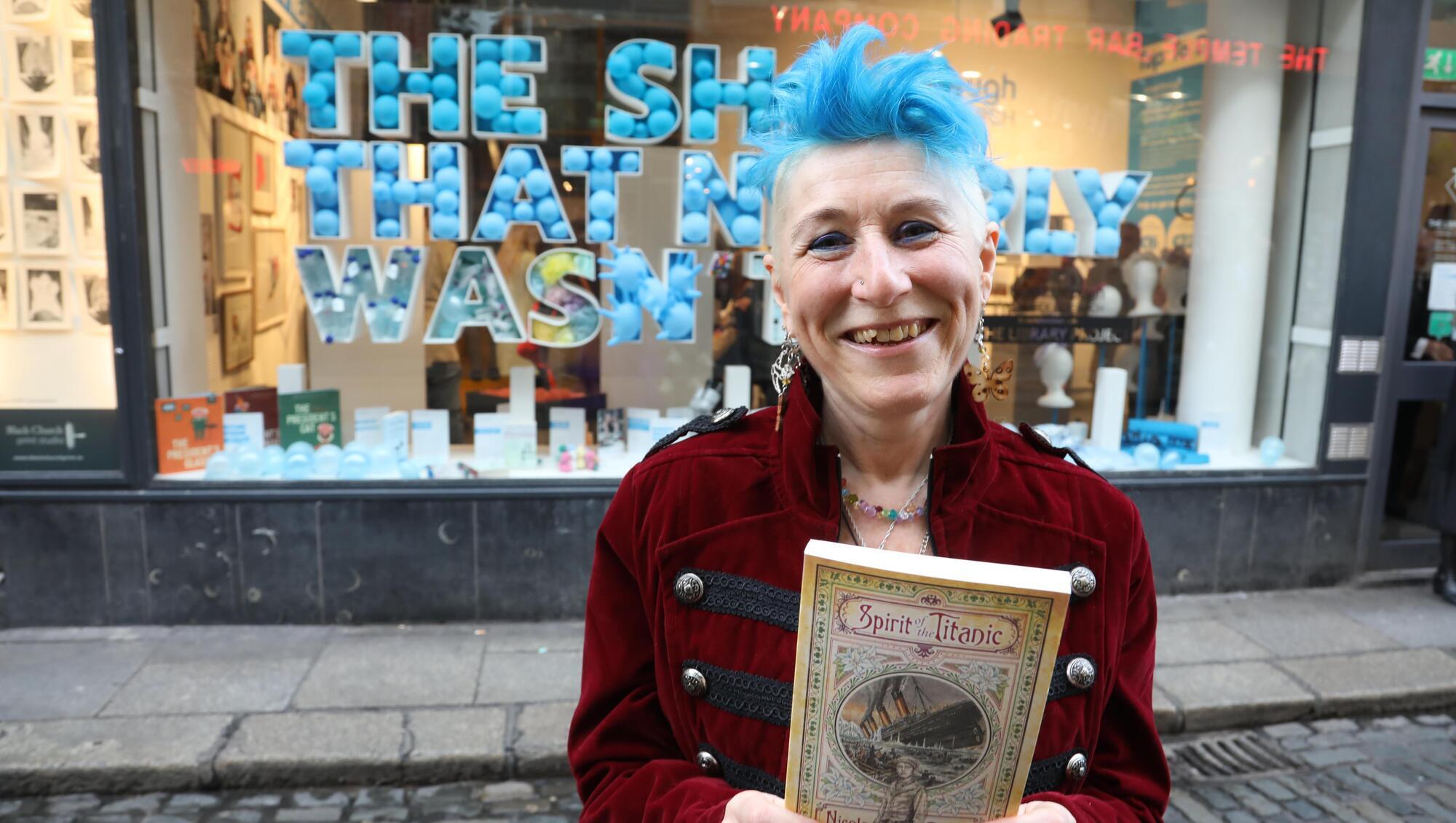
Author Nicola Pierce. Picture: Garrett White/Collins Agency

  • In Between Worlds
  • Nicola Pierce
  • O’Brien, €9.99

“There had to be potatoes in September. There just had to be.” Skibbereen, August 1846, and the failure of the previous year’s crop means that, despite neighbours sharing what little food they had, there was now nothing to do but pray that God would provide.

“We had no food left. No one had. Instead of potatoes, we boiled nettles and juicy green leaves and pretended we were supping like kings,” Maggie Gaffney, the young narrator of In Between Worlds, says.

“If only we could remain calm, then God would have to reward our trust in Him and in those seed potatoes we had planted so carefully back in March,” she reasons, counting down the final weeks until the new crop is ready.

One morning, however, Maggie wakes to an “evil stench” pervading the air and a sound coming from the field near the family’s cottage: The sobs of her father, on his knees in despair at the sight of their potatoes, stalks “soft and clammy as vomit”, their insides turning to pulp.

While her parents and younger brother Seán wilt in grief and defeat, Maggie is angry. Angry at a heartless God, angry at her parents’ blind faith, their promises that this year would be better, and at her father’s refusal to leave the land.

After building roads in return for soup, and then surviving the workhouse, anger is the only thing keeping Maggie strong as she finally turns her back on Skibbereen and Ireland. Following the death of her parents, she and her friend Sarah seize the chance of a new life in Australia.

Aboard the ship Thomas Arbuthnot, the girls sail “between worlds” of all that is familiar in Cork, and an uncertain future on the other side of the world, yet Maggie has no tears to shed.

In Between Worlds: The Journey of the Famine Girls by Nicola Pierce

Unlike Eily O’Driscoll in Marita Conlon-McKenna’s Under the Hawthorn Tree, with whom inevitable comparisons will be made, she shuts off her emotions in response to the horrors of the Famine, cursing the “stupid rotting ground” that bred only misery and hardship.

Maggie has a percipience that belies her 16 years, articulating her cynicism of the Church and abhorrence at the treatment of women at the hands of men.

Faced with the loss of home and family, there is no outpouring of grief, even in the bleakness of her mother’s death. Silenced by hunger and numbed to all feelings, she focuses only on her next steps of continuous survival: “We were alive and that was all that mattered.”

If the hollowness of her emotions early in the novel means Maggie fails to provoke the same level of reader empathy, as do the O’Driscoll siblings in Conlon-McKenna’s Children of the Famine trilogy, her self-preservation instinct stands her in good stead for the hardships life has yet to throw at her in and en-route to Australia.

As in previous works, including Spirit of the Titanic and Behind the Walls, Drogheda-based Nicola Pierce blends fact with fiction to present Irish history afresh to young readers.

The courage of Maggie and Sarah springs from Pierce’s imagination, but their situation is based on her research surrounding the 4,114 orphaned Irish girls, aged 14-18, who between 1848 and 1850 took up offers of free passage to Australia under the “Earl Grey Scheme”.

The scheme, under Earl Henry Grey, aimed to relieve pressure on overcrowded workhouses while fulfilling the British colony’s need for female labour and future mothers.

Though none of those who made the three-month voyage on the Thomas Arbuthnot were from Skibbereen, Pierce opens her novel in the West Cork town, synonymous with the worst ravages of the Famine. Amid her fictional cast is the real and much respected Dr Daniel Donovan, who also features in Conlon-McKenna’s The Hungry Road. The Rosscarbery native’s accounts of the Famine’s horrors were published in newspapers from Cork to London, laying bare the awful truth and eliciting money for relief of the poor — acts for which, along with his tireless medical work, he is remembered fondly, not least in Skibbereen.

Best-selling author Judi Curtin. Photograph: Leon Farrell/Photocall Ireland

  • Sally in the City of Dreams
  • Judi Curtin
  • O’Brien, €12.99

Little over half a century after the Famine, the population of rural Ireland is still decimated as poverty drives thousands to emigrate, among them young sisters Sally and Bridget, who sail from Queenstown in 1911 in search of prosperity in New York.

An American wake fills their

house with music and joy for a few fleeting hours before the girls say goodbye, perhaps forever, to family, friends, and all they have ever known.

By the time their boat passes Roches Point, most passengers are in tears, though the sisters and their new-found Kerry friend, Julia, attempt to stay positive by focusing on the opportunities awaiting them in the city of dreams.

Sally and Bridget are to stay with a distant relative who has found jobs for them, though she turns out to be a merciless miser who cares only about extracting rent from the girls for their meagre lodgings.

Sally in the City of Dreams by Judi Curtin

Julia, meanwhile, is an orphan who comes to America in hopes of staying with her older brother, but on reaching Ellis Island he is nowhere to be found.

Attempts to trace her brother fail and the girls’ awe at the wonders of the city is tempered with loneliness in their vast, often inhospitable, new surroundings.

They learn quickly about injustice and anti-Irish prejudice, and when a false accusation is made, the trio must rely on their wits and each other to survive.

Inspired by her own grandmother’s emigration to New York in the early 1900s, Curtin, whose grandparents returned to Ireland when her grandfather found work at Cork’s Ford Motor Company, explores a period sometimes overlooked in children’s historical fiction, through her stock in trade of well-developed female characters bound together in the face of adversity.

  • The Silver Road
  • Sinéad O’Hart
  • Piccadilly, €11.20

What would you do if an ice giant, made of hailstones, appeared in your back garden and offered you a stone?

Whether for good or evil, Rose Darke (or perhaps Róisín Dubh) decides to accept the smooth stone, little suspecting its power.

Rose, whose life in the present is blighted by the manipulative school mean girl, steps into an ancient world of Irish mythology thanks to the magical stone.

The Silver Road by Sinéad O’Hart

She discovers how the Silver Road, which runs across Ireland like a huge web of magic, is under threat as the seandraíocht fades.

Rose must try and keep the magic alive, but she has allowed the precious stone out of her possession and is powerless to get it back.

An entrancing intertwining of Irish legend, language, and lore with modern themes of bullying, social class, and ecocide.

BOOKS & MORE

Check out our Books Hub where you will find the latest news, reviews, features, opinions and analysis on all things books from the Irish Examiner's team of specialist writers, columnists and contributors.

More in this section

Scene & Heard

Newsletter

Music, film art, culture, books and more from Munster and beyond.......curated weekly by the Irish Examiner Arts Editor.

Cookie Policy Privacy Policy Brand Safety FAQ Help Contact Us Terms and Conditions

© Examiner Echo Group Limited