Book Review: Lisbeth Salander returns in Karin Smirnoff's The Girl in the Eagle's Talons
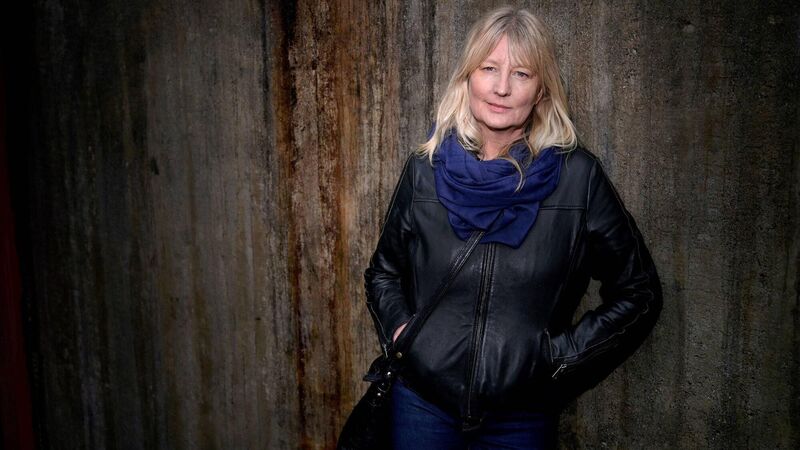
A photo taken on April 28, 2020 shows Swedish writer Karin Smirnoff posing during a photo session in Stockholm.
- The Girl In The Eagle’s Talons
- Karin Smirnoff
- McLehose Press, €22.40
Steig Larsson had intended to write 10 novels featuring Lisbeth Salander and Mikael Blomkvist.
When he died in 2004, aged just 50, he had completed three and part of a fourth.
David Lagercrantz was commissioned to carry the series forward and wrote a further three volumes.
With this new book, published in Sweden to an excellent response last year, Karin Smirnoff, a successful journalist and novelist in her own right, has instigated a planned further trilogy.
reintroduces us to damaged hacker, and now businesswoman Salander, and her friend and occasional lover Blomkvist.
The action largely takes place in Norrland County in the north of Sweden (with an interlude in Rovaniemi, home of Santa Village, across the Finnish border).
Salander has travelled north to come to the aid of her niece Svala, whose mother has gone missing.
Blomkvist, dispirited by the end, after 31 years, of his beloved print magazine 'Millennium', and its conversion into a podcast, is in the area because his daughter Pernilla is marrying local politician and businessman Henry Salo.
The untapped natural resources of Sweden’s far north have begun to attract the attention of various multinational companies, eager to cash in. The area has become something of a new Klondyke.
There are people who are not willing to leave their homes to facilitate the construction of giant wind farms and people who are not willing to accept such refusals.
There have been many disappearances of young immigrant women in the area.
Behind many of the evil goings-on is the monstrous figure of Marcus Branco, a thalidomide victim born without legs. Branco is an extremely evil sexual predator, who has plans for world domination.
There is something cartoonish about him. This volume shares that quality with the original trilogy (less so the instalments written by Lagercrantz).

The country’s nastiest biker gang, the Svalelsjö, with which Salander and Blomkvist have previously battled, have relocated from Stockholm hoping to profit from developments in their usual criminal manner.
Thirteen-year-old Svala, who ‘…is not a child. Never has been’ is an interesting addition to the world of the novels. A sufferer of Vittangi disease, she is impervious to pain.
Like her aunt, she has a genius-level IQ, and also shares Salander’s determination to ensure that the bad guys don’t get away with their crimes. She is sassy and funny.
Fast-paced, with many twists and turns, and a satisfyingly large dramatis personae, the book’s four hundred or so pages feel in no way excessive.
A flaw might be an overreliance on coincidence, particularly in an odd episode involving Santa Claus and some plagiarised poetry.
There are a couple of enjoyably cheeky post-modern touches. A real-life book by Steig Larsson and Michael Ekkman called Sweden Democrats: The National Movement is name-checked.
Svala tells Lisbeth that, with her make-up, she resembles Noomi Rapace (the actor who played Salander in the Swedish original of ) to which Salander replies ‘Who?’
There are other flashes of humour throughout what is a dark and violent book.
The translation, by Sarah Death, three times winner of the George Bernard Shaw prize for translations of full-length works of literary merit from Swedish to English, is crisp.
Fans of the series will enjoy this extension of the adventures of Lisbeth Salander (‘Relationships are tiresome. Life has more to offer than people. Prime numbers, for example’) and Mikael Blomkvist, in a Sweden which is very much not the social democratic paradise of quite recent myth.