Book Excerpt: Kathleen Lynn - doctor, revolutionary and lover
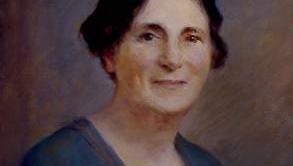
Kathleen Lynn: "a revolutionary — of the socialist, suffragist, anti-imperialist, or hard-core Irish Republican kind"
My Kathleen Lynn may not be the same as yours. That’s all right — hers was a broad church.
My Kathleen Lynn is at least partly fictional. I’ve been asked to introduce this volume because she features as a central character in my 2020 novel set in a Dublin hospital’s maternity/fever unit during the Great Flu, .
For my purposes, Lynn is the archetypal good doctor, witty, analytical and compassionate, working on a vaccine in the lab when she’s not striding from ward to ward to battle with Death for each patient.
For other readers, Lynn will be primarily a revolutionary — of the socialist, suffragist, anti-imperialist, or hard-core Irish Republican kind, depending on which of the threads of her commitment you follow.
A political and medical campaigner and reformer, a TD and councillor, a hospital founder and administrator… Nor should we forget that Lynn was an Anglo-Irish Protestant, a minister’s daughter, and a zealous Christian to the end, even if she climbed out of the comfortable social niche of her upbringing when she chose to embrace radicalism.
Lynn also embraced her fellow radicals. She was a great friend to many — her lifelong loyalty to an alcoholic comrade comes across touchingly in these pages. She was the passionate partner for three decades of Madeleine ffrench-Mullen.
Lynn described the couple with discreet understatement as a ‘great team’ in all things; perhaps their most lasting legacy was the small, ecumenical miracle that was St Ultan’s Children’s Hospital. (In a tiny link which thrills me inordinately, my mother’s diary includes a reminder to bring me there for my TB vaccine in 1970.)
Judging from this rich collection of excerpts, the Kathleen Lynn diaries — close to a million words written over four key decades in the formation of Ireland (1916-55), often consulted by scholars but not published till now — are an astonishment. From her first entry in 1916, they bristle with an energetic intelligence, a hunger for change: ‘Thank God Ireland is alive & throbbing.’
Lynn as a social commentator is opinionated, rueful, funny and heartfelt.
Her countless references to her beloved ‘M ffM’ add up to one of the best accounts we have of a long same-sex partnership.
Mostly she jotted down their work, meetings and travels, relieved by moments of domestic respite or fun with friends or their dog Bran, but sometimes absence prompted an eloquent declaration of what ‘barren wilderness’ life could be without Madeleine.
A.G.O.W., all goes on well, Lynn wrote repeatedly, despite how many reasons she had for crushing disappointment, as the vote for women and freedom for Ireland failed to bring in the new and just world she’d worked for.
D.G., deo gratias, Lynn kept adding, determinedly thankful for everything from a good meeting to a release of prisoners, a sunrise to the serene expression on a dead friend’s face.
She noted that her hunger-striking comrade Thomas Ashe died ‘with my finger on his pulse’, and what the phrase evokes for me is that Lynn would always keep her finger on the pulse of life in its smallest, most personal details as well as its grander historical movements.
There are many Kathleen Lynns; she squeezed so much into her eighty-one years.
Alive & throbbing, indeed, as long as breath was in her, and the world was better for the marks she left on it, which is only one reason why the long-overdue publication of a selection of Kathleen Lynn journals is a cause for what she would have called a loud hip hip DG.
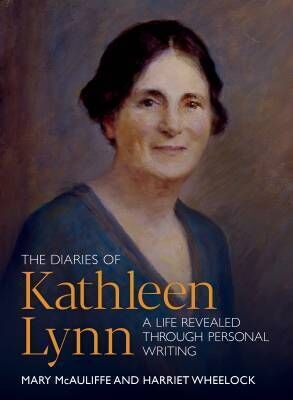
- , edited by Dr Mary McAuliffe and Harriet Wheelock published by UCD Press, is out now.