Will Sergeant: Tales from Echo & the Bunnymen and that rivalry with U2
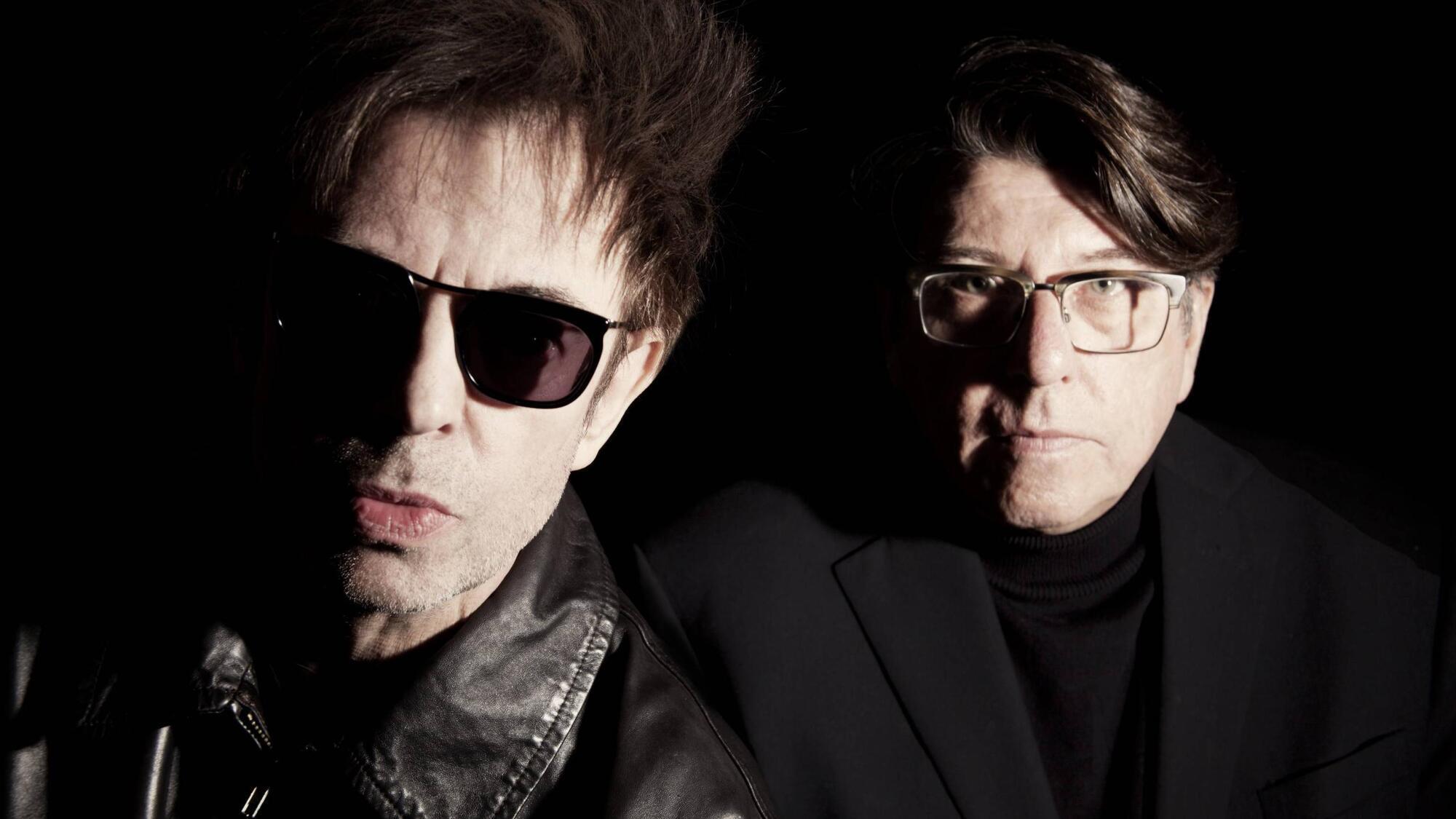
Ian McCulloch and Will Sergeant of Echo & The Bunnymen.
Will Sergeant of Echo & the Bunnymen is picking out the opening notes to 'The Killing Moon' in Edinburgh’s Usher Hall during a soundcheck.
The current tour is in celebration of Ocean Rain, the 1984 album, mostly recorded in Paris, that's regarded by many as the band’s masterpiece.
Singer Ian McCulloch appears under a black hood and dark glasses to sing the first verse backed by Liverpool’s Royal Philharmonic Orchestra with string arranger and cellist Adam Peters.
‘Mac the Mouth’ pauses and mumbles a few sentences as Sergeant stands with his hands behind his back.
After the soundcheck, I’m ushered across the stage, past Sergeant’s arsenal of guitars (including the original 12-string Rickenbacker he played on Ocean Rain) and up the stairs to the top of the building where he discusses his second memoir Echoes.
The book follows the acclaimed Bunnyman memoir which told the compelling story of a self-proclaimed ‘woollyback’ growing up in Liverpool amid IRA bomb scares, power cuts and fears of a nuclear war.
Bunnyman ends just as the band are getting started, while this new volume charts their rise to popularity.
Beyond the usual biography fare, Sergeant is an entertaining writer who paints a vivid picture of a creative working-class life in Liverpool. “I’m a punk rock Billy Elliot,” he laughs.
“I’m just kind of telling the reader what happened, when the band got offered a gig in Camden with Madness and Bad Manners we thought, ‘Yeah okay’. We then got bottled off the stage by skinheads and it’s kind of funny now but it wasn’t at the time.”
Echoes also charts some early encounters with U2, the Bunnymen’s rivals during the early 1980s. “We were snotty and thought Bono was too much of a God-botherer. Adam Clayton asked us how do you get that treble sound and Les [Pattinson] said to him: ‘Turn the treble up’.”
Echoes ends at the start of 1982 with the arrival of Courtney Love, who began her apprenticeship as a rock star in Liverpool.
Around the same time the Bunnymen played a string of memorable dates in Dublin. “I’ve always loved playing all over Ireland; Belfast, Dublin, Cork, Limerick,” says Sergeant.
He particularly recalls a gig in McGonagles, followed by a session at the Pink Elephant, the 1980s South Frederick Street nightspot.
“U2 sent over a case of champagne, we sent them back a couple of pints,” says Sergeant. “They were on a different level to us. In the long run, we could have ended up as massive as U2 or whatever but we’ve kept our cult status. We’re not millionaires but we’re alright.
"I remember once they did a U2 Jukebox on CD that came with a magazine and they picked ‘The Cutter’ [1992 Bunnymen single]. Considering the gip our band have given them over the years they were turning the other cheek and practicing what they preach.”
Sergeant reveals a trip eastwards with the band’s bassist in the early days that opened their ears to new influences.
“Les and I went on holiday to Russia in 1983 and heard all kinds of music. It just stands out on its own, it’s this weird thing,” says Sergeant of ‘The Killing Moon’.
“We tried to avoid all that 1980s sounding studio flange stuff that you hear and the DX7 synth, the chiming bell sounds etc, we were coming at it from a Doors, Velvets and Bowie direction. I just wanted it to be timeless music and be a good rock band up there with the likes of The Who or The Kinks.
“The 1960s was a special time, we all loved Jacques Brel and that French/Belgian stuff, we had (Fire Escape in the Sky) The Godlike Genius of Scott Walker. Les and I were all into that, also The World of David Bowie, there are some great songs Bowie recorded in the ’60s.”
The haunting ballads of those artists seem to inhabit Ocean Rain.
During the interview, Sergeant often refers to the band’s original bass player Les Pattinson, his former class-mate and co-writer with the Bunnymen whose distinctive style was a key element.
“Les is my best mate,” he explains. “He lives in Australia now but is coming over soon for a visit, he’s a great photographer and has a book coming out.” Sergeant reckons it’s unlikely Pattinson will play with the band any time soon: “He’s had enough and is well out of it.”
The original bassist departed after the release of their lauded 1997 long-player, Evergreen. ‘Nothing Lasts Forever’ from that album remains a staple in the band’s live set, it features Liam Gallagher on backing vocals.

Relations between the Bunnymen and the former Oasis singer have cooled somewhat since. Gallagher said he was going to tattoo his lyrics on McCulloch’s head after he criticised the Mancunian singer’s Beady Eye output.
While many bands have been on the wrong end of Mac the Mouth’s savage tongue, he’s made no secret of his love for Mick Jagger and the Rolling Stones. How was supporting the Stones for Sergeant at Anfield last year?
“It was weird, the gig was alright. Mac and me were asked to take a photo and were all excited, we went into this little room and waited for about twenty minutes. We were then moved into the corridor beside a Liverpool Football Club sign.”
When the Stones finally did arrive, a rushed photo added to a fairly underwhelming encounter. “We asked for a copy of the photo and got this low-resolution jpeg, it was crap. We never used it really,” says Sergeant.
For now, Sergeant suggests the Bunnymen are at an “equilibrium” with no plans to enter the studio, though they continue to be a popular live draw. Away from performing Sergeant will continue writing his popular memoirs.
A few days prior to this interview he met up with Brian Griffin, the celebrated photographer who shot the cover art for the band’s run of four classic albums between 1980-84.
“Brian’s a genius, he had a different angle on everything,” says Sergeant.
“I can’t wait to write about Porcupine. For the cover, we were standing above a 400ft drop and messing about, shoving each other [above a frozen waterfall near Reykjavík]. We didn’t know if the ice was solid. You can’t get near where we were now, there’s safety barriers all around it.”
While the Bunnymen have made their peace with U2, old habits die hard. When I ask about the last time Sergeant met Bono, he reveals it was at a Christine and the Queens gig: “They were fucking awful… Bono loved them."
- Echoes: A Memoir Continued, by Will Sergeant, is out now