Book Interview: Clíona Ní Ríordáin on The Poets and Poetry of Munster
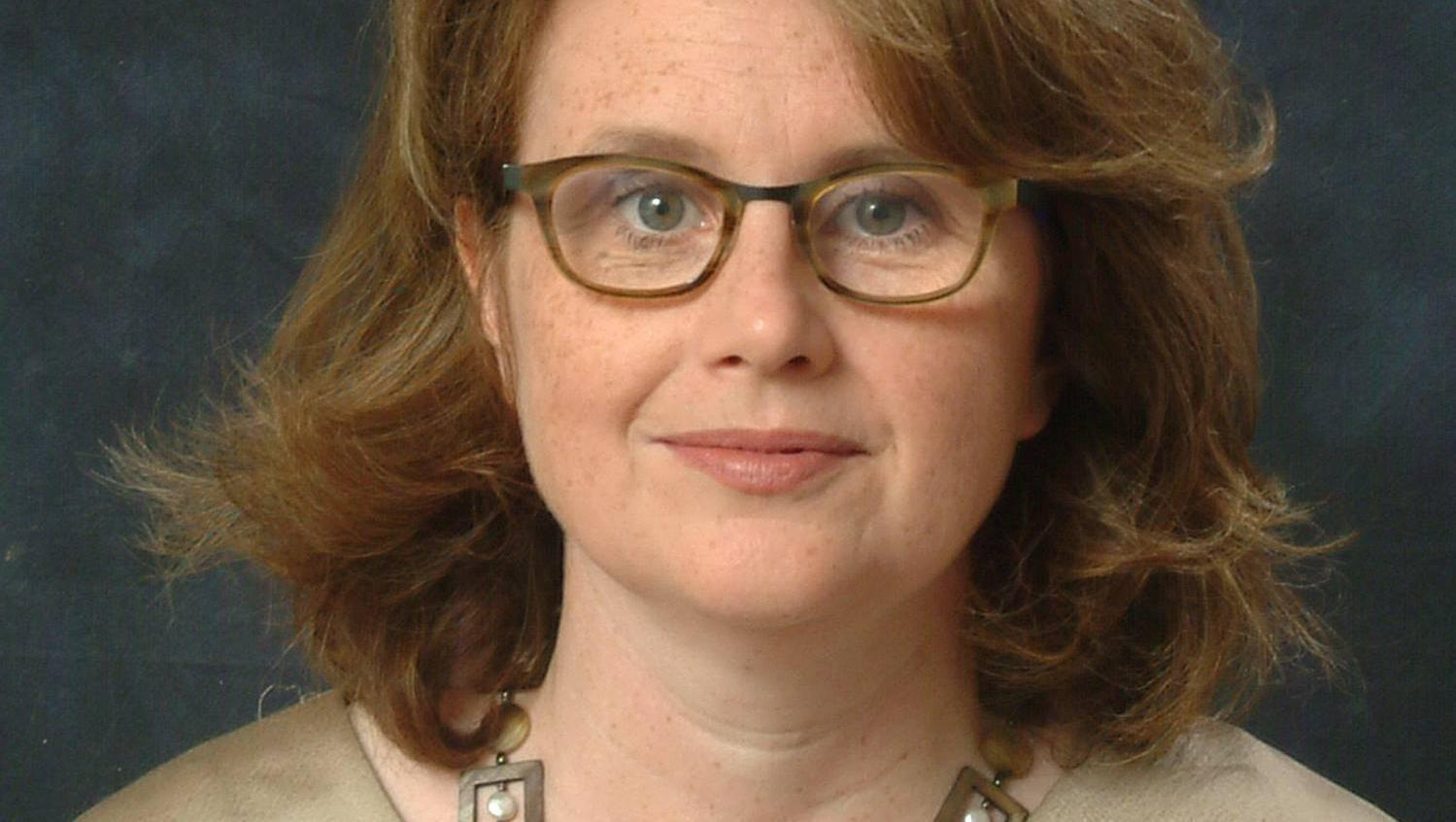
Clíona Ní Ríordáin, author and academic
- The Poets and Poetry of Munster
- Clíona Ní Ríordáin and Stephanie Schwerter
- Columbia University Press, €42

Given that her parents were Francophiles who took her on regular holidays to Brittany, it’s no surprise that Cork-born Clíona Ní Ríordáin is a lover of all things French. But what is impressive about her is her rise through academia in France, a competitive and rigorous milieu. Ní Ríordáin’s latest book, co-authored with Stephanie Schwerter, has recently been published covering 100 years since the foundation of the state in 1922. It looks at the work of more than 30 poets from Munster (or working in the province) writing in English and Irish.
As well as co-editing the volume, Ní Ríordáin has contributed four essays to it. Declan Kiberd wrote the foreword. The book includes essays on Patrick Galvin, Eiléan Ní Chuilleanáin, Seán Ó Tuama, Michael Hartnett, and Colm Breathnach right up to younger contemporary poets like Doireann Ní Ghríofa. The contributors are academics from the US, Europe, and Ireland as well as poets such as Theo Dorgan.
Ní Ríordáin, who published an anthology entitled in 2020, has been living in Paris for 30 years. She is professor of English at the Sorbonne in Paris teaching Irish studies and translation studies. She will take up a new post at the end of August at Notre Dame in Indiana where she will be the O’Donnell chair of Irish Studies at the American university. It’s a big change for this scholar who is in her mid-fifties.
“It’s exciting,” says Ní Ríordáin, on a visit to Cork to launch her book at Waterstones. “There’s a very lively Irish studies and community at Notre Dame. I think it’s a university that is very committed to bringing Ireland to the world.”
The scholar, who also published , started her career as a primary school teacher spending four years at Gael Scoil Uí Ríordáin in Ballincollig.
“I come from generations of teachers going back to my great grandfather. My dad (Tomás Ó Ríordáin who died five years ago) was the principal of Scoil na nÓg in Glanmire. My mother, an Irish and Latin teacher, is the manager of Scoil Mhuire.” Always interested in reading and learning, Ní Ríordáin left primary teaching and did a Masters degree in French which took her to Nantes for two years as a language assistant at the university there. She then decided to go to the Sorbonne and took a degree there equivalent to an M Phil in postcolonial Francophone studies.
“That sent me back to Irish studies. I was comparing the work of Seamus Heaney with the work of Aimé Césaire, looking at the treatment of the land in their writing. It was about how they approached geographical rootedness in their home places.”
Once that was finished, Ní Ríordáin was keen to pursue a doctorate in comparative literature. “But comparative literature comes under the realm of French literature in France. I was advised that it would be difficult for somebody who wasn’t a native speaker to get a job in a French university department. So I did a competitive teaching exam that people do to teach in high school and in universities in France.
“I did it in English and was admitted to the École Normale Supérieure which is the holy grail of French academe. It’s where people like Jean-Paul Sartre and Simone de Beauvoir and all the great intellectuals go. It was a wonderful preparation. There were 12 of us in the class. We had the best teachers from all over France. I went on and did a doctorate on the work of Seamus Heaney. I wrote it in French. I was particularly interested in the ‘poetics of responsibility’ and how Heaney responded to the political situation in which he found himself.”

In 2003, Ní Ríordáin was made a lecturer. She had to do another exam to become a professor. That was in 2013. She was made a full professor in 2015 at the Sorbonne.
“In France, everything is regimented and laid down. There is a process to get through.”
What is intellectual life like in France, compared to Ireland? “It’s difficult to compare. One of the things I would see as a contrast would be the public role that intellectuals and philosophers would have in France. In Ireland, the people with the public role as intellectuals are poets, novelists and dramatists.
“I suppose that speaks to our differing history and to the different place that philosophy occupies in France. It’s very important there. All French students have to study philosophy when they’re doing the Baccalaureate (the equivalent of the Leaving Certificate). They have to do it for one year. It’s ingrained into the method of arguing.”
A mother of two grown-up children reared bilingually in France, Ní Ríordáin is a big fan of the Irish Leaving Certificate curriculum. “It’s wonderfully modern. It gets the students to engage with topics in a very lively way whereas in France, the conversation continues to be around textual analysis. It demands far more analysis than an imaginative response.
“In France, children start learning grammar at a very young age. When they go to university, students learning languages study linguistics. So there’s that formal analytical element that isn’t here in Ireland to the same extent. The emphasis in language learning here is communication. That’s wonderful but I think there’s also a place for analysis.”
The idea for Ní Ríordáin’s new book germinated from a conversation with Terence Brown when he was professor of English at Trinity College Dublin. She was “bereft” after completing her doctorate and wanted another challenge. Brown suggested that she look at southern Irish poets having spent a lot of time looking at northern Irish poets. That resulted in .
“But before that, I responded to a call from Patrick Cotter of the Munster Literature Centre. He had wanted to publish a book of essays on Munster poets. For various reasons, the centre wasn’t able to publish the book. My friend Stephanie Schwerter and I decided to take on the project. Of course, there have been anthologies of Munster poets starting in the 19th century. Seán Dunne did one in the 1980s. He said the poets had nothing in common except for the fact that they wrote poetry and were from Munster.”
Did Ní Ríordáin find any further common ground? “We looked at the whole notion of networks, the connections between the poets and how they relate to each other. In Munster, there are communities of poets in various places. So we looked at things like workshops, journals and festivals and how the poets were reading each other’s work.
“That’s really interesting because you can see influences. There’s the importance of central figures like John Montague, Sean Lucey, and Sean Ó Tuama and the way universities have become places that both foster poetry and give homes to poets through writer-in-residence posts.”
Ní Ríordáin’s book is not just aimed at academics. “I think it would be of interest to general readers because I think poetry continues to be important in Irish society.”
What will she miss most about Paris? “I’ll always have Paris. It’s like what Theo Dorgan said about Cork: ‘I never left it; I just live elsewhere’.”