Feist on the woman who drew her back to play in Cork again
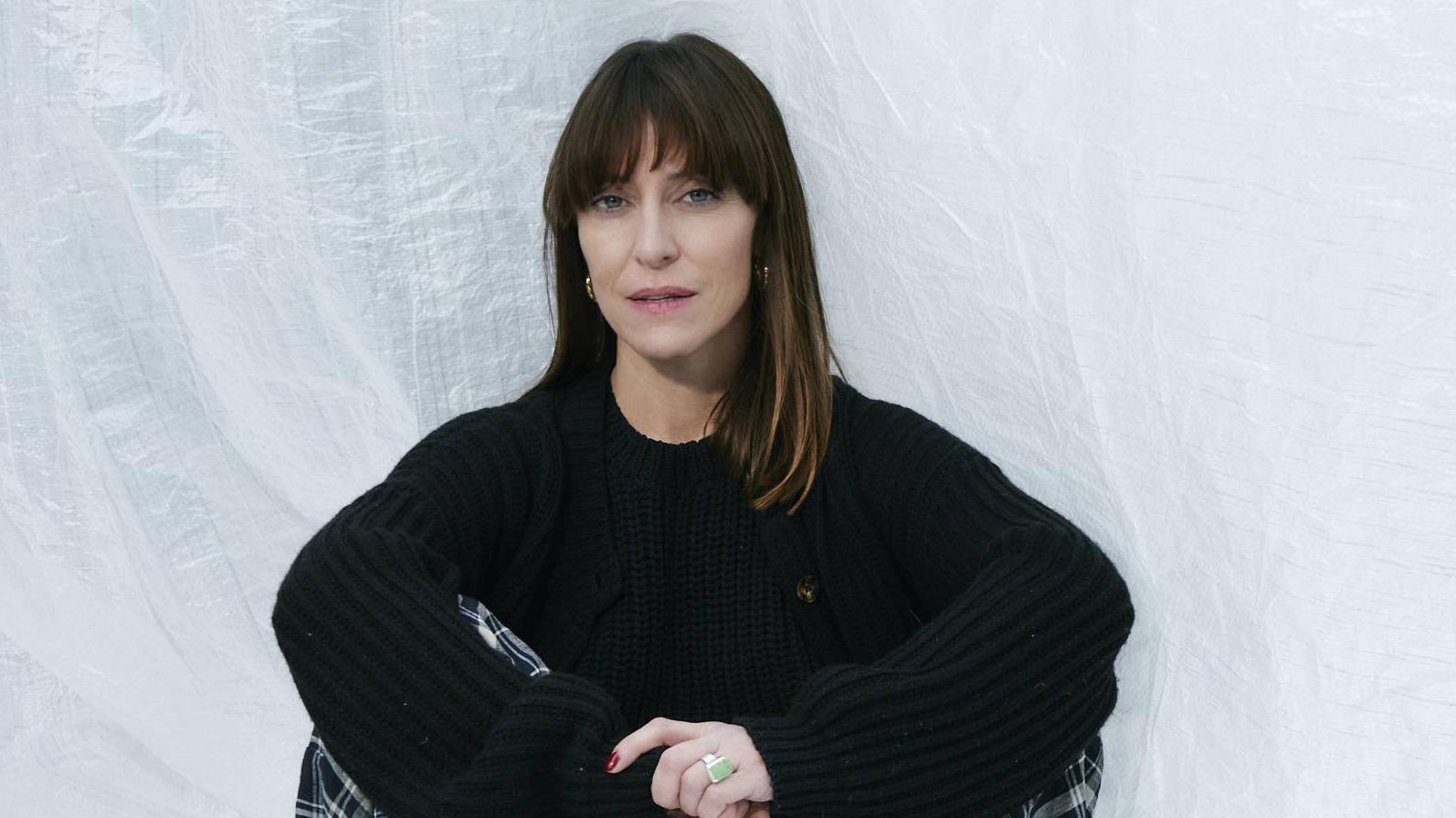
Feist headlines the Sounds From A Safe Harbour festival. Picture: Mary Rozzi
Leslie Feist is speaking in eloquently glowing terms about a certain Cork woman. “Listen, I would go to the ends of the earth for Mary Hickson,” she says, leaning enthusiastically towards her laptop screen.
She’s backstage at Edmonton Folk Festival in her native Canada, after a sound check. “I would go to the ends of the earth, and do anything she ever suggested, let alone asked. She’s the midwife, the godmother, the co-conspirator for me for a huge piece of time that was the pandemic and a renewal in my interest in making music.”
Hickson, former CEO of Cork Opera House and a native of Fermoy, was the artistic producer of Feist’s recent show, Multitudes, which evolved into the singer-songwriter’s sixth studio album of the same title, which was released in April.
And Hickson is also the driving force behind Sounds From a Safe Harbour (SFSH), the biannual festival she co-curates alongside Bryce Dessner of The National. Feist makes a return to SFSH this year, following Hickson not quite to the ends of the earth, but at least to her home town.
“I met her when she was producing this massive, brand new festival construct she’d come up with, with Bon Iver and The National, called People: it happened in Germany a couple of times and then around the world in different spots, and it had this similar ethos to Sounds From a Safe Harbour.”
SFSH, like People before it, is a festival that is as much about the artists’ experience as it is about the audience’s. The way Feist describes it, People operated like a childhood summer camp but for musicians, who were invited to collaborate with each other in the atmospheric surroundings of East Berlin’s Funkhaus a vast former broadcasting centre. Musicians would hang out and experiment and, at the end of a week, present new work to an audience.
“Mary had a huge piece of paper with everyone’s names and the rooms we had access to, about 50 rooms, in this radio complex,” Feist says. “I’d say, ‘me and the Kings of Convenience were thinking we should do something’, and she would figure out that all three of us were available at this time, and she’d give us this room: she was doing this for 300 people and having more fun than anyone else.
“I know Sounds From a Safe Harbour was her own home turf version of that idea. She commissions new work, she gets people to take steps towards a deeper nexus of their own creation.”
It's 15 years since Feist’s velvet vocals on her breakout hit 1,2,3,4 brought her international recognition, and commercial success when the track was used for an early iPod ad, and many years before that since she first began playing with bands in her teens.
“Something had happened over many years touring, where I had sort of lost my, I dunno, I had just gone a little dull through repetition,” she says.
The seven-year gap between her fifth album, Pleasure, and Multitudes’ recent release included touring, and then Covid and some pretty big life changes. Was she suffering from a form of burnout?
“It might look like downtime, but I toured for probably two and half years after Pleasure and then the pandemic hit,” she says. “It wasn’t really an on-purpose, stop the press, I need to figure out how to balance work and the idea of home, but I would say that going to People, meeting Mary, all of that, created new conditions. The part of me that’s generative, the well, was definitely covered in muck, and Mary helped me unearth it.”
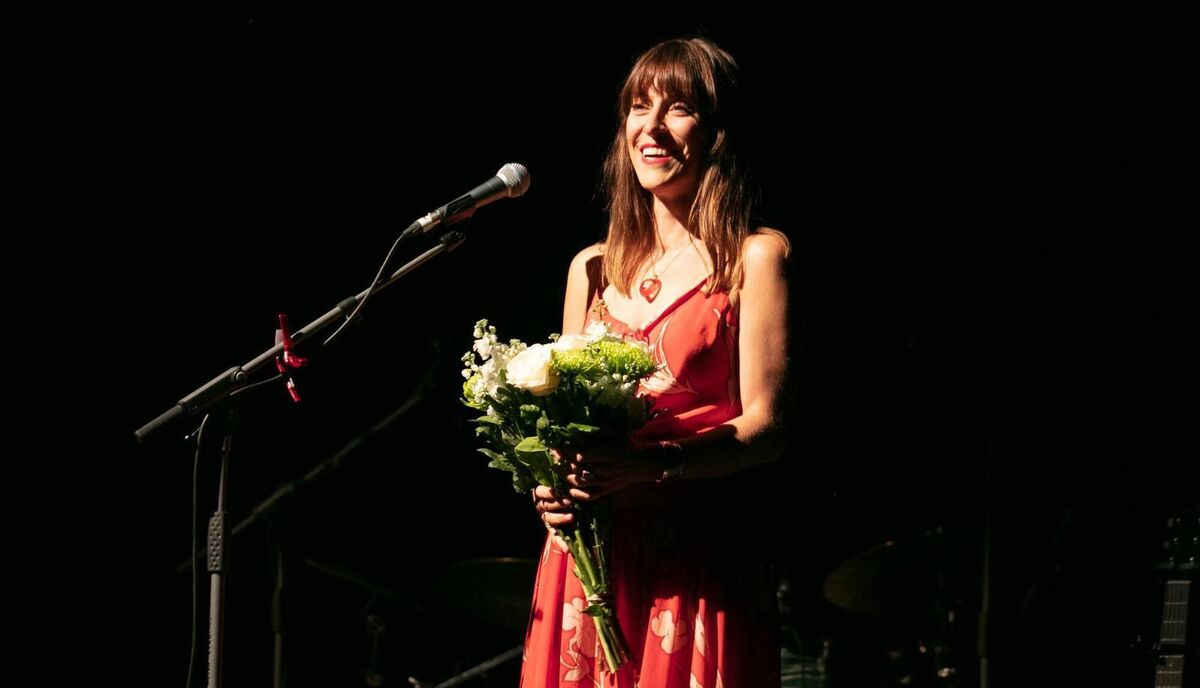
Her last appearance at SFSH seems testament to Hickson’s approach: a visibly relaxed, happy and playful atmosphere accompanied her onstage for her Opera House set. In grim contrast to her next Irish appearance, as support to Arcade Fire in Dublin, as news broke of lead singer Win Butler’s sexual harassment scandal last August.
Feist played the opening night, and then promptly left the tour, making a heartfelt and widely covered statement on her social media accounts. Later, Beck too would leave the tour: he had been lined up as support to Arcade Fire on their US dates.
It’s not an incident the 47-year-old wants to revisit now: although she has spoken of her discomfort surrounding the ill-fated performance in the past, she feels the time for comment has come and gone. She’s firmly drawing a line under it.
“Look, I think I’ve said all I need to about it,” she says with a shrug. “It finally quelled and died away, and I don’t want it to come back.”
Instead, she talks about the life she has built post-Covid, after the adoption of her daughter, now in toddlerhood, and the death of her father, the expressionist painter Harold Feist, who died in 2021, having quarantined throughout 2020 with his daughter as she got to grips with new motherhood.
She’s keenly aware, she says, that the life with a musician mother that her daughter is accustomed to is a curious one.
“It makes me observe the thing I’ve done for so long with a new set of eyes because she thinks this is normal, that this is what life is,” she says with a laugh, looking around the backstage area where she’s sitting. “It’s going to be a project to make sure she understands the scope of the different ways there are to live.” An antidote to the life of gigging, touring and recording is, she says, summers in her secluded cabin by a lake in Canada.
“We live off grid, we don’t have electricity and the water we drink is pumped up from the lake,” she says. “It’s a fantasy land, a complete 180 from the rest of my life which is about movement and people and a lot of scene changes. We go to the lake and stay very still and watch the storms pass overhead, and it helps me feel that I’m creating a ballast for this other idea she’s being shown about what life is, which is all this movement we do. We have this solid ground to return to.”
A workaday life in the creative arts, role models for how to balance strong artistic ambitions with the practicalities of family, were deeply embedded in her family with Harold Feist as a father and ceramicist Lyn Feist as a mother.
“Painting was my presumed normal, the ground laid for me by my dad, and I didn’t think to question that or look at what kind of influence that might have had until relatively recently,” she says.
“He worked consistently throughout my entire life: he had a show hanging in a gallery when he passed away. It was part of the fabric of his being and so I guess I saw the length of time needed to have that deep commitment.
“To keep your own thumbprint on your work, you have to keep working. In my case, to not become a jukebox, you have to keep progressing, keep changing. So there might always be a hiatus between albums, but I’m genuinely only wanting to keep doing this from an honest place, not from some sort of need to sustain it.”
“I’m not plugging quarters into the meter to keep it alive. It’s just part of what life is, returning to this conversation with songs.”
- Feist plays Cork Opera House on Thursday, Sept 7, as part of Sounds From A Safe Harbour. For bookings and further info, see: https://soundsfromasafeharbour.com/