Book Interview: Karin Slaughter's nightmare stories are the stuff of a daydreamer
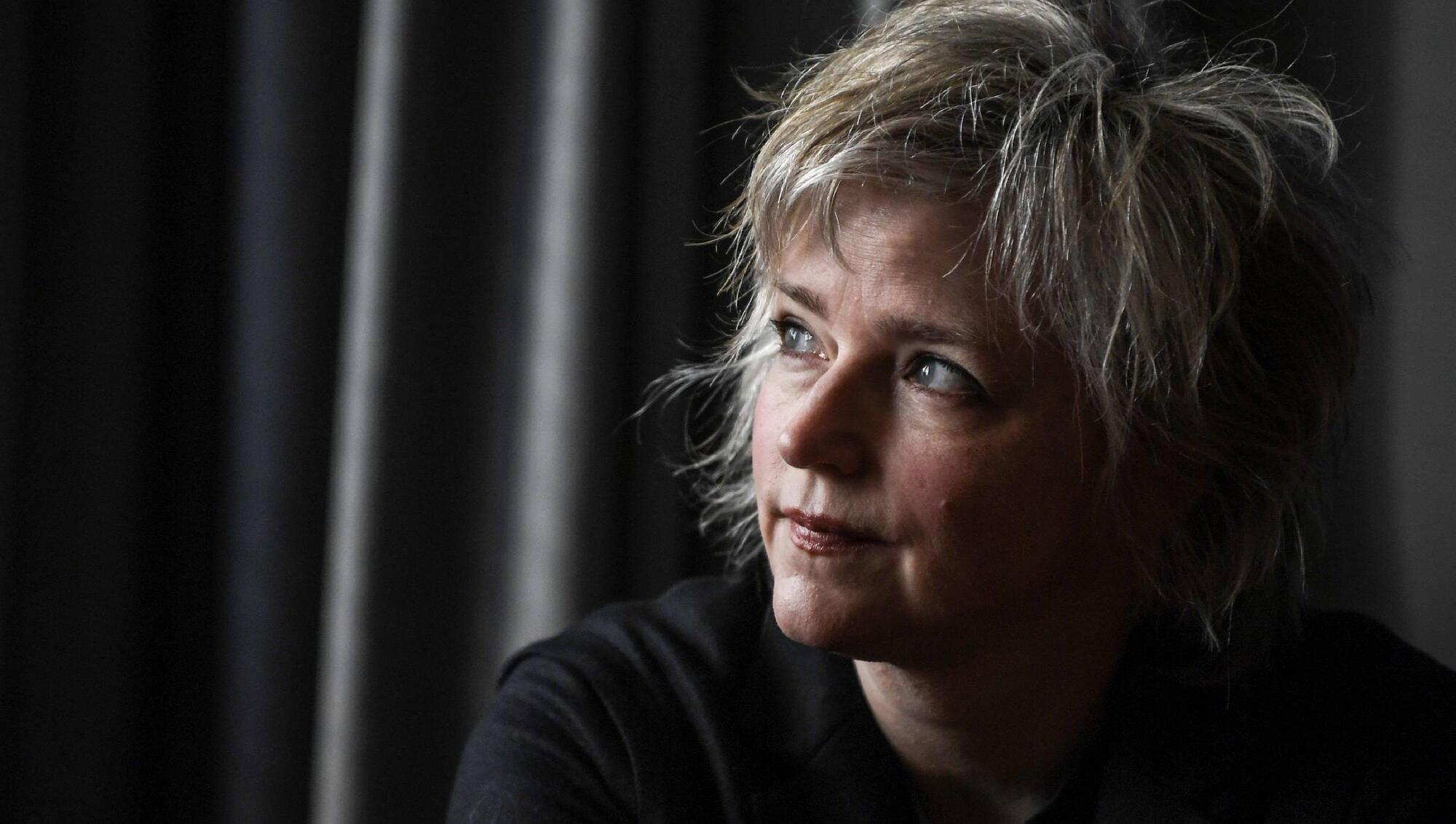
“I was constantly in trouble at school for that, but screw you, teachers, I get paid for it now!”
Book Interview: Karin Slaughter's nightmare stories are the stuff of a daydreamer

US writer Karin Slaughter poses on April 6, 2018 during the international crime book festival, "Quai du Polar" in Lyon, southeastern France.

  • After That Night
  • Karin Slaughter
  • Harper Collins: €17.50. Kindle: €12.71

Content warning: this feature contains references to sexual assault, rape, and murder.

Karin Slaughter looks around the drawing room in the Merrion Hotel and smiles. 

She agrees that, after selling more than 40 million copies of her books around the world, she sometimes has to pinch herself.

“When I was a little girl, I always wanted to be a writer,” she says. “Always. But I didn’t know I could make a living at it, and one day be sitting in this beautiful hotel.”

She laughs, admitting that she’s an introvert, who is most likely to be found talking to a dog at parties.

“I’m a great daydreamer,” she says. “I was constantly in trouble at school for that, but screw you, teachers, I get paid for it now!”

We’re discussing After That Night, the latest thriller featuring investigator Will Trent, and medical examiner Sara Linton, who are engaged. 

The novel opens in a courtroom, where Sara is giving evidence in a case of a rape and murder of a woman, who, as an emergency doctor, she battled, in vain, to save.

The case feels personal, because 15 years earlier, an attack on Sara had torn her life apart, and the two cases are uncannily similar. Are they connected?

The case concerned the son of a hospital consultant, a one-time colleague of Sara’s, who is still in touch with his friends from student days. Their attitude towards women, in general, is, to say the least, misogynistic.

Karin is known for writing books based on a selection of real cases – and she specialises in crimes against women. 

This could be because her grandmother was an abused wife – although, at the time, her family didn’t realise this.

“I can’t think of anything more horrific than what is done in real life,” she says. 

“I talk to survivors and to police officers and I can read witness statements and police reports. I take different details from different cases, and I go online and see the stuff that men are saying to each other in private male spaces. They are quite open about how they feel about women.”

I adored the novel. It’s not too much blood and guts; the horror comes from the attitudes the male antagonists have toward women. 

Where the author excels, though, is in examining how the trauma victims feel – as well as the people who love them.

“I made a strong commitment, early on, that I would have the character affected by what they were seeing,” she says, “because when writing about women’s crimes it has ripple effects everywhere.”

There’s a conversation between Sara, and a former friend, who, herself was once raped, which, although darkly humorous, feels utterly authentic and, from reader reaction, it’s clear she got their feelings right.

“It’s never happened to me, although, sure, I’ve been sexually harassed, but I know women who have been assaulted, or almost assaulted and got away, and when I said to a friend, ‘I’m so sorry – is there anything I can do?’ she said, ‘You’re the first person who didn’t say, ‘why were you in that area,’ or ‘why did you walk home’, or ask, ‘did you scream?’”

During the pandemic, Karin consoled herself by re-reading Maeve Binchy, but she feels it’s also important to read novels that reflect the darker events of life.

“When I do events, women will come up to me and say they are survivors, or that this is their story. I wanted to give them a voice and explain how complicated rape is.”

Suffering from severe allergies as a child, Karin spent a lot of time indoors and read profusely.

She studied Renaissance poetry in college, but dropped out, and worked in random jobs to facilitate her writing. 

Starting with short stories, she saw herself as the next Flannery O’Connor, but then she turned to novel writing, experimenting until she got it right.

By this time, she was running her own successful sign writing company. The crunch came when she lost an important client, and decided that, instead of finding another, she’d take the leap as a writer.

“Everyone said, ‘you’re successful as a sign writer, why would you do this thing where you’d be lucky to make $5,000 a year?’ but I wanted to do it, and it worked out.” 

It certainly did! Gaining a three-book international deal, she was published at 30 – and had written her second book before the first came out in 2001. The first six, set in Grant County featured Sara, and the later ones focused on Will.

“I knew Sara would eventually join him,” she says. “It was all very deliberate.” Her many fans will be happy to learn that Karin intends to keep writing the series as long as she can come up with new stories.

And that has never been a problem. Planning 2 or 3 books ahead, she often writes in an event that she intends to explore in a later book.

“Sara talks about her rape in the first novel,” she says, “and of how it changed her life, so I knew I would write something about this later, just not how many novels on it would be.”

In 2019, Karin wrote Cleaning the Gold with her great friend, Lee Child. They had great fun imagining the collaboration between Jack Reacher and Will Trent. 

There have also been some standalone novels, including Pieces of Her, in 2018, which was later released on Netflix.

“It starred Toni Collette. She was brilliant but didn’t look like my original character. I was working on a second book when it was screened, and it was difficult. I couldn’t push Toni from my mind.” 

The actor playing Will Trent – screened earlier this year on Disney+, doesn’t resemble the print version either.

“But the actor was brought up by a single mum and has bossy older sisters, so he understands Will’s world,” she says. 

“And he’s sexy. That helps. The series is different from the books, but the makers and actors really get the gist of the story.” 

Twenty years on, Karin is still passionate about her craft, and it shows. She knows she’s lucky to be able to write fulltime, rather than work her novels round another job. Does she ever teach?

“I did once,” she says. “I only did it because I was in Hawaii at a conference, and a friend offered to team teach with me.” It wasn’t a success. “I ended up making one woman cry and calling a guy an asshole.” 

She writes between September and February, spending two weeks every month, alone, in a cabin in the mountains, and the rest of year is taken up with publicity and with relaxing. She doesn’t write drafts.

“The first word you read is the first I wrote, and the last one is the last. But I’ve done a lot of thinking first so that when I sit down, I am clear.

“When I get to the cabin, I make a pot of soup and I eat it for lunch and dinner every day. I’m probably at my heathiest eating wise, but I don’t move around. I spend 15 hours writing. I’ll look at my watch at 8 in the evening and I’ll have done just 1,000 steps.” 

If she needs space from her writing, Karin loves to be out in nature, walking, or playing, ‘shi**y’ golf.

“I don’t take my phone. I’ll go to the range and hit a bunch of balls. That really clears my mind.”

More in this section

Scene & Heard

Newsletter

Music, film art, culture, books and more from Munster and beyond.......curated weekly by the Irish Examiner Arts Editor.

Cookie Policy Privacy Policy Brand Safety FAQ Help Contact Us Terms and Conditions

© Examiner Echo Group Limited