Ballingeary group explores dark deeds from the War of Independence
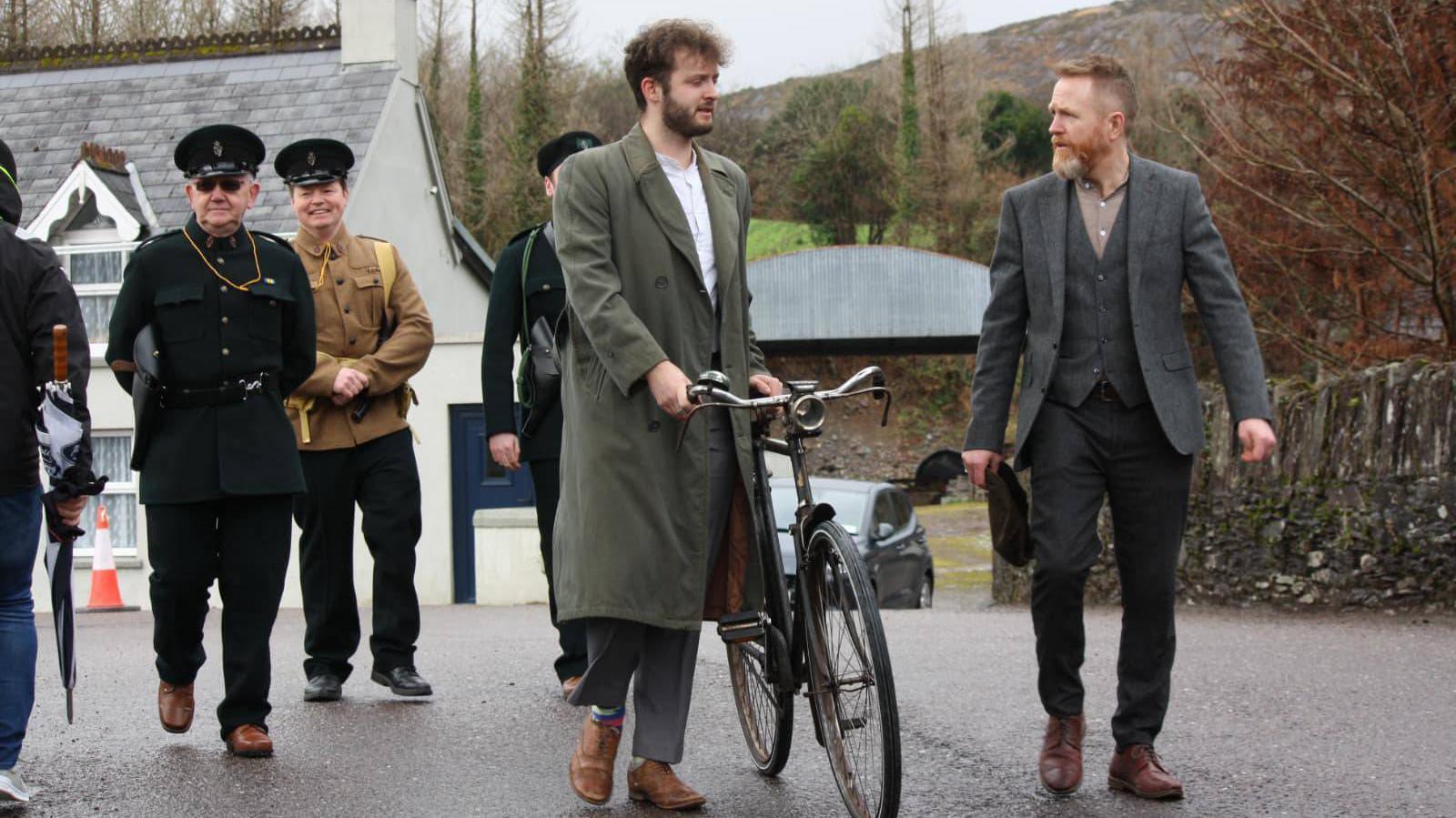
Bobby Wolfe as Christopher Lucey and director of An Tuairín Dubh Seán Óg Ó Duinnín.
“An official message received in Dublin from Macroom, Co Cork, states that while the auxiliary police were searching a house at noon to-day at Ballingarry [sic], a civilian named Christopher Lucy, of Cork, fired on them. The police returned the fire and Lucy was killed.”
The spellings of Ballingeary (Béal Átha ’n Ghaorthaidh) and the name of the UCC medical student shot dead near the village on November 10, 1920, were not the only questionable aspects of reports carried in The Times and other newspapers. The veracity of official accounts of the final moments of Volunteer Christopher Lucey (Criostóir Ó Luasa) is still causing debate in the Gaeltacht area more than a century later.
That the 22-year-old’s demise is a hot topic in 2023 owes much to the fact that the events surrounding the War of Independence shooting have now become the somewhat unlikely subject of a bilingual community musical.
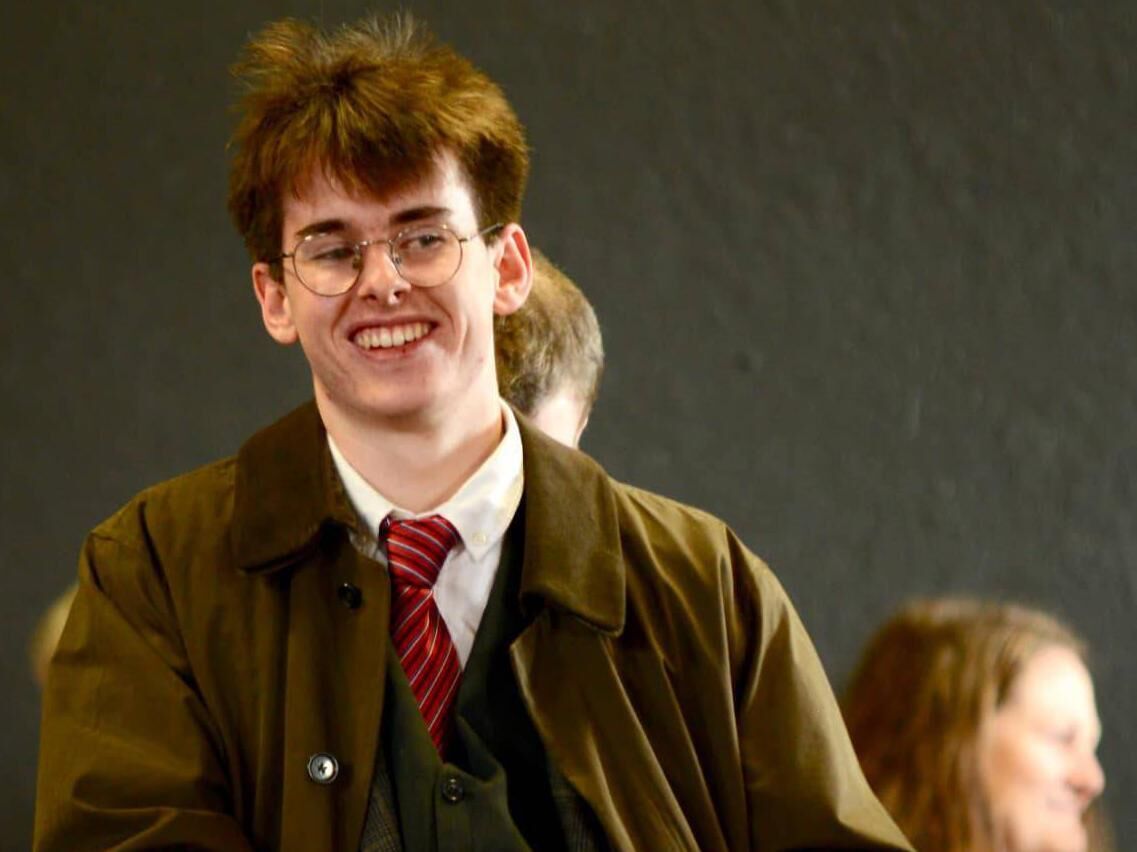
Tuairín Dubh, the townland in which Lucey was hiding out in a cave while on the run and where he met his untimely end, now lends its name to the latest production from the creative team behind last year’s musical dramatisation of the Dripsey Ambush, Shame the Devil.
Seán Óg Ó Duinnín, local secondary school principal and one third of the writing/production team with Kevin Connolly and Alan Kiely, hints that the account of one of the Auxiliaries present in Tuairín Dubh that day casts doubt over the official version of events.
“The common accepted story is that he was shot from the roadside at Tuairín Dubh by a marksman at what looks to me like two or three hundred yards’ distance up a hill,” he said.
“There’s a monument there on the side of the road and a cross on the side of the hill… but we’re not so sure that’s how it happened. There are other versions of events in diaries – contentious versions,” said Ó Duinnín. “We’ve looked at the diaries of [Lt Raymond] Cafferata, who was an Auxiliary in the area at the time and is a character in the play, and his version of events is quite different.”
Cafferata, who names the person he believes responsible for shooting Lucey, suggests it was an act of vengeance for the IRA killing of Auxiliary cadets Bertram Agnew and Lionel Mitchell, who disappeared on November 6, their bodies never found.
Lucey may have been targeted following his involvement in the ambush of two military paint lorries near Tuairín Dubh, an event which features strongly in the musical.
The son of a wealthy merchant from Cork’s Pembroke St, Lucey had been on hunger strike in Mountjoy jail and was the subject of arrest warrants, including for a raid on Murray’s gun shop on Saint Patrick’s St, when he was sent for his own safety to the home of his cousins the Twomeys in Tuairín Dubh. The Béal Átha ’n Ghaorthaidh area was a hub of Republican activity and home to Coláiste na Mumhan, attracting the likes of Terence MacSwiney and Tomás Mac Curtain.
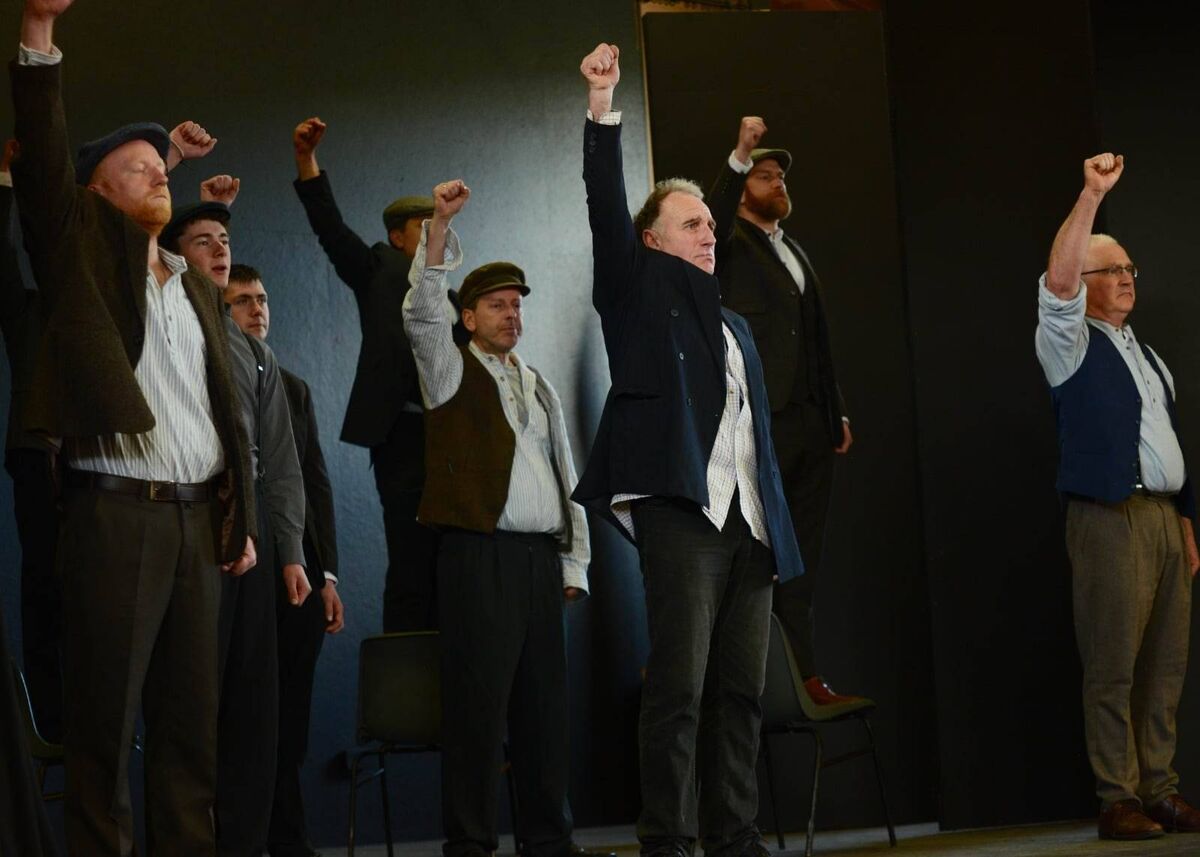
Interest in War of Independence events in the locality has been rekindled since An Tuairín Dubh rehearsals began. “Some people would have been aware, or would have half-known from monuments, but we see these things and we don’t even stop to see what’s written on them,” said Kiely.
“But once you start digging and creating an awareness, people start to volunteer bits of information and there’s a sense of ownership of [the musical] that’s really strong,” he said, adding that some parts are played by the characters’ own descendants. “The fact that they are singing and acting about their own relations, there’s a great sense of pride.”
Cumann na mBan features strongly, as does Ian ‘Scottie’ McKenzie Kennedy, a Volunteer from the Scottish Highlands, said to be a descendent of Robert the Bruce, and who is remembered in Béal Átha ’n Ghaorthaidh with a plaque in his honour.
While McKenzie, complete with kilt, is among the most colourful characters in An Tuairín Dubh, so terrifying is the appearance of his fellow countryman Cecil Guthrie and other gun-wielding Auxiliaries that tears have been shed by frightened young audience members during rehearsal.
Little more than a fortnight after Lucey’s shooting, Guthrie was wounded at the Kilmichael Ambush before being shot and his body dumped in Annahala bog, while McKenzie was killed during the Civil War. Ceremonial swords belonging to the bagpipe-playing Scot are among artefacts to come to light, along with ammunition shells, letters, prison records, and photographs, as the musical becomes a catalyst for a collective recollection of the area’s part in Ireland’s struggle for independence.
By presenting the story of Tuairín Dubh in the locality of the events of 1920, “people will learn a lot of history and it will come alive very strongly, emotionally, very powerfully,” said Ó Duinnín, “but my main remit was to bring drama back to the area, to give people a place to speak Irish, do something fun through Irish, and the goal was to bring theatre back to Béal Átha”.
- An Tuairín Dubh by Cumann Léirithe Bhéal Átha ’n Ghaorthaidh, May 11-13 and 18-20. Tickets: eventbrite.ie