Book Interview: Claire Kilroy returns after over a decade with Soldier Sailor
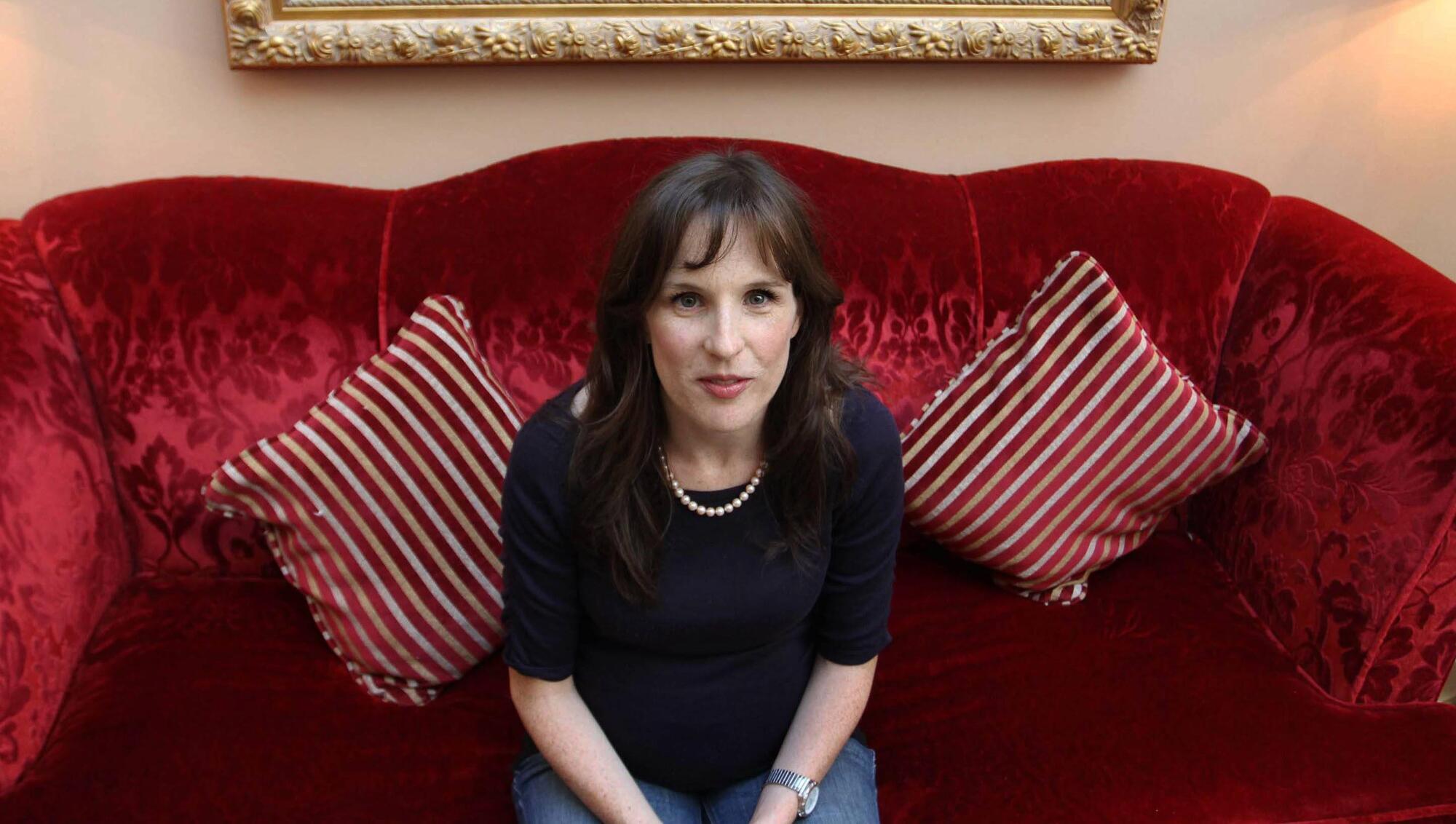
Claire Kilroy. Picture: Nick Bradshaw
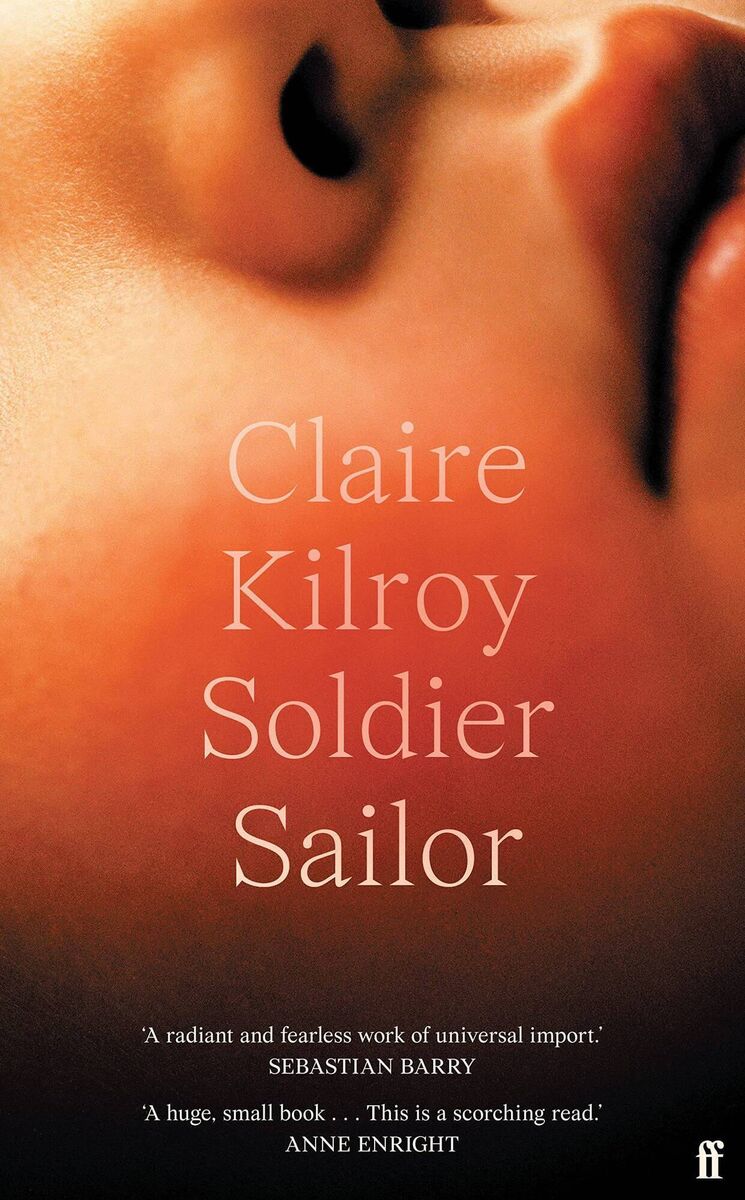
- Soldier Sailor
- Claire Kilroy
- Faber, €11,99
It is more than a decade since Claire Kilroy last published a book. She tells me this is her first interview in years — not that one would ever guess from the acclaimed author's easy eloquence.
The writer’s block is not a topic she dances around: she faced it head-on in her extraordinary essay 'F for Phone', which featured in the anthology in 2015. In it, she recounts with raw honesty the visceral shock of giving birth to her son, and how becoming a mother had affected her ability not only to write but to think, bringing her close to a breakdown: “Writing used to be the answer to all my problems — it enabled me to make something out of the bad things in my life, to use them — but now I can no longer write. So I can no longer fix my life.”
The essay was the catalyst for her to start writing again, and the result is her fifth novel , a powerful, affecting and exquisitely written exploration of the nerve-shredding enormity of early motherhood.
Kilroy stresses the line that needs to be drawn between fact and fiction, however. In 'F for Phone', she relates how she spent two days away giving a reading, and how, on her return, she ‘was composing a suicide note to my baby while walking him in his pram’. A friend stepped in and arranged an appointment with a perinatal psychiatrist — the nameless mother in is not offered the same lifeline.
“One is fiction, one isn’t. It took a long time to decide where to start this novel. It kind of did start in that episode related in — coming back from Paris and having some class of meltdown. But then the fiction kicked in. What actually happened to me, I rang my friend and I got an appointment and I got sorted.
"Obviously, in the novel, this character has no friend, and doesn’t get sorted immediately. So yes, it was such a huge incident in my own personal life that it did become the starting point of the novel, but the great happiness that’s related in that piece is the awareness of having ideas again.
"My child was two-and-a-half when I wrote that and I hadn’t had any ideas because ideas happen in a strange way where you have to allow them happen. And if you’re constantly fielding demands and trying to stay on top of stuff, you don’t have ideas. Well, I didn’t — it’s different for everyone.”
will resonate with anyone who has struggled through the hormonal fug of childbirth and everything that comes with giving your entire self to a helpless and completely dependent human being. For Kilroy, there was also a reckoning with isolation and the loss of identity that led her to reassess her attitude to motherhood, ingrained since childhood.
“The loneliness was completely unexpected and it's just a loneliness for adult company. You don’t see your friends anymore, either you’re too busy or they’re too busy. I remember this huge discrepancy between what I thought it would be and what it was.
"All through school in the '80s and '90s, nobody actually said it to us, but we were taught to aspire to careers, in a way that denigrated the very wonderful job of motherhood. I remember looking at women pushing prams and thinking, ‘I’m not going to do that, I've got bigger plans’. And it’s so deeply patronising to the job, which is more important than anything most of us ever do.
"I'm shocked at how I was taught to look down on it. So that's why I wanted to write about it and say this is what it is, it’s huge. And it’s really important, valuable work.”
Kilroy says women have not been served well by economic forces — the exorbitant cost of childcare was another contributing factor in her struggle to write.
“After the essay, I did start writing for a few hours a day because I started earning money as a teacher, and I could pay for a creche. As a writer, there’s no salary. Mothers now have to be mothers and generate money. There’s no way around that in our economic environment.
"Somehow it's still all being left to the women and if the men want to opt in, great, but we're still in this inflection point of reassessing what the job is. Do I think we should all start having babies before the university education? Absolutely not. That would be a triumph for the patriarchy ... it’s actually the role of motherhood that has to be reassessed, revalued and supported.”
I mention the envy I felt in early motherhood when I would read articles about women who had written actual books during their babies’ nap times.
But Kilroy, who was awarded the Rooney Prize for Irish Literature in 2004, says the pressure to produce a book was more internal than external.
“Barbara Kingsolver said she would breastfeed her child and write with the other hand. I couldn't do it. I was aware that I need to write for my own clarity of knowing who I am. No-one gives you the job of writer, it is something you start doing as a child and you keep doing it because you need to.
"I felt this low-level anxiety all the time, that I wasn’t doing the thing I was put here to do. Mothers talk a lot about guilt. But for me, it was anxiety that I wasn’t progressing. And I wasn’t. Here I am 11 years later, you know? All the other books took three years and the milestones would tick off — there was one in 2003, 2006, 2009, 2012, had a baby, then 2015 passed, 2018 passed, I thought I'm close here and then covid happened. So I thought it would be 2020. And here we are, 11 years. And it’s very strange. 11 years. Wow.”
In Soldier Sailor, Kilroy also captures how maternal love can be completely overwhelming, a deep and primal bond formed beyond consciousness.
“When I started writing this novel, I didn’t know what it was going to be. I sat there crying a lot of the time not because I was sad but because it was so emotional. It was just ‘I love you, I love you, God nothing can happen to you’. Barriers dissolve when you become a mother. It’s a very intense experience.”
Motherhood is a topic that is being explored more creatively in recent years, especially in personal essays and auto-fiction. Kilroy attributes this partly to the changes in the publishing arena.
“Sally Rooney has changed the whole scene. It’s all about women now. So of course the narrative is going to change. It’s like this huge untold story. There seems to be a black hole here and it’s coming out as memoir and life-writing. Certainly when I wrote 'F for Phone', it’s the most read thing I’ve ever written. If I wasn’t so married to the novel, I would have gone on with personal essays. The novel is the great love of my life and I wanted to bring the glory of what a novel is to this story.”
Kilroy’s joy at having resumed her love affair with the novel is palpable, as is her relief at reclaiming her identity as a writer once again.
“I am writing another novel, it is about ghosts. I don’t know what it is yet until I write it but the main thing is that I am writing it. I am now a writer again and there won’t be a 11-year gap. My child said to me, this is a while ago, ‘daddy fix things’ and I said ‘what does mammy do’ and he went ‘mammy clean things’. I said, ‘no, no, come in here, and I showed him some of my books with my picture on the back and I said ‘mammy write things’.”