Book Interview: Sam Knight steps forth with The Premonitions Bureau

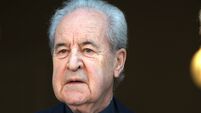
Sam Knight Author of 'The Premonitions Bureau' Picture: Olivia Arthur
- The Premonition Bureau
- Sam Knight
- Faber & Faber, £14.99
Spiritualism. Mediums. Telepathy. Most of us would probably, if asked, place the heyday of such things somewhere in the late 19th or early 20th century. On hearing of an outfit called the ‘premonitions bureau’, a place that people seeing into the future could write to and have their visions of disasters and tragedies recorded and logged and tested against events, we might also expect it to come from those times. Instead, the bureau was set up in the late 1960s; and Sam Knight, who has written the story of the whole venture, first saw it mentioned in a book by Arthur C Clarke.
“My first thought was that it would be a kind of hokey thing, a stunt,” Sam recalled when we caught up recently. “It didn’t take me very long to find out that the two principal people involved, John Barker and Peter Fairley, were serious people. Barker was the deputy superintendent of a large mental hospital who published in and the , a proper doctor and experimental psychiatrist. And Peter Fairley was the science editor of the who presented the moon landings on ITN. They were people who had something to lose by being involved in an experiment like this.
“I became determined to find out everything I possibly could, but it took a long time because, in lots of ways, it’s quite a small story, it’s quite a fragile story. You don’t want to make excessive claims about what it achieved. I became very drawn to the character of Barker as the sort of the scientist who goes a bit too far. It’s quite a kind of classical figure from literature or from stories. I couldn’t quite put it out of my mind.”
Knight is a staff writer for . Good magazine writing, or longform, or creative non-fiction (“or whatever we’re calling it”) is his beat. He’s affable and level-headed, cerebral without being remotely aloof.
“I’m not someone who has premonitions or has had supernatural experiences,” he says. “I was motivated to write this story as straight as I possibly could, as a piece of history and a piece of journalism, rather than using it in support of some larger argument about how the world works.”
But having investigated the story and written the book, did his view of ‘how the world works’, in fact, change? John Barker felt that “a purely physical view” of life was “far too restricted and would be unlikely to explain everything”.
“It has definitely reinforced the sense that these are common experiences; that experiences of premonitions or impossible coincidences or moments that, for whatever reason, stick out from the ordinary and change people’s lives as a result are common. They exist in almost every family.”
Strict materialists may see a world in which there are “lots of people, banging around in Brownian motion, bumping into each other, having random, rubbishy dreams in our heads and then, ‘Oh, hey, presto!’, it all maps out onto reality somehow”.
“And yet that’s not how we behave as humans, is it? We’re always looking for meaning, we’re always looking for significance, sometimes to our cost and to our detriment. But this is how we navigate the messy experience of life. It’s clear to me that you can’t see the future, you can’t see things before they happen, but that really doesn’t mean a whole lot when you’re convinced that you have done. You have inexplicable knowledge of what’s about to occur, and that’s generally a very uncomfortable feeling. And what do you do with that information? The premonitions bureau was an example of a small group of people in the 1960s who really thought that they were seeing behind the curtain.”
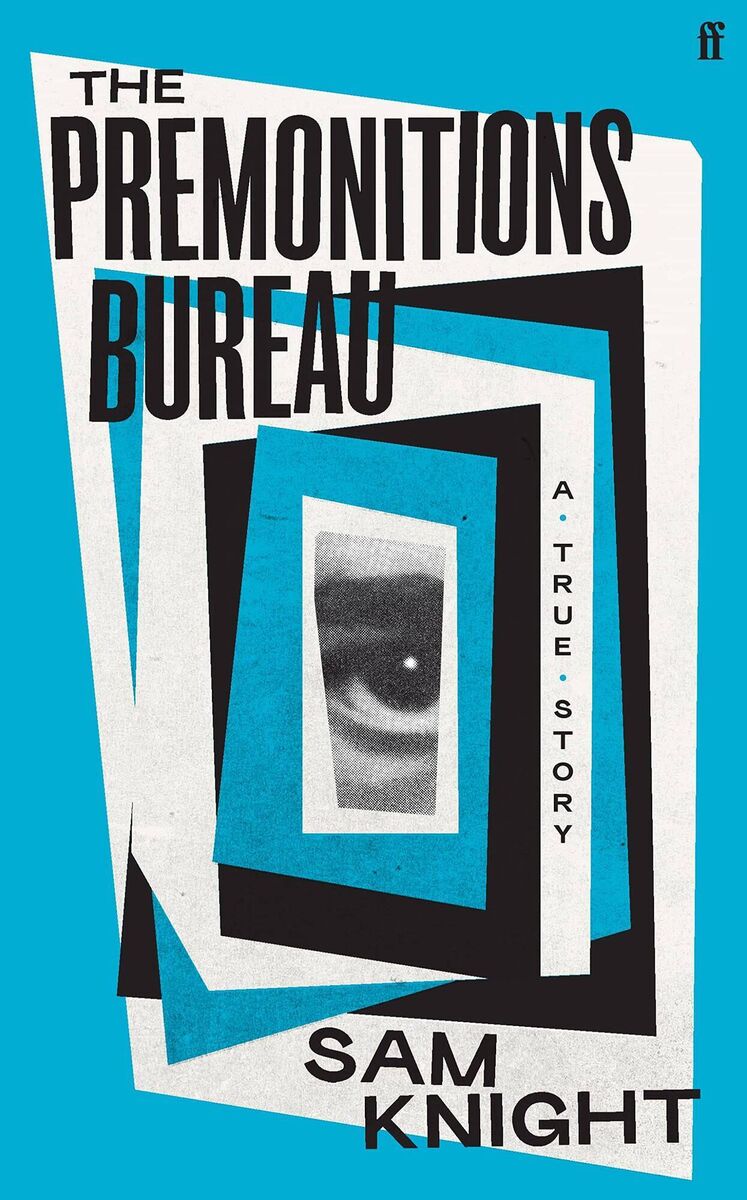
, now out in paperback, is massively redolent of the era in which the events occurred. John Barker is deeply involved in extraordinary experiments in aversion therapy. He takes up surfing at a time when the sport had barely arrived in Britain. Enoch Powell, of all people, is campaigning for the dismantling of the Victorian asylum system. The “percipients” of the Aberfan tragedy (movingly recreated in the book), when the collapse of a colliery spoil tip killed 116 children and 28 adults in a Welsh mining village, are dropped by David Frost from his talk show even as they were in the studio waiting to come on.
Also in the book is the 1967 Stockport air disaster when 84 died, a fire at John Barker’s own hospital when 21 female patients were lost, and the Hither Green rail disaster of 1967 in south-east London in which 48 people died. (One of the 78 injured was a 17-year-old Robin Gibb.) The derailment seemed to have been predicted by two of the bureau’s star ‘percepients’, who are brought vividly to life by Knight: “I see no reason why this gift should be any more frightening than a good head for mathematics,” opined one of them, Miss Middleton. But the ‘gift’ could undoubtedly be a mixed blessing.
The bureau, meanwhile, relied on appeals issued in a printed newspaper for information that would be gathered through letters in the post or by means of phone calls to ‘Fleet Street 3000’. Down in the basement of the building, the printing presses heaved as the predictions rolled in.
“I don’t think it’s a coincidence that this happened in the mid-sixties. It was a time of dramatic technological change, social change, and a sense of awful and exciting possibility. I love the idea that Peter Fairley was going from his desk at the , rifling through the latest predictions of the premonitions bureau sent in from the suburbs of England, and then going off to NASA to watch the latest, most wonderful technology in the world. He’s in both of those realms at the same time and they didn’t seem contradictory to him.
"The other great time of spiritualism and psychical research in the UK was around the time of the First World War, another time of dramatic technological change and social change. I think these things go hand in hand.
“It’s arguable that maybe we are living through something of a similar moment now in terms of technological progress, but also fear and anxiety. John Barker envisaged the premonitions bureau as this great big computer that everyone would pour all their forms into and the computer would be able to search that information for peaks and patterns and points of correlation and then maybe issue a kind of a warning.
"It doesn’t sound to me very different from a social network and how people turn on their devices and pour all their feelings into it and those things are then trawled over by algorithms. That idea of a computer searching for peaks and patterns in information was etched into my mind as soon as I read it.”
To get the full measure of his themes, Sam Knight scans backwards and forwards from the sixties, enriching his book even further and also deepening the unease it elicits: from, in 1917, the Bulletin des armées de la République asking French soldiers at the front to send in their premonitions for study to ‘resignation syndrome’, a form of mental and physical shutdown afflicting children of asylum-seeking families that caused consternation in Sweden in the early 2000s.
Sam and I wound up our conversation with musings about the nature of time and how poor and uninteresting are our current notions, compared to those of previous ages. It will be fascinating to see where this talented writer’s curiosity alights next.