Book Interview: William Wall on debt, Communism, and 'Empty Bed Blues'
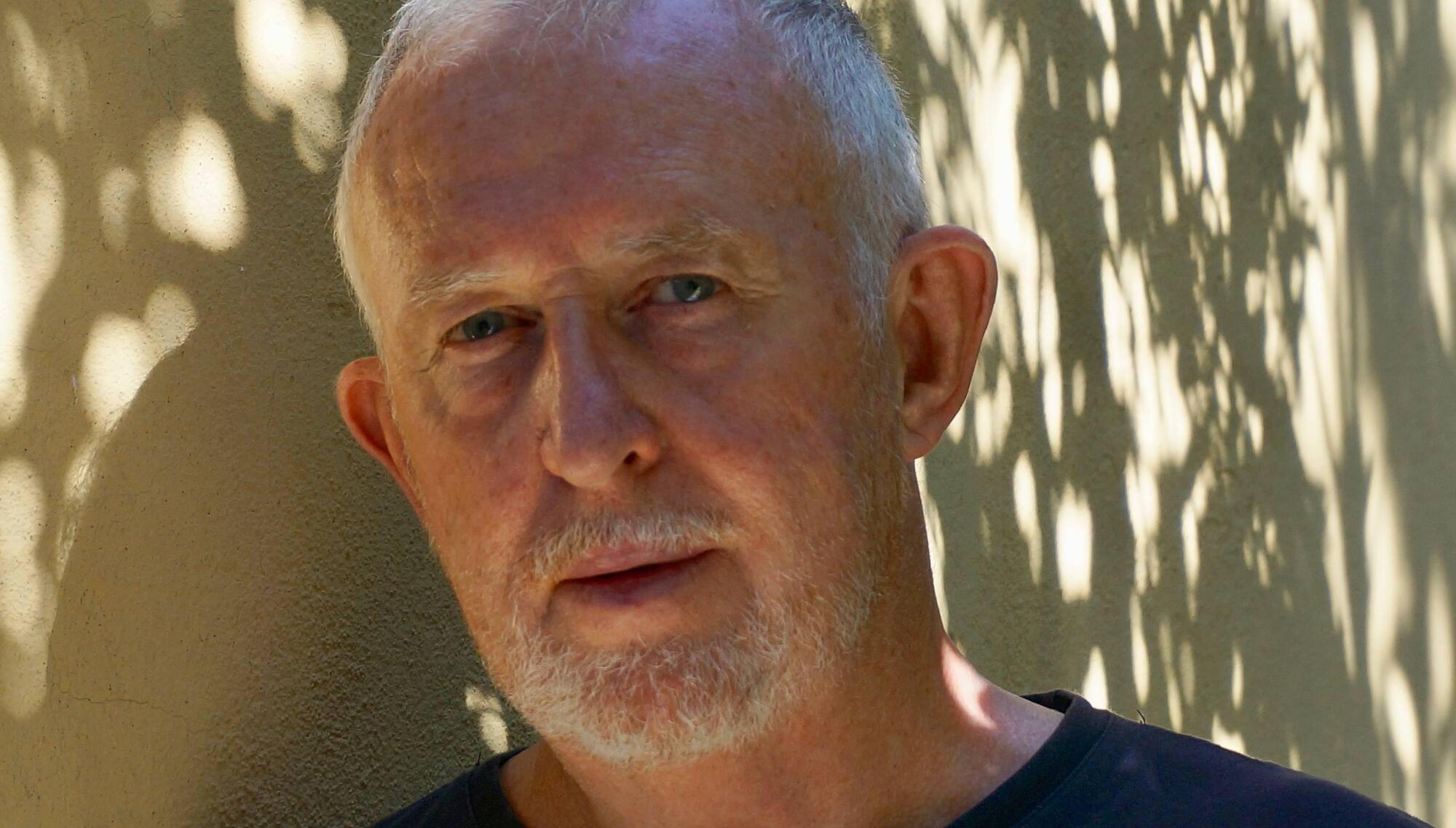
William Wall. Pic: Liz Kirwan
- Empty Bed Blues
- William Wall
- New Island, €15.95
It may have been his honeymoon, but William Wall’s love affair with Italy got off to a less-than-romantic start.
“It was 1979 and we picked the cheapest Joe Walsh tour that we could find, which was to a place called Hotel Alaska, in Rimini. We arrived at two o'clock in the morning to find that the hotel had overbooked and there was only one room available and it had bunk beds. And so the first three nights of our honeymoon was spent in bunk beds,” he laughs.
It would be another while before Wall and his wife Liz would return, as children and a busy life back home in Cork, including his job as a teacher, intervened but the couple indulged their passion for all things Italian at a distance, including learning the language.
The author’s love for Italy imbues his latest novel, , with a wonderful sense of place. It is set in the fishing village of Camogli, near Genoa, a part of the country that is close to Wall’s heart. When her husband dies unexpectedly, Kate, an Irish academic, discovers not only that he has amassed a pile of debt, but that he has also acquired a secret love nest in Camogli. When his mistress returns the keys, an overwhelmed Kate takes the opportunity to escape there.
Wall says he was inspired to write the book by the events of the 2008 crash.
“I started thinking about the problem of debt — the national debt, personal debt, and so on. I thought the best way to write about debt is to personalise it. Situating it in Italy was natural to me, because I spend a lot of time there. I was trying to think of a place where you could go, where you could disappear, at least for a time, because I don’t think she can ultimately escape her debts.”
Writing from the point of view of a woman came easily to Wall. He grew up in a farming family in Whitegate, Co Cork, where he was surrounded by women who could spin a good yarn.
“It came reasonably naturally to me because I don't specifically think of Kate as a woman, I think of her as a person. My wife Liz is my first reader and she’s a really acute editor as well. She puts me straight — she would often say, ‘I would never think that’. My mother, my aunt, my grandmother were all storytellers, and I often hear that kind of female voice in my head when I want to think about female characters. I can hear them speaking quite clearly at times. I also think we’re not aliens to each other, men and women. I’ve lived with a woman for nearly 50 years at this stage. If I hadn't learned something along the way, I'd not only be a very poor writer, I’d be a very poor human being.”
The other main character in the book is Kate’s new neighbour, Anna, a communist, and former resistance fighter.
“The Italian Communist Party was very interesting, it was the biggest Communist party outside of Russia. It wasn’t Stalinist, it wasn't Maoist, it kind of ran along a different line. The last great leader of the party, Enrico Berlinguer, invented the term Eurocommunism, which is ill-defined but basically means that the people should have control of the major utilities such as electricity, transport, water, health, and education. If we just stopped at that point and said no more, how changed Ireland would be,” he says.
was initially published in Italy as and the book struck a profoundly personal chord with many readers there, says Wall.
“It is fascinating, I did about 20 different festivals and readings — presentations as they’re called in Italy. And at several of them, people came up to me afterwards to talk about how their family members were in the resistance.”
In , Wall also draws on the huge affinity Italians have with one of our greatest writers, James Joyce. Kate is a Joyce scholar who is similarly in exile. Wall’s stint as writer-in-residence in the Italian city of Trieste, Joyce’s former home, came in handy when he was seeking inspiration.
“I was fishing around in my head for an occupation for Kate and suddenly it occurred to me, I had met all these Joyce scholars and had become friends with several of them. The Italians are crazy about Joyce. Every major city in Italy has a Bloomsday reading of in Italian — I have even taken part in the one in Genoa. They love it. They also love the fact that he spoke in the Triestine dialect.”
Wall has sustained a prolific writing career for many years, winning several awards and being long-listed for the Booker Prize. Navigating the world of publishing is now a different prospect to when he began, he says, with a lot more writers competing for attention.
“There are far more women writers now and far more minorities … and I’m glad that has happened. But I think what makes things most difficult for somebody like me is the emphasis on youth. It's something you don’t have in other countries like Italy, for example. They're happy to find a new young writer and they’re just as happy to find a writer of my age. But publishers are constantly out looking for the next big thing. The problem with that is that those writers will hopefully continue to write to my age.”

Wall is also an accomplished poet and had the distinction of being Cork’s first poet laureate in 2021.
“It was an enormous honour, I was blown away by it. As an experience, it was amazing. I had to write a poem a month — I had written [the poetry collection] which was about the first year of the lockdown, 2020, and I thought, yeah, I can do that no problem, something was bound to happen every month that would be interesting. And then it was a year in which almost nothing of interest happened.” The role was a one-off but Wall says he would love to see it being a more long-term proposition.
“I wish it did happen every year. There are so many fantastic writers in Cork, the city and the county, who could do that role. It could be really good for the city. They could alternate it, have a writer in residence one year, an artist in residence the next, a musician in residence, and so on.”
If an actor in residence was required, Wall could put in a good word for one of his former students, and one of Cork’s most famous sons, the actor Cillian Murphy. In his previous life as an English teacher in Presentation College, Cork, Wall encouraged Murphy to pursue drama after his talent shone through in a school play.
The star is also passionate about literature, as evidenced by his championing of Claire Keegan’s acclaimed book , a screen adaptation of which he is currently filming in Co Wexford.
“I wrote to him recently because I visited a secondary school in Genoa not so long ago and the last question of the day came from a group of girls at the back of the lecture theatre. They said ‘when we researched you, we discovered you knew Cillian Murphy, is it true?’. They almost fainted at the thought that I knew him well and that we were still friends.”