Book interview: Victoria Smith mounts a challenge to the 'Karen' trope
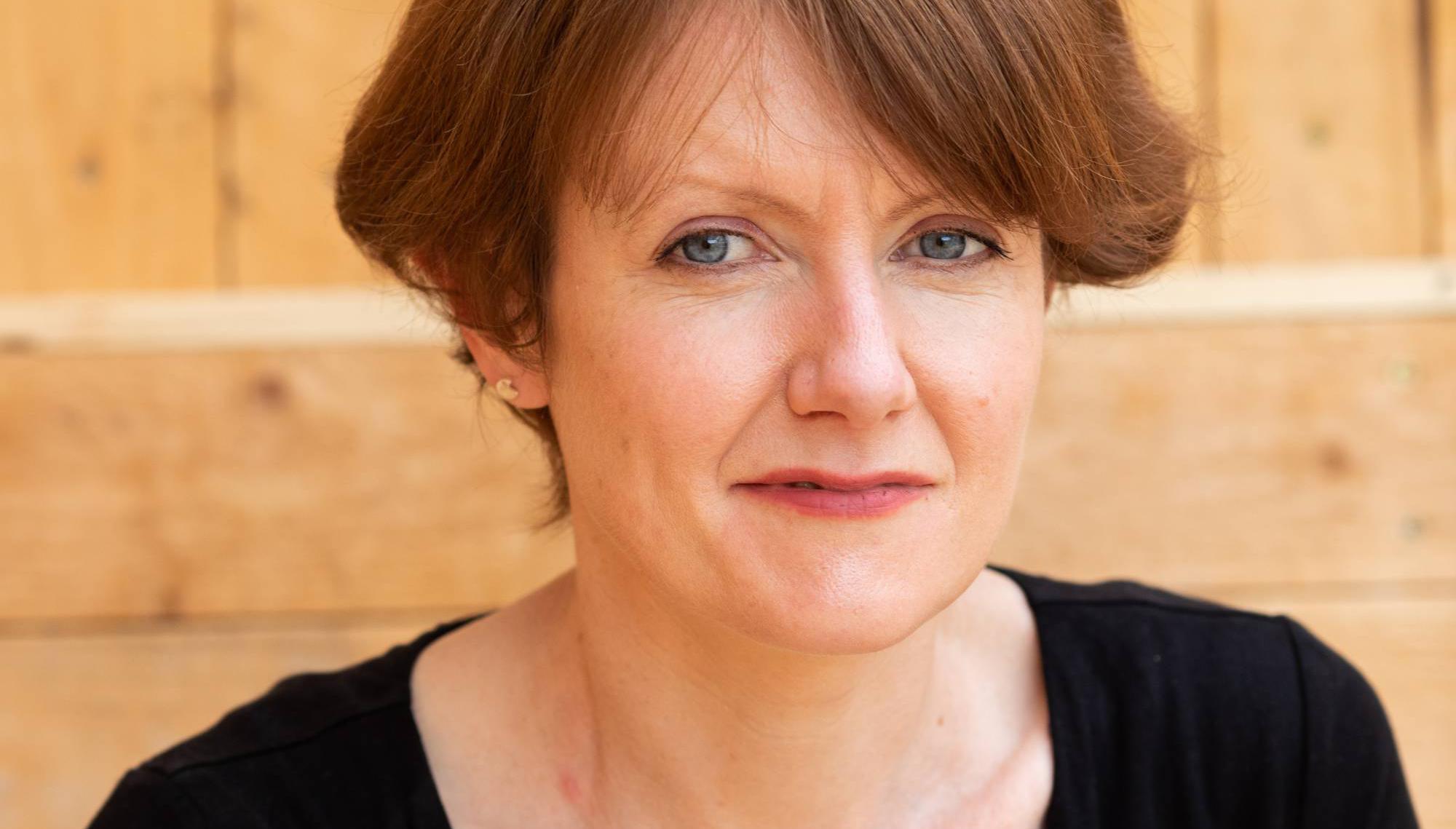
Victoria Smith, English writer and columnist and author of Hags: The Demonisation of Middle-Aged Women
- Hags: The Demonisation of Middle-Aged Women
- Victoria Smith
- Fleet, hb €28
As declared by the newspaper, 2020 was the ‘Year of Karen’. For the uninitiated and the blissfully offline, the term ‘Karen’, originally denoting a racist white woman, has now become a throwaway term of abuse to describe any middle-aged woman who has the temerity to raise her voice or exert her rights. And any woman who expresses concern about the sexist and ageist nature of the word is, after all, only proving the point.
The ‘Year of Karen’ was a tipping point for the English writer and columnist Victoria Smith, who, as a woman in her late 40s, and not afraid to share her opinion online, was increasingly experiencing the seemingly acceptable discrimination and abuse faced by middle-aged women. For her, 2020 became the year that she decided to write a book about it.
In , Smith explores how, in a world where identity politics has taken hold, middle-aged women, rather than be respected for their hard-won wisdom, are at best treated with disdain, at worst exposed to online vitriol and death threats in the modern-era version of the witch-hunt.
In this context, Smith also began to rethink the second wave feminism of her mother’s generation that she had previously overlooked. This wave of feminism, expounded by women such as Andrea Dworkin and Germaine Greer, is seen as ‘problematic’ by a younger generation. Yet these were the women who helped achieve many of the gains which were once taken for granted but are now being rowed back on.
“I used to think feminism was primarily the route for me not to end up like people of my mum’s generation. I had this slightly patronising idea that my generation was not going to be sidelined in the same way because we had all these opportunities, and nobody would look down on us and patronise us in the same way. And then you get there and suddenly it's like, ‘Oh, shut up, Karen’,” says Smith.
“So on the one hand, a lot of older women are saying they are made to feel invisible, not listened to, being sidelined at work, and falling behind more and more in terms of pay and representation in politics. But then at the same time, you’ve got this attitude of ‘they’re so entitled, they’re always complaining, they’re so shouty, they just need to be quiet’.”
Smith says the realisation that society is structured unfairly for women often doesn’t hit them until later life, when they experience the consequences of living in a society that is tilted in favour of men, professionally, politically and domestically.
“When you are younger, you might think, 'I support the idea of an equal redistribution of work between the sexes, it can’t or won’t happen to me, I'll be fine’. But actually, it’s a series of little decisions that get made — the fact that you’re paid less as a woman might mean that when your children are younger, you’re the one who takes more time off, then you fall a bit more behind. So then when you’ve got ill parents, you’re also the one who takes time off and it's all these little incremental things that mean inequality accumulates across a life cycle and however idealistic you are, it can still happen to you because it’s structural.”
The dismissal of older women is exacerbated by the battle lines drawn between the generations: “There are so many influences in our culture that stopped communication between older and younger women that make us not respect one another and also make us really fearful of being an older woman. But you are going to get older. And there are a lot of forces that mean that you will be seen in a certain way.”
Smith says that ageism is often considered a more acceptable form of discrimination: “There’s a particular way in which groups that try to be very hot on issues such as racism and classism, sexism and homophobia, can often give ageism a free pass because they’ve got this kind of moral vision attached to it.
In the book, Smith is particularly thought-provoking on the abuse and discrimination targeted at middle-aged mothers, exemplified by the vilification of the hugely popular online forum Mumsnet.
“They have become this kind of receptacle for all these societal prejudices … people’s most immediate relationship with a middle-aged woman is with their mum. And mum is the person who says no and the person who puts limits on people.
"In broader politics, there’s an expectation that the ‘mum’ will be the one to say no, to protect things such as child safeguarding and limit the spread of online pornography.
"There is this expectation that older women will ensure that while everyone else is doing whatever they like, it won’t get too out of hand, but they’re not thanked for it in the same way that Mum is not thanked for laying the law down at home — that she’ll just be considered a bit of an uptight prude for saying these things. I think there's a degree of guilt as well, because these women are taking on a lot of unpaid work and they’re also going out to work.
"A lot of people still depend on the mummy generation for quite a lot of support, whether it’s financial, emotional, or domestic. They’re not given much of a voice, but they’re relied upon on a very personal level.”
Social media is the frontline of the culture wars, and while online abuse is rife, platforms like Twitter have given a voice to many women who feel their voices are not heard.
“Social media isn’t how I talk in real life but I think we do need to find places to discuss these things that are making us angry. For all the bad aspects of social media, and it has contributed to polarising opinion on many issues, I’ve also met lots of really interesting women and learned a lot from them.
"It's through meeting women on Twitter that I got into reading more second-wave feminist texts, which I hadn’t really read when I was younger because I had all of these ideas that the second wave was past it and the third wave, Generation X women, would reinvent everything.”
Smith believes a more radical feminism is now percolating, and it is one that can help younger women, who, after all, will be old themselves one day.
“Having an idea of legacy, of connection, not just with older women today but with women of the past can help give you confidence in yourself and in your own body and not feel this kind of shame or fear of getting older … being a woman has always been powerful and you don’t need to reinvent it or metaphorically kind of kill the mother to become yourself. We have had quite a long time where feminism has been treated as very mainstream and fashionable but it has been watered down.”
She sounds a note of caution, however: “I worry about the fact that the sexism of the left, which a lot of older women are pushing against, is giving opportunities to the right that we really need to safeguard against. We are kind of caught in the middle there, we need to be really careful. But I do think there are a lot of interesting feminist voices coming through.”