The New Electric Ballroom review: Enjoyable revival of Enda Walsh's dark fairytale
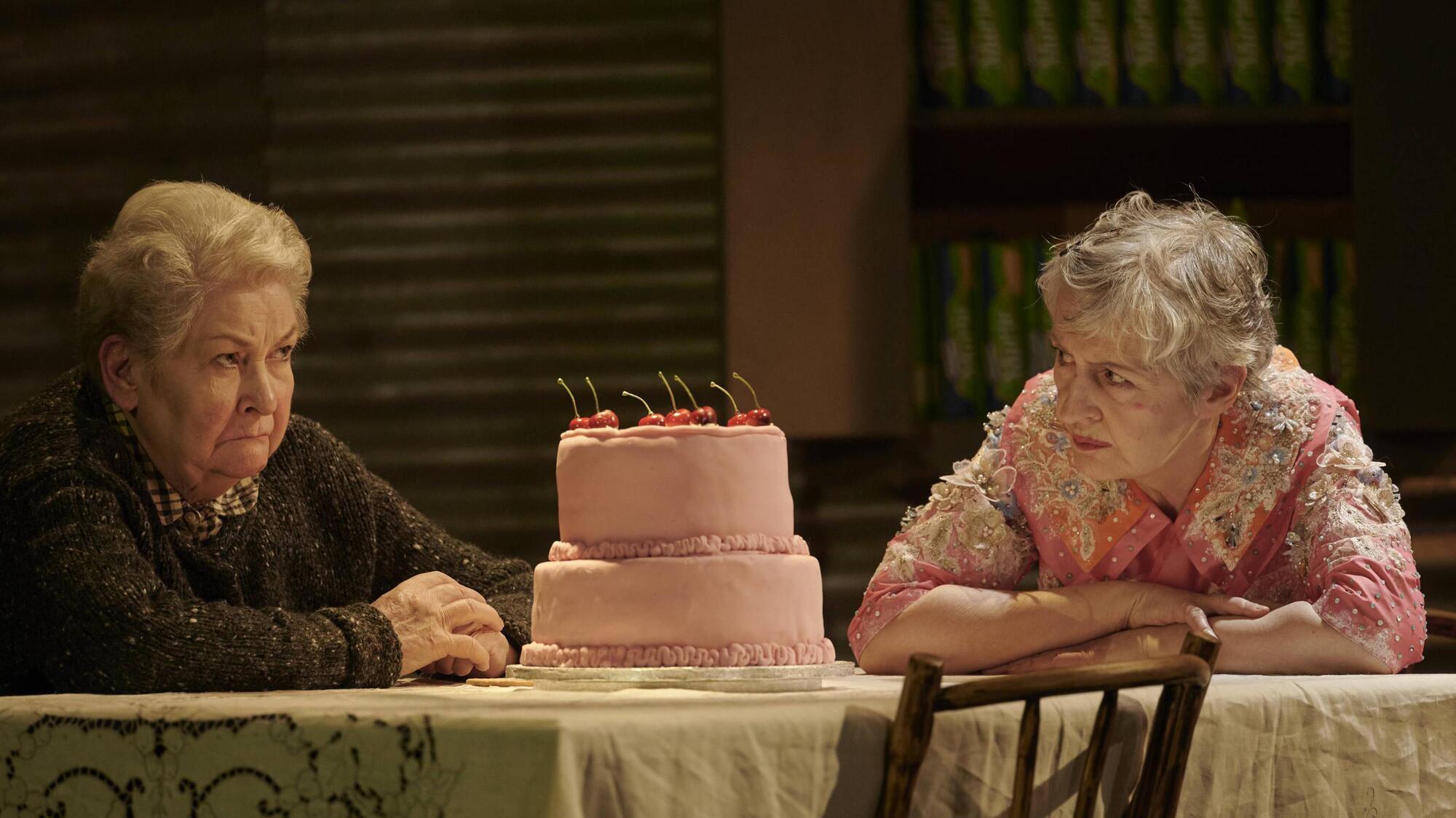
Sisters Barbara Brennan and Jane Brennan star as Breda and Clara in the Gate Theatre revival of Enda Walsh's The New Electric Ballroom. Picture: Ros Kavanagh
Gate Theatre, ★★★★☆
Coming to The New Electric Ballroom 15 years after it was staged by Druid, what’s striking is what a remarkable text it is. Here is Enda Walsh, utterly at ease directly, even brazenly, channelling Samuel Beckett, daring even to flirt with the derivative, before his play explodes into what is very much his own dramatic world.
If, famously, nothing happens in Beckett, over and again, with Walsh, anything at all can happen, even if the lives he depicts are tortuously constrained and hidebound. And even as he uses his immense skill with words to question their very utility, and with it the whole enterprise of storytelling.
So, what’s it all about? This companion piece to The Walworth Farce removes us from that male, urban world to a female, rural one, as three sisters in a remote fishing village rehearse and retell a life-defining story of decades-old dance hall heartbreak.
Real-life sisters Barbara and Jane Brennan excel as Breda and Clara, whose teenage love rivalry has condemned them to the nightmare of ritual role play and retelling, spurred on in their corrugated warehouse-cum-kitchen by the younger Ada, played with a deft touch of mystery by Orla Fitzgerald. “It’s time,” she’ll say, and all talk of the Virgin Mary, tea and cake stops as we revisit the titular ballroom, and its decisive, crushing moment.
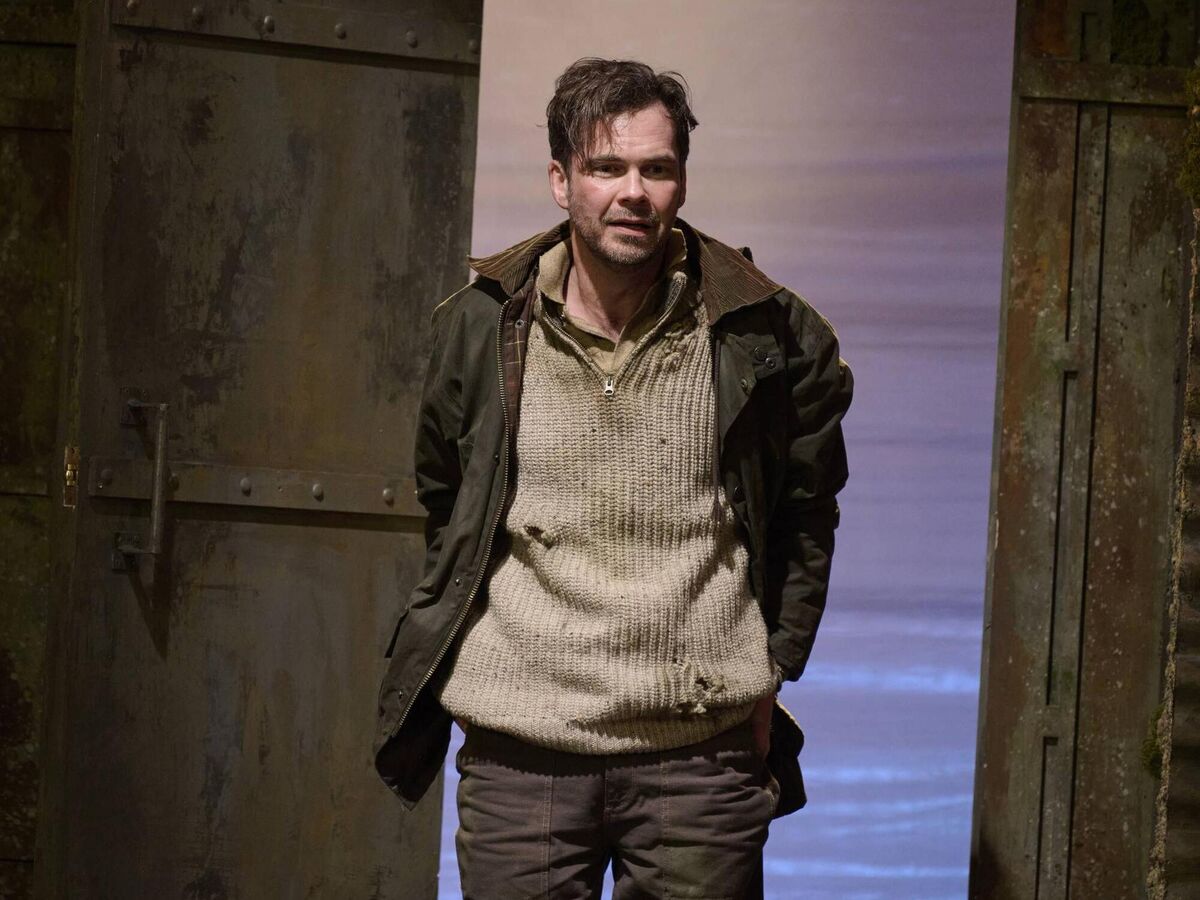
Into all this comes, regular as the tide, Patsy, the fishmonger. “Things are odd, outside,” he says. That’s emphasised when the metal door opens to reveal a pink atmosphere, the mist spilling in. What is going on out there?
We never find out. Indeed, Patsy reels off only the most absurd small-town inanity in his compulsive, virtuoso blather, Marty Rea brilliantly expressing the “bigger question of purpose”, the simmering torment, that Patsy’s stories barely keep repressed.
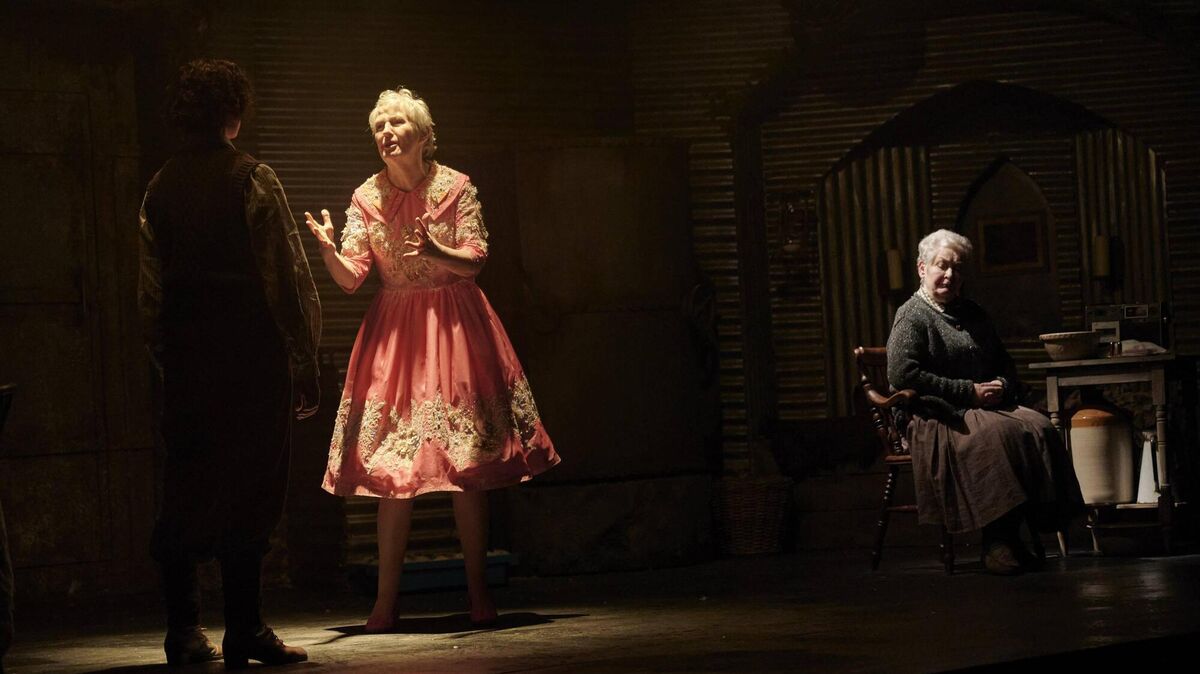
There is an almost musical logic to how Walsh shuffles and reshuffles the trio and their words here, words that “stamp” and “brand”, with this “terrible need for talking”. Yet, just as we think we know the score, a new dynamic emerges. Director Emma Jordan latches onto the play’s final, tantalising intensity, as new possibilities mix romance and melodrama to absorbing effect. Suddenly, Patsy and Ada have different stories to tell, futures to imagine.
Inevitably, it all comes crashing down. We have glimpsed freedom, but there’s no escape or transcendence here. This, we realise, is the darkest of fairy tales. The older sisters sit and watch as Ada’s dream shatters. And then, she is one with them. “The story takes over, the pattern returns.”
- At Gate Theatre until April 1. At Everyman Theatre, Cork, April 4-7