Philippe Auliac: The man who photographed David Bowie
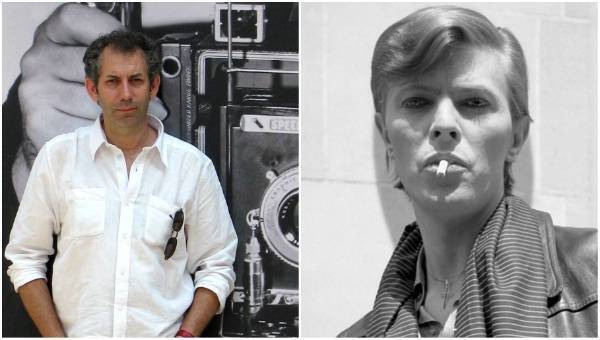
Philippe Auliac has an exhibition in Dublin as part of Dublin Bowie Festival. (Picture: Laurence Geslin); right, one of Auliac's pictures of Bowie.
In 1976, music photographer Philippe Auliac went to Berlin to visit his friend David Bowie. At that time, Bowie was in the middle of one of the most dramatic reinventions in rock history, as he recorded his moody ‘Berlin’ trilogy – starting with the avant-garde classic Low.
Auliac had a ringside seat as a masterpiece took shape. It did so at the Hansa Studios complex in the shadow of the Berlin Wall. Bowie was collaborating with former Roxy Music keyboardist Brian Eno and his long-time producer Tony Visconti. Together they wove a dark alchemy from the Cold War gloom.
“I was present at several sessions of the recording of the record Low. The atmosphere was very creative and confusing,’ says Auliac. “But warm for [for 1977 follow-up] Heroes in Berlin. Working with Eno was very easy – Eno was very creative. Working with Tony Visconti was different. With Tony, you had a big ego problem.”
Auliac’s images of Bowie capture the duality of the Thin White Duke. In them, Bowie has the strut and mercurial quality of a great pop star. But there are also glimpses of vulnerability – of the off-duty Bowie, with whom he was close.
Now, Irish fans have an opportunity to enjoy those images up close as part of the Dublin Bowie Festival. The festival hosts an exhibition of the photographs at Rathfarnham Castle from January 11-29. Other highlights include a January screening of Tony Scott’s The Hunger (in which Bowie portrayed a vampire). And a performance and Q&A by Gerry Leonard, the Dublin-born guitarist who recorded and toured with Bowie.
Auliac believes that representing the two sides of Bowie – the star and the man – were key to his job. “You have to understand that David Bowie doesn’t exist, Bowie is a commercial product,” says Auliac. “The real David off stage is David Jones [Bowie’s real name]: intelligent, cultured, friendly and respectful of the people he appreciates.”
Auliac’s love affair with photography and his enthusiasm for Bowie are intertwined. Growing up in Paris, he discovered Bowie through the artist’s early albums. He resolved to become a rock photographer so that he could take the singer’s picture.
Part one of that mission was achieved when he got a job at RCA Records in Paris. And then, in 1976, he was instructed to travel with Bowie as he took the train to Victoria Station in London. It was the singer's first visit to the UK capital after an exile of several years in Los Angles.
Bowie’s arrival at Victoria Station would become instantly notorious. After years of drug use in LA, the singer was wigged out and all at sea. He had also developed an unhealthy interest in the philosophical underpinning of fascism. Early in 1976 he even described Hitler as “the first rock star”.
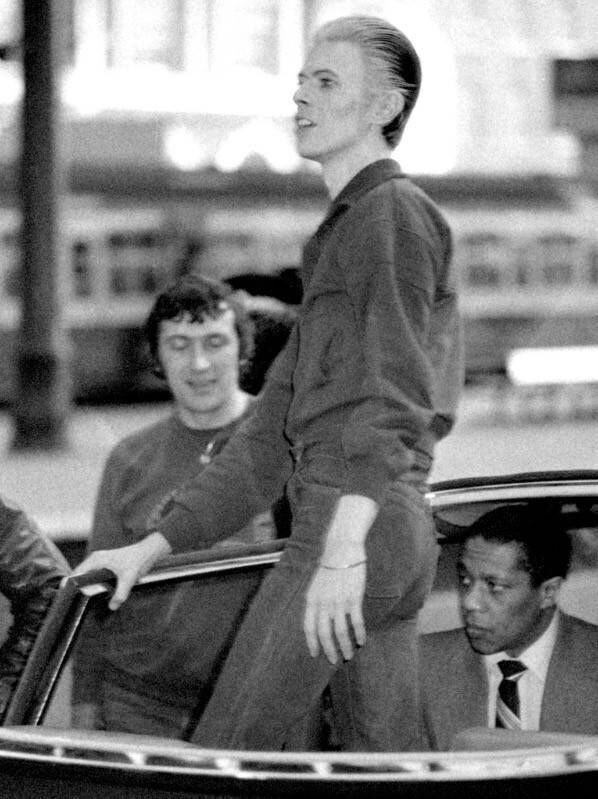
It was in the context of those pronouncements that his appearance in an open-topped car in Victoria Station was judged. Rumours swirled that he’d given a Hitler salute to fans gathered to greet him.
“The arrival at Victoria Station was supposed to be festive but a lack of sound system changed everything,” recalls Auliac. “David … greeted his audience standing in the car. At no time was there a Nazi salute.”
Bowie, he feels, was victimised by the British press. “This is the story of the English newspapers. David had said a few days previously that Britain was in a bad condition. The English people were not very happy. They said David Bowie [was a Nazi]. But no… this is only the story."
Several months later, he was invited to Berlin, to which Bowie had moved with his friend Iggy Pop.
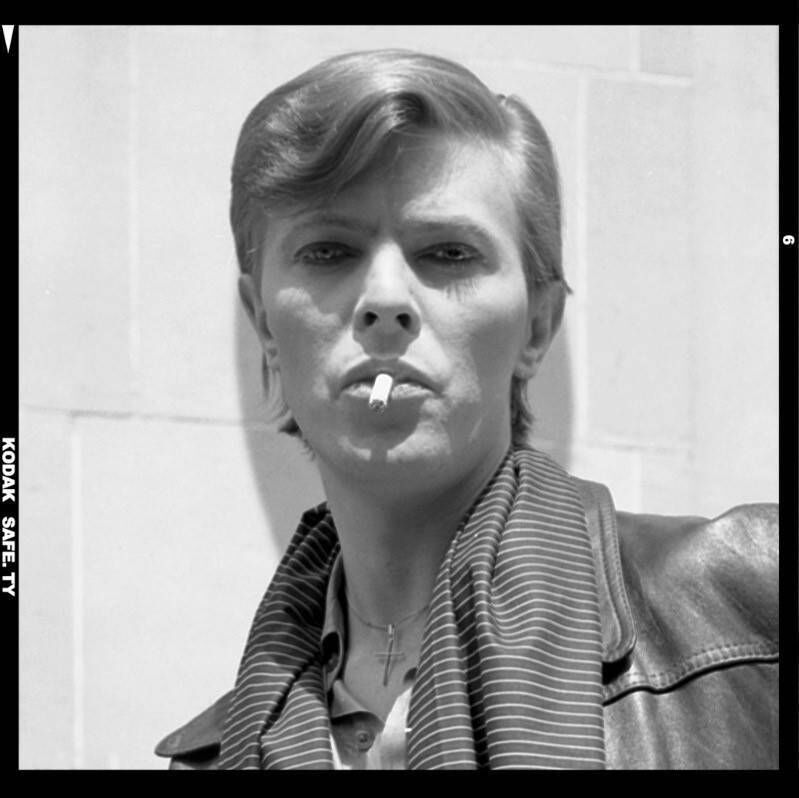
In many ways, the Bowie Auliac met on that trip was a Starman coming down to earth. Bowie’s cocaine use in LA had left him isolated and paranoid (among other eccentricities he would hide his urine in the fridge, convinced the FBI wanted it).
He was also decompressing after portraying an alien in Nicolas Roeg’s The Man Who Fell to Earth. That character was a major influence on the Teutonic, 'Thin White Duke' persona he had adopted around then. It was an iconic look: with slicked-back blond hair and sharp cheekbones.
“The Thin White Duke was a character. But outside of this character at that time Bowie was still in the skin of Thomas Jerome Newton [from The Man Who Fell To Earth]. Who was actually an avatar of David Jones,” says Auliac.
Bowie would have turned 75 on Tuesday, January 10. His death in 2016 at age 69 came as a shock to the world. He had released his cathartic final album, Blackstar, just days previously. A dark masterpiece, it suggested the comeback he had begun with The Next Day in 2013 was gathering pace. And then, he was gone.
Auliac was one of the few aware of the singer’s poor health. “We knew. We had the information from a week previously that it was at the end. It was not a surprise. It was very difficult. He was a big part of my life.”
![Photographer's Favourite, No 3 - In Concert (2004): “One of my last stage pictures before David’s heart disease [the singer suffered a heart attack in 2004]. In this picture, the expression on his face is terrifying.” Copyright: Philippe Auliac](/cms_media/module_img/6743/3371552_9_articleinline_thumbnail_Bowie3.jpg "Photographer's Favourite, No 3 - In Concert (2004): “One of my last stage pictures before David’s heart disease [the singer suffered a heart attack in 2004]. In this picture, the expression on his face is terrifying.” Copyright: Philippe Auliac")
He snapped Bowie through his career. The biggest change was in the mid-1980s when the Let’s Dance album turned the singer into a global superstar. Bowie would come to regret that success – dismissing it as his “Phil Collins period”. For Auliac, it was a case of a man devoured by the record industry machine.
“David Jones died the first time in 1983. With Let’s Dance he fell into the hands of labels. It took him years to try to get rid of it. It didn’t change much for me because I had privileged access to David.”
One thing of which he is sure is that Bowie was a one-off. He looks around today and does not see anyone carrying on that chameleonic legacy.
“David was unique. Today there are no rock stars like David Bowie. Today – who is a rock star? With the death of David Bowie, Lou Reed and John Lennon, rock is dead. Today we are not in a musical period but one of communication.”
With so many people wanting a part of him, Bowie could be mindful of his privacy. But he trusted Auliac. The Frenchman was one of a handful of photographers allowed into his inner circle. “Any collaboration with David is based on trust and mutual respect,” says the photographer. “Those are the keys to longevity.”
- An exhibition of Bowie photographs by Philippe Auliac is at Rathfarnam Castle, Dublin, Jan 11-29. For full details of the Dublin Bowie Festival, see dublinbowiefestival.ie