Books of 2022: JP O'Malley picks tales of a troubled world
In a year pockmarked by extreme climate crisis, war, intrusive technology and totalitarian regimes, JP O’Malley selects his books of 2022
Books of 2022: JP O'Malley picks tales of a troubled world

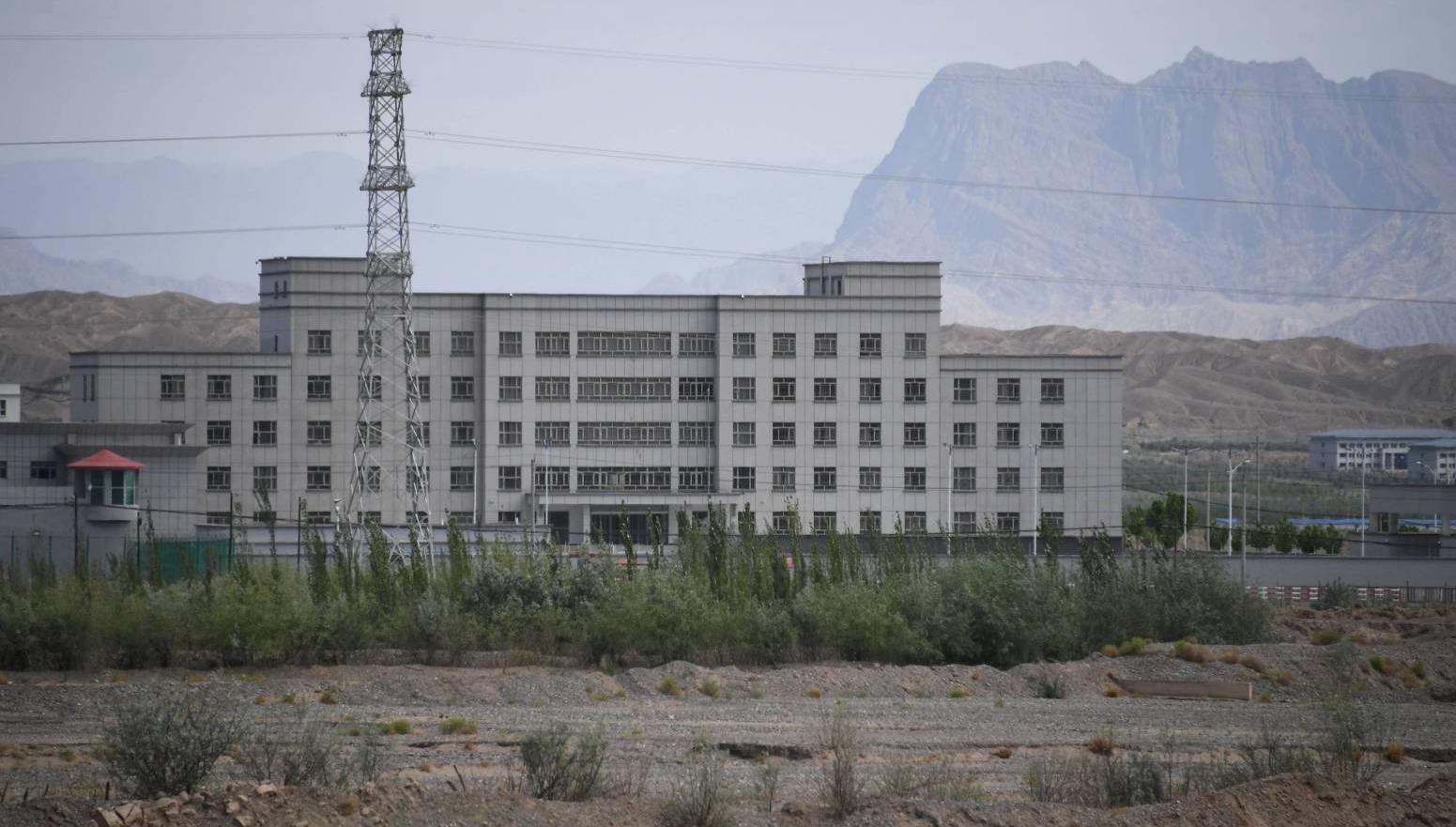
Buildings at the Artux City Vocational Skills Education Training Service Center, believed to be a re-education camp where mostly Muslim ethnic minorities are detained, north of Kashgar in China’s northwestern Xinjiang region. It is suspected that as many as one million ethnic Uyghurs and other mostly Muslim minorities are held in a network of internment camps in Xinjiang. Picture: Greg Baker / AFP via Getty Images

2022 saw China making sporting history. In February, Beijing became the first city ever to have hosted both the Summer and Winter Olympic Games. Many western governments focused on a more urgent political matter though: China’s alleged human rights abuses. The US, Britain, Australia, and Canada all announced diplomatic boycotts of the Winter Olympics, which began on February 4.
Today, the international community continues to accuse the Chinese government of detaining over a million Muslims in reeducation camps. Some detainees come from Kazakh and Hui ethnic minorities. But most are Uyghur: a Turkic-speaking Muslim group of 12m people residing in China’s autonomous northwestern region of Xinjiang. China categorically refutes these allegations, claiming it’s carrying out a “vocational training program”.

In the Camps (Atlantic, €10.99) tells a less sanguine story. Darren Byler points to more than 300 camps that are presently in operation across the Xinjiang region, an autonomous territory in northwest China, where detainees are deprived of fundamental human rights, such as freedom of speech, and basic human dignity.

The Canadian academic backs up those claims with factual evidence, namely: government bid contracts, satellite imagery, and a whole host of interviews from camp survivors.

The book draws on nine years of ethnographic research. This includes verified text messages from internal government officials in China, leaked reports from the Chinese police, and testimonies from whistleblowers across the Chinese tech industry. The findings are shocking and harrowing.

Byler is keen to emphasise why the Xinjiang camps are a historical anomaly. In its quest to separate Xinjiang’s Muslim minorities from the broader Han population, the Chinese state has employed pernicious sophisticated technological systems — such as algorithm tinkerers, face recognition designers, DNA mappers, and smart phone tracking systems.

Distinguishing reality

David Chalmers says technology is becoming so sophisticated that it won’t be long before we have realities that are indistinguishable from the non-virtual world. In Reality+: Virtual Worlds and the Problems of Philosophy (Allen Lane, € 22.99), the Australian philosopher explores how virtual reality (VR) will drastically alter our lives in the coming years and decades ahead. The book falls into the genre of ‘technophilosophy’. Essentially, this combines technology with philosophy to ask questions like: can there be consciousness in a digital world?

Chalmers then walks the reader through all sorts of scenarios this coming world might entail, including uploading consciousness to the cloud, so that we can build backups of our own minds.

Or perhaps, Chalmers speculates, when the brain is dying at the end of life, one will have the ability to upload the content of their mind to the cloud with a silicon brain.

It seems we no longer have the luxury to treat the fate our planet as a hypothetical, philosophical thought experiment. Even climate change deniers are now having to face the fact that our ecosystem is heating up like never before, and on course to cook itself to death if we don’t take action right now. In July, the UK had its hottest day on record, ever, with temperatures reaching 40.3 C. Forest fires, meanwhile, raged across Europe for much of the summer. It was rather fitting, then, to see George Monbiot win the the Orwell Prize for Journalism 2022 in July. The outspoken Guardian columnist won the prize for his four-decade-long fight to raise the profiles of a wide range of neglected environmental issues.

In Regenesis (Allen Lane, € 22.99) the British journalist, author, and environmental campaigner notes that 70% of the world’s farmland is now owned or controlled by just 1% of its farmers. This complex corporate global structure yields more food. But it also encourages heavy use of fertilisers, pesticides, and irrigation water, which is bad for soil. Monbiot spends most of this brilliant book exploring an urgent question: can we alter the global food production cycle in the coming years and decades, to protect our planet’s safety and wellbeing?

The book also rams home one undeniable truth: in the name of profit, livestock farming has displaced millions of indigenous people, and destroyed billions of hectares of wildlife habitat.

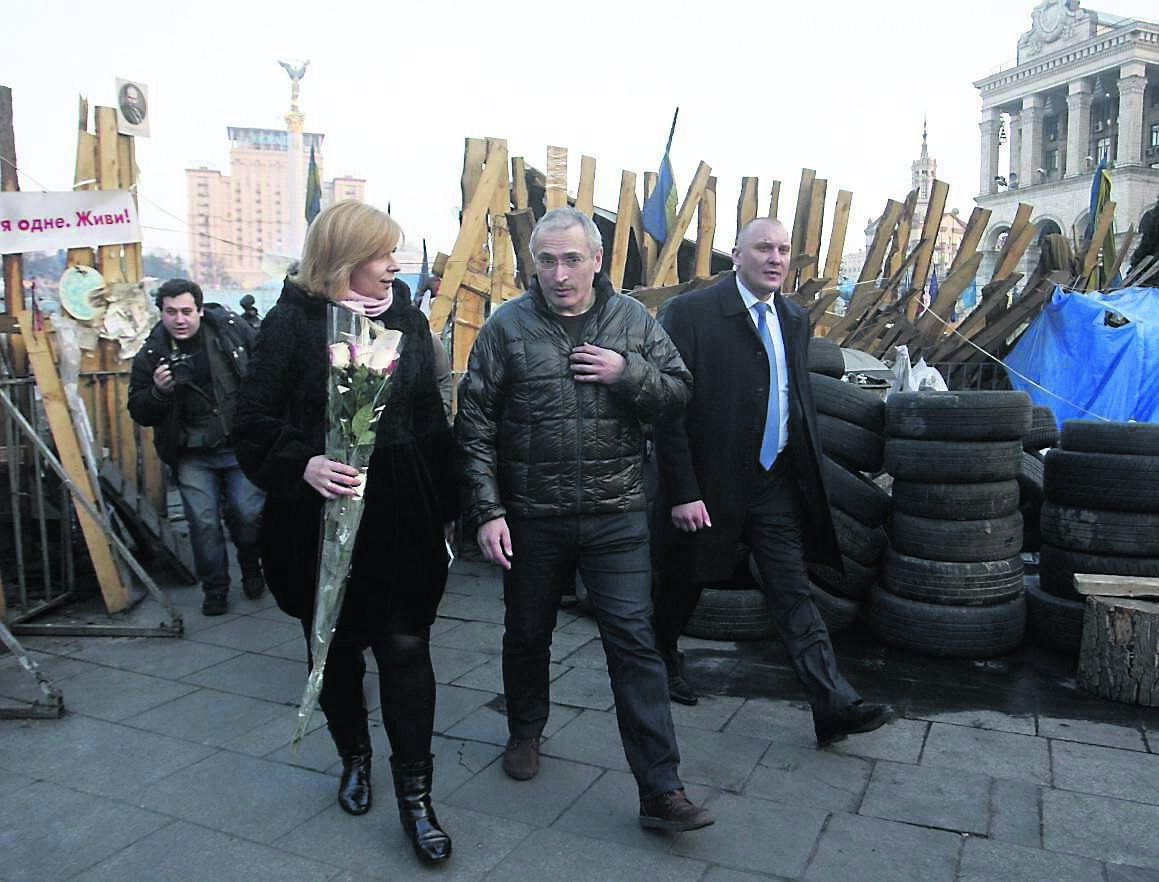
Mikhail Khodorkovsky (centre), the then recently-freed former head of the Russian oil company Yukos, walks past a makeshift barricade set up by Ukrainian anti-regime protesters after addressing an anti-war rally in Independence Square in the Ukrainian capital Kiev in March, 2014. 	Picture: Yury Kirnichny/AFP via Getty Images
Mikhail Khodorkovsky (centre), the then recently-freed former head of the Russian oil company Yukos, walks past a makeshift barricade set up by Ukrainian anti-regime protesters after addressing an anti-war rally in Independence Square in the Ukrainian capital Kiev in March, 2014. Picture: Yury Kirnichny/AFP via Getty Images

We need to talk about Russia

In October, Samantha Power was the keynote speaker for the World Food Prize’s Norman E Borlaug International Symposium held in Iowa in the US.

Power, who currently holds the position as administrator of the US Agency for International Development, emphasised the urgency of addressing the climate crisis and the growing threat of famine it ad

dressing the climate crisis and the growing threat of famine it poses around the globe. In her speech, Power also mentioned how Russia’s invasion of Ukraine is “holding hostage global supplies of food, fertiliser and fuel, denying food to the world’s poorest communities.” Prior to the war, Ukraine was one of the world’s most productive grain-growing regions, and biggest exporters of grain.

In The Russia Conundrum Russian dissident Mikhail Khodorkovsky argues that if Russian society is going to transform itself towards democracy any time soon, it must face up to the demons of its own past.

In the same way as, say, Germany did after Hitler committed suicide and the country lost the Second World War. Khodorkovsky believes a radical transformation of Russian society could take a period of 20 years, though. His latest book also recalls his own life story.

At the turn of the millennium Khodorkovsky became Russia’s wealthiest individual, heading up Yukos. The oil production company was worth nearly $30bn when “Putin’s Mafia state” stole it from Khodorkovsky in the early 2000s.

In 2005, as Russian president Vladmir Putin continued to wage war on Russia’s oligarch class, Khodorkovsky was found guilty in a Russian court of tax evasion, corruption, embezzlement, and money laundering. He served more than 10 years behind bars, mostly in a Siberian prison camp. The former billionaire was released from prison in December 2013. Today, from London, he continues to lead Open Russia: a UK-based NGO that was outlawed by the Kremlin five years ago, which promotes values like press freedom and democratic accountability. Khodorkovsky has been an ardent supporter of Ukraine since Russia launched a war in eastern Ukraine in 2014, and annexed Crimea too. During the Maidan Revolution that took place in Ukraine that same year, he addressed the crowds on Maidan Square in Kyiv, offering his public support for Ukraine’s wish to move away from its Soviet past, and towards a pro-western European path of democracy.

In late November, the World Health Organization reported that half of Ukraine’s energy infrastructure was either damaged or destroyed, and 10m people were without power. With temperatures predicted to plummet as low as minus-20C in some areas, people across Ukraine will be faced with what is perhaps the toughest and most unpredictable Winter there since the Second World War.

In Russia: Myths Realities (Profile Books €16.99) Rodric Braithwaite says since Russia’s invasion of Ukraine was launched last February, the West has learned two valuable lessons. Putin was bluffing about the power and might of the Russian army. Ukrainian resistance, meanwhile, is proving to be far stronger than anybody in the West previously imagined. How the war will unfold in 2023 is anybody’s guess.

But a victory for Ukraine appears to be the only viable exit strategy. I believe peace will only come when Russia is defeated and/ or Putin leaves office or dies.

Slava Ukraini!

x

More in this section

Scene & Heard

Newsletter

Music, film art, culture, books and more from Munster and beyond.......curated weekly by the Irish Examiner Arts Editor.

Cookie Policy Privacy Policy Brand Safety FAQ Help Contact Us Terms and Conditions

© Examiner Echo Group Limited