Book interview: 'Terence MacSwiney was a sensitive man torn between ambitions of writing and duty to Ireland'
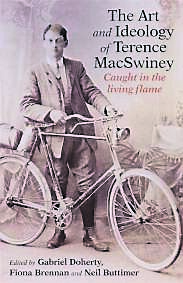
- The Art and Ideology of Terence MacSwiney: Caught in the living flame
- Edited by Gabriel Doherty, Fiona Brennan and Neil Buttimer
- Cork University Press, €39
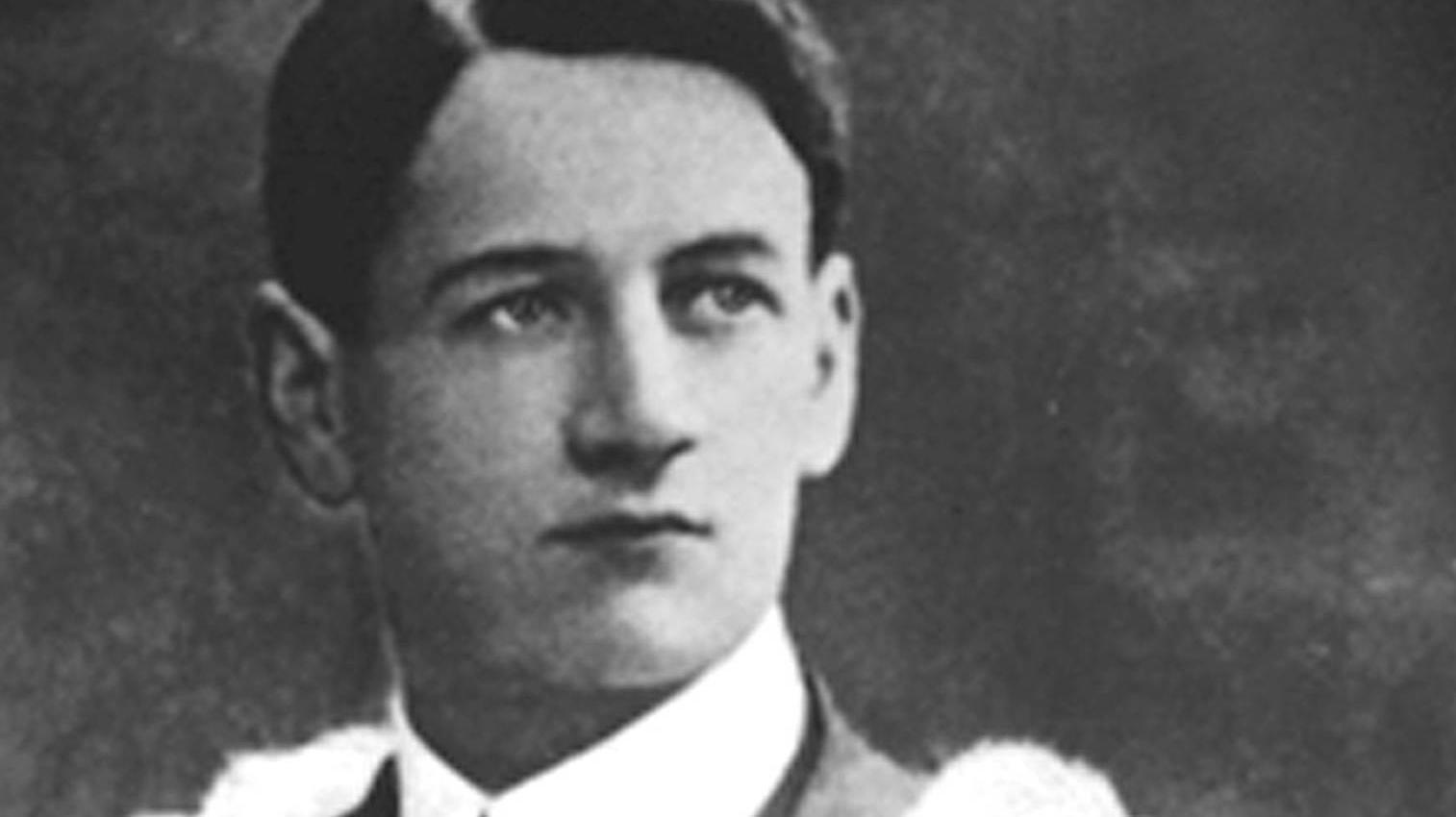
When theatre historian Dr Fiona Brennan began researching Terence MacSwiney’s plays, all she knew about the Cork revolutionary was the politically seismic circumstances of his death after 74 days on hunger strike in Brixton Prison.
At the end of her meticulous study, she knew the man so well that she could almost tell what mood he was in just by his handwriting.
The man that emerged from diaries, letters, and plays was a deeply sensitive individual who was torn between his heartfelt personal ambition to be a writer and his public duty to fight for an independent Ireland.
“My heart broke so often reading his letters,” says Dr Brennan. “And it still breaks because at the centre of MacSwiney’s life — it’s there in black and white — is the fact that he wanted so much to be a writer, but he had to be strong enough to put that personal ambition aside.
"I think he suffered terribly dark, dark days because of it.”
MacSwiney makes reference to a breakdown in a diary entry of 1898. He mentions headaches and problems with his ears, both probably caused by the anxiety of being involved in so many political and cultural activities.
His day began at 3am. He would write for three hours, then go to 7 o’clock Mass before going to work at 8.30am.
He put himself under immense pressure, says Dr Brennan, although she adds that there are many uplifting passages in his letters too.
One of them vividly captures his excitement at the prospect of having one of his plays staged in America.
When his sister in North Carolina, Peg, or Mother Margaret, mentioned the possibility of a US opening for his play, The Revolutionist, MacSwiney’s response in a letter from 1914 speaks volumes: “When you suggest a possible opening in America you touch a hope of mine — how ardent. Peg, pray for it, the opening, somewhere — pray, pray, pray… You see, you touched a secret spring.”
That secret spring began as early as 1902 when he started to write poetry and, explains Dr Brennan, he began to talk often of his desire to develop his literary career: “I do feel here is my vocation …. Grant that my chance may come.”
However, Terence MacSwiney knew that time was against him.
“I don’t lack patience I think, but time won’t wait. Politicians don’t get old till after 60; but writers and athletes begin to age after 30. I’m just 35 — 35 and still practically beginning.”
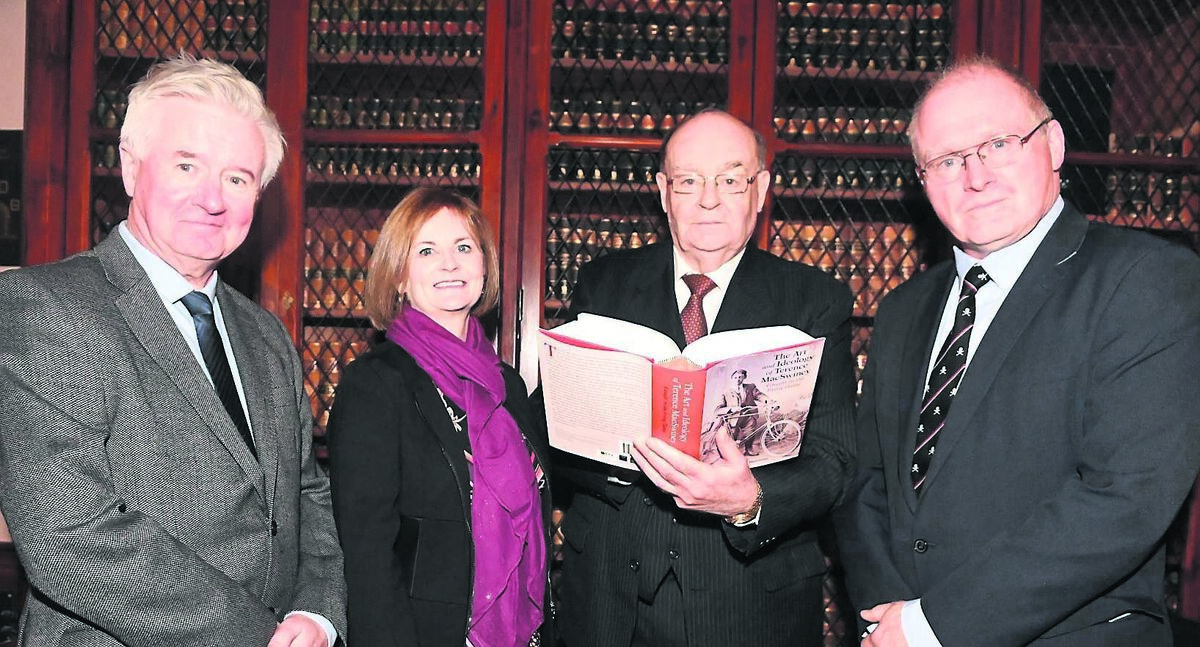
In the same way, the study of MacSwiney’s poems, essays and plays is still just “practically beginning”, but The Art and Ideology of Terence MacSwiney: Caught in the living flame — a stunning piece of scholarship that comes in at 962 pages — makes an impressive start.
In it, Fiona Brennan, with fellow editors Gabriel Doherty and Neil Buttimer, shift the focus from the headline-grabbing death of Terence MacSwiney to his life in all its vibrant colour. They open a revealing window on the literature that enabled “his politics to radiate passion, inspiration and sincerity”, as Dr Brennan puts it.
Here is the man behind the political colossus who is best remembered for his political work as TD, Mayor of Cork and Commandant of the Cork No 1 Brigade of the IRA. Later, his death made waves around the world.
Now we have access to research that brings his writings, both published and unpublished, to a new audience.
There is much to consider, but there are two things that jump out from Fiona Brennan’s long days in the archives at the Cork Public Museum at Fitzgerald Park. First, she was able to show that MacSwiney’s play The Holocaust, put on by the Cork Dramatic Society in 1910, was the first tenement play performed in Ireland. It was staged four years before AP Wilson’s The Slough was produced at the Abbey Theatre in Dublin.
“That’s a little bit of coup for MacSwiney,” she says.
She can also prove that MacSwiney submitted the play to the Abbey Theatre, a fact previously unknown. She says she “nearly fell off her seat” when she saw a note on one of two typescripts in the archive saying that he had sent this copy to the Abbey in 1912.
“I jumped for joy,” she says, but she was disappointed not to be able to find the Abbey’s submission log book for the same year.
By sheer coincidence, however, many years before she had been collecting the names of Kerry playwrights who had submitted plays and had noted that Terence MacSwiney, from Cork, had submitted that very play in 1914.
The discovery reveals not only his ambition, but also an attempt to take the national theatre in a new direction. He was not a fan of WB Yeats and disliked the national theatre’s focus on rural life.
In The Holocaust, MacSwiney portrayed the gritty urban reality faced by people in Cork city who, in 1909, were trying to cope with the hardship caused by the quay strikes.
“They were on a par with the lockout in Dublin,” says Dr Brennan.
“Hundreds of people were out of work; locked-out and fired. He had grown up around the corner from slums in North Main Street and was very aware of where he came from himself.”
MacSwiney also despised materialism and was deeply critical of how Irish businessmen — and they were mostly men — had made a profit from the British empire. He had high hopes for his play and believed if it was successful, he would make it as a playwright.
The Abbey ultimately rejected this play, but four of his plays were staged in his native city by the Cork Dramatic Society, which he co-founded with his friend Daniel Corkery in 1908.
For Fiona Brennan, The Holocaust is his best drama. And she certainly is well-acquainted with all of them, having transcribed seven of the eight plays from handwritten manuscripts, all 108,000 words of them. He wrote nine in total; one has disappeared and only one was published in his lifetime.
She says he showed “huge promise” as a playwright, and read every play he could get his hands on, from Ibsen and Molière to Shakespeare.
“But,” she adds, “there’s a big difference between reading and being able to develop his own style. It’s almost like he never had the time to step back and be objective. There was no time to learn his craft. That is not to demean what he was doing.”
The editors were not looking at the quality of writing for this collection which brings together MacSwiney’s poetry, drama and prose, much of it for the first time.
The aim of this important book is to look at the man in a different way and to bring his work to a wider audience.
The editors hope it will inform a new, definitive biography of Terence MacSwiney.
Fiona Brennan has a personal wish too. She hopes it will inspire a renewed interest in, and appreciation of, the Irish amateur drama movement of which MacSwiney was a part. That movement left a vast and rich legacy which has yet to be fully written.