'The band is formally stopping': Horslips reach end of the road
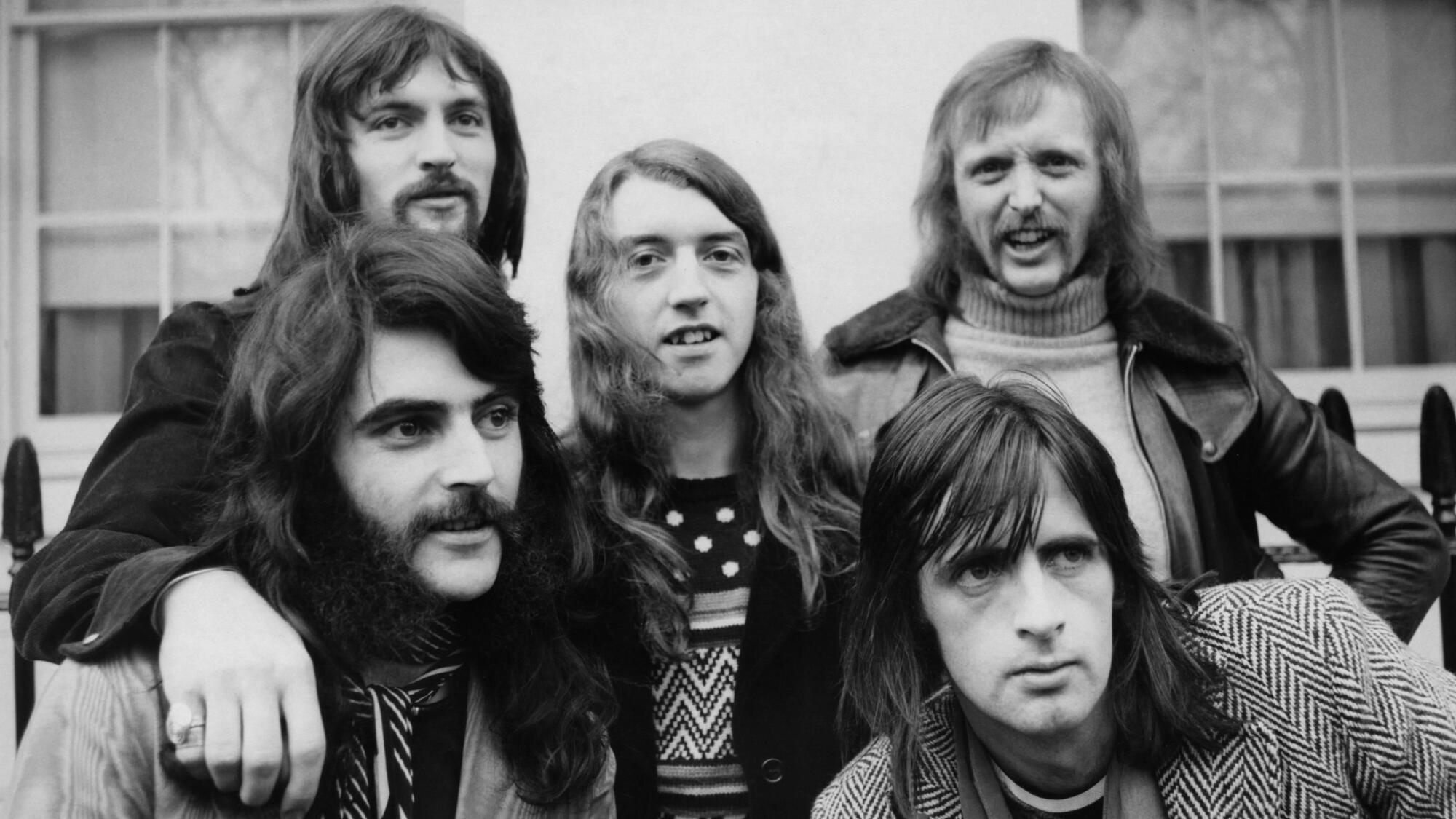
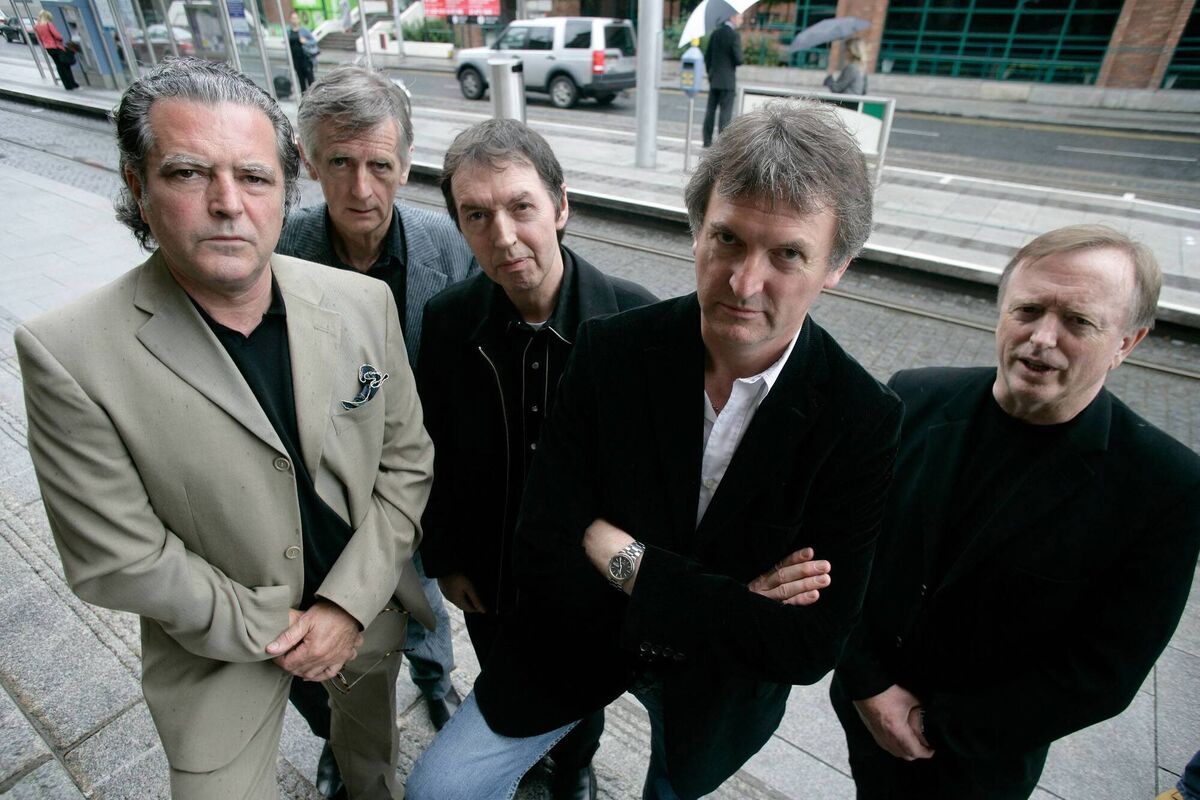
Horslips in 1974: Jim Lockhart (behind), John Fean, Barry Devlin, Charles O'Connor and Eamon Carr (behind). (Picture: Central Press/Hulton Archive/Getty Images)
On November 16, at the Ulster Hall in Belfast, Ireland’s original Dancehall Sweethearts take one final twirl. Horslips, the long-haired psychedelic warriors of Seventies Celtic pop, play what is being billed as their last-ever gig. It promises to be an evening high on emotion and super-charged with nostalgia.
“The band is formally stopping in Belfast,” says singer and bassist Barry Devlin. He’ll be performing with keyboardist and flautist Jim Lockhart, a fellow Horslips founder member, and with friends of the group Ray Fean and Fiach Moriarty [the rest of the classic Horslips line-up having retired]. “It’s last gig time.”
Devlin turns 76 a week after the Belfast performance, at which he will receive the Oh Yeah Legend status award (all part of the Northern Ireland Music Prize ceremony).
Half a century has elapsed since Horslips wove from thin air the genre of Celtic rock. Having manifested in the literary underground of early 1970s Dublin, this quintet of former ad executives were the conquering heroes Irish culture desperately needed. They were hugely and immediately successful too, with hits such as Dearg Doom, from 1973, and Trouble (With a Capital T), from 1976.
With these songs and concept records such as the aforementioned Dancehall Sweethearts along with The Táin and the Book of Invasions, Horslips created something entirely original. Playful, epic rock ’n roll that tapped into the early Seventies “prog” movement. But which did so while acknowledging the five musicians’ Irish traditional roots. It was a mash-up sprinkled with fairy dust.
The music suggested Pink Floyd dancing around a fairy fort. With their extravagant moustaches and even more extravagant boots and frilled shirts, Horslips looked like Finn McCool’s honour guard having just fought their way out of Carnaby Street. All these decades on, no musicians have come close to the weird sorcery conjured by the band.
“Right at the start,we were looking at Seán Ó Riada,” says Devlin of the Cork composer who blended Celtic and classical music.
“And at fusion bands in world at rock – people like King Crimson. And jazz fusion. It was a time of fusion. We wanted to do something with rock. We weren’t absolutely sure what. We definitely wanted to be a prog rock band. And for the “prog” bit to be trad,” he says.
Horslips had one major advantage over other Irish musicians of that time. They were full of self-confidence – an anomaly in an era when Ireland was weighed down with a collective inferiority concert.
“We thought we were brilliant. We were very pleased with ourselves. It wouldn’t’ have surprised us had we turned out to be the biggest band in the world,” he says.
“It turned out we weren’t. But we were going ‘yeah – we know this thing we are doing is of interest’. And did have a longevity. We got a terrible kicking at the time from the trad establishment.
"Some of that was our own fault. People said, ‘this is the future of Irish traditional music’. And we didn’t go, ‘no, honest-to-god, we’re not’. We were preening so much we would take any praise we got. We didn’t make that clear enough.”
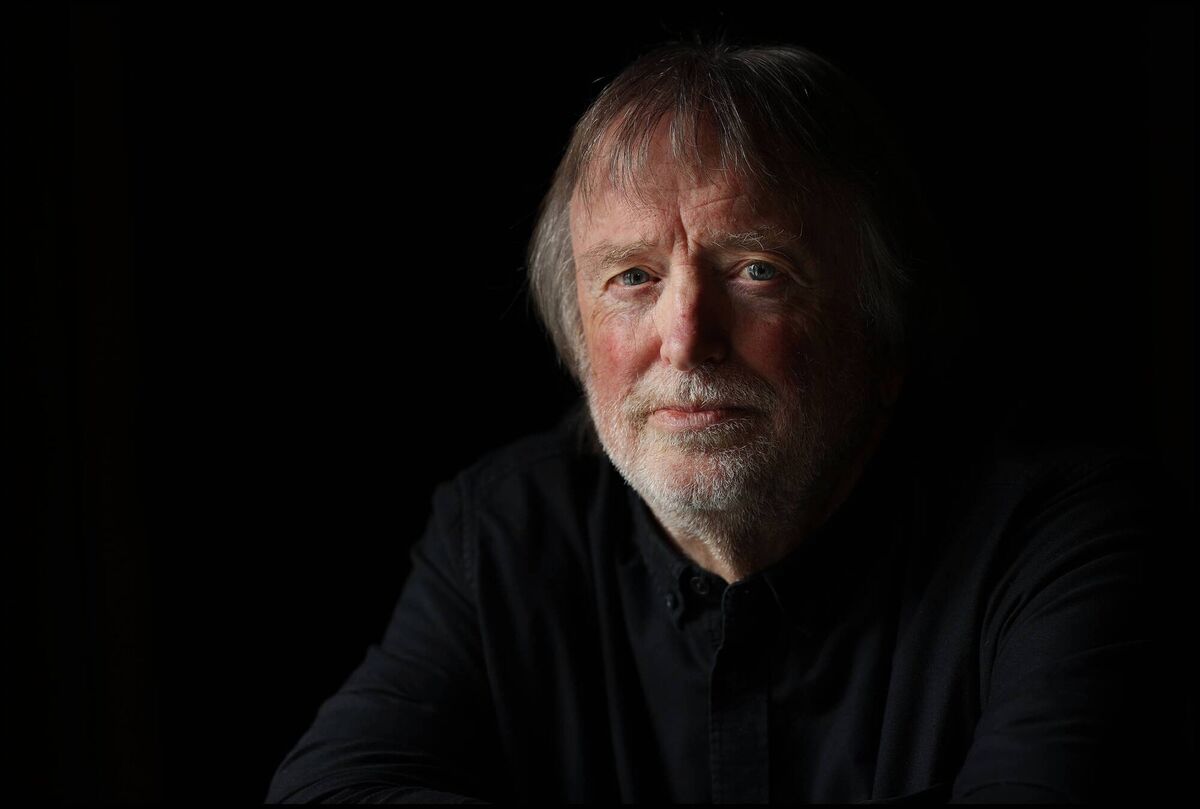
Early 1970s Dublin is often remembered as a cultural, economical and social backwater. That is not how Devlin recalls the city at that time, however. He recollects that it was a period of change and excitement. The old Dublin that produced Brendan Behan and JP Donleavy's The Ginger Man was fading. The one that would give the world U2 had not yet arrived. And there, in this liminal moment, were Horslips.
“The music scene and the poetry scene was in as much a state of flux as Dublin was. It was a period of transition. The Dublin of Behan and Patrick Kavanagh and Luke Kelly was turning into the Dublin of U2. So there’s a 10-year period then between 68 and 78. It was kind of a melting pot,” he says.
“There was a lot going on. If you look at the 1950s into the 1960s – books like Donleavy's The Ginger Man. That was a very visible movement. Between ’68 and ’78 it kind of ducked down below. And in rock terms, there would have been Rory Gallagher, ourselves, [Thin] Lizzy.
"There wasn’t much else that was visible there. The bands that would explode around the late 70s: The Blades, U2, Light a Big Fire…they were getting ready. And, of course, the great The Radiators [a formative Dublin punk crew]. It was a petri-dish at that stage. We were partly formed out of that.”
Dublin was in flux, he says. And isn’t that always the most exciting time for a city and a scene? “It was not short of talent. It was an extremely interesting moment. It just hadn’t figured out what it was then.”
Horslips had come together in the capital. But they were not a 'Dublin' group, feels Devlin. He was from Tyrone; lead guitarist Johnny Fean from Shannon, Charles O’Connor, the vocalist and guitarist, was an art-school graduate from the UK; drummer Eamonn Carr, a former beat poet, from Kells. Only Jim Lockhart was a Dubliner. And their fanbase was always country-wide.
“It’s kind of key. We were all country boys. Even Jim Lockhart, who was a Dub – his mother was from Cooktown and his dad from Belfast. Charles was the archetypal art-school graduate from Middlesborough Johnny Fean, the guitarist was from already giggling [with progressive country outfit Jeremiah Henry]. I was from Tyrone,” he says.
“We met up in Dublin. We all had a strong interest in traditional music. I wasn’t a trad player at all but was very interested. We didn’t know enough to know what we could expect to get away with.That was great for us. We didn’t mind what people thought about us.
"We didn’t know anyone who thought anything about us anyway. We had no gang in Dublin who played the blues or whatever. We got together in this self-made bubble.”
They’ll play four songs in Belfast. As already pointed out, Devlin, who grew up in Tyrone, will also receive the NI Music Prize Legend Award for his part as one of “the founding fathers of Celtic Rock”.
The evening will make a poignant full-stop to a busy year for Horslips, who have also released a box set, that, after logistical delays, is set to make its way into collectors’ hands this winter.
The cover features the group’s “clown” motif; inside are more than 35 discs containing their entire catalogue – plus 16 hours of unreleased material. You could slap it on Christmas morning and it would still be whirring in the corner as you went to bed.
“It’s an extraordinary thing. Many bands produce coffee table books. As far as I know we’re the only band that has produced a coffee table,” says Devlin. “All you need are legs and you could have your dinner on it. It’s gorgeous.
"Charles O’Connor, who was always the designer of our art-work… Charles and Mark Cunningham, who did the biography book, they did together – it uses the clown [image] that we used back in the day.”
Horslips were never ones for half-measures. And the boxed set is true to that over-the-top tradition. “It’s a beautiful-looking thing. And, of course, a wretched excess. There are CDs – three DVDs, and two books of enormous beauty. Ephemera.. fan-club letters, posters. Everything you have ever wanted to know about the band.
"And possibly a great deal you didn’t want to know about the band. If you’re genuinely a Horslips nerd, it’s kind of got everything."
Horslips went on hiatus in the 1980s, without ever officially breaking up. But as they got on with their lives (Devlin composed and wrote scripts for TV) Horslips’ reputation endured.
If anything it grew when the riff from Dearg Doom was reprised for the 1990 Ireland World Cup song, Put Em Under Pressure. And then, in 2009, they were persuaded to come back together.
“There was an under-current of awareness of songs like Trouble with a Capital T and Dearg Doom. In 2007- 2008, Denis Desmond [of promoters MCD] said, ‘You should go back on the road now’. He said, ‘I’ll put you on’. We said, ‘What – Vicar Street’. And he said, ‘nah, we’ll do the Point’.” They thought he had taken leave of his senses.
“We said, ‘Dennis the last time we played Dublin – we played a 1,200 seater– the National Stadium’. And he said, ‘no you’ll fill it [3Arena, as the venue, is today called]. And we did.
"Part of the reason was that, although we played the National Stadium once or twice a year, we would play much bigger ballrooms all around Ireland. You’d be playing the Astoria in Bundoran – 2,500 people. We were in many ways a rural band rather than particularly a Dublin band. We lived in the shires. And that’s where the support was.”
Horslips may be stepping into history. But Devlin has no intention of retiring from music. He has a close collaborative relationship with poet Paul Muldoon and will not be hanging up his guitar for the foreseeable future, he says.
“Being in a band when you’re my age – it stops you being the man in the middle aisle in Aldi, buying bad jeans,” he says. “You’re allowed to be younger than you should be.”
- Horslips play the Ulster Hall on November 16 as part of the Northern Ireland Music Prize ceremony